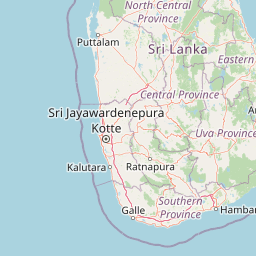
Why Angammedilla National Park stands out
Angammedilla National Park is best known for its role in protecting the watershed that feeds Parakrama Samudra, the large reservoir that is central to irrigation and water supply in the North Central Province. The park features dry evergreen forest ecosystems dominated by valuable timber species including Diospyros ebenum (ebony) and Mesua ferrea. Its wildlife includes significant populations of Sri Lankan elephants, sambar deer, axis deer, and various primate species including the endangered red slender loris. The park's location at the intersection of wet and dry zone ecosystems gives it a distinctive mixed vegetation character.
Angammedilla National Park history and protected-area timeline
The area that now comprises Angammedilla National Park was originally declared a forest reserve within the Minneriya-Girithale Sanctuary on 12 February 1988, reflecting its importance as a watershed and forested landscape. After nearly two decades of protection as a forest reserve, the region was elevated to national park status on 6 June 2006, a designation that strengthened both the level of protection and the management framework for the area. This elevation came as part of Sri Lanka's broader efforts to expand its national park network and provide stronger conservation status to ecologically significant areas. The park's creation was driven primarily by the need to secure the Parakrama Samudra drainage basin, recognizing that the forest cover and watershed functions of this area were essential to maintaining the reservoir's capacity and water quality. Beyond its modern conservation history, the region contains evidence of historical water management infrastructure, including ancient stone canal systems that once carried water from the Amban river to Parakrama Samudra.
Angammedilla National Park landscape and geographic character
The topography of Angammedilla National Park is defined by a prominent mountain range that traverses the park from Girithale in the west toward Minneriya in the east. These elevated areas receive greater rainfall than the surrounding plains during the monsoon season, creating important microclimatic variation within the park. The Amban river, originating from the Sudu Kanda (White Hill) area, forms the natural southern boundary of the park and has historically served as a water source for irrigation. The landscape exhibits a dual character depending on season: during drought periods the park becomes very dry and parched, while the rainy season brings lush growth to the higher elevations. The ancient landscape also features remnants of stone canal infrastructure, with villagers referring to the rocky walls of historical irrigation channels as the royal wall, testament to the long history of water management in this region.
Angammedilla National Park ecosystems, habitats, and plant life
The vegetation of Angammedilla National Park is characterized predominantly by dry evergreen forests, a distinctive ecosystem type found in Sri Lanka's dry zone regions. The forest composition includes several notable tree species, with Diospyros ebenum (ebony) being one of the most dominant species in the natural vegetation. Other common trees include Manilkara hexandra locally known as Palu, Chloroxylon swietenia known as Burutha, Vitex pinnata called Milla, and Adina cordifolia referred to as Kolon. The park also supports communities of Mesua ferrea, a species valued for its timber and medicinal properties. The climate regime, which blends characteristics of both wet and dry zones, enables this mixture of vegetation types to coexist, creating an ecological transition zone of some botanical significance.
Angammedilla National Park wildlife and species highlights
Angammedilla National Park supports a diverse assemblage of wildlife typical of Sri Lanka's dry zone forests. Large mammals are well represented, with Sri Lankan elephants being among the most notable species found within the park boundaries. The ungulate community includes Sri Lankan sambar deer, Indian muntjac, and Sri Lankan axis deer, while water buffalo and wild boar are also present. The park provides habitat for several primate species including the red slender loris, tufted gray langur, and purple-faced langur. Though less commonly observed, the park also harbours Sri Lanka leopards, sloth bears, grizzled giant squirrels, and Sri Lanka junglefowl, species that contribute to the ecological significance of this protected area. Peafowl are common throughout the park.
Angammedilla National Park conservation status and protection priorities
Angammedilla National Park was established primarily to protect the drainage basin of Parakrama Samudra, recognizing the essential role that forest cover plays in maintaining water quality and regulating water flow into this vital reservoir. The protection of watershed areas is particularly important in Sri Lanka's dry zone, where water availability for agriculture and domestic use depends heavily on the health of catchment forests and the hydraulic function of reservoir systems. In addition to watershed protection, the park conserves the habitats and wildlife of adjacent forest areas, creating a connected conservation landscape that supports ecological processes across a broader area. The elevation from forest reserve to national park status in 2006 reflects an institutional recognition of the area's conservation value and the need for enhanced protection measures.
Angammedilla National Park cultural meaning and human context
The region surrounding Angammedilla National Park contains elements of Sri Lanka's ancient agricultural landscape, with the Minneriya and Girithale irrigation tanks representing traditional water management systems that have shaped local livelihoods for centuries. The historical stone canal that once carried water from the Amban river to Parakrama Samudra reflects sophisticated hydraulic engineering from the island's past, with the ancient canal walls still referred to as the royal wall in local terminology. The park lies in an area of significant archaeological importance, with the ancient city of Polonnaruwa, a UNESCO World Heritage site, located nearby.
Best time to visit Angammedilla National Park
Angammedilla National Park experiences distinct wet and dry seasons that influence the visitor experience. The dry season, typically from May to September, brings very dry conditions to the park, making wildlife easier to spot as animals congregate around remaining water sources. However, the landscape appears parched during this period. The rainy season brings greater vegetation density and lusher scenery to the higher elevations, though wildlife can be more dispersed. The best time to visit generally coincides with the latter part of the dry season when water sources are limited and wildlife viewing opportunities are strongest, though visitors should be prepared for hot and dusty conditions.