

Mori Atlas logo
National parkAngammedilla National Park

Discover the mapped terrain and protected boundaries of this vital Sri Lankan national park.

Angammedilla National Park: Protected Watershed and Dry Evergreen Forest Landscape in North Central Province

Angammedilla National Park, situated in Sri Lanka's North Central Province, stands as a key protected area guarding the watershed that feeds the vital Parakrama Samudra reservoir. This national park, spanning approximately 7,529 hectares, encompasses diverse mountainous terrain and dry evergreen forest ecosystems. Established to conserve its crucial watershed functions and wildlife habitats, the park's landscape character is shaped by its location at the transition between Sri Lanka's wet and dry climatic zones, offering a unique perspective on regional geography and protected lands.

dry evergreen forestwatershed protectiondry zone wildlifeSri Lankan elephantParakrama Samudramountainous terrain

Angammedilla National Park

National park

Park overview

Structured park overview, official facts, and landscape profile for Angammedilla National Park

Angammedilla National Park park facts, protected area profile, and essential visitor context
Review the core facts for Angammedilla National Park, including designation, size, terrain, visitor scale, habitats, and operating context in one park-focused overview.

About Angammedilla National Park

Angammedilla National Park occupies a significant position in Sri Lanka's protected area network, serving both as a biodiversity sanctuary and as a critical watershed protection zone. The park's primary conservation mandate centres on preserving the drainage basin of Parakrama Samudra, a massive reservoir constructed in the 12th century during the reign of King Parakramabahu and still vital to agricultural irrigation across the region. Beyond this central water security function, the park also safeguards the catchments feeding the Minneriya and Girithale irrigation tanks, traditional water storage systems that have supported agriculture in this dry zone region for centuries. The landscape is characterized by a mountain range running from Girithale to Minneriya, with the Amban river forming the southern boundary, sourced from the distinctive Sudu Kanda or White Hill. The park's location in the transitional zone between Sri Lanka's wet and dry climatic regions results in a unique混合 of vegetation types, combining elements of both dry zone and wet zone plant communities.

Quick facts and research context for Angammedilla National Park

Angammedilla National Park covers 7,528.95 hectares in Polonnaruwa District, Sri Lanka, roughly 225 kilometres northeast of Colombo. The park was established on 6 June 2006, having previously functioned as part of the Minneriya-Girithale Sanctuary since 1988. It is managed by Sri Lanka's Department of Wildlife Conservation. The park protects the drainage basins of Parakrama Samudra as well as the Minneriya and Girithale irrigation tanks, serving as a critical watershed area for these important water bodies in the dry zone.

Park context

Deeper park guide and search-rich context for Angammedilla National Park

Angammedilla National Park history, landscape, wildlife, and travel context
Explore Angammedilla National Park through its history, landscape character, ecosystems, wildlife, conservation priorities, cultural context, and seasonal travel timing in a structured park guide built for atlas discovery and search intent.

Why Angammedilla National Park stands out

Angammedilla National Park is best known for its role in protecting the watershed that feeds Parakrama Samudra, the large reservoir that is central to irrigation and water supply in the North Central Province. The park features dry evergreen forest ecosystems dominated by valuable timber species including Diospyros ebenum (ebony) and Mesua ferrea. Its wildlife includes significant populations of Sri Lankan elephants, sambar deer, axis deer, and various primate species including the endangered red slender loris. The park's location at the intersection of wet and dry zone ecosystems gives it a distinctive mixed vegetation character.

Angammedilla National Park history and protected-area timeline

The area that now comprises Angammedilla National Park was originally declared a forest reserve within the Minneriya-Girithale Sanctuary on 12 February 1988, reflecting its importance as a watershed and forested landscape. After nearly two decades of protection as a forest reserve, the region was elevated to national park status on 6 June 2006, a designation that strengthened both the level of protection and the management framework for the area. This elevation came as part of Sri Lanka's broader efforts to expand its national park network and provide stronger conservation status to ecologically significant areas. The park's creation was driven primarily by the need to secure the Parakrama Samudra drainage basin, recognizing that the forest cover and watershed functions of this area were essential to maintaining the reservoir's capacity and water quality. Beyond its modern conservation history, the region contains evidence of historical water management infrastructure, including ancient stone canal systems that once carried water from the Amban river to Parakrama Samudra.

Angammedilla National Park landscape and geographic character

The topography of Angammedilla National Park is defined by a prominent mountain range that traverses the park from Girithale in the west toward Minneriya in the east. These elevated areas receive greater rainfall than the surrounding plains during the monsoon season, creating important microclimatic variation within the park. The Amban river, originating from the Sudu Kanda (White Hill) area, forms the natural southern boundary of the park and has historically served as a water source for irrigation. The landscape exhibits a dual character depending on season: during drought periods the park becomes very dry and parched, while the rainy season brings lush growth to the higher elevations. The ancient landscape also features remnants of stone canal infrastructure, with villagers referring to the rocky walls of historical irrigation channels as the royal wall, testament to the long history of water management in this region.

Angammedilla National Park ecosystems, habitats, and plant life

The vegetation of Angammedilla National Park is characterized predominantly by dry evergreen forests, a distinctive ecosystem type found in Sri Lanka's dry zone regions. The forest composition includes several notable tree species, with Diospyros ebenum (ebony) being one of the most dominant species in the natural vegetation. Other common trees include Manilkara hexandra locally known as Palu, Chloroxylon swietenia known as Burutha, Vitex pinnata called Milla, and Adina cordifolia referred to as Kolon. The park also supports communities of Mesua ferrea, a species valued for its timber and medicinal properties. The climate regime, which blends characteristics of both wet and dry zones, enables this mixture of vegetation types to coexist, creating an ecological transition zone of some botanical significance.

Angammedilla National Park wildlife and species highlights

Angammedilla National Park supports a diverse assemblage of wildlife typical of Sri Lanka's dry zone forests. Large mammals are well represented, with Sri Lankan elephants being among the most notable species found within the park boundaries. The ungulate community includes Sri Lankan sambar deer, Indian muntjac, and Sri Lankan axis deer, while water buffalo and wild boar are also present. The park provides habitat for several primate species including the red slender loris, tufted gray langur, and purple-faced langur. Though less commonly observed, the park also harbours Sri Lanka leopards, sloth bears, grizzled giant squirrels, and Sri Lanka junglefowl, species that contribute to the ecological significance of this protected area. Peafowl are common throughout the park.

Angammedilla National Park conservation status and protection priorities

Angammedilla National Park was established primarily to protect the drainage basin of Parakrama Samudra, recognizing the essential role that forest cover plays in maintaining water quality and regulating water flow into this vital reservoir. The protection of watershed areas is particularly important in Sri Lanka's dry zone, where water availability for agriculture and domestic use depends heavily on the health of catchment forests and the hydraulic function of reservoir systems. In addition to watershed protection, the park conserves the habitats and wildlife of adjacent forest areas, creating a connected conservation landscape that supports ecological processes across a broader area. The elevation from forest reserve to national park status in 2006 reflects an institutional recognition of the area's conservation value and the need for enhanced protection measures.

Angammedilla National Park cultural meaning and human context

The region surrounding Angammedilla National Park contains elements of Sri Lanka's ancient agricultural landscape, with the Minneriya and Girithale irrigation tanks representing traditional water management systems that have shaped local livelihoods for centuries. The historical stone canal that once carried water from the Amban river to Parakrama Samudra reflects sophisticated hydraulic engineering from the island's past, with the ancient canal walls still referred to as the royal wall in local terminology. The park lies in an area of significant archaeological importance, with the ancient city of Polonnaruwa, a UNESCO World Heritage site, located nearby.

Best time to visit Angammedilla National Park

Angammedilla National Park experiences distinct wet and dry seasons that influence the visitor experience. The dry season, typically from May to September, brings very dry conditions to the park, making wildlife easier to spot as animals congregate around remaining water sources. However, the landscape appears parched during this period. The rainy season brings greater vegetation density and lusher scenery to the higher elevations, though wildlife can be more dispersed. The best time to visit generally coincides with the latter part of the dry season when water sources are limited and wildlife viewing opportunities are strongest, though visitors should be prepared for hot and dusty conditions.
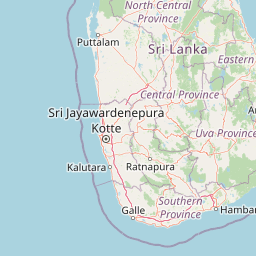
Park location guide

Geography guide, regional context, and park location map for Angammedilla National Park

Angammedilla National Park park geography, regions, and map view in Sri Lanka
Understand where Angammedilla National Park sits in Sri Lanka through a broader geographic reading of the surrounding landscape, nearby location context, and its mapped position within the national park landscape.

How Angammedilla National Park fits into Sri Lanka

Sri Lanka is a tropical island nation in South Asia with a recorded history spanning over 3,000 years. Formerly known as Ceylon, it became independent in 1948 and adopted its current constitutional name in 1972. The country features diverse geography ranging from coastal plains to mountainous highlands and maintains a population exceeding 22 million.

Wider geography shaping Angammedilla National Park in Sri Lanka

Sri Lanka is an island nation in the Indian Ocean, positioned southwest of the Bay of Bengal. It is separated from India by the Gulf of Mannar and Palk Strait to the northwest. The island has a pear-like shape with diverse terrain including coastal plains, central highlands, and river valleys.

Map view of Angammedilla National Park

Use this park location map to pinpoint Angammedilla National Park in Sri Lanka, understand its exact geographic position, and read its mapped placement within the surrounding landscape more clearly.

Pigeon | © OpenStreetMap contributors

Location context for Angammedilla National Park

North Central Province
Park atlas

Explore the regional park geography surrounding Angammedilla National Park, comparing nearby protected landscapes and their unique ecological features.

Explore Nearby National Parks and Protected Areas in the Angammedilla Region
Continue your exploration from Angammedilla National Park to discover other protected areas and national parks within the North Central Province and surrounding regions of Sri Lanka. This geographic view allows for precise comparison of dry evergreen forest ecosystems, watershed protection zones, and wildlife habitats across interconnected landscapes.
National parkNorth Central Province

Minneriya National Park: A Protected National Park in North Central Province

Explore mapped boundaries and regional landscape context.

Minneriya National Park is a designated national park offering unique protected landscape exploration within Sri Lanka's North Central Province. This entry provides structured data crucial for understanding the park's geographic features, its defined boundaries, and its significance as a protected area. Dive into the atlas context that illuminates the natural terrain and regional setting of Minneriya National Park.

Area
88.894 km²
Established
1997
IUCN
II
National parkNorth Central Province

Flood Plains National Park: Sri Lanka's Vital Wetland and Elephant Corridor

Mapping the geography of its unique villus system and Mahaweli River flood plain.

Flood Plains National Park stands as a paramount protected wetland ecosystem in Sri Lanka's North Central Province, critically important as an elephant corridor along the Mahaweli River. The park's landscape is defined by its unique villus system, shallow swampy depressions that support extraordinary biodiversity and serve as vital feeding grounds for Asian elephants and migratory waterfowl. Understanding the mapped park boundaries and its regional geographic context reveals its significance in landscape-level conservation efforts within the Mahaweli basin.

Area
173.5 km²
Established
1984
IUCN
II
National parkNorth Central Province

Horowpathana National Park: Protected Landscape within North Central Province's Dry Zone

Explore its mapped boundaries and vital wildlife habitat.

Horowpathana National Park is a designated national park in Sri Lanka's North Central Province, covering 2,570 hectares of dry zone forest. Established to protect critical habitats for endangered species like the Sri Lankan elephant and leopard, it plays a vital role in regional wildlife conservation and managing human-wildlife conflict. Its landscape is characterized by dry forest ecosystems situated near the Tawalamham Hammillewa reservoir system, presenting a unique environmental context within the broader mapped geography of the island.

Area
2,570 km²
Established
2011
IUCN
II
National parkUva Province

Gal Oya National Park: Protected Landscape and Reservoir Geography in Uva Province

Explore savannah grasslands, elephant populations, and mapped terrain.

Gal Oya National Park presents a unique protected landscape within Uva Province, Sri Lanka. This national park is defined by its broad savannah grasslands, known as thalawa, interspersed with forested hills and the vast Senanayake Samudraya reservoir. Its varied topography, from lowlands to mountain peaks, offers a rich canvas for geographic exploration and understanding protected-area dynamics. The park's consistent visibility of elephant populations across these diverse terrains makes it a key site for wildlife observation within Sri Lanka's atlas of natural heritage.

Area
259 km²
Established
1954
IUCN
II
National parkNorth Western Province

Wilpattu National Park: Sri Lanka's Largest Protected Landscape and Wetland Atlas

Discover the unique willu system and mapped geography of this National Park.

Wilpattu National Park represents a significant protected area within Sri Lanka's North Western Province, recognized for its vast expanse and the distinctive natural sand-rimmed water basins known as willu. This atlas entry provides a deep dive into the park's geographic setting, focusing on its dry zone forest, coastal lowland terrain, and the critical wetland habitats that define its ecological importance. Understand the mapped boundaries and landscape character of Wilpattu National Park, a key site for conservation and natural discovery.

Area
1,316.67 km²
Established
1938
IUCN
II
National parkNorthern Province

Madhu Road National Park: Sri Lanka's Northern Province Dry Zone National Park

Explore protected landscapes and mapped geography.

Madhu Road National Park, situated in Sri Lanka's Northern Province, is a significant protected area defined by its dry zone ecosystems, including forests, grasslands, and wetlands. As one of the island's larger national parks, it offers critical habitat for diverse wildlife and represents an important component of northern Sri Lanka's conservation efforts. This page provides detailed atlas-style insights into the park's geography, mapped boundaries, and its ecological context within the region.

Area
631 km²
Established
2015
IUCN
II
National parkEastern Province

Kumana National Park: Detailed Geographic and Protected Landscape Exploration

Mapped boundaries and regional context for this national park.

Delve into the protected landscape of Kumana National Park, a designated national park situated in Sri Lanka's Eastern Province. This dedicated exploration surface provides detailed geographic information, helping you understand the park's mapped boundaries, surrounding terrain, and its significance within the regional context. It is designed for users seeking a structured understanding of protected areas and their place in the broader atlas.

Area
356.64 km²
Established
1970
IUCN
II
National parkNorthern Province

Adam's Bridge Marine National Park: Protected Coastal Landscape and Geographic Significance

Mapped marine geography and protected island ecosystems.

Adam's Bridge Marine National Park is a protected national park in Sri Lanka's Northern Province, notable for encompassing the legendary Adam's Bridge. This marine protected area safeguards critical shallow-water habitats, including seagrass meadows and sand dunes, which are vital for migratory birds, dugongs, and sea turtles. The park's unique geographic identity as a chain of limestone shoals and islands offers a distinct landscape for atlas-based discovery and understanding of coastal conservation significance.

Area
190 km²
Established
2015
IUCN
II

Common questions about visiting, size, designation, and location context for Angammedilla National Park

Angammedilla National Park FAQs for park facts, access, geography, and protected area context
Find quick answers about Angammedilla National Park, including protected-area facts, park geography, trail and visitor context, and how the park fits into its surrounding country and regional landscape.
MoriAtlas Explorer

Continue Your Protected Areas Search Across the Global Atlas

Deepen your exploration by continuing the structured search for national parks and protected areas worldwide. Utilize the comprehensive filtering capabilities to compare different conservation landscapes and refine your understanding of global park geography. Discover more about the distribution and characteristics of protected natural areas.

Global natural geography