
Mori Atlas logo
National parkAshkelon National Park

Discover the mapped boundaries and distinct geography of an ancient coastal city preserved as a national park.

Ashkelon National Park: A Millennia-Strata Protected Landscape on Israel's Mediterranean Coast

Ashkelon National Park preserves the profound archaeological depth of one of the world's oldest continuously inhabited cities, set along the Mediterranean coast of Israel. This protected area reveals a remarkable stratification of civilizations, from the Bronze Age gate with the earliest known arch to imposing Fatimid walls and Roman-era structures. Its coastal location and the distinct natural terrain shape the context for exploring these extensive historical remains, offering a unique window into millennia of human habitation and landscape evolution.

Archaeological siteAncient ruinsMediterranean coastPhilistine historyRoman archaeologyHistoric walls

Ashkelon National Park

National park

Park overview

Structured park overview, official facts, and landscape profile for Ashkelon National Park

Ashkelon National Park park facts, protected area profile, and essential visitor context
Review the core facts for Ashkelon National Park, including designation, size, terrain, visitor scale, habitats, and operating context in one park-focused overview.

About Ashkelon National Park

Ashkelon National Park serves as a window into the ancient world, preserving the physical remains of a city that played pivotal roles in biblical history, classical antiquity, and medieval crusader politics. The site lies along the Mediterranean shoreline, where the coastal plain meets the historic trade routes that connected Egypt, Mesopotamia, and the broader Mediterranean basin. The park's boundaries encompass the heart of ancient Ascalon, a city mentioned in Egyptian texts, the Hebrew Bible, and classical Greek and Roman sources. The multi-layered archaeology reflects the city's strategic importance as a port and its resilience through numerous conquests and reconstructions. Visitors walk among the foundations, columns, and walls of civilizations that built upon each other's work, creating a palimpsest of human settlement spanning nearly four millennia. The Fatimid walls, though reduced from their original height of 15 meters, still define the park's perimeter and create a tangible connection to the medieval period when Ascalon served as a fortified outpost of the Islamic caliphate.

Quick facts and research context for Ashkelon National Park

Ashkelon National Park protects the ruins of ancient Ascalon, located on the Mediterranean coast in southern Israel. The site contains the world's earliest known arch, dating to approximately 1850 BCE, at a Middle Bronze Age gate. The Fatimid-era walls from the 12th century are among the best-preserved elements, originally measuring 2,200 meters in length. Archaeological work has been conducted at the site since 1815, with major excavations by Lady Hester Stanhope, the British School of Archaeology in Jerusalem, Harvard University, and the Israel Antiquities Authority. The park also incorporates land formerly belonging to the Palestinian village of Al-Jura.

Park context

Deeper park guide and search-rich context for Ashkelon National Park

Ashkelon National Park history, landscape, wildlife, and travel context
Explore Ashkelon National Park through its history, landscape character, ecosystems, wildlife, conservation priorities, cultural context, and seasonal travel timing in a structured park guide built for atlas discovery and search intent.

Why Ashkelon National Park stands out

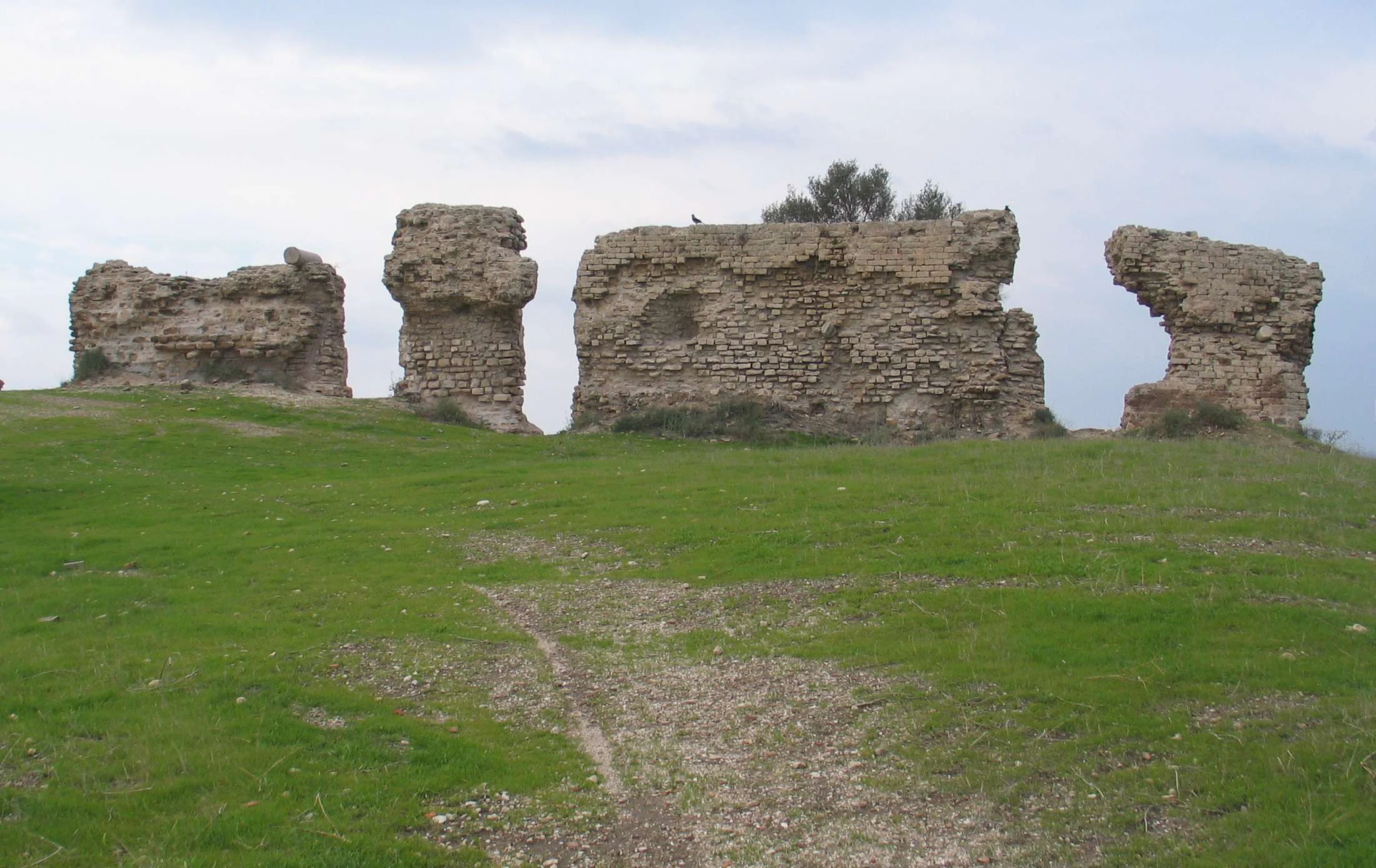
Ashkelon National Park is best known for its extraordinary archaeological depth, preserving remains from multiple millennia of continuous habitation. The Middle Bronze Age gate with the world's oldest known arch represents a landmark in architectural history. The Roman ruins, including a basilica complex with imported marble columns and capitals from Asia Minor, showcase the city's importance during the Herodian period. The discovery of the largest known dog cemetery from the ancient world adds a unique dimension to the site's significance. The Fatimid-era fortifications, though partially ruined, remain visually commanding and provide a clear sense of the city's medieval scale.
Ashkelon National Park history and protected-area timeline

The history of Ashkelon as a protected area begins with the recognition of its extraordinary archaeological value in the modern era. The first modern archaeological excavation occurred in 1815, when Lady Hester Stanhope conducted pioneering work at the site, becoming one of the first women to lead such an expedition in the region. Her work focused on the mosque area and revealed the site's multi-phase history, including its transformation from a pagan temple to a church and then a mosque. The British School of Archaeology in Jerusalem conducted excavations in 1921, focusing on the Roman-era columns and identifying what they determined to be a municipal council hall dating to Herod the Great's reign. The park's establishment as a national park incorporated not only the ancient city but also the land of the Palestinian village Al-Jura, which was depopulated during the 1948 war and subsequently absorbed into the preserve. Harvard University's archaeological program, led by Lawrence Stager beginning in 1985, has conducted the most sustained excavation work, with particular focus since 2007 on the Early Iron Age and Late Bronze Age periods. The Israel Antiquities Authority continues active excavation work, with significant recent discoveries including a Roman basilica complex dating to Herod's reign announced in 2021.

Ashkelon National Park landscape and geographic character

The park occupies a coastal position along the Mediterranean Sea, where the ancient city benefited from both maritime trade access and defensive advantages. The landscape is characterized by the relatively flat terrain of the coastal plain, though centuries of accumulated archaeological material have created an undulating terrain of foundations, walls, and eroded structures. The Fatimid wall, constructed of local limestone, follows a roughly rectangular perimeter, with more substantial remains surviving in the eastern and southern sections. The Mediterranean shoreline provides a western boundary, and the proximity to the sea influenced Ascalon's development as a major port city throughout antiquity. The modern park includes areas of exposed archaeological remains interspersed with sections where excavation has not yet occurred, creating a landscape that alternates between defined ruins and areas of archaeological potential.
Ashkelon National Park ecosystems, habitats, and plant life

As an archaeological preserve rather than a nature reserve, Ashkelon National Park's ecological character is secondary to its historical significance. The coastal Mediterranean setting supports typical vegetation of the Israeli coastal plain, though the heavily disturbed nature of the site due to millennia of construction and excavation has limited natural habitat development. The archaeological importance takes precedence, and management focuses on preservation and interpretation of the structural remains rather than ecological conservation. The park does provide some habitat for coastal bird species and small fauna typical of the region, but this is not a primary feature of the preserve.

Ashkelon National Park wildlife and species highlights

Wildlife at Ashkelon National Park is limited by the site's intensive archaeological character and high visitor traffic. The coastal location attracts some bird species associated with Mediterranean shoreline habitats, particularly during migration seasons. Small mammals and reptiles typical of the Israeli coastal plain may inhabit the less-disturbed areas of the park periphery. The most famous animal-related discovery at the site is not wildlife in the living sense but rather the archaeological remains of the largest known dog cemetery from the ancient world, dating to the Roman period. This unusual burial practice, with hundreds of dogs interred, reflects specific cultural practices of the city's inhabitants rather than contemporary wildlife.

Ashkelon National Park conservation status and protection priorities

Ashkelon National Park represents an important conservation priority as a repository of archaeological heritage spanning multiple millennia. The site's significance has been recognized through its designation as a national park and through sustained archaeological excavation programs. Conservation challenges include the preservation of exposed structures, particularly the Roman and Byzantine remains that are vulnerable to weathering and coastal salt exposure. The Fatimid walls require ongoing stabilization work to prevent further deterioration. The Israel Antiquities Authority's continued excavation work, combined with conservation measures, aims to balance public access with preservation of the fragile remains. The site is also protected under Israeli heritage preservation laws.

Ashkelon National Park cultural meaning and human context

Ashkelon occupies a profound place in the cultural and religious history of the eastern Mediterranean. The city appears in ancient Egyptian texts as early as the 19th century BCE and is mentioned numerous times in the Hebrew Bible as a major Philistine city. The biblical narrative associates Ashkelon with Samson and other key figures, embedding the site deeply in Jewish cultural memory. In classical antiquity, Ascalon functioned as a significant Hellenistic and Roman city, with the discovered basilica and imported marble columns demonstrating its prosperity during the Roman period. The medieval period saw the city become a contested stronghold between Muslim powers and crusader forces. The park's incorporation of Al-Jura adds a more recent layer to the site's cultural complexity, reflecting the modern history of the region.

Top sights and standout views in Ashkelon National Park

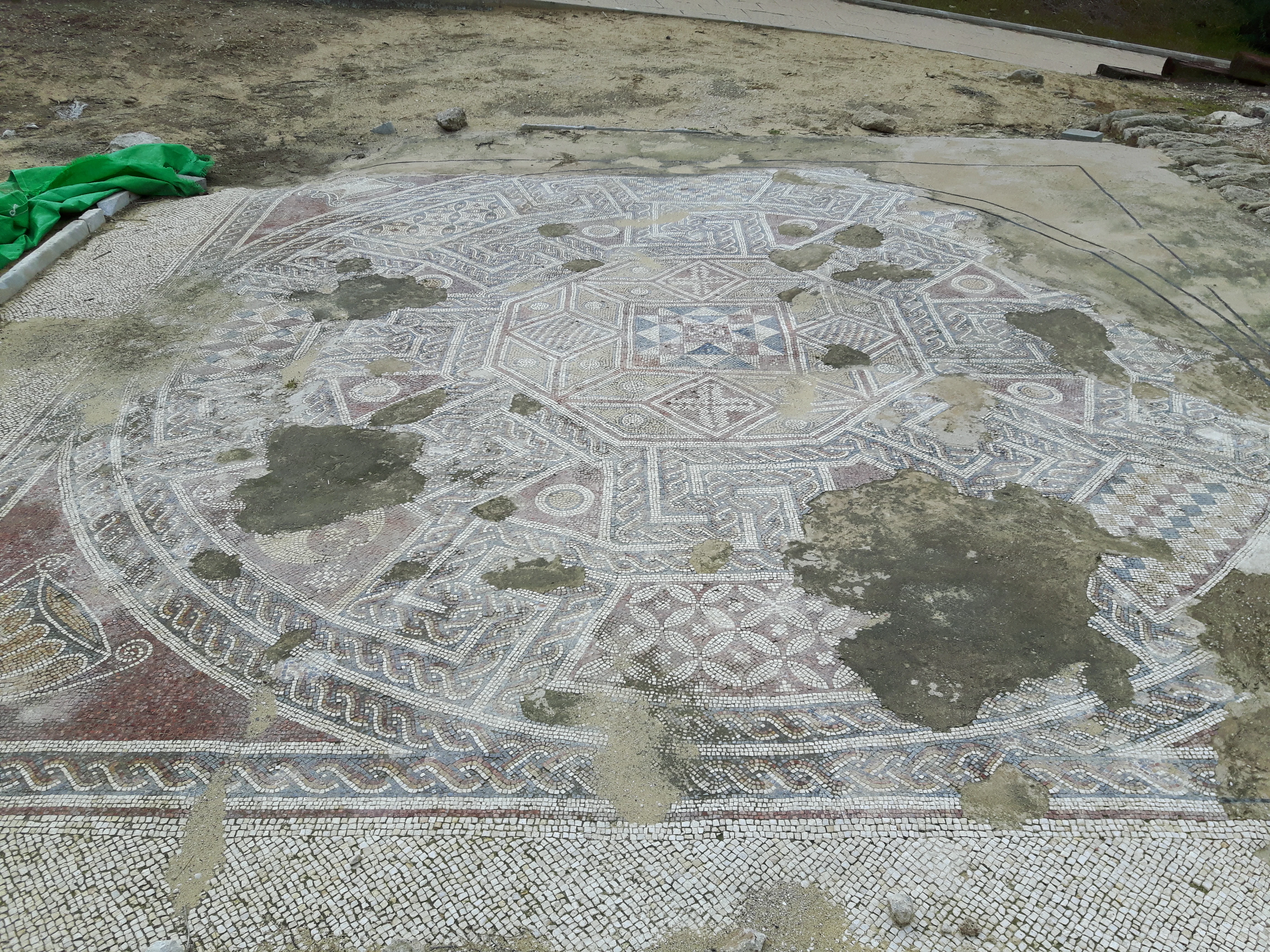
The Middle Bronze Age gate with the world's earliest known arch stands as the park's most architecturally significant feature, representing a milestone in the development of vaulted construction. The Fatimid walls from the 12th century provide the most visually imposing structural remains, with their substantial scale still evident despite centuries of deterioration. The Roman basilica complex, with its imported marble columns and capitals, offers insight into the city's Roman-period grandeur. The archaeological excavation areas, particularly Grid 38 where continuous occupation from the Early Bronze Age through the Islamic period has been documented, provide a unique educational resource for understanding urban development patterns. The dog cemetery, while macabre by modern standards, represents a unique archaeological phenomenon with no known parallel in the ancient world.

Best time to visit Ashkelon National Park

The optimal time to visit Ashkelon National Park is during the cooler months from October through April, when temperatures are more comfortable for walking the extensive site. Summer months can bring intense heat along the Mediterranean coast, making prolonged exploration uncomfortable. The winter season may see occasional rain, but this is generally not severe enough to significantly impact visits. Morning visits are recommended to avoid the strongest afternoon sun, particularly in the warmer months. The park can be enjoyed in any season, but the cooler periods allow for more extended exploration of the outdoor archaeological remains.

Park location guide

Geography guide, regional context, and park location map for Ashkelon National Park

Ashkelon National Park park geography, regions, and map view in Israel
Understand where Ashkelon National Park sits in Israel through a broader geographic reading of the surrounding landscape, nearby location context, and its mapped position within the national park landscape.

How Ashkelon National Park fits into Israel

Israel is a parliamentary republic in the Southern Levant, established in 1948 as a Jewish homeland. It borders Lebanon, Syria, Jordan, and Egypt, with Mediterranean coastline and access to the Red Sea. Jerusalem is the capital, though its status is contested, while Tel Aviv is the largest urban area. The country has a high-income economy with strong technology and innovation sectors.

Wider geography shaping Ashkelon National Park in Israel

Israel occupies the Southern Levant region of West Asia. It is bordered by Lebanon to the north, Syria to the northeast, Jordan to the east, and Egypt to the southwest. The western coast lies on the Mediterranean Sea, while the southern tip reaches the Red Sea. The eastern border includes the Dead Sea, Earth's lowest point. The country occupies the West Bank, Gaza Strip, and Golan Heights.

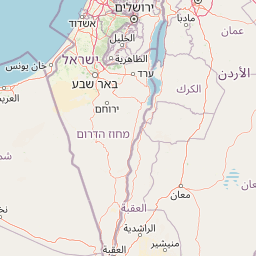
Map view of Ashkelon National Park

Use this park location map to pinpoint Ashkelon National Park in Israel, understand its exact geographic position, and read its mapped placement within the surrounding landscape more clearly.

Pigeon | © OpenStreetMap contributors
Park atlas

Trace the regional protected landscapes surrounding Ashkelon National Park, mapping archaeological and natural reserves.

Explore Surrounding Protected Areas and National Parks Near Ashkelon National Park
Continue exploring beyond Ashkelon National Park by browsing other national parks and protected areas within the wider regional geography. Compare diverse protected landscapes, such as archaeological sites, coastal reserves, and natural areas, to understand broader conservation patterns.
National parkIsrael

Ein Avdat National Park: A Spectular Desert Oasis and Protected Landscape in Israel

Explore its unique springs, waterfalls, and ancient Nabatean and Byzantine history.

Ein Avdat National Park showcases a rare desert oasis environment, a starkly beautiful protected landscape where natural springs emerge from the Negev's arid terrain. This park is celebrated for its dramatic waterfalls, deep pools, and the preserved remnants of ancient human habitation, including a remarkable Byzantine cave monastery carved directly into the canyon walls. Its geography, shaped by the Nahal Zin wadi, provides a vivid study in desert ecosystems and their capacity for supporting life and history over millennia, making it a key site for understanding landscape context in Israel.

Area
4.8 km²
IUCN
V
Nature reserveJordan

Wadi Mujib Nature Reserve: Explore Jordan's Dramatic Canyon Protected Landscape

Discover mapped boundaries and arid biodiversity within this unique rift valley gorge.

Wadi Mujib Nature Reserve represents a significant protected landscape in Jordan, celebrated for its deep desert canyon and dramatic slot canyon terrain. Situated in the Dead Sea region, this reserve protects a remarkable range of geography, from its lowest points near the Dead Sea to surrounding mountain terrain. Its status as a UNESCO biosphere reserve highlights its importance for arid biodiversity and its role as a migratory bird flyway, offering a distinct atlas-level discovery of Jordan's natural heritage.

Area
212 km²
Established
1987
IUCN
IV
Relief
Mountain
Nature reserveAjloun Governorate

Ajloun Forest Reserve: A Protected Mediterranean Woodland in Jordan's Ajloun Governorate

Explore the unique protected landscape and mapped terrain of Ajloun Forest Reserve.

Ajloun Forest Reserve is a nature reserve located in Jordan's Ajloun Governorate, distinguished by its rare Mediterranean woodland ecosystem. This protected area provides crucial habitat and showcases a landscape of rolling hills and valleys, offering a stark contrast to the country's predominantly arid regions. Its designation as a UNESCO biosphere reserve underscores its importance for conservation, including efforts in roe deer restoration and the preservation of the black iris, Jordan's national flower. Discover the geographic context and protected nature of this significant Jordanian landscape.

Area
13 km²
Established
1988
IUCN
IV
National parkIsrael

Bar'am National Park: Preserving Ancient Jewish Heritage and Galilee Landscape

Explore significant Talmudic-era synagogues and borderland geography.

Bar'am National Park is an important archaeological site in Israel's upper Galilee, renowned for its remarkably preserved ancient Jewish synagogues dating to the Talmudic period. These structures represent significant tangible evidence of Jewish religious life and architectural styles from late antiquity. Situated amidst the rolling hills of the Galilee countryside, the park's landscape offers a unique combination of historical reflection and scenic views towards the Lebanese border, making it a key destination for understanding regional heritage and geography.

Relief
Upland
Access
Moderate access
Scope
Terrestrial
Water
No major water
Biosphere reserveLebanon

Aammiq Wetland Biosphere Reserve: Mapping Lebanon's Crucial Freshwater Protected Landscape

Discover its geography, mapped terrain, and role as a biodiversity hotspot.

Aammiq Wetland is Lebanon's most significant freshwater protected area, recognized as a UNESCO Biosphere Reserve and Ramsar site. Its unique geography, characterized by extensive reedbeds and open pools fed by mountain snowmelt, makes it a vital stopover for countless migratory bird species traversing the Middle East. This protected landscape offers rich opportunities for atlas-style exploration, revealing the ecological importance of its mapped terrain and its role as a critical biodiversity hotspot.

Area
2.53 km²
Established
1999
IUCN
IV
Nature reserveNorth Lebanon Governorate

Tannourine Cedar Forest Nature Reserve: A Premier Protected Cedar Landscape in North Lebanon

Mapped geography of Lebanon's largest cedar forest.

Delve into the Tannourine Cedar Forest Nature Reserve, a protected area critically important for its extensive cedar groves within the North Lebanon Governorate. This nature reserve encompasses a complex mountain geography characterized by deep ravines, imposing cliffs, and secluded caves, providing a dramatic backdrop for its dominant cedar population. Users can explore the mapped boundaries and understand the regional landscape context of this ecologically significant coniferous forest, essential for Lebanon's natural atlas.

Area
1.955 km²
Established
1999
IUCN
IV
Watercolor illustration showing mountains, a reservoir, and green landscape
National parkOsmaniye Province

Karatepe-Aslantaş National Park: A National Park Bridging Ancient History and Natural Geography

Discover its protected landscape and mapped terrain in Osmaniye Province.

Karatepe-Aslantaş National Park stands as Turkey's second national park and its inaugural open-air museum, situated in Osmaniye Province. This protected area is renowned for its significant Neo-Hittite archaeological remnants, including iconic lion statues and the vital Karatepe Bilingual inscription. The park's landscape is characterized by slightly rugged terrain, woodlands, and maquis scrubland, all set against the backdrop of the Aslantaş Dam reservoir, providing a unique geographic context for exploring ancient heritage and natural ecosystems.

Area
41.45 km²
Established
1958
IUCN
II
Relief
Lowland
Watercolor illustration showing a mountainous landscape with a lake and greenery
National parkAntalya Province

Altınbeşik Cave National Park: A Karst Landscape with Turkey's Largest Subterranean Lake

Protected lands and mapped geological formations in Antalya Province.

Altınbeşik Cave National Park represents a significant protected karst landscape within Antalya Province, Turkey. The park's primary feature is the renowned Altınbeşik Cave, home to Turkey's largest subterranean lake and exceptional travertine formations. Explore the mapped geography of this unique national park, understanding its role as a critical discharge point for one of the world's longest karst aquifer systems.

Area
11.47 km²
Established
1994
IUCN
II
Relief
Mixed relief

Common questions about visiting, size, designation, and location context for Ashkelon National Park

Ashkelon National Park FAQs for park facts, access, geography, and protected area context
Find quick answers about Ashkelon National Park, including protected-area facts, park geography, trail and visitor context, and how the park fits into its surrounding country and regional landscape.
MoriAtlas Explorer

Continue Your Protected Areas Search Across the Global Atlas

Deepen your exploration by continuing the structured search for national parks and protected areas worldwide. Utilize the comprehensive filtering capabilities to compare different conservation landscapes and refine your understanding of global park geography. Discover more about the distribution and characteristics of protected natural areas.

Global natural geography