
Mori Atlas logo
National parkEin Avdat

Trace the mapped geography of springs, waterfalls, and ancient sites within the Negev Desert.

Ein Avdat National Park: Israel's Dramatic Desert Oasis and Protected Landscape

(Ein Avdat National Park)

Ein Avdat National Park in Israel's Negev Desert protects a spectacular natural oasis, renowned for its fresh springs, cascading waterfalls, and deep pools that provide a striking contrast to the arid surroundings. This unique protected landscape, carved by the Nahal Zin wadi, preserves not only geological wonders but also thousands of years of human history, including Nabatean settlements and Byzantine monastic caves, offering unparalleled insight into desert adaptation and landscape preservation.

desert canyonnatural springswaterfallNegev desertNabatean heritageByzantine archaeology

Ein Avdat

National park

Park overview

Structured park overview, official facts, and landscape profile for Ein Avdat

Ein Avdat park facts, protected area profile, and essential visitor context
Review the core facts for Ein Avdat, including designation, size, terrain, visitor scale, habitats, and operating context in one park-focused overview.

About Ein Avdat

Ein Avdat represents one of the most striking natural and cultural landmarks in Israel's desert landscape, where the stark beauty of the Negev meets a rich tapestry of human history. The canyon was formed by the erosive forces of Nahal Zin, the longest wadi in the Negev, which begins at the northwestern edge of Makhtesh Ramon and flows across the desert before turning sharply eastward through the park. The springs that define Ein Avdat emerge from geological layers deep within the canyon, creating a lush riparian environment that stands in dramatic contrast to the surrounding barren terrain. This ecological anomaly has drawn human communities for tens of thousands of years, as evidenced by flint artifacts from the Mousterian culture dating back 80,000 to 90,000 years, as well as Bronze Age settlement remains. The park's cultural significance reached its peak during the Nabatean period when Avdat became a station along the ancient Incense Route connecting Egypt to India, and later during Byzantine times when monks established a monastic community in the canyon caves. Today, the Israel Nature and Parks Authority manages the 480-hectare reserve, which receives between 120 and 500 daily visitors who come to experience its unique combination of natural beauty, historical depth, and desert hiking opportunities.

Quick facts and research context for Ein Avdat

Ein Avdat National Park encompasses roughly 480 hectares of desert canyon terrain in the Negev region of Israel. The canyon features multiple springs including Ein Ma'arif, the main Ein Avdat spring with its 15-meter waterfall emptying into an 8-meter deep pool, and Ein Mor near the northern entrance. The area sits within Nahal Zin, the longest wadi system in the Negev, which originates at Makhtesh Ramon and runs approximately 120 kilometers. The park preserves evidence of continuous human presence from the Paleolithic period through the Nabatean and Byzantine eras, making it one of Israel's most historically layered natural sites.

Park context

Deeper park guide and search-rich context for Ein Avdat

Ein Avdat history, landscape, wildlife, and travel context
Explore Ein Avdat through its history, landscape character, ecosystems, wildlife, conservation priorities, cultural context, and seasonal travel timing in a structured park guide built for atlas discovery and search intent.

Why Ein Avdat stands out

Ein Avdat is best known for its spectacular desert springs and waterfalls that create an unexpected oasis environment in one of Israel's harshest landscapes. The main waterfall reaches 15 meters in height, descending into an 8-meter deep pool divided by a small artificial dam. The park is equally renowned for its well-preserved Byzantine-era cave monastery, where monks carved closets, shelves, benches, stairs, and water systems into the canyon walls during the 3rd to 6th centuries. The canyon also serves as a critical habitat for griffon vultures and Egyptian vultures that nest on the cliff faces, making it an important raptor conservation area within the desert ecosystem.
Ein Avdat history and protected-area timeline

The human history of Ein Avdat spans an extraordinary breadth of time, beginning with prehistoric inhabitants who left behind flint artifacts, Mousterian stone tools, and animal remains including ostrich egg shells and onager bones dating to approximately 200,000 years ago. During the Hellenistic period, the site became integrated into the Nabatean Incense Route, a major ancient trading corridor linking Egypt through the Arabian Peninsula to India. Avdat evolved from a waypoint station into a thriving city with public buildings and agricultural enterprises during the Roman era. The Byzantine period saw the canyon become home to a monastic community of Christian monks who carved extensive cave dwellings into the canyon walls, installing closets, shelves, benches, and even water channels. These monks also decorated cave walls with crosses and prayers, and constructed what is now recognized as one of the earliest and best-preserved Byzantine churches predating Emperor Constantine's recognition of Christianity. Following the Muslim conquest of Palestine, the region was abandoned for centuries. The modern era began in 1952 when Kibbutz Sde Boker was established, followed by the construction of Highway 40 to Eilat and the creation of hiking trails that made the canyon accessible to the public. The site was designated as a National Park of Israel and is now administered by the Israel Nature and Parks Authority.

Ein Avdat landscape and geographic character

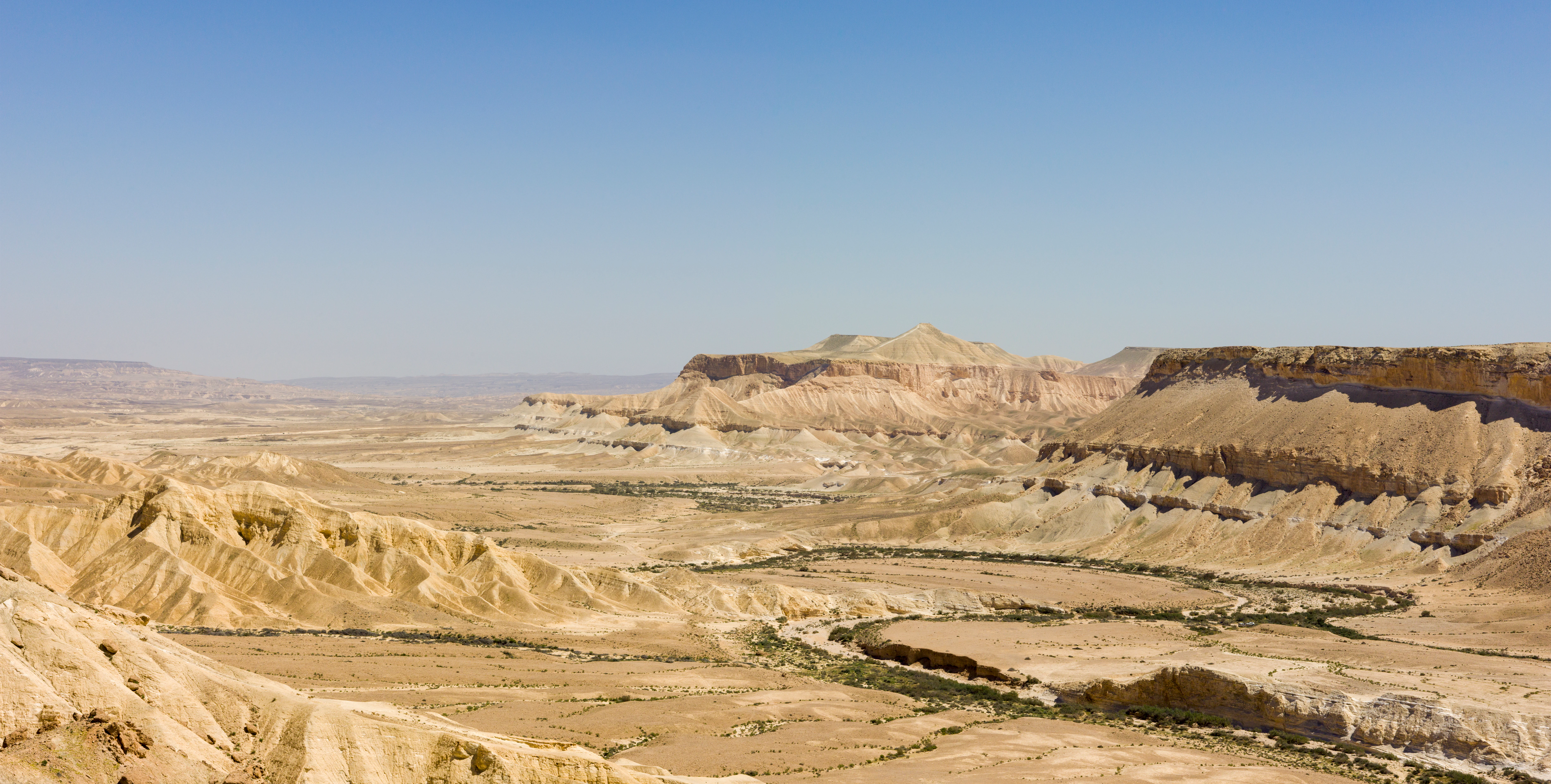
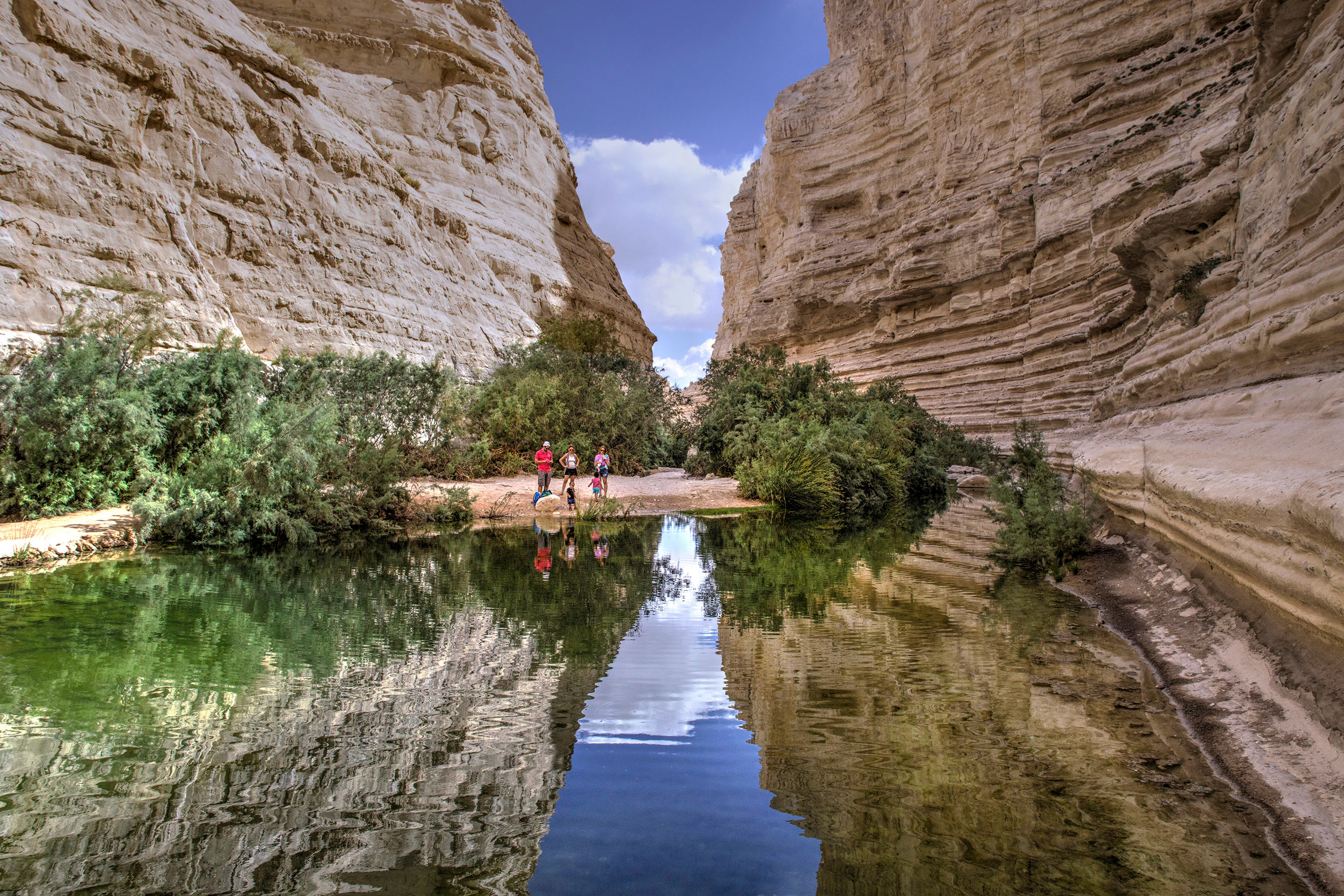
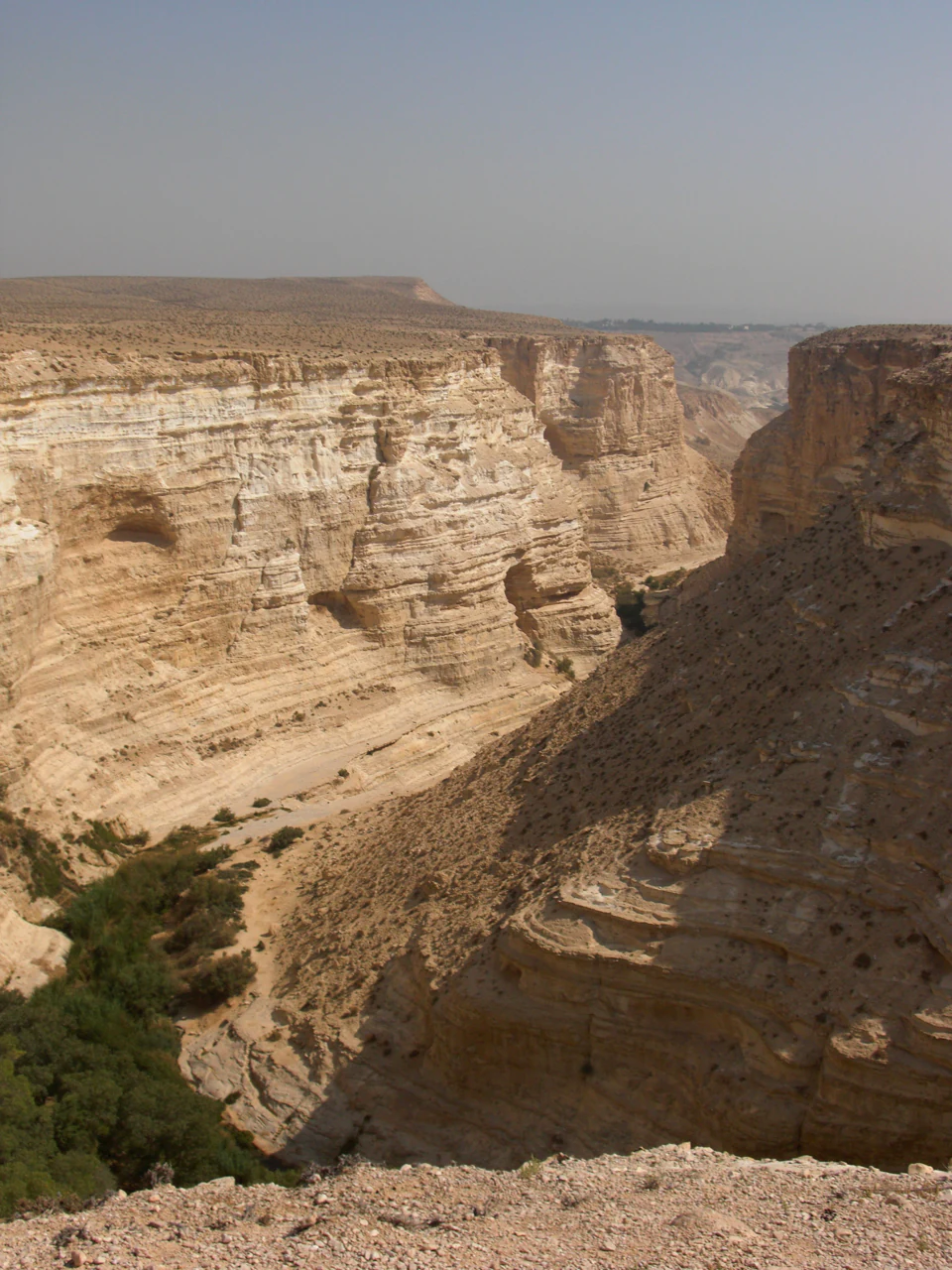
The landscape of Ein Avdat is defined by the dramatic contrast between harsh desert canyon terrain and a verdant spring-fed oasis. The canyon walls rise steeply along the Nahal Zin wadi, composed of typical Negev sandstone and limestone formations that have been sculpted by water erosion into vertical faces, shelves, and hidden caves. At the southern end of the canyon, multiple springs emerge from the rock layers, creating a series of waterfalls that descend into deep natural pools. The main spring features a 15-meter waterfall that feeds an 8-meter deep pool, while further north, Ein Mor spring produces water with a slightly different character. The surrounding desert is characteristic of the central Negev, characterized by sparse vegetation, extreme temperature variations, and an absence of permanent surface water. However, the canyon micro-habitat supports significantly more diverse flora where water is present, with poplar trees, tamarisks, and various wetland plants growing along the watercourses. The canyon provides dramatic vertical relief and varied topography, from the narrow gorge sections to wider areas where the springs create broader pool systems.
Ein Avdat ecosystems, habitats, and plant life

The ecological character of Ein Avdat centers on its unique riparian oasis environment within an otherwise arid desert ecosystem. Around the springs and water channels, Euphrates poplar trees create canopy cover, while Atriplex (saltbush) dominates the riverbanks, demonstrating the plants' remarkable tolerance for salinity. Tamarisks, salt trees, common reeds, lesser bulrush, and sea rush form the core wetland vegetation community. On the moist canyon walls, maidenhair ferns and lichen cling to shaded surfaces, while various algae species grow in the slow-moving water. The dryer areas of the canyon support different plant communities including bushy bean caper and saltworth. A single large Mt Atlas mastic (pistacia atlantica) tree grows near the park entrance, serving as a notable landmark. The aquatic environment supports populations of European green toads, Levant freshwater crabs, and insect larvae including Culiseta mosquitoes and desert skimmer dragonflies. This combination of aquatic and desert habitats creates an ecological island of biodiversity in the heart of the Negev.
Ein Avdat wildlife and species highlights

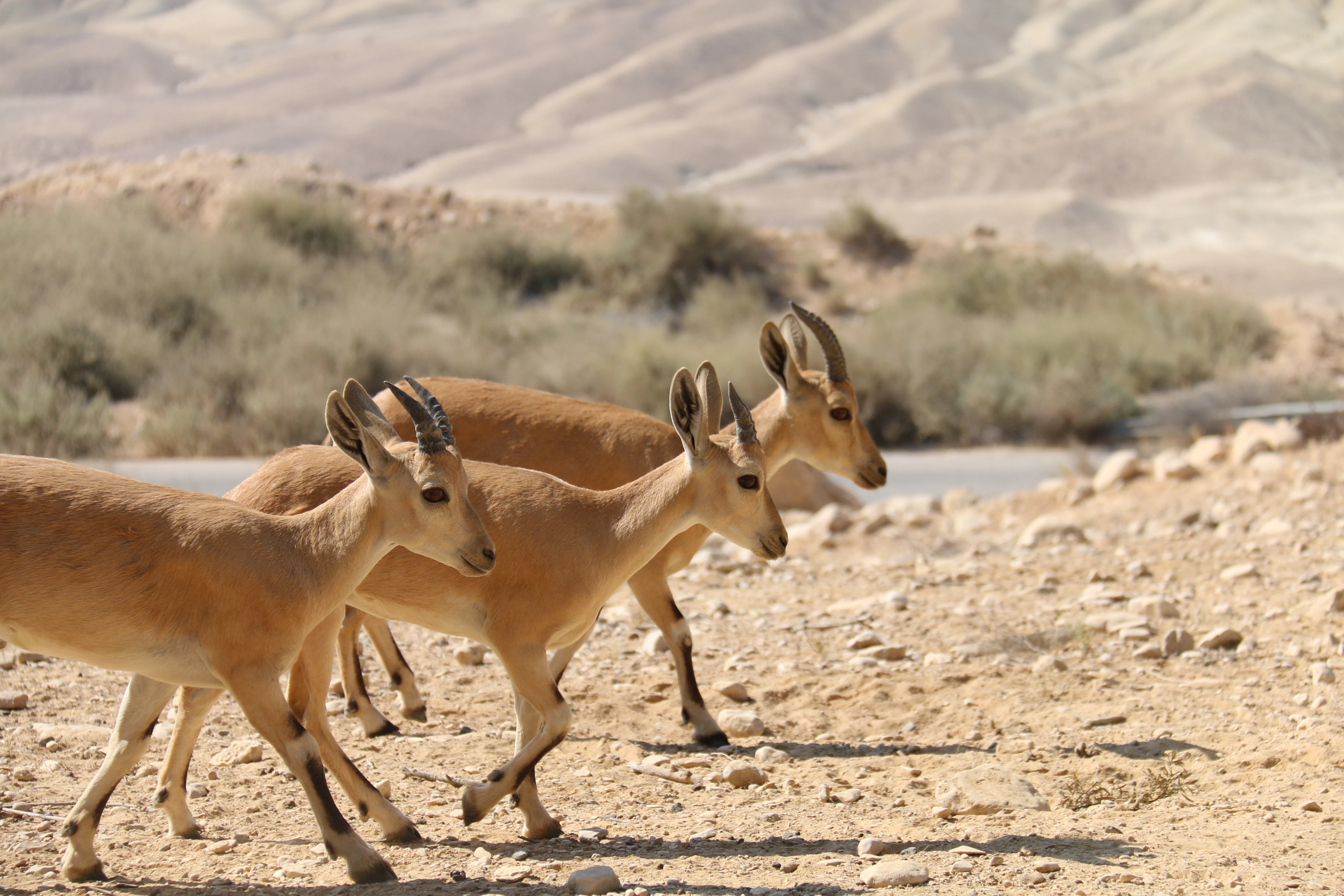
Ein Avdat supports a diverse assembly of wildlife adapted to both desert and riparian environments. Mammals include Nubian ibex, which are commonly seen navigating the canyon cliffs, as well as fat sand rats, golden jackals, red foxes, Arabian wolves, and striped hyenas. Several bat species, including Kuhl's pipistrelle, roost in the canyon crevices. The canyon holds particular significance for birds of prey, serving as an important protected nesting area for griffon vultures and Egyptian vultures that nest on the cliff faces. Other notable bird species include Bonelli's eagles, sand partridge, Arabian babblers, rock martin, Tristram's starling, and rock doves. The permanent water sources attract additional birdlife and support aquatic fauna including European green toads and freshwater crabs. This combination of cliff-dwelling raptors, desert mammals, and water-dependent species creates a diverse ecological community that depends on the unique microhabitat created by the desert springs.
Ein Avdat conservation status and protection priorities

Ein Avdat holds significant conservation value as one of the few permanent desert oasis ecosystems in the Negev region. The springs and their associated riparian habitats represent a rare and fragile environment in an otherwise water-scarce landscape, supporting species assemblages found nowhere else in the Israeli desert. The canyon serves as a critical breeding and nesting site for griffon vultures and Egyptian vultures, both species of conservation concern in the region, making the area important for raptors protection. The park's designation as a National Park of Israel and its administration by the Israel Nature and Parks Authority provide formal protection for both the natural ecosystem and the archaeological heritage within its boundaries. The site's inclusion in the broader Avdat UNESCO World Heritage recognition reflects its international significance as a cultural landscape. However, the park faces inherent challenges related to water scarcity, flash flood events, and visitor pressure, requiring careful management to maintain the ecological balance between allowing access and preserving the sensitive spring ecosystem.

Ein Avdat cultural meaning and human context

The cultural significance of Ein Avdat derives from its exceptional layering of human occupation spanning from prehistoric times through the Nabatean, Roman, Byzantine, and modern periods. The canyon was a significant station along the ancient Incense Route, with Avdat (formerly Eboda) named after the Nabataean King Obodas I, traditionally buried at the nearby city site. The Byzantine monastic presence is particularly remarkable, as monks carved extensive cave complexes into the canyon walls, creating living spaces, storage areas, and religious spaces that remain partially intact today. The Byzantine church at Ein Avdat represents one of the earliest Christian worship sites in the region, predating Constantine's legalization of Christianity. The site embodies the intersection of trade, religion, and settlement that characterized the Negev's historical role as a crossroads between Arabia, Egypt, and the Mediterranean world. The name itself reflects this heritage: 'Ein' means spring in both Hebrew and Arabic, while 'Avdat' derives from the nearby city named after the Nabataean king.

Top sights and standout views in Ein Avdat

Ein Avdat offers visitors a rare combination of natural wonder and historical depth in an unexpected desert setting. The main waterfall and deep pool at the southern springs represent the park's most dramatic natural feature, where water cascades 15 meters into a refreshing pool surrounded by verdant vegetation. The Byzantine cave monastery provides a tangible connection to early Christian monastic life in the desert, with its carved chambers, crosses, and remarkably preserved church. Hiking the canyon trail allows exploration of multiple springs including Ein Ma'arif and Ein Mor, each with distinct character. The opportunity to observe Nubian ibex navigating cliff walls and griffon vultures soaring on thermal currents adds wildlife viewing to the experience. The park's position within the larger Avdat heritage site, recognized by UNESCO, connects it to a broader network of ancient Nabatean and Byzantine settlements in the Negev.

Best time to visit Ein Avdat

The best time to visit Ein Avdat depends on balancing comfortable hiking conditions with the park's seasonal water flow characteristics. Winter months (December through February) bring cooler temperatures that make hiking more pleasant, with January temperatures sometimes dropping to -3.6°C, but this is also the wettest season when flash floods can occur and some trails may be temporarily closed. Summer months (June through August) feature extreme heat with temperatures exceeding 40°C, making midday hiking dangerous and reducing the appeal of the trails despite the full water flow from springs. Spring and autumn offer the most balanced conditions, with moderate temperatures and comfortable hiking weather, though spring may bring the added interest of occasional water flow from winter precipitation. The high humidity near the springs, relative to the surrounding desert, creates a slightly more temperate microclimate. Visitors should check current conditions and potentially avoid visiting during or immediately after heavy rain events given the flash flood risk characteristic of desert wadis.
Park location guide

Geography guide, regional context, and park location map for Ein Avdat

Ein Avdat park geography, regions, and map view in Israel
Understand where Ein Avdat sits in Israel through a broader geographic reading of the surrounding landscape, nearby location context, and its mapped position within the national park landscape.

How Ein Avdat fits into Israel

Israel is a parliamentary republic in the Southern Levant, established in 1948 as a Jewish homeland. It borders Lebanon, Syria, Jordan, and Egypt, with Mediterranean coastline and access to the Red Sea. Jerusalem is the capital, though its status is contested, while Tel Aviv is the largest urban area. The country has a high-income economy with strong technology and innovation sectors.

Wider geography shaping Ein Avdat in Israel

Israel occupies the Southern Levant region of West Asia. It is bordered by Lebanon to the north, Syria to the northeast, Jordan to the east, and Egypt to the southwest. The western coast lies on the Mediterranean Sea, while the southern tip reaches the Red Sea. The eastern border includes the Dead Sea, Earth's lowest point. The country occupies the West Bank, Gaza Strip, and Golan Heights.

Map view of Ein Avdat

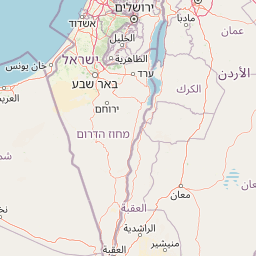
Use this park location map to pinpoint Ein Avdat in Israel, understand its exact geographic position, and read its mapped placement within the surrounding landscape more clearly.

Pigeon | © OpenStreetMap contributors

Location context for Ein Avdat

Negev
Park atlas

Explore adjacent desert canyons, unique oases, and historical protected areas across the wider Negev region, enabling deeper geographic comparison.

Discover More Protected Areas and National Parks Near Ein Avdat in Israel's Negev Desert
After exploring Ein Avdat's unique desert oasis and Byzantine heritage, browse other protected areas, national parks, and ecological reserves situated within the diverse landscapes of Israel's Negev Desert. Compare distinct desert canyons, ancient archaeological sites, and varied conservation efforts to trace the region's natural and historical protected-area geography.
National parkIsrael

Ashkelon National Park: Ancient Coastal Protected Landscape and Archaeological Atlas

Explore mapped ruins, Fatimid walls, and Mediterranean coastal geography.

Ashkelon National Park in Israel offers a unique dive into ancient urban development, preserving layers of history from multiple civilizations along the Mediterranean coast. This protected area features landmark archaeological discoveries, including the Middle Bronze Age gate and extensive Roman ruins, all situated within a distinct coastal landscape. Understanding its mapped boundaries and the progression of its terrain provides critical context for appreciating this significant heritage site's geographic and historical importance.

IUCN
V
Nature reserveJordan

Wadi Mujib Nature Reserve: Explore Jordan's Dramatic Canyon Protected Landscape

Discover mapped boundaries and arid biodiversity within this unique rift valley gorge.

Wadi Mujib Nature Reserve represents a significant protected landscape in Jordan, celebrated for its deep desert canyon and dramatic slot canyon terrain. Situated in the Dead Sea region, this reserve protects a remarkable range of geography, from its lowest points near the Dead Sea to surrounding mountain terrain. Its status as a UNESCO biosphere reserve highlights its importance for arid biodiversity and its role as a migratory bird flyway, offering a distinct atlas-level discovery of Jordan's natural heritage.

Area
212 km²
Established
1987
IUCN
IV
Relief
Mountain
Nature reserveAjloun Governorate

Ajloun Forest Reserve: A Protected Mediterranean Woodland in Jordan's Ajloun Governorate

Explore the unique protected landscape and mapped terrain of Ajloun Forest Reserve.

Ajloun Forest Reserve is a nature reserve located in Jordan's Ajloun Governorate, distinguished by its rare Mediterranean woodland ecosystem. This protected area provides crucial habitat and showcases a landscape of rolling hills and valleys, offering a stark contrast to the country's predominantly arid regions. Its designation as a UNESCO biosphere reserve underscores its importance for conservation, including efforts in roe deer restoration and the preservation of the black iris, Jordan's national flower. Discover the geographic context and protected nature of this significant Jordanian landscape.

Area
13 km²
Established
1988
IUCN
IV
National parkIsrael

Bar'am National Park: Preserving Ancient Jewish Heritage and Galilee Landscape

Explore significant Talmudic-era synagogues and borderland geography.

Bar'am National Park is an important archaeological site in Israel's upper Galilee, renowned for its remarkably preserved ancient Jewish synagogues dating to the Talmudic period. These structures represent significant tangible evidence of Jewish religious life and architectural styles from late antiquity. Situated amidst the rolling hills of the Galilee countryside, the park's landscape offers a unique combination of historical reflection and scenic views towards the Lebanese border, making it a key destination for understanding regional heritage and geography.

Relief
Upland
Access
Moderate access
Scope
Terrestrial
Water
No major water
Biosphere reserveLebanon

Aammiq Wetland Biosphere Reserve: Mapping Lebanon's Crucial Freshwater Protected Landscape

Discover its geography, mapped terrain, and role as a biodiversity hotspot.

Aammiq Wetland is Lebanon's most significant freshwater protected area, recognized as a UNESCO Biosphere Reserve and Ramsar site. Its unique geography, characterized by extensive reedbeds and open pools fed by mountain snowmelt, makes it a vital stopover for countless migratory bird species traversing the Middle East. This protected landscape offers rich opportunities for atlas-style exploration, revealing the ecological importance of its mapped terrain and its role as a critical biodiversity hotspot.

Area
2.53 km²
Established
1999
IUCN
IV
Nature reserveNorth Lebanon Governorate

Tannourine Cedar Forest Nature Reserve: A Premier Protected Cedar Landscape in North Lebanon

Mapped geography of Lebanon's largest cedar forest.

Delve into the Tannourine Cedar Forest Nature Reserve, a protected area critically important for its extensive cedar groves within the North Lebanon Governorate. This nature reserve encompasses a complex mountain geography characterized by deep ravines, imposing cliffs, and secluded caves, providing a dramatic backdrop for its dominant cedar population. Users can explore the mapped boundaries and understand the regional landscape context of this ecologically significant coniferous forest, essential for Lebanon's natural atlas.

Area
1.955 km²
Established
1999
IUCN
IV
Watercolor illustration showing mountains, a reservoir, and green landscape
National parkOsmaniye Province

Karatepe-Aslantaş National Park: A National Park Bridging Ancient History and Natural Geography

Discover its protected landscape and mapped terrain in Osmaniye Province.

Karatepe-Aslantaş National Park stands as Turkey's second national park and its inaugural open-air museum, situated in Osmaniye Province. This protected area is renowned for its significant Neo-Hittite archaeological remnants, including iconic lion statues and the vital Karatepe Bilingual inscription. The park's landscape is characterized by slightly rugged terrain, woodlands, and maquis scrubland, all set against the backdrop of the Aslantaş Dam reservoir, providing a unique geographic context for exploring ancient heritage and natural ecosystems.

Area
41.45 km²
Established
1958
IUCN
II
Relief
Lowland
Watercolor illustration of a coastal landscape with mountains, water lilies, reeds, and a body of water under a pale sky
National parkAntalya Province

Beydağları Coastal National Park: Protected Landscape and Geographic Atlas

Explore mapped boundaries and natural terrain in Antalya Province.

Beydağları Coastal National Park is a significant protected national park located along the Mediterranean coast of Antalya Province, Turkey. This page provides an atlas-focused view of the park, detailing its geographic scope, the interplay of mountain and coastal landscapes, and its importance as a protected area. Users can delve into the mapped features and regional context that define this remarkable natural and historical landscape.

Area
344.25 km²
Established
1972
IUCN
II
Relief
Mountain

Common questions about visiting, size, designation, and location context for Ein Avdat

Ein Avdat FAQs for park facts, access, geography, and protected area context
Find quick answers about Ein Avdat, including protected-area facts, park geography, trail and visitor context, and how the park fits into its surrounding country and regional landscape.
MoriAtlas Explorer

Continue Your Protected Areas Search Across the Global Atlas

Deepen your exploration by continuing the structured search for national parks and protected areas worldwide. Utilize the comprehensive filtering capabilities to compare different conservation landscapes and refine your understanding of global park geography. Discover more about the distribution and characteristics of protected natural areas.

Global natural geography