Mori Atlas logo
National parkBatéké Plateau National Park

Discover the distinctive forest-savanna mosaic and regional geography of this Central African national park.

Batéké Plateau National Park: A Mapped Protected Landscape in Haut-Ogooué Province

(Parc National des Plateaux Batéké)

Batéké Plateau National Park encompasses over 2,000 square kilometers of unique savanna ecosystems and forested corridors within Gabon's Haut-Ogooué Province. This protected landscape offers a rare glimpse into the intermingling of grasslands and woodlands characteristic of Central Africa, distinct from dense rainforests. Explore its mapped boundaries and understand its significance as a testament to conservation efforts in preserving Central African natural heritage.

savanna ecosystemCentral Africaforest-savanna mosaiclion habitatplateau landscapeGabon protected area

Batéké Plateau National Park

National park

Park overview

Structured park overview, official facts, and landscape profile for Batéké Plateau National Park

Batéké Plateau National Park park facts, protected area profile, and essential visitor context
Review the core facts for Batéké Plateau National Park, including designation, size, terrain, visitor scale, habitats, and operating context in one park-focused overview.

About Batéké Plateau National Park

Batéké Plateau National Park occupies a significant geographic position in southeastern Gabon, protecting a substantial portion of the Bateke Plateau region. The landscape is characterized by a complex intermingling of savanna grasslands, forested areas, and woodland zones that together create one of Central Africa's most representative ecosystem types. This forest-savanna mosaic has long been recognized as ecologically important, representing the transitional landscapes that span the interior of the Congo Basin. The park's establishment in 2002 reflected Gabon's commitment to conserving its natural heritage, and its subsequent addition to the UNESCO World Heritage Tentative List further elevated its international recognition. The protected area serves as a critical refuge for biodiversity in a region where agricultural expansion, commercial hunting, and other human pressures have dramatically altered natural landscapes.

Quick facts and research context for Batéké Plateau National Park

Located in Haut-Ogooué Province in southeastern Gabon, Batéké Plateau National Park covers approximately 2,034 square kilometers of terrain centered on the Bateke Plateau. The protected area was established in 2002 and is managed by Gabon's National Agency for National Parks. The park is notable for its forest-savanna ecosystem, a landscape type that characterizes much of Central Africa but has faced significant pressure from human activity across the region. The park's ecological significance is underscored by its UNESCO tentative list designation and its role as a refuge for diverse wildlife species.

Park context

Deeper park guide and search-rich context for Batéké Plateau National Park

Batéké Plateau National Park history, landscape, wildlife, and travel context
Explore Batéké Plateau National Park through its history, landscape character, ecosystems, wildlife, conservation priorities, cultural context, and seasonal travel timing in a structured park guide built for atlas discovery and search intent.

Why Batéké Plateau National Park stands out

Batéké Plateau National Park is best known for its distinctive forest-savanna mosaic, a landscape that exemplifies the broader ecological character of Central Africa. The park gained particular scientific attention in 2015 when a single male lion was recorded within its boundaries, representing a remarkable find for a species that had become extremely rare in Gabon. Genetic analysis of the lion revealed close relations to historical lion populations from the region and neighboring Republic of the Congo, grouping with samples from Namibia and Botswana, suggesting the potential presence of a relict lion population persisting in this isolated savanna habitat.

Batéké Plateau National Park history and protected-area timeline

Batéké Plateau National Park was established in 2002 as part of Gabon's expanding network of protected areas. The creation of the park reflected growing recognition of the ecological importance of the Bateke Plateau's forest-savanna ecosystems, which had faced increasing pressure from logging, agricultural development, and commercial hunting. In 2005, the park was added to UNESCO's World Heritage Tentative List, acknowledging its potential universal significance as a natural heritage site. This designation underscored the park's role in representing Central African landscape patterns and its conservation value for unique ecosystems. The park is managed by Gabon's National Agency for National Parks, the governmental body responsible for overseeing the country's protected area network.

Batéké Plateau National Park landscape and geographic character

The Bateke Plateau, which forms the physical foundation of the national park, consists of a relatively flat to gently undulating landscape with elevations ranging between 500 and 900 meters above sea level. The park's terrain is marked by a mosaic of vegetation types, with extensive savanna grasslands dominating the plateau surfaces while forested areas persist in valleys, along watercourses, and in patches where fire and other disturbances have been less frequent. This landscape pattern is characteristic of much of Central Africa, where climatic conditions and soil types create a complex intermingling of grassland and woodland ecosystems. The plateau's geology contributes to the distinctive character of the terrain, with ancient Precambrian basement rocks underlying the area.

Batéké Plateau National Park ecosystems, habitats, and plant life

The ecological character of Batéké Plateau National Park centers on the forest-savanna ecosystem, one of Central Africa's most distinctive habitat types. This mosaic landscape supports a diversity of plant communities adapted to the interplay of seasonal fire, rainfall patterns, and soil conditions. The savanna components are dominated by grasses and scattered trees, while the forested areas contain species typical of Central African woodland and forest margins. This ecosystem type has become increasingly fragmented across its historic range, making the park's relatively intact landscapes particularly valuable for conservation. The park provides habitat for species adapted to both grassland and forest environments, creating a zone of ecological transition that supports higher biodiversity than either habitat type alone.

Batéké Plateau National Park wildlife and species highlights

Batéké Plateau National Park supports a diversity of wildlife, though the park's fauna has faced significant pressure from commercial hunting. The 2015 recording of a male lion within the park boundaries represented a remarkable discovery, as lions had become extremely rare in Gabon. Genetic analysis of the lion revealed it belongs to the Panthera leo melanochaita subspecies, with close genetic connections to lion populations from the Republic of the Congo, Namibia, and Botswana. This finding suggests the possibility of a relict lion population persisting in the isolated savanna habitats of the Bateke Plateau. The park also supports populations of large mammals, though commercial hunting targeting species for markets in Congo and Gabon poses a continuing threat to wildlife populations throughout the plateau region.

Batéké Plateau National Park conservation status and protection priorities

The conservation significance of Batéké Plateau National Park derives from its role in protecting one of Central Africa's most distinctive ecosystem types and its potential as a refuge for rare and declining species. The park's inclusion on UNESCO's World Heritage Tentative List acknowledges its potential universal value as a natural heritage site. However, the park faces significant conservation challenges, particularly from commercial hunting that targets large mammals for regional markets. The discovery of a persisting lion population highlights both the ecological importance of the area and the fragility of its wildlife communities. Conservation efforts focus on protecting the park's ecosystems while addressing the underlying pressures from hunting and habitat modification that threaten native species.

Batéké Plateau National Park cultural meaning and human context

The Bateke Plateau region has historically been inhabited by communities whose relationships with the landscape have shaped both the environment and local cultural practices. The plateau's savanna ecosystems have been influenced by human activities including fire management, grazing, and traditional land use practices over generations. These interactions have contributed to the maintenance of the open landscapes that characterize much of the park today. The cultural dimension of the plateau extends beyond local communities to include the broader Gabese and regional identities connected to this distinctive geographic area.

Top sights and standout views in Batéké Plateau National Park

The forest-savanna mosaic of Batéké Plateau National Park represents one of Central Africa's most characteristic and increasingly rare landscapes. The 2015 discovery of a lion in the park, a species nearly extirpated from Gabon, highlighted the area's significance as a potential refuge for relict wildlife populations. The park's UNESCO World Heritage Tentative List designation reflects its recognized importance as a natural heritage site. The plateau's extensive savanna habitats, interspersed with forested corridors, create a visually distinctive landscape that differs markedly from the dense rainforest typically associated with the Congo Basin region.

Best time to visit Batéké Plateau National Park

The optimal period to visit Batéké Plateau National Park falls during the dry season, typically from May through September, when precipitation is minimal and wildlife viewing conditions are most favorable. During this season, the reduced vegetation density in savanna areas improves visibility for observing wildlife, and the concentration of animals around remaining water sources enhances viewing opportunities. The landscape retains its green character from the preceding wet season while offering more comfortable conditions for exploration. Visitors should be aware that access to the park requires planning, as infrastructure is limited compared to more developed protected areas in Gabon.
Park location guide

Geography guide, regional context, and park location map for Batéké Plateau National Park

Batéké Plateau National Park park geography, regions, and map view in Gabon
Understand where Batéké Plateau National Park sits in Gabon through a broader geographic reading of the surrounding landscape, nearby location context, and its mapped position within the national park landscape.

How Batéké Plateau National Park fits into Gabon

Gabon is a Central African country on the Atlantic coast, positioned on the equator. It gained independence from France in 1960 and is governed as a unitary presidential republic. The country has significant oil wealth and one of the highest Human Development Index rankings in Africa, though wealth distribution remains uneven.

Wider geography shaping Batéké Plateau National Park in Gabon

Gabon is situated on the Atlantic coast of Central Africa, positioned along the equator. It borders Equatorial Guinea to the northwest, Cameroon to the north, and the Republic of the Congo to the east and south. The terrain includes coastal plains along the Atlantic, mountain ranges in the center (the Cristal Mountains and Chaillu Massif), and savanna zones in the east.

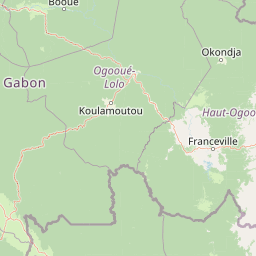
Map view of Batéké Plateau National Park

Use this park location map to pinpoint Batéké Plateau National Park in Gabon, understand its exact geographic position, and read its mapped placement within the surrounding landscape more clearly.

Pigeon | © OpenStreetMap contributors

Location context for Batéké Plateau National Park

Haut-Ogooué Province
Park atlas

Explore the surrounding protected landscapes and compare regional park geography, expanding your view from Batéké Plateau National Park.

Explore Related National Parks and Protected Areas Around Batéké Plateau National Park
Browse national parks and other protected areas that share geographic proximity or similar ecological characteristics with Batéké Plateau National Park, including its distinctive forest-savanna mosaic. Discovering these additional protected landscapes provides a broader regional context, enabling deeper atlas-style comparison of conservation efforts and mapped terrain across Central Africa.
National parkGabon

Ivindo National Park: A Protected Rainforest Landscape in Gabon

Explore its waterfalls, diverse ecosystems, and mapped geographic context.

Ivindo National Park represents a significant protected landscape within Gabon, spanning a vast area of intact tropical rainforest. Recognized as a UNESCO World Heritage Site, the park is defined by the Ivindo River and its dramatic waterfalls, including the famous Kongou and Mingouli Falls. Its geography includes mountainous terrain and vital riverine ecosystems, supporting critical populations of forest elephants and great apes. This page offers a gateway to understanding the park's protected status, its unique natural features, and its role in the broader geography of Central Africa.

Area
3,000 km²
Established
2002
IUCN
II
National parkGabon

Moukalaba-Doudou National Park: Gabon's Forest-Savanna Mosaic Protected Landscape

Atlas exploration of unique habitats and geographic boundaries.

Moukalaba-Doudou National Park in Gabon offers a distinctive atlas exploration experience, characterized by its remarkable combination of humid tropical rainforest and savanna grasslands. Covering a vast area, this protected landscape provides critical habitat and showcases a rare ecological transition zone within Central Africa. Understanding its mapped geography and protected-area status is key to appreciating Gabon's conservation efforts and the diverse natural terrains it preserves.

Area
4,500 km²
IUCN
II
National parkGabon

Loango National Park: Gabon's Coastal Wilderness and Unique Protected Landscape

Explore savanna, forest, beach, and lagoon ecosystems in this vital national park.

Loango National Park in Gabon is a significant protected area recognized for its remarkable geographic diversity. This national park encompasses over 100 kilometers of pristine, uninhabited Atlantic coastline, rare mangrove systems, and expansive savanna plains transitioning into dense tropical forests. Its unique landscape, particularly the Iguéla Lagoon, offers rich opportunities for atlas-style exploration of coastal ecosystems and protected areas. Understanding the park's mapped boundaries and regional setting is key to appreciating its ecological importance.

Area
1,550 km²
Established
2002
IUCN
II
National parkEast Region

Lobéké National Park: A Pristine National Park within Cameroon's East Region Geography

Explore mapped boundaries of semi-evergreen forest and unique bais habitats.

Lobéké National Park represents a critical component of Central Africa's protected landscape atlas, situated in Cameroon's East Region. This national park encompasses vast tracts of pristine semi-evergreen forest, notable for its lack of commercial logging. Its landscape is distinguished by natural saline swamp savannas, riverine habitats, and the iconic mineral-rich bais clearings that attract significant megafauna. Understanding Lobéké National Park offers insight into the ecological richness and geographic context of the Congo Basin's conservation areas.

Area
2,178 km²
Established
1999
IUCN
II
Relief
Lowland
National parkCentral African Republic

Dzanga-Ndoki National Park National Park: Mapped Boundaries and Geographic Context in Central Africa

Explore protected landscape geography and park atlas details.

Gain a structured understanding of Dzanga-Ndoki National Park as a protected area in the Central African Republic. This page focuses on its precise geographic scope, mapped park boundaries, and its identity as a National Park. It serves as an entry point for exploring the park's landscape context and its place within the atlas of protected natural areas, offering factual details for geographic discovery.

Area
1,143.26 km²
Established
1990
IUCN
II
Relief
Lowland
National parkCameroon

Campo Ma'an National Park: Essential Protected Landscape in Cameroon's Atlantic Biafran Forest

Mapped evergreen canopy and vital great ape habitat in a key conservation area.

Campo Ma'an National Park is a crucial protected area in Cameroon, spanning 2,680 square kilometers of dense Atlantic Biafran forest. Established for environmental compensation, it safeguards critical habitat for western lowland gorillas and central chimpanzees, alongside forest elephants and diverse birdlife. The park's landscape is defined by a persistent evergreen canopy ecosystem, offering a unique context for understanding Central African rainforest geography and protected land status.

Area
2,680 km²
Established
2000
IUCN
II
National parkDemocratic Republic of the Congo

Salonga National Park: Africa's Largest Tropical Rainforest Protected Landscape

Discover its vast mapped boundaries and riverine geography.

Salonga National Park is recognized as Africa's largest tropical rainforest, a UNESCO World Heritage Site vital for the conservation of bonobos and other endemic species. Its protected landscape is defined by extensive lowland forests and intricate river networks, with access primarily through waterways. This park offers profound insights into the geography of the Congo Basin and the conservation of endangered primates within a vast, remote wilderness.

Area
36,000 km²
Established
1970
IUCN
II
National parkBioko Norte

Pico Basilé National Park: Volcanic Peak National Park and Protected Landscape

Explore Bioko Norte's unique montane terrain and rich avifauna.

Pico Basilé National Park is a critical conservation zone encompassing Equatorial Guinea's highest point, Pico Basilé volcano. This national park protects unique montane forest ecosystems and their diverse inhabitants, including several threatened primate species and a significant bird population, making it a key protected area on Bioko Island. Understand its geographic setting within Bioko Norte and its role as a vital natural landscape.

Area
300 km²
Established
2000
IUCN
II

Common questions about visiting, size, designation, and location context for Batéké Plateau National Park

Batéké Plateau National Park FAQs for park facts, access, geography, and protected area context
Find quick answers about Batéké Plateau National Park, including protected-area facts, park geography, trail and visitor context, and how the park fits into its surrounding country and regional landscape.
MoriAtlas Explorer

Continue Your Protected Areas Search Across the Global Atlas

Deepen your exploration by continuing the structured search for national parks and protected areas worldwide. Utilize the comprehensive filtering capabilities to compare different conservation landscapes and refine your understanding of global park geography. Discover more about the distribution and characteristics of protected natural areas.

Global natural geography