Why Moukalaba-Doudou National Park stands out
Moukalaba-Doudou National Park is best known for its unusual combination of two major ecosystem types that coexist within its boundaries. The humid rainforest portions represent Gabon's extensive Central African forest estate, while the savanna grasslands provide habitat for species adapted to more open landscapes. This ecological mixture is relatively rare in Gabon, where most protected areas focus on continuous forest environments. The park's position in southeastern Gabon also places it in a region that has received targeted conservation investment, including a development program initiated by the World Wildlife Fund in the mid-1990s. Its inclusion on the UNESCO World Heritage Tentative List as a mixed cultural and natural site further distinguishes it, suggesting recognition of both ecological significance and cultural heritage values.
Moukalaba-Doudou National Park history and protected-area timeline
Moukalaba-Doudou National Park was formally established as part of Gabon's expanding protected area network during the late twentieth century. The park's designation reflects Gabon's proactive approach to conservation, which accelerated significantly during the 1990s and 2000s as the country sought to protect its extensive forest resources and biodiversity. The World Wildlife Fund initiated a development program within the park beginning in 1996, indicating early international recognition of the site's conservation potential. This external engagement helped build capacity for park management and conservation activities. In 2005, the site was added to UNESCO's World Heritage Tentative List in the Mixed category, acknowledging both natural and cultural values. This tentative listing process typically precedes formal World Heritage inscription and indicates that the site meets criteria considered significant at the global level. The park's relatively recent formal recognition compared to some older African protected areas reflects both the country's methodical approach to establishing parks and the specific ecological characteristics that required conservation attention.
Moukalaba-Doudou National Park landscape and geographic character
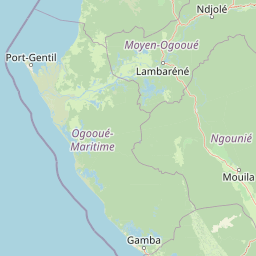
The landscape of Moukalaba-Doudou National Park is defined by the interaction between two contrasting habitat types that create a mosaic environment across the protected area. The humid rainforest portions feature tall canopy trees, dense understory vegetation, and the characteristic humidity and shade of Central Africa's tropical forests. These forest areas are part of the broader Congo Basin forest ecosystem, which represents one of the world's largest remaining tropical rainforests. In contrast, the savanna grasslands within the park consist of more open terrain with grasses and scattered trees, providing a different visual and ecological character. This forest-savanna mosaic is a distinctive feature of the park, as most of Gabon's protected areas are dominated by continuous forest cover. The park's location in southeastern Gabon places it in a region where rainfall patterns and soil conditions support this transitional ecological zone. The terrain likely includes rolling hills and flat areas typical of the coastal plain regions of Gabon.
Moukalaba-Doudou National Park ecosystems, habitats, and plant life
The ecological character of Moukalaba-Doudou National Park is shaped by its position in a transitional zone between Gabon's extensive rainforests and the more open landscapes of the interior. The park's combination of humid forest and savanna ecosystems creates conditions that support two fundamentally different community types within a single protected boundary. The forest areas provide habitat for species dependent on dense tropical vegetation, including numerous bird species, mammals, and invertebrates that characterize the Central African forest fauna. The savanna portions support different species assemblages adapted to more open conditions, including grasses, shrubs, and animal species that prefer or require grassland environments. This ecological diversity within a single protected area enhances the park's conservation value, as it preserves ecological processes and species interactions that depend on landscape heterogeneity. Gabon's overall biodiversity is exceptionally high, and protected areas like Moukalaba-Doudou play a critical role in maintaining populations of both common and endangered species.
Moukalaba-Doudou National Park wildlife and species highlights
Wildlife in Moukalaba-Doudou National Park benefits from the dual-habitat environment that characterizes the protected area. The forest sections support populations of forest-dwelling species including various primates, small mammals, and an array of bird species that rely on the canopy and understory for food and shelter. The savanna areas provide habitat for species adapted to more open environments, potentially including large mammals that graze or browse in grassland conditions. While specific species are not detailed in available sources, Gabon's wildlife in general includes significant populations of forest elephants, gorillas, chimpanzees, and numerous antelope species, along with diverse birdlife. The park's location in southeastern Gabon places it within a region that maintains relatively intact wildlife populations due to the country's strong conservation policies. The presence of both forest and savanna habitats means the park can support a wider range of wildlife than single-habitat protected areas, though the specific species present would reflect the particular ecological conditions of this transition zone.
Moukalaba-Doudou National Park conservation status and protection priorities
Moukalaba-Doudou National Park contributes to Gabon's position as one of Africa's leading conservation nations. The park's inclusion on UNESCO's World Heritage Tentative List since 2005 reflects its recognized significance at the international level, particularly as a mixed natural and cultural site. This tentative listing indicates that the site meets one or more of the criteria that the World Heritage Committee uses to assess outstanding universal value. The park's management under the National Agency for National Parks connects it to Gabon's systematic approach to protected area administration. The World Wildlife Fund's development program initiated in the mid-1990s demonstrates sustained international engagement with the site's conservation. Gabon's protected area network is widely regarded as a model for effective forest conservation in Central Africa, with the country having designated roughly ten percent of its territory to protected status. Parks like Moukalaba-Doudou play a role in maintaining ecological corridors, preserving biodiversity, and supporting sustainable land use across the national territory.
Moukalaba-Doudou National Park cultural meaning and human context
Moukalaba-Doudou National Park's classification as a Mixed World Heritage site indicates recognition of cultural values alongside its ecological significance. This dual designation suggests that the park contains elements of human heritage, possibly including traditional land use practices, historical communities, or cultural landscapes that have shaped and been shaped by the local environment. The park's location in southeastern Gabon places it within regions inhabited by local communities whose relationship with the land predates formal protected area designation. The presence of savanna ecosystems within the park may reflect historical patterns of human interaction with the landscape, including fire management, grazing, or agricultural activities that have influenced vegetation patterns over time. While specific cultural details are not provided in available sources, the Mixed category designation implies that these human dimensions are considered important for the site's overall significance and warrant preservation alongside the natural environment.
Top sights and standout views in Moukalaba-Doudou National Park
Moukalaba-Doudou National Park stands out as one of Gabon's larger protected areas at approximately 4,500 square kilometers, offering extensive habitat for wildlife and ecological processes. The park's defining characteristic is its unusual combination of humid rainforest and savanna grasslands within a single protected boundary, creating an ecological transition zone that is relatively rare in Gabon. Its 2005 inclusion on UNESCO's World Heritage Tentative List as a Mixed natural and cultural site distinguishes it from many other Gabonese parks that are recognized primarily for natural values. The park's location in southeastern Gabon places it within a region that has received targeted conservation investment and benefits from the country's strong protected area management framework. The presence of both forest and savanna habitats supports a diverse array of species and ecological communities, making the park valuable for biodiversity conservation in the Congo Basin region.
Best time to visit Moukalaba-Doudou National Park
The best time to visit Moukalaba-Doudou National Park would generally align with Gabon's dry season, which typically occurs from June through September. During these months, rainfall is reduced and wildlife becomes more concentrated around water sources, potentially improving viewing opportunities. The wet season from October through May brings higher rainfall, which can affect road accessibility within the park and make some areas more difficult to reach. Temperature in southeastern Gabon remains consistently warm throughout the year due to the equatorial location. Visitors interested in birdwatching may find the transition periods between wet and dry seasons particularly rewarding, as migrant species move through the region. The park's less developed infrastructure compared to some other Gabonese protected areas means that access and logistics require more planning. Overall, the period from mid-year through early autumn typically offers the most favorable conditions for exploration of this coastal forest-savanna park.