Mori Atlas logo
National parkCampo Ma'an National Park

Explore mapped boundaries and the unique evergreen canopy ecosystem of this vital protected area.

Campo Ma'an National Park: Cameroon's Atlantic Biafran Forest Protected Landscape

Campo Ma'an National Park represents a significant protected area within Cameroon, forming a core component of the Atlantic Biafran forest ecosystem. This national park encompasses 2,680 square kilometers of dense, evergreen canopy rainforest, historically continuous since the Pleistocene era. Its establishment as environmental compensation highlights its importance in modern conservation, offering users a detailed look at its mapped landscape, protected boundaries, and the unique biodiversity it shelters.

national parklowland rainforestAtlantic Biafran forestgreat ape habitatgorilla conservationforest elephant

Campo Ma'an National Park

National park

Park overview

Structured park overview, official facts, and landscape profile for Campo Ma'an National Park

Campo Ma'an National Park park facts, protected area profile, and essential visitor context
Review the core facts for Campo Ma'an National Park, including designation, size, terrain, visitor scale, habitats, and operating context in one park-focused overview.

About Campo Ma'an National Park

Campo Ma'an National Park represents one of Cameroon premier protected areas and a critical component of Central Africa's forest estate. Located in the South Region along the country's Atlantic coast, the park occupies a strategic position bordering Equatorial Guinea and incorporating coastal marine environments alongside interior rainforest. The park's establishment in 2000 marked a significant expansion of protection for the region, building upon earlier designations of the Campo Wildlife Reserve created in 1932 and the Ma'an forest plantation established in 1980. The transformation into a national park came as part of biodiversity compensation measures associated with the Chad-Cameroon oil pipeline project, and the area was subsequently recognized as a site of the Global Environmental Facility through the World Bank Biodiversity Conservation and Management Project. The park is now surrounded by five forest management units, industrial rubber and oil palm plantations, and a dedicated buffer zone. The surrounding region supports over 100 villages inhabited primarily by Bagyeli Pygmy hunter-gatherers and various Bantu groups, including fishermen along the coast and subsistence farmers inland. The park has been proposed as a pilot ecotourism destination given its exceptional biodiversity and the opportunity to showcase conservation success in Central African forest ecosystems.

Quick facts and research context for Campo Ma'an National Park

Campo Ma'an National Park covers 2,680 km² in southern Cameroon, making it one of the nation's largest protected areas. The park and its buffer zone together span approximately 700,000 hectares. It was formally established in 2000, building on earlier protected status dating to 1932 when the Campo Wildlife Reserve was created. The average annual temperature is 25°C. The park is recognized as a biodiversity hotspot with high concentrations of endemic plant and animal species, particularly in the Caesalpiniaceae family.

Park context

Deeper park guide and search-rich context for Campo Ma'an National Park

Campo Ma'an National Park history, landscape, wildlife, and travel context
Explore Campo Ma'an National Park through its history, landscape character, ecosystems, wildlife, conservation priorities, cultural context, and seasonal travel timing in a structured park guide built for atlas discovery and search intent.

Why Campo Ma'an National Park stands out

Campo Ma'an is especially renowned for its populations of critically endangered western lowland gorillas and endangered central chimpanzees, which the IUCN has identified as priority species for conservation in this landscape. The park hosts an ongoing gorilla habituation project and employs local Bagyeli trackers in great ape conservation initiatives. Beyond the primates, the park protects significant populations of forest elephants, mandrills, leopards, and forest buffalo. The area is also recognized as one of 33 Important Bird Areas in southwestern Cameroon with more than 300 bird species recorded.

Campo Ma'an National Park history and protected-area timeline

The conservation history of Campo Ma'an reflects the evolution of forest protection in Cameroon from early colonial-era reserves to modern national park status. The original Campo Wildlife Reserve was established in 1932 through an agreement between the Government of Cameroon and the Campo Forest Company, covering approximately 1,582 km². This early designation reflected colonial interests in managing forest resources while allowing controlled exploitation. In 1980, the adjacent Ma'an forest plantation covering 990 km² was created specifically for conservation of the okoumé tree species (Aucoumea klaineana), a commercially valuable timber species. On August 6, 1999, under Decision 054/CAB/PN, the forest was elevated to a Technical Operational Unit spanning 771,000 hectares, incorporating protected areas, forest management units, maritime estate, and agroforestry zones. The formal establishment of Campo Ma'an National Park in 2000 represented the culmination of these conservation designations while also serving as environmental compensation for the Chad-Cameroon oil pipeline project. The signing of the Campo Ma'an GEF/Biodiversity Project in December 1999 introduced new funding and enforcement mechanisms, including the creation of an Integral Protection Zone covering 2,901 km² completely off-limits to local communities, with natural resource extraction prohibited throughout 4,196 km² of the broader region.

Campo Ma'an National Park landscape and geographic character

The physical landscape of Campo Ma'an National Park is characterized by Atlantic Biafran forest, a closed evergreen canopy ecosystem that covers the majority of the protected area. The terrain consists largely of lowland tropical rainforest with the Caesalpiniaceae plant family playing a dominant role in the forest composition. The park extends from the coastal zone along the Atlantic Ocean inland through undulating terrain typical of the Central African plateau. The region has maintained tropical rainforest continuity since the Pleistocene era, evidenced by the distribution of slowly dispersing plant species and high degrees of endemism. The forest ecosystem transitions through various habitat types as elevation changes occur, though the overall character remains one of dense, species-rich evergreen forest with a multi-layered canopy. The park's location near the coast also incorporates elements of maritime influence on the broader landscape character.

Campo Ma'an National Park ecosystems, habitats, and plant life

The ecological character of Campo Ma'an centers on its status as a biodiversity hotspot within the Atlantic Biafran forest ecoregion. The park contains remarkable plant diversity with 256 documented plant species, including 29 species occurring exclusively within park boundaries and 22 listed as endangered by the IUCN. A rare and critically endangered orchid from the genus Distylodon was discovered in a nearby village, with ongoing assessments seeking additional occurrences within the protected area. The forest type is described as closed evergreen canopy, dominated by species in the Caesalpiniaceae family. The park's ecological significance is amplified by its ancient forest heritage, as the region is believed to have remained continuously forested as tropical rainforest throughout the Pleistocene, providing critical refugia for species with limited dispersal capabilities. The bi-modal rainfall pattern with two dry and two wet seasons annually shapes the ecological dynamics of the ecosystem, influencing vegetation cycles, wildlife activity patterns, and the overall productivity of this forest environment.

Campo Ma'an National Park wildlife and species highlights

Campo Ma'an supports exceptional wildlife diversity across multiple taxonomic groups. The park is particularly significant for its populations of critically endangered western lowland gorillas and endangered central chimpanzees, both identified as priority species by the IUCN for conservation action. A gorilla habituation program is underway, with 15 Bagyeli community members employed as guides and trackers supporting great ape conservation. Large mammals include forest elephants, African forest buffalo in the southern area, hippos, bush pigs, and various antelope species including Peters's duiker. Predators are represented by leopards, while primate diversity includes black colobus and mandrills. The park supports a remarkable 122 reptile species and 165 fish species. Avifauna includes more than 300 bird species, earning the park recognition as one of 33 Important Bird Areas in southwestern Cameroon. A 2015 millipede survey documented 27 species, with Aporresmus gabonicus being the most abundant. The presence of giant pangolins highlights the park's importance for specialized forest fauna.

Campo Ma'an National Park conservation status and protection priorities

Campo Ma'an holds significant conservation importance as a priority landscape for western lowland gorilla and central chimpanzee conservation according to the IUCN. The park's establishment in 2000 as a biodiversity compensation for the Chad-Cameroon oil pipeline reflects its role in broader environmental mitigation strategies. The area receives support through the Global Environmental Facility and the World Bank Biodiversity Conservation and Management Project. Conservation challenges include logging activities, poaching, agricultural expansion, and coastal development pressures. Construction of the Memve'ele hydroelectric dam and the Kribi deep-sea port represent emerging threats to regional biodiversity. Between 2011 and 2014, human hunting pressure reportedly declined by 50 percent, though illegal hunting and poaching continue within the reserve. A formal co-management agreement has been signed with the Bagyeli indigenous community, integrating local knowledge and participation into conservation management. The park is proposed as a pilot ecotourism site to support sustainable conservation financing while providing economic benefits to surrounding communities.

Campo Ma'an National Park cultural meaning and human context

The Campo Ma'an region is the traditional territory of indigenous groups with deep historical roots in the area. The Bagyeli, sometimes referred to as Bagyeli Pygmies, represent a minority population of fewer than 10,000 people who have traditionally practiced subsistence hunting and gathering, relying on the forest for resources including medicinal plants. Various Bantu groups including the Batanga, Mabea, Yassa, Ntumu, Mavae, and Bulu also inhabit the region, with coastal groups primarily engaged in fishing while inland groups practice subsistence agriculture. A third ethnic group, the Bebilis originating from eastern Cameroon, also reside in the area, maintaining hunting camp lifestyles similar to the Bagyeli. The establishment of the Integral Protection Zone in 1999 introduced restrictions on natural resource access that have created tensions with local communities, including incidents involving the destruction of hunting camps and pirogues by eco-guards. A formal co-management agreement with the Bagyeli has been established, and employment of Bagyeli community members as conservation guides represents an effort to integrate indigenous knowledge and sustainable livelihoods into park management.

Top sights and standout views in Campo Ma'an National Park

Campo Ma'an National Park stands as one of Cameroon's largest and most biodiverse protected areas, encompassing critical habitat for western lowland gorillas and central chimpanzees in the Atlantic Biafran forest ecosystem. The park's unique combination of coastal and interior forest environments supports exceptional species richness, including forest elephants, mandrills, leopards, and over 300 bird species. The ongoing gorilla habituation project offers rare opportunities for wildlife observation while the integration of Bagyeli indigenous communities into conservation management provides a model for collaborative protected area governance. The park's establishment history as environmental compensation for oil infrastructure development reflects modern approaches to biodiversity offsets, while its proposed development as an ecotourism destination aims to create sustainable financing for long-term conservation.

Best time to visit Campo Ma'an National Park

The climate of Campo Ma'an follows a bi-modal pattern with two dry seasons occurring from November to March and July to August, while two rainy seasons span April to June and August to October. The average temperature remains around 25°C year-round. The optimal visiting period generally corresponds to the drier seasons when wildlife viewing conditions improve as animals congregate more readily around remaining water sources and vegetation density decreases slightly. However, the park's evergreen character means that forest landscapes remain lush throughout the year. Visitors interested in primate habituation experiences should consider that the dry seasons may offer more consistent tracking opportunities, though the wet seasons provide their own ecological rewards with active understory vegetation and bird activity.
Park location guide

Geography guide, regional context, and park location map for Campo Ma'an National Park

Campo Ma'an National Park park geography, regions, and map view in Cameroon
Understand where Campo Ma'an National Park sits in Cameroon through a broader geographic reading of the surrounding landscape, nearby location context, and its mapped position within the national park landscape.

How Campo Ma'an National Park fits into Cameroon

Cameroon is a Central African country spanning coastal, highland, and forest regions. It has a population of nearly 31 million people who speak 250 native languages alongside English and French as official languages. The country gained independence from France in 1960 and unified with British Southern Cameroons in 1961.

Wider geography shaping Campo Ma'an National Park in Cameroon

Cameroon is located in Central Africa, bordering Nigeria and Chad to the west and north, the Central African Republic to the east, and Equatorial Guinea, Gabon, and the Republic of the Congo to the south. The country has a coastline on the Bight of Biafra, part of the Gulf of Guinea. Terrain includes coastal plains, mountainous highlands (including Mount Cameroon), plateaus, and dense rainforest regions.

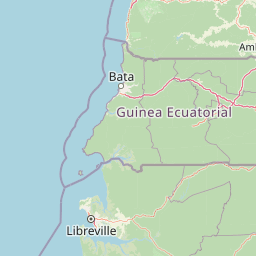
Map view of Campo Ma'an National Park

Use this park location map to pinpoint Campo Ma'an National Park in Cameroon, understand its exact geographic position, and read its mapped placement within the surrounding landscape more clearly.

Pigeon | © OpenStreetMap contributors

Location context for Campo Ma'an National Park

South Region
Park atlas

Compare the regional geography of protected areas surrounding Campo Ma'an, exploring connected rainforest ecosystems.

Parks Near Campo Ma'an National Park: Trace Surrounding Protected Landscapes and Ecosystems
Explore national parks and protected areas geographically connected to Campo Ma'an National Park, spanning adjacent lowland rainforest and coastal landscapes of Central Africa. Comparing these protected landscapes provides crucial insights into regional biodiversity patterns and distinct ecological features within the broader Central African ecosystem.
National parkBioko Norte

Pico Basilé National Park: Volcanic Peak National Park and Protected Landscape

Explore Bioko Norte's unique montane terrain and rich avifauna.

Pico Basilé National Park is a critical conservation zone encompassing Equatorial Guinea's highest point, Pico Basilé volcano. This national park protects unique montane forest ecosystems and their diverse inhabitants, including several threatened primate species and a significant bird population, making it a key protected area on Bioko Island. Understand its geographic setting within Bioko Norte and its role as a vital natural landscape.

Area
300 km²
Established
2000
IUCN
II
National parkSouthwest Province

Korup National Park: Discover Southwest Province's Ancient Tropical Rainforest

Explore the mapped boundaries and unique protected landscape of this vital national park.

Korup National Park represents a significant protected area within Cameroon's Southwest Province, recognized for its status as one of Africa's oldest and most biodiverse tropical rainforests. With an area of 1,260 square kilometers, the park offers rich opportunities for geographic discovery, focusing on its unique lowland forest terrain, extensive plant and primate populations, and intricate stream networks. This protected landscape serves as a crucial component of the regional atlas, providing structured data on park boundaries and ecological significance for in-depth exploration.

Area
1,260 km²
Established
1986
IUCN
II
Relief
Mixed relief
National parkGabon

Ivindo National Park: A Protected Rainforest Landscape in Gabon

Explore its waterfalls, diverse ecosystems, and mapped geographic context.

Ivindo National Park represents a significant protected landscape within Gabon, spanning a vast area of intact tropical rainforest. Recognized as a UNESCO World Heritage Site, the park is defined by the Ivindo River and its dramatic waterfalls, including the famous Kongou and Mingouli Falls. Its geography includes mountainous terrain and vital riverine ecosystems, supporting critical populations of forest elephants and great apes. This page offers a gateway to understanding the park's protected status, its unique natural features, and its role in the broader geography of Central Africa.

Area
3,000 km²
Established
2002
IUCN
II
National parkGabon

Loango National Park: Gabon's Coastal Wilderness and Unique Protected Landscape

Explore savanna, forest, beach, and lagoon ecosystems in this vital national park.

Loango National Park in Gabon is a significant protected area recognized for its remarkable geographic diversity. This national park encompasses over 100 kilometers of pristine, uninhabited Atlantic coastline, rare mangrove systems, and expansive savanna plains transitioning into dense tropical forests. Its unique landscape, particularly the Iguéla Lagoon, offers rich opportunities for atlas-style exploration of coastal ecosystems and protected areas. Understanding the park's mapped boundaries and regional setting is key to appreciating its ecological importance.

Area
1,550 km²
Established
2002
IUCN
II
National parkGabon

Moukalaba-Doudou National Park: Gabon's Forest-Savanna Mosaic Protected Landscape

Atlas exploration of unique habitats and geographic boundaries.

Moukalaba-Doudou National Park in Gabon offers a distinctive atlas exploration experience, characterized by its remarkable combination of humid tropical rainforest and savanna grasslands. Covering a vast area, this protected landscape provides critical habitat and showcases a rare ecological transition zone within Central Africa. Understanding its mapped geography and protected-area status is key to appreciating Gabon's conservation efforts and the diverse natural terrains it preserves.

Area
4,500 km²
IUCN
II
National parkEast Region

Lobéké National Park: A Pristine National Park within Cameroon's East Region Geography

Explore mapped boundaries of semi-evergreen forest and unique bais habitats.

Lobéké National Park represents a critical component of Central Africa's protected landscape atlas, situated in Cameroon's East Region. This national park encompasses vast tracts of pristine semi-evergreen forest, notable for its lack of commercial logging. Its landscape is distinguished by natural saline swamp savannas, riverine habitats, and the iconic mineral-rich bais clearings that attract significant megafauna. Understanding Lobéké National Park offers insight into the ecological richness and geographic context of the Congo Basin's conservation areas.

Area
2,178 km²
Established
1999
IUCN
II
Relief
Lowland
National parkHaut-Ogooué Province

Batéké Plateau National Park: Mapped Geography of a Central African Forest-Savanna Mosaic

Discover the terrain and protected landscape of Haut-Ogooué Province.

Batéké Plateau National Park is defined by its expansive forest-savanna mosaic, a rare ecological formation across Central Africa. Located within Haut-Ogooué Province, this national park showcases unique terrain characterized by savanna grasslands interspersed with woodlands and forested corridors. Understanding its geographic context and protected boundaries provides valuable insight into the region's natural heritage and conservation significance.

Area
2,034 km²
Established
2002
IUCN
II
National parkCentral African Republic

Dzanga-Ndoki National Park National Park: Mapped Boundaries and Geographic Context in Central Africa

Explore protected landscape geography and park atlas details.

Gain a structured understanding of Dzanga-Ndoki National Park as a protected area in the Central African Republic. This page focuses on its precise geographic scope, mapped park boundaries, and its identity as a National Park. It serves as an entry point for exploring the park's landscape context and its place within the atlas of protected natural areas, offering factual details for geographic discovery.

Area
1,143.26 km²
Established
1990
IUCN
II
Relief
Lowland

Common questions about visiting, size, designation, and location context for Campo Ma'an National Park

Campo Ma'an National Park FAQs for park facts, access, geography, and protected area context
Find quick answers about Campo Ma'an National Park, including protected-area facts, park geography, trail and visitor context, and how the park fits into its surrounding country and regional landscape.
MoriAtlas Explorer

Continue Your Protected Areas Search Across the Global Atlas

Deepen your exploration by continuing the structured search for national parks and protected areas worldwide. Utilize the comprehensive filtering capabilities to compare different conservation landscapes and refine your understanding of global park geography. Discover more about the distribution and characteristics of protected natural areas.

Global natural geography