Why Brownsberg Nature Park stands out
Brownsberg Nature Park is best known for its prominent central mountain, the Leo Waterfall, and its location within the Guianan moist forests ecoregion. The park offers visitors the opportunity to hike to the summit of Brownsberg for panoramic views over the Brokopondo Reservoir, explore trails leading to multiple waterfalls, and observe wildlife including howler monkeys, grey-winged trumpeters, toucans, and red-rumped agoutis. The combination of accessible mountain terrain, waterfall features, and tropical biodiversity makes it one of Suriname's most visited protected areas.
Brownsberg Nature Park history and protected-area timeline
The area now known as Brownsberg Nature Park has a history tied to gold mining that stretches back to the late 19th century. One of the first recorded miners in the area was John Brown, after whom both the mountain and subsequently the park were named. The Dutch word 'berg' translates to mountain in English. Following the departure of early gold miners, there was an unsuccessful attempt to extract bauxite from the region. In 1969, the site was officially established as a nature reserve and placed under the management of STINASU, the Suriname Nature Conservation Foundation. Gold mining activities resumed in the park beginning in 1999, and despite periodic enforcement actions against illegal miners, rising gold prices have continued to attract new waves of prospectors to the area. This ongoing threat led the World Wide Fund for Nature to publish a report in 2012 identifying the park as severely threatened by illegal mining operations.
Brownsberg Nature Park landscape and geographic character
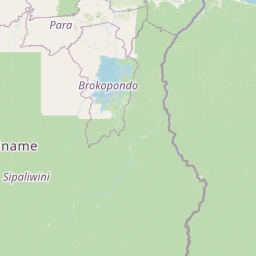
The Brownsberg mountain forms the dramatic centerpiece of the park's physical landscape, rising abruptly from the Mazaroni plateau to a height of approximately 500 meters. This granite peak provides significant topographic variation in a region characterized by the generally flat terrain of the Guianan Shield. The mountain's steep slopes and exposed rock faces contrast with the surrounding tropical forest. The park overlooks the Brokopondo Reservoir, a large artificial lake created in the 1960s, which forms a prominent visual element when viewing the landscape from the mountain's higher points. The combination of mountain, forest, and reservoir waters creates a distinctive scenic character that distinguishes Brownsberg from other protected areas in Suriname.
Brownsberg Nature Park ecosystems, habitats, and plant life
Brownsberg Nature Park lies within the Guianan moist forests ecoregion, a globally significant biodiversity hotspot known for its exceptional concentration of plant and animal species. The park contains an estimated 1,450 species of plants and 350 species of birds, reflecting the high biological productivity of this tropical forest environment. The forest types within the park range from lowland tropical rainforest on the lower slopes to more specialized habitats at higher elevations. The proximity to the Brokopondo Reservoir influences the local microclimate and creates additional ecological niches near the water's edge. The mountain's elevation gradient exposes different forest strata, allowing visitors to observe changes in vegetation structure as they ascend the trails.
Brownsberg Nature Park wildlife and species highlights
The park supports diverse wildlife populations typical of the Guianan moist forests, with documented records of approximately 350 bird species and numerous mammal species. Notable mammals include howler monkeys, which are commonly heard vocalizing throughout the forest canopy, and red-rumped agoutis, medium-sized rodents that can be observed foraging on the forest floor. The grey-winged trumpeter, a distinctive ground-dwelling bird species, represents one of the park's more sought-after sightings for birdwatchers. Toucans, with their characteristic large bills, are a common presence in the forest canopy. The combination of forest habitats, water features, and the mountain's environmental gradient creates conditions supporting this biodiversity, though illegal mining activities have introduced mercury contamination to some areas.
Brownsberg Nature Park conservation status and protection priorities
Brownsberg Nature Park faces significant conservation challenges despite its protected status. Illegal gold mining has emerged as the primary threat since operations resumed in 1999, with the World Wide Fund for Nature documenting approximately 50 illegal mining sites within the park in a three-week survey period. The number of illegal miners in the park was estimated at between 1,500 and 2,000 in the years preceding 2012, and this number has likely grown as gold prices remain high. Beyond the physical disturbance of mining activities, the use of mercury in gold extraction has introduced toxic contamination to soil within the park boundaries. Conservation management falls to STINASU, which must balance the park's tourism function with the need to address ongoing illegal extraction activities that threaten the ecological integrity of the reserve.
Brownsberg Nature Park cultural meaning and human context
The park's name reflects the Dutch colonial naming conventions still prevalent in Suriname, with 'Brownsberg' derived from John Brown, the gold miner after whom the mountain was named, and 'berg' being the Dutch word for mountain. Local Surinamese commonly use 'Brownsberg' as a shortened reference for the nature park. The park is located near the village of Brownsweg, which serves as the nearest settlement for visitors. The cultural landscape bears traces of earlier human activity through historical gold mining, though this period largely predates the establishment of formal protected area status.
Top sights and standout views in Brownsberg Nature Park
The Leo Waterfall represents one of the park's most accessible and popular attractions, located along trail networks radiating from the Brownsberg mountain base. Hiking to the summit of Brownsberg offers panoramic views over the Brokopondo Reservoir and surrounding forest, providing a sense of the park's geographic setting within the broader Guianan landscape. The trail system connects multiple waterfall locations and passes through diverse forest habitats where wildlife viewing opportunities exist. The park's relative accessibility from Paramaribo, combined with its dramatic mountain topography, makes it a distinctive destination within Suriname's protected area system.
Best time to visit Brownsberg Nature Park
The park can be visited throughout the year, though the dry season typically offers more comfortable conditions for hiking and outdoor exploration. The tropical climate of Suriname means that rainfall occurs in some form throughout the year, but the drier months generally provide more consistent opportunities for trail use and wildlife observation. Visitors interested in maximizing their experience should consider the overall seasonal patterns when planning their trip, though the park's mountain trails remain accessible in most weather conditions.