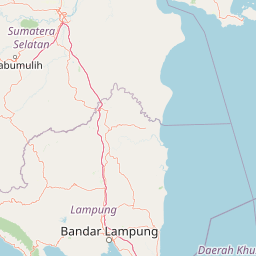
Why Bukit Barisan Selatan National Park stands out
Bukit Barisan Selatan is best known as a critical stronghold for three of the world's most endangered megafauna species: the Sumatran elephant, Sumatran tiger, and Sumatran rhinoceros. The park contains one of the largest remaining lowland tropical rainforest ecosystems in Southeast Asia, protecting a narrow but ecologically vital corridor along the Bukit Barisan mountain range. Its extraordinary plant diversity includes the massive Rafflesia arnoldii, the giant titan arum (Amorphophallus titanum), and the world's largest orchid (Grammatophyllum speciosum). The park's designation as part of the Tropical Rainforest Heritage of Sumatra World Heritage Site underscores its global significance for biodiversity conservation.
Bukit Barisan Selatan National Park history and protected-area timeline
The protection history of Bukit Barisan Selatan dates back to the Dutch colonial period, when the South Sumatra I Nature Reserve was established in 1935 through colonial legislation. This early recognition of the area's ecological value provided initial legal protection for the region's forests and wildlife. The transition to national park status occurred in 1982, formalizing the area's conservation designation under Indonesian law. In 2004, the park achieved international recognition when it was inscribed as part of the Tropical Rainforest Heritage of Sumatra UNESCO World Heritage Site, a complex that also includes Gunung Leuser National Park and Kerinci Seblat National Park. This designation acknowledged the outstanding universal value of Sumatra's remaining rainforests. However, the park was subsequently placed on the List of World Heritage in Danger in 2011 due to ongoing threats from encroachment, illegal logging, and agricultural expansion, particularly coffee cultivation.
Bukit Barisan Selatan National Park landscape and geographic character
The landscape of Bukit Barisan Selatan is defined by its position along the Bukit Barisan mountain range, a volcanic arc that runs the entire length of Sumatra. The park averages only about 45 kilometers in width but extends approximately 350 kilometers in length, creating a long forest corridor along the island's central highlands. The northern region features rugged mountain terrain with steep eastern slopes descending toward the Sumatran interior, while the western slopes are more gradual toward the Indian Ocean. The highest peak within the park is Gunung Pulung at 1,964 meters. The southern portion of the park extends as a peninsula with more subdued topography. The park encompasses diverse terrain including coastal zones along the Indian Ocean, river valleys, and steep mountainous areas. Geological conditions include volcanic rock formations in the central and northern sections, with alluvial deposits in lower-lying areas.
Bukit Barisan Selatan National Park ecosystems, habitats, and plant life
The ecological character of Bukit Barisan Selatan is defined by its complex of tropical forest ecosystems that represent some of the most biodiverse habitats on Earth. The park contains a complete altitudinal sequence from sea level to nearly 2,000 meters, supporting distinct vegetation zones including coastal mangrove forest, lowland tropical rainforest, hill forest, and montane forest. The lowland forests are dominated by dipterocarp species including Shorea, Dipterocarpus, and Hopea, while montane areas feature Myrtaceae, Lauraceae, and Fagaceae families. The park's botanical diversity is extraordinary, with at least 514 tree species identified, along with 126 orchid species, 26 rattan species, and numerous medicinal plants. The park's dual climate zones, with wetter conditions on the western slopes facing the Indian Ocean and drier conditions on the eastern side, create additional ecological variation that supports diverse species assemblages.
Bukit Barisan Selatan National Park wildlife and species highlights
Bukit Barisan Selatan supports an exceptional concentration of endangered megafauna that makes it one of Asia's most important conservation areas. The park contains approximately 500 Sumatran elephants, representing roughly a quarter of the global population of this critically endangered subspecies. An estimated 17-24 Sumatran rhinoceroses persist in the park, a tiny fraction of the fewer than 100 individuals remaining worldwide. The park also supports around 40 adult Sumatran tigers, approximately 10% of the remaining population of this critically endangered subspecies. Beyond these flagship species, the park hosts the Sumatran striped rabbit, Malayan tapir, siamang, Sumatran surili, sun bear, and lesser mouse-deer. The bird fauna includes over 300 species, with the critically endangered Sumatran ground-cuckoo among the notable inhabitants. The park also supports populations of nine hornbill species and various marine turtle species along its southern and western coastlines.
Bukit Barisan Selatan National Park conservation status and protection priorities
The conservation significance of Bukit Barisan Selatan cannot be overstated, as it protects some of the last remaining lowland rainforest in Sumatra and serves as a critical habitat for three of the world's most endangered large mammal species. The park's inclusion in the Tropical Rainforest Heritage of Sumatra World Heritage Site reflects its outstanding universal value, though its placement on the Danger List since 2011 acknowledges the severe threats it faces. Conservation challenges include significant human encroachment, with an estimated 127,000 squatters occupying portions of the park and approximately 55,000 hectares under illegal cultivation as of 2006. Coffee production has become a particular concern, with over 450 square kilometers of the park reportedly used for coffee cultivation. Between 1972 and 2006, an estimated 63,000 hectares of primary forest were lost. Conservation partners including WWF and WCS work with the Indonesian government on anti-poaching efforts, community engagement, and sustainable land-use planning. The park has been identified as a priority area for Asian Rhino and Elephant Action Strategy (AREAS) and as a Tiger Conservation Unit of global importance.
Bukit Barisan Selatan National Park cultural meaning and human context
Bukit Barisan Selatan occupies a landscape that has been inhabited by local communities for generations, with the park's establishment requiring careful consideration of traditional land use patterns. The park provides essential ecosystem services to surrounding communities, including water catchment functions supported by its network of approximately 23 major rivers and numerous tributaries that flow to downstream communities in Lampung and Bengkulu provinces. The regional economy historically included traditional forest-based activities such as damar resin collection from Shorea javanica and other forest products. However, the expansion of coffee cultivation and other agricultural activities into the park boundary represents a significant challenge, creating tension between conservation objectives and local livelihoods. Conservation programs have sought to promote sustainable alternatives through initiatives like the Conservation Conscious Community Network (3CoNet), which aims to provide environmentally friendly livelihoods for communities surrounding the park.
Top sights and standout views in Bukit Barisan Selatan National Park
Bukit Barisan Selatan stands as one of the last great tropical rainforest wilderness areas in Southeast Asia, protecting a critical corridor of forest along Sumatra's backbone. The park's remarkable concentration of endangered megafauna includes viable populations of Sumatran elephants, tigers, and rhinoceroses, making it essential for the survival of these species. Its botanical treasures include the colossal Rafflesia flower, the towering titan arum, and the world's largest orchid. The park's inclusion in the Tropical Rainforest Heritage of Sumatra World Heritage Site confirms its global significance, though its endangered status since 2011 underscores the urgent conservation challenges it faces. The park's diverse landscapes, from coastal mangroves to montane peaks, support an extraordinary range of ecosystems and species that represent the biological heritage of Sumatra and the broader Indo-Malay region.
Best time to visit Bukit Barisan Selatan National Park
The optimal time to visit Bukit Barisan Selatan coincides with the dry season, typically between April and October, when conditions are more favorable for wildlife viewing and forest exploration. The park experiences a tropical climate with high humidity throughout the year, with average temperatures ranging from 20 to 28 degrees Celsius. Annual rainfall averages around 3,500 mm, with the western side of the park generally receiving more precipitation than the eastern side due to exposure to the Indian Ocean. Visitors should be prepared for frequent rainfall regardless of season, as the rainforest environment maintains high moisture levels year-round. The wetter months from November through March may make some trails more difficult to navigate but also offer the opportunity to experience the forest in its lushest condition.