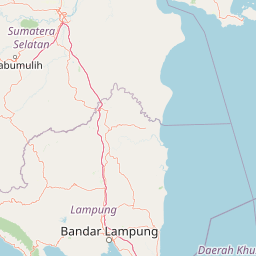
Why Way Kambas National Park stands out
Way Kambas is most renowned for its critical role in the survival of the Sumatran rhinoceros, one of the most endangered large mammals in the world. The park hosts approximately 12 to 14 individuals of this species, down from around 40 in the 1990s, making it one of the most important remaining habitats for this species. The park also serves as a vital refuge for the Sumatran elephant, with an estimated population of 247 individuals as of 2015, and the Sumatran tiger, with fewer than 30 individuals remaining. Additionally, the park is recognized as an important bird habitat, particularly for the white-winged wood duck, which has its largest remaining population in Sumatra within this park.
Way Kambas National Park history and protected-area timeline
Way Kambas was first established as a game reserve by the Dutch administration in 1937, during the colonial period when Indonesia was known as the Dutch East Indies. This early protection status reflected recognition of the area's wildlife value, particularly for species such as tigers, elephants, and rhinoceroses that were targeted for sport hunting and commercial trade. The reserve remained under various forms of protection through the Indonesian independence period until 1989, when it was officially declared a national park and placed under the management of the Ministry of Forestry. The transition from game reserve to national park reflected a shift in conservation philosophy from managing wildlife for extraction to protecting ecosystems for their intrinsic value and ecological function. Throughout its history, the park has faced significant encroachment from surrounding communities, particularly along its southern boundary where villagers have claimed traditional land rights. In 2009-2010, approximately 6,000 hectares of land that had been occupied by squatters for decades was cleared, representing both a challenge for local communities and an opportunity for habitat restoration. Conservation infrastructure has developed progressively, with the Elephant Conservation Centre established in the 1980s and the Sumatran Rhino Sanctuary constructed more recently to support captive breeding efforts.
Way Kambas National Park landscape and geographic character
The physical landscape of Way Kambas is characterized by a flat to gently undulating terrain typical of coastal lowland Sumatra. The park encompasses a range of wetland habitats including extensive mangrove forests along its coastal fringes, freshwater and peat swamp forests in its interior, and riverine systems that drain toward the southern Sumatra coastline. The park's elevation remains low throughout, with no significant topographic relief to break the otherwise flat landscape. Sandy beaches and coastal dunes characterize the shoreline areas, where vegetation transitions from mangroves to beach scrub and strand vegetation. The park is intersected by numerous water channels and rivers that create complex hydrological patterns, particularly in the swamp forest areas where water flows slowly through dense vegetation. The combination of wetland and lowland forest habitats creates a distinctive landscape that differs markedly from the mountainous interior of central Sumatra, offering instead a vision of the island's coastal and lowland ecology that has become increasingly rare across the island.
Way Kambas National Park ecosystems, habitats, and plant life
The ecological character of Way Kambas is defined by its wetland-dominated landscape, which supports a distinctive array of plant and animal communities adapted to saturated soil conditions and seasonal flooding. The park's plant communities include mangroves represented by species such as Avicennia marina and Sonneratia, the palm Nypa fruticans, and various swamp forest trees including Melaleuca leucadendra, Syzygium polyanthum, Pandanus, Schima wallichii, and dipterocarp species. The park's secondary forest status results from extensive logging that removed much of the original old-growth forest, though the remaining vegetation still provides critical habitat for wildlife. The ecological significance of the park is amplified by its position as a coastal wetland that serves as a filter between terrestrial and marine environments, processing nutrients and providing nursery habitat for various species. The diverse habitats from mangroves through freshwater swamps to dry land forest create a gradient of ecological conditions that supports high species diversity despite the park's relatively small size and degraded condition.
Way Kambas National Park wildlife and species highlights
Way Kambas supports remarkable wildlife diversity despite its secondary forest character, with approximately 50 mammal species and over 400 bird species recorded within its boundaries. The park's most significant conservation value lies in its populations of critically endangered megafauna, particularly the Sumatran rhinoceros, of which only 12-14 individuals remain in the park, representing one of the last wild populations of this species. The Sumatran elephant population was estimated at 247 individuals in 2015, while the Sumatran tiger population has declined to fewer than 30 individuals from a peak of 36-40 in 2000. Other notable mammals include the Malayan tapir, Sumatran dhole, and siamang. The bird fauna is exceptionally diverse, with approximately half of the species associated with the park's coastal swamps and wetlands. The white-winged wood duck represents a particular conservation priority, with 24-38 individuals representing the largest population in Sumatra. Other significant bird species include Storm's stork, woolly-necked stork, lesser adjutant, crested fireback, great argus, and Oriental darter. The endangered false gharial crocodile also inhabits the park's coastal swamps.
Way Kambas National Park conservation status and protection priorities
Way Kambas faces significant conservation challenges but also represents an important success story in Indonesian protected area management. The park's designation as an ASEAN Heritage Park in 2016 recognized its regional significance and the need for enhanced conservation measures. Major threats include poaching, which historically targeted rhinos and tigers, and illegal logging that has reduced forest coverage to approximately 60% of the park area. The establishment of Rhino Protection Units, trained anti-poaching teams that patrol key areas for a minimum of 15 days per month, has helped reduce poaching pressure, with no rhinoceros or tiger poaching reported between 2004 and 2011. The Sumatran Rhino Sanctuary, a 250-acre managed breeding facility, was established to maintain a small population of rhinos for research, conservation breeding, and awareness-building purposes, with ten rhinos currently residing at the facility as of 2023. The Elephant Conservation Centre supports both captive breeding and community-based conservation, using domesticated elephants for patrols, ecotourism, and breeding programs. Efforts to address human-wildlife conflict include the use of trained elephants to drive away crop-raiding wild herds and community measures such as field guarding and fire-scaring.
Way Kambas National Park cultural meaning and human context
Way Kambas exists within a landscape shaped by both historical human presence and contemporary community needs. The park is located in East Lampung Regency, an area with significant agricultural activity where communities have historically practiced subsistence farming and coconut cultivation. The relationship between local communities and the park has been complex, with traditional land claims creating ongoing pressure on park boundaries, particularly along the southern boundary where villagers have claimed customary rights to forest areas. The establishment of the Elephant Conservation Centre has created a point of connection between the park and surrounding communities, with the facility serving as an ecotourism destination and source of employment. Conservation efforts have required balancing wildlife protection with community livelihoods, as evidenced by programs to mitigate elephant crop-raiding that has historically caused significant damage to agricultural lands and occasional human casualties. The relocation of communities from within the park area, particularly in 2009-2010, has addressed some encroachment issues while creating social challenges that require ongoing attention.
Top sights and standout views in Way Kambas National Park
Way Kambas National Park stands as one of Indonesia's most critical conservation areas, protecting what remains of Sumatra's lowland forest ecosystems and serving as the last refuge for several of the island's most endangered species. The park's Sumatran Rhino Sanctuary represents a desperate conservation effort to prevent the extinction of one of the world's rarest large mammals, while the Elephant Conservation Centre demonstrates innovative approaches to managing human-wildlife conflict and supporting endangered species recovery. The park's wetland habitats support exceptional bird diversity, including the largest remaining population of white-winged wood ducks in Sumatra. As an ASEAN Heritage Park, Way Kambas carries regional responsibility for maintaining biodiversity that cannot be protected elsewhere, making every hectare of remaining forest precious for species that have been eliminated from most of their historic range.
Best time to visit Way Kambas National Park
The optimal time to visit Way Kambas National Park coincides with the dry season in southern Sumatra, typically from April to October, when lower rainfall facilitates movement through the park's wetland areas and wildlife viewing opportunities improve as animals concentrate around remaining water sources. The wet season, from November to March, brings higher water levels that can restrict access to some areas but also offers the advantage of seeing the park's ecosystems at their most lush and vibrant. Birdwatching can be productive year-round, though the dry season generally offers better conditions for observing waterfowl and storks in the swamp habitats. Visitors interested in seeing the park's conservation facilities should plan ahead, as the Sumatran Rhino Sanctuary is not open to the general public, though the Elephant Conservation Centre does offer ecotourism opportunities. The park's lowland forest character means that temperatures remain warm and humid throughout the year, with typical tropical conditions that require appropriate preparation.