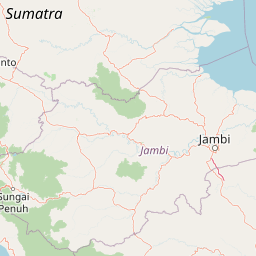
Why Bukit Duabelas National Park stands out
Bukit Duabelas is best known for its representation of Sumatra's disappearing lowland rainforest and its role as the home of the Orang Rimba indigenous communities. The park protects rare timber species including Eusideroxylon zwageri and towering Koompassia excelsa trees that can exceed 80 meters in height. The hilly terrain and its function as a critical water catchment for the Batang Hari River give the park additional ecological significance. The interplay between biodiversity conservation and the ongoing traditional lifestyle of the Orang Rimba people makes this park distinctive among Indonesia's protected areas.
Bukit Duabelas National Park history and protected-area timeline
The formal protection of Bukit Duabelas as a national park in 2000 represented a turning point in the conservation of Jambi's forest landscapes. Prior to designation, the area functioned as production forest, a classification that permitted commercial logging operations which resulted in substantial primary forest loss across the region. The transition to national park status reflected growing recognition of the area's ecological importance and the need to address the environmental degradation that had occurred under previous land management regimes. The establishment process also acknowledged the park's significance as the ancestral territory of the Orang Rimba, whose traditional land use practices became incorporated into the management framework. Since designation, conservation efforts have focused on protecting remaining primary forest areas and facilitating regeneration in degraded secondary forest zones, though challenges from ongoing deforestation pressures persist.
Bukit Duabelas National Park landscape and geographic character
The landscape of Bukit Duabelas National Park is defined by its rolling hilly terrain that gives the protected area its name, meaning 'The Twelve Hills' in Indonesian. The terrain rises from lower slopes through a series of ridges and valleys, with the highest points reaching approximately 438 meters above sea level. Three named hills Punai, Panggang, and Kuran stand as the most prominent landscape features, each contributing to the park's distinctive character compared to the surrounding lowland terrain. The hillsides support forest cover that varies in density and composition depending on the extent of historical disturbance, with primary forest concentrated in the northern sector wherelogging pressure was less intense. The park's elevation and topography play a crucial role in hydrological function, with the hills serving as the origin point for numerous streams that feed into the Batang Hari River system.
Bukit Duabelas National Park ecosystems, habitats, and plant life
The ecosystems within Bukit Duabelas represent Sumatra's lowland tropical rainforest, a biome that has experienced extensive reduction across its historical range. The park contains approximately 120 documented plant species, including several that are ecologically and economically significant. The ironwood tree Eusideroxylon zwageri represents one of the park's rare timber species, while the giant legume Koompassia excelsa dominates the canopy in areas of primary forest, with specimens capable of reaching heights exceeding 80 meters. The lesser known Dyera costulata contributes to the forest's structural complexity with trees developing trunks up to two meters in diameter. Rattan palms form an important component of the understory, adding to the vertical stratification that characterizes healthy lowland rainforest. The contrast between primary forest in the northern sector and secondary forest elsewhere illustrates the recovery trajectory of tropical forest following disturbance.
Bukit Duabelas National Park wildlife and species highlights
Bukit Duabelas National Park provides habitat for a notable assembly of endangered and threatened species that depend on Sumatra's forest ecosystems. The siamang, the largest of the gibbon species, occupies the canopy throughout the park and represents a flagship species for conservation efforts. The clouded leopard, a cryptic feline that thrives in forested terrain, maintains populations within the park's protected boundaries. Additional mammalian species include the sun bear, the smallest bear species in the world, the Java mouse-deer representing one of the smallest hoofed mammals, the Sumatran muntjac, leopard cat, and the hairy-nosed otter. The dhole, a social canid that hunts in packs, preys on ungulates within the forest. The crested serpent eagle hunts reptiles and amphibians in the forest canopy and represents the park's avian conservation value. The Sumatran striped rabbit occupies understory habitats throughout the protected area.
Bukit Duabelas National Park conservation status and protection priorities
The conservation status of Bukit Duabelas reflects the broader challenges facing Sumatra's forest estates. Prior to national park designation in 2000, extensive areas were allocated for timber production, resulting in the conversion of primary forest to secondary growth across much of the park's territory. Current estimates indicate that approximately 70 percent of the park's forest cover had been damaged by 2012, a figure that underscores the scale of degradation that preceded formal protection. Deforestation remains the primary threat to the park's ecological integrity, with pressures stemming from logging, land conversion, and the expansion of agricultural activities in surrounding areas. Conservation strategies emphasize the empowerment of Orang Rimba communities as forest guardians, recognizing that their traditional land use practices are compatible with biodiversity protection when supported by appropriate management frameworks.
Bukit Duabelas National Park cultural meaning and human context
Bukit Duabelas National Park holds profound cultural significance as the ancestral territory of the Orang Rimba, the indigenous forest-dwelling communities of Jambi Province. The name Orang Rimba translates as 'people of the forest' and reflects the intimate relationship between these communities and the rainforest environment. Approximately 40 percent of the total Orang Rimba population, roughly 1,200 individuals, reside within the boundaries of Bukit Duabelas National Park, while additional communities inhabit the neighboring Bukit Tigapuluh National Park and dispersed locations throughout Jambi. Their traditional practices of cultivation, hunting, and gathering have shaped the forest landscape for generations. Contemporary conservation approaches recognize that the continued empowerment of Orang Rimba communities and their traditional practices is essential to the effective protection of the park's forest resources.
Top sights and standout views in Bukit Duabelas National Park
Bukit Duabelas offers visitors the opportunity to experience Sumatra's lowland rainforest in a setting of cultural significance. The park's hilly terrain provides topographic variation uncommon in surrounding lowland areas, with views from hilltops offering orientation to the broader landscape. The presence of the Orang Rimba adds a cultural dimension rarely found in other Indonesian national parks, where indigenous communities have maintained continuous residence. The canopy-dwelling siamangs and occasional clouded leopard sightings represent highlight wildlife encounters for patient observers. The towering trees of primary forest areas, particularly the Koompassia excelsa specimens exceeding 80 meters, illustrate the ecological potential of intact lowland rainforest.
Best time to visit Bukit Duabelas National Park
The optimal period for visiting Bukit Duabelas National Park corresponds with the drier months typically spanning June through September, when precipitation levels permit more comfortable exploration of trail systems. The wet season from November through March brings heavier rainfall that can restrict access to certain areas and make wildlife observation more challenging. Temperature and humidity remain relatively constant throughout the year given the park's equatorial location, with visitor comfort largely determined by rainfall patterns rather than seasonal temperature swings. Those seeking to observe wildlife should be prepared for the challenges of tropical forest conditions, where animal sightings require patience and运气.