Mori Atlas logo
National parkUjung Kulon National Park

Discover Java's last remaining lowland rainforest and the critical habitat of the Javan rhinoceros.

Ujung Kulon National Park: Protected Landscape Atlas, Geography, and Conservation Significance

(Taman Nasional Ujung Kulon)

Ujung Kulon National Park represents a critical protected landscape at the western tip of Java, Indonesia. As a UNESCO World Heritage Site, it safeguards the largest remaining tract of lowland rainforest on the island, serving as the sole refuge for the critically endangered Javan rhinoceros. This atlas-focused page details the park's unique geography, from its peninsula and mountain terrain to its surrounding marine ecosystems, offering a comprehensive view of its immense conservation value and ecological significance.

Lowland RainforestJavan RhinocerosUNESCO World Heritage SiteASEAN Heritage ParkMarine Protected AreaBanten

Ujung Kulon National Park

National park

Park overview

Structured park overview, official facts, and landscape profile for Ujung Kulon National Park

Ujung Kulon National Park park facts, protected area profile, and essential visitor context
Review the core facts for Ujung Kulon National Park, including designation, size, terrain, visitor scale, habitats, and operating context in one park-focused overview.

About Ujung Kulon National Park

Ujung Kulon National Park represents one of Indonesia's most significant protected areas, serving as both a biodiversity sanctuary and a living repository of Java's natural heritage. Located at the westernmost tip of Java island in Banten province, the park encompasses the Ujung Kulon peninsula, the Gunung Honje mountain range, and surrounding coastal waters. The region was first introduced to the scientific community by Dutch-German botanist Franz Wilhelm Junghuhn in 1846, though much of its documented conservation history began following the catastrophic eruption of Mount Krakatoa in 1883. The eruption, which generated a 15-meter tsunami, destroyed settlements across the peninsula and deposited an average 30 centimeters of volcanic ash across the area. Despite this devastation, the region recovered remarkably quickly, later serving as a crucial repository for Java's flora and fauna as the island's lowland forests were cleared for agriculture. The park was Indonesia's first national park to be designated a UNESCO World Heritage Site in 1991, recognized specifically for containing the largest remaining area of lowland rainforests in Java and for possessing the most threatened species of rhino. It was also designated as an ASEAN Heritage Park in 2005, further cementing its regional conservation significance.

Quick facts and research context for Ujung Kulon National Park

Ujung Kulon National Park occupies the western tip of Java in Banten province, Indonesia, covering 1,056.95 square kilometers with 443.37 square kilometers of marine area. The park was inscribed as a UNESCO World Heritage Site in 1991, making it Indonesia's first national park to receive this designation. It protects Java's last significant lowland rainforest ecosystem and serves as the sole remaining habitat for the Javan rhinoceros, one of the world's most endangered large mammals. The landscape features the Ujung Kulon peninsula and the Gunung Honje mountain range, with elevations ranging from sea level to 620 meters at Mount Honje.

Park context

Deeper park guide and search-rich context for Ujung Kulon National Park

Ujung Kulon National Park history, landscape, wildlife, and travel context
Explore Ujung Kulon National Park through its history, landscape character, ecosystems, wildlife, conservation priorities, cultural context, and seasonal travel timing in a structured park guide built for atlas discovery and search intent.

Why Ujung Kulon National Park stands out

Ujung Kulon is world-renowned as the final stronghold of the Javan rhinoceros, representing the last viable population of this critically endangered species on Earth. The park contains the largest remaining area of lowland rainforest in Java, a biome that has been largely eliminated from the island due to agricultural expansion and human settlement. Its significance extends beyond species conservation to encompass the preservation of an entire ecosystem representing Java's ecological heritage. The park also includes the historic Krakatoa archipelago, although this is now managed as a separate marine nature reserve.

Ujung Kulon National Park history and protected-area timeline

The conservation history of Ujung Kulon began in the early twentieth century during the Dutch colonial period. Pulau Panaitan was first designated as a nature reserve in 1921, before being combined with Pulau Peucang to establish a wildlife sanctuary in 1937. Following Indonesian independence, the area maintained its protected status, with the southern portion of Gunung Honje Protection Forest incorporated into the reserve in 1967 and the northern portion added in 1979. The park was officially declared a national park on February 26, 1992. Uniquely, Ujung Kulon became Indonesia's first proposed national park to be designated a UNESCO World Heritage Site in 1991, even before its formal establishment as a national park. The designation recognized its exceptional biodiversity value and the critical importance of its Javan rhinoceros population. Border reconstructions in the Mt. Honje area were finalized in 2004, solidifying the park's current boundaries. Several villages within the park have achieved cultural status as Kampung Recreational Villages, reflecting a model of integrated conservation and community development.

Ujung Kulon National Park landscape and geographic character

The physical landscape of Ujung Kulon National Park is characterized by a diverse topography spanning the Ujung Kulon peninsula and the Gunung Honje mountain range. The peninsula itself reaches a maximum elevation of 480 meters at Mount Payung in the southwest, while the Honje mountains in the eastern portion of the park rise to 620 meters at Mount Honje. The park encompasses approximately 443 square kilometers of marine environments, including coral reefs, seagrass beds, and coastal waters surrounding the peninsula and its offshore islands. The coastal areas feature mangrove ecosystems and tidal wetlands, while the inland areas support the lowland rainforest that represents the park's most significant ecological asset. The landscape creates a gradient from coastal mangrove systems through lowland forest to lower montane vegetation on the mountain slopes, providing habitat diversity that supports the park's exceptional biodiversity.

Ujung Kulon National Park ecosystems, habitats, and plant life

Ujung Kulon contains the largest remaining area of lowland rainforest in Java, representing an ecosystem type that has been nearly eliminated from the island through centuries of agricultural expansion and human settlement. The park's humid tropical climate supports a diverse array of plant communities, including mangrove forests along the coast featuring species such as Sonneratia alba, Excoecaria agallocha, and Rhizophora apiculata. Coastal vegetation includes Nypa fruticans, Calophyllum inophyllum, Terminalia catappa, and Hibiscus tiliaceus, while the interior forests support dense fig communities including Ficus benjamina, Ficus deltoidea, and Ficus racemosa. The park has recorded 175 plant species, with 57 protected under Indonesian law. Notable protected species include Heritiera percoriacea, Vatica bantamensis, Intsia bijuga, and the iconic Rafflesia patma. The marine component of the park supports coral reef communities and coastal ecosystems that add further ecological complexity to the protected area.

Ujung Kulon National Park wildlife and species highlights

Ujung Kulon National Park is globally significant for its critically endangered Javan rhinoceros population, which represents the last viable population of this species on Earth. Following the extinction of the last known Javan rhino in Vietnam's Cát Tiên National Park, Ujung Kulon became the species' sole remaining refuge. Population estimates suggest approximately 82 individuals currently inhabit the park, representing a slowly increasing population from the 40-60 individuals recorded in the 1980s. Camera trap surveys between 2001 and 2013 documented 14 rhino births and tracked population growth, with 8 calves recorded in 2013 alone. Beyond rhinos, the park supports approximately 35 mammal species endemic to Java, including banteng, silvery gibbon, Javan lutung, crab-eating macaque, Javan leopard, dhole, Java mouse-deer, Javan rusa, Sunda leopard cat, and smooth-coated otter. The park also recorded 197 bird species. Notably, Javan tigers persisted in the park until the mid-1960s but are now extinct locally. A significant conservation challenge involves the invasive Arenga palm, which has been spreading rapidly and reducing the undergrowth that rhinos depend upon for food.

Ujung Kulon National Park conservation status and protection priorities

Ujung Kulon represents one of the most critical conservation priorities in Southeast Asia due to its role as the last refuge for the Javan rhinoceros. The park's UNESCO World Heritage Site designation in 1991 recognized its outstanding universal value, specifically citing the largest remaining lowland rainforest in Java and the presence of the most threatened rhino species. The ASEAN Heritage Park designation in 2005 further reinforced its regional conservation significance. Conservation efforts focus heavily on rhino population monitoring through camera traps and video surveillance, with over 120 motion-activated cameras operating throughout the park. A significant challenge involves managing invasive Arenga palm populations that compete with native vegetation and reduce feeding grounds for rhinos. Efforts to reduce Eupatorium odoratum vegetation have shown success, with feeding areas reduced from 158 hectares across 10 locations to 20 hectares across 5 locations between the 1980s and 2013. The park faces ongoing challenges balancing rhino conservation with other species such as banteng that compete for similar habitat resources.

Ujung Kulon National Park cultural meaning and human context

The Ujung Kulon region carries cultural significance for the local Sundanese communities of Banten province. Several villages within the park have achieved recognition as Kampung Recreational Villages, reflecting a model where traditional communities maintain their presence within the protected area while participating in sustainable tourism. The park's name, Ujung Kulon, derives from the local Banten Sundanese language, translating to Western End or Point West and reflecting the peninsula's geographic position at Java's westernmost tip. The region bears the historical imprint of the catastrophic 1883 eruption of Krakatoa, which destroyed settlements across the peninsula and created the conditions for the forest's recovery that now makes the area so ecologically significant. Local communities maintain connections to the landscape through traditional land use practices and ongoing cultural ties to the coastal and forest environments.

Top sights and standout views in Ujung Kulon National Park

Ujung Kulon National Park stands as Earth's last hope for the Javan rhinoceros, making it one of the most important conservation sites globally. The park protects the largest remaining tract of Java's lowland rainforest, an ecosystem that once covered much of the island but has been reduced to fragments by human activity. Its dual designation as a UNESCO World Heritage Site and ASEAN Heritage Park recognizes both its outstanding universal value and its regional significance. The park offers a rare opportunity to experience one of Southeast Asia's most significant remaining lowland forest ecosystems, with opportunities to observe wildlife including the Javan rhino, banteng, silvery gibbon, and diverse birdlife. The combination of terrestrial and marine protected areas creates a comprehensive conservation landscape that extends from mountain forests through lowland rainforest to coral reef and mangrove environments.

Best time to visit Ujung Kulon National Park

Ujung Kulon can be visited year-round due to its tropical climate, though the dry season from April to October generally offers more comfortable conditions for outdoor exploration and wildlife observation. The park's humidity remains high throughout the year, and rainfall can occur in any month. The period from May to September typically experiences lower rainfall, making it more suitable for trekking and outdoor activities within the park. Visitors interested in wildlife viewing should note that early morning hours offer the best opportunities to observe animals active during cooler temperatures. The park's coastal and marine areas are accessible throughout the year, though sea conditions may vary with seasonal weather patterns.

Park location guide

Geography guide, regional context, and park location map for Ujung Kulon National Park

Ujung Kulon National Park park geography, regions, and map view in Indonesia
Understand where Ujung Kulon National Park sits in Indonesia through a broader geographic reading of the surrounding landscape, nearby location context, and its mapped position within the national park landscape.

How Ujung Kulon National Park fits into Indonesia

Indonesia is a vast archipelagic nation in Southeast Asia and Oceania, spanning over 17,000 islands between the Indian and Pacific Oceans. As the world's fourth-most populous country with 288 million people, it features extraordinary cultural and biological diversity, withJavanese and Sundanese being the largest ethnic groups. The country gained independence from the Netherlands in 1945 and operates as a unitary presidential republic.

Wider geography shaping Ujung Kulon National Park in Indonesia

Indonesia is situated in Southeast Asia and Oceania, spanning the equatorial region between the Indian Ocean to the west and the Pacific Ocean to the east. The archipelago includes major islands such as Sumatra, Java, Sulawesi, and parts of Borneo and New Guinea. It borders Papua New Guinea, Timor-Leste, and Malaysia by land, with extensive maritime boundaries throughout the region.

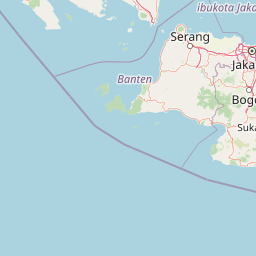
Map view of Ujung Kulon National Park

Use this park location map to pinpoint Ujung Kulon National Park in Indonesia, understand its exact geographic position, and read its mapped placement within the surrounding landscape more clearly.

Pigeon | © OpenStreetMap contributors

Location context for Ujung Kulon National Park

BantenJava
Park atlas

Compare other national parks and protected areas, tracing their geographic spread across the surrounding region.

Find Nearby National Parks and Protected Areas Beyond Ujung Kulon National Park
Browse a curated selection of national parks and protected areas located in the geographical vicinity of Ujung Kulon National Park. This structured view allows you to compare diverse conservation landscapes, understand their regional context, and discover adjacent protected terrains beyond Ujung Kulon's unique lowland rainforest ecosystem.
National parkSumatra

Bukit Barisan Selatan National Park: Sumatra's Critical Tropical Rainforest Corridor

Explore mapped boundaries and regional geography within this protected area.

Bukit Barisan Selatan National Park is a substantial national park located in Sumatra, Indonesia, designated as a protected landscape along the southern Bukit Barisan mountain range. Spanning a considerable area, it functions as a crucial corridor of tropical rainforest, playing a pivotal role in conservation efforts and the preservation of Sumatra's unique geographic identity. This page serves as a dedicated entry point for understanding the park's protected area status and its mapped presence within the broader regional geography of Indonesia.

Area
3,568 km²
Established
1982
IUCN
II
National parkLampung

Way Kambas National Park: Mapped Lowland Rainforest and Wetland Ecosystems

Explore the geography and protected landscape of this Indonesian national park.

Way Kambas National Park in Lampung, Indonesia, is a significant protected area characterized by its extensive lowland rainforest and varied wetland habitats. The park's landscape features swamp forests, coastal fringes, and river systems, creating a unique ecological mosaic. It serves as a critical sanctuary for endangered species, offering a vital context for understanding Sumatra's remaining natural landscapes. Explore the mapped boundaries and geographic identity of this important conservation area.

Area
1,300 km²
Established
1989
IUCN
II
National parkJambi

Bukit Duabelas National Park: Jambi's Protected Lowland Tropical Rainforest Landscape

Explore its mapped terrain and vital water catchment geography.

Bukit Duabelas National Park is a protected area in Jambi, Sumatra, safeguarding critical lowland tropical rainforest ecosystems. Its name reflects the hilly terrain that defines its landscape, acting as an essential water catchment for the Batang Hari River. This park offers an atlas-focused view of Sumatra's threatened forest heritage and its importance within regional geography, including unique timber species and the ancestral lands of the Orang Rimba people.

Area
605 km²
Established
2000
IUCN
II
National parkWest Sumatra

Siberut National Park: Isolated Island Ecosystem and Endemic Wildlife Atlas

Discover the mapped geography and unique landscapes of this West Sumatra protected area.

Siberut National Park in West Sumatra, Indonesia, presents a distinct protected landscape forged by long-term geographic isolation. This national park covers a significant portion of Siberut Island, showcasing a rich tapestry of lowland dipterocarp rainforest, swamp forest, and coastal mangrove ecosystems. Explore its unique terrain, river systems, and protected boundaries to understand the extraordinary concentration of endemic species, particularly its globally significant primate populations.

Area
1,905 km²
Established
1992
IUCN
II
National parkEast Java

Meru Betiri National Park: Mapped Protected Landscape in East Java

Discover the terrain and geography of this national park.

Meru Betiri National Park in East Java, Indonesia, offers a rich tapestry of mapped landscapes, from its distinctive sandy beaches and mangrove ecosystems along the southern coast to its interior volcanic highlands and tropical rainforests. This protected area is crucial for understanding the regional geography and the distribution of conservation lands across Java. Explore its topographic diversity and unique ecological settings that define this significant national park.

Area
580 km²
Established
1982
IUCN
II
National parkCentral Kalimantan

Bukit Baka Bukit Raya National Park: Central Kalimantan's Protected Montane Rainforest Landscape

Explore the geographic core of Borneo's Schwaner mountain range.

Bukit Baka Bukit Raya National Park is a critical national park situated in Central Kalimantan, Indonesia, recognized for its extensive montane tropical rainforests and rugged topography. The park's landscape is dominated by the Schwaner mountain range, featuring prominent peaks like Bukit Raya, and functions as a vital watershed and biodiversity corridor. This protected area offers a rich subject for understanding regional geography, mapped landscapes, and the significance of Borneo's natural heritage within an atlas context.

Area
1,810 km²
Established
1992
IUCN
II
Relief
Mountain
National parkKuching Division

Bako National Park: Sarawak's Oldest National Park and Coastal Protected Landscape

Explore diverse ecosystems and dramatic mapped geology near Kuching Division.

Bako National Park, the oldest national park in Sarawak, Malaysia, offers a profound study in ecological concentration and geological drama. Covering a mere 27 square kilometers on the Muara Tebas peninsula, it encapsulates seven distinct ecosystem types, from coastal heath forest to mangrove areas, supporting significant biodiversity. The park's protected landscape is defined by its stunning sandstone coastline, carved by the sea into cliffs, arches, and seastacks, providing a unique geographic context. This makes Bako an essential destination for understanding Borneo's environmental diversity and the mapped boundaries of its conservation areas.

Area
27 km²
Established
1957
IUCN
II
National parkSarawak

Rajang Mangroves National Park: Borneo's Premier Mangrove Protected Landscape

Explore the mapped geography and wetland conservation of this Sarawak national park.

Rajang Mangroves National Park is a significant protected area dedicated to preserving the intricate mangrove swamp ecosystems of Sarawak's Rajang River delta. Encompassing a vast expanse of tidal channels and riverine forests, this national park serves as a critical habitat for unique wildlife and plays a vital role in coastal ecological health. Its landscape is defined by the dynamic interface between riverine and marine environments, offering a prime example of wetland conservation within Borneo's broader natural geography and atlas context.

Area
107 km²
Established
2000
IUCN
II

Common questions about visiting, size, designation, and location context for Ujung Kulon National Park

Ujung Kulon National Park FAQs for park facts, access, geography, and protected area context
Find quick answers about Ujung Kulon National Park, including protected-area facts, park geography, trail and visitor context, and how the park fits into its surrounding country and regional landscape.
MoriAtlas Explorer

Continue Your Protected Areas Search Across the Global Atlas

Deepen your exploration by continuing the structured search for national parks and protected areas worldwide. Utilize the comprehensive filtering capabilities to compare different conservation landscapes and refine your understanding of global park geography. Discover more about the distribution and characteristics of protected natural areas.

Global natural geography