Why Freycinet National Park stands out
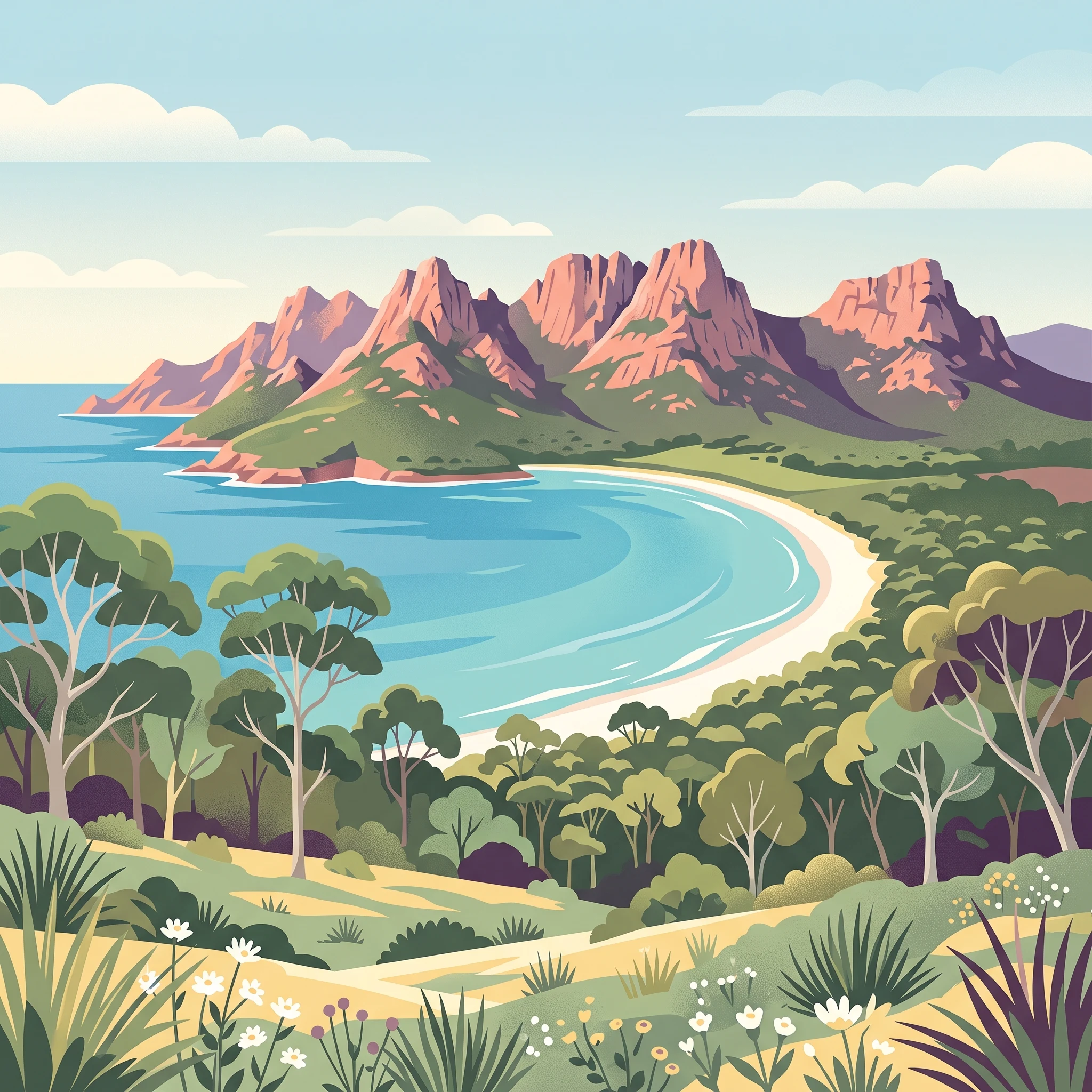
Freycinet National Park is most celebrated for its iconic coastal scenery, particularly Wineglass Bay, which consistently ranks among the world's most beautiful beaches. The park's defining visual feature is The Hazards, a dramatic line of pink granite peaks that creates a striking backdrop to the turquoise waters of the Freycinet Peninsula. Beyond its visual appeal, the park is significant for its ecological diversity, protecting forty-nine Tasmania-endemic species within a landscape that ranges from coastal dunes and heaths to dry sclerophyll forests. The park is also notable for its conservation challenges, particularly the impact of devil facial tumour disease on the Tasmanian devil population, which has prompted ongoing research and management interventions.
Freycinet National Park history and protected-area timeline
Freycinet National Park was established in 1916, making it one of the earliest protected areas in Tasmania and the oldest national park in the state alongside Mount Field National Park. The park was formally named after Louis de Freycinet, the French navigator who led an expedition that charted this section of the Tasmanian coast in 1802 aboard the vessel Naturaliste. The creation of the park reflected a growing recognition in the early twentieth century of the need to preserve Tasmania's unique natural heritage. Initially, protection focused on the most scenic and botanically significant areas, with the Freycinet Peninsula selected for its outstanding natural values and distinctive landscape character. Throughout the twentieth century, the park's boundaries were refined and expanded, and management practices evolved from early multiple-use approaches toward the contemporary focus on conservation and ecological management. The park's cultural heritage encompasses both Aboriginal sites and European historical features, though research into the human history of the area continues to reveal additional understanding of past land use and occupation.
Freycinet National Park landscape and geographic character
The landscape of Freycinet National Park is defined by its dramatic granite landforms that create one of Tasmania's most visually striking coastal environments. The dominant geological feature is the Freycinet Peninsula, composed primarily of Devonian granite that was formed deep within the Earth's crust approximately 400 million years ago. The granite contains significant amounts of orthoclase feldspar, which imparts the characteristic pink and warm reddish-brown coloration that distinguishes The Hazards and other peaks throughout the park. These granite formations have been shaped by millions of years of weathering and erosion, producing the steep cliffs, rounded summits, and rugged coastal scenery that define the area. The western side of Schouten Island presents a different geological character, composed of Jurassic dolerite that forms more angular, darker rock formations. Between the mountain ridges, the park contains numerous valleys, lagoons, and wetlands, including Hazards Lagoon, which supports distinctive vegetation communities. The coastline features diverse landforms including sandy beaches such as Wineglass Bay and Hazards Beach, rocky headlands, coastal dunes, and offshore islands. The interior of the peninsula supports undulating terrain covered by forest and woodland, with elevation ranging from sea level to approximately 620 metres at Mount Graham and other prominent peaks.
Freycinet National Park ecosystems, habitats, and plant life
The ecological character of Freycinet National Park reflects the transitional position of the Freycinet Peninsula between Tasmania's wetter western forests and the drier eastern environments. The park is dominated by dry sclerophyll forests and woodlands, with black peppermint eucalypt forming the primary tree canopy over a diverse understorey of heaths and shrubs. Plant families including Banksia, Leptospermum, Thryptomene, Melaleuca, and Calytrix are well represented in the heathland communities, particularly around Hazards Lagoon. The park supports an extraordinary botanical diversity, with over 500 plant species recorded, including more than 80 orchid species. Several plant species have very restricted distributions within the park, and numerous species are listed as threatened under the Tasmanian Threatened Species Protection Act. Notable among these are Melaleuca pustulata, Cyphanthera tasmanica, Epacris barbata, and Westringia brevifolia var. raleighi. The park also contains the sand grass tree, which is endemic to Tasmania and listed as vulnerable at both state and national levels, with populations occurring in suitable habitat areas within the reserve.
Freycinet National Park wildlife and species highlights
Freycinet National Park supports remarkable faunal diversity, with forty-nine species endemic to Tasmania recorded within its boundaries. The mammal community includes several common species that visitors may encounter, most notably the red-necked wallaby, also known as Bennett's wallaby, which is frequently observed grazing in open areas. The park supports populations of eastern quoll, a marsupial carnivore now extinct on the Australian mainland and found only in Tasmania. The Tasmanian pademelon remains common in the park but is primarily nocturnal, making sightings less frequent. The park also hosts the echidna, which can be found foraging in forests and coastal areas, along with various possum species including the eastern pygmy possum and little pygmy possum. The reptile fauna includes several endemic species such as the ocellated skink, Tasmanian tree skink, and she-oak skink, along with the blotched blue-tongued lizard and mountain dragon. The amphibian community includes the endemic Tasmanian froglet and the common eastern froglet. Marine environments support cetaceans including southern right whales and humpback whales that use Wineglass Bay for feeding and calving, while bottlenose dolphins are regularly observed in the bay. The birdlife is particularly diverse, with species ranging from large raptors including the white-bellied sea eagle and brown falcon to smaller birds such as the superb fairy-wren and flame robin. Several bird species are listed as threatened, including the swift parrot, which breeds on the east coast of Tasmania within the park's forests.
Freycinet National Park conservation status and protection priorities
Freycinet National Park plays a critical role in conserving Tasmania's unique biodiversity and geological heritage. The park protects significant populations of species that occur nowhere else on Earth, with forty-nine Tasmania-endemic species recorded within its boundaries. Several plant species of conservation concern are protected within the park, including the Freycinet Waxflower, which occurs only on the Freycinet Peninsula and is listed as endangered under both Commonwealth and Tasmanian legislation. The park's conservation value is enhanced by the relatively intact state of its native vegetation, with approximately 80-90 percent of native vegetation remaining in good condition across the bioregion. However, the park faces significant conservation challenges. The Tasmanian devil population has been severely impacted by devil facial tumour disease, a transmissible cancer that has caused a dramatic decline in numbers and led to the species being listed as endangered in 2008. This decline has potential cascading effects on other species, as devils play an important ecological role as apex predators. The park also faces threats from the soil-borne pathogen Phytophthora cinnamomi, which affects numerous plant species and can cause local extinctions of susceptible species. Feral animals, particularly cats, pose a threat to native mammals, and invasive weeds can be introduced by visitors. Management efforts focus on monitoring threatened species, controlling pathogens, managing visitor impacts, and implementing fire management strategies that consider the specific requirements of threatened plant species.
Freycinet National Park cultural meaning and human context
Freycinet National Park holds cultural significance for both Aboriginal communities and European settlers. The park contains numerous Aboriginal heritage sites, though the full extent of human occupation and use of the Freycinet Peninsula remains an area requiring further research. European history is tied to the French exploration expeditions of the early nineteenth century, with Louis de Freycinet naming the peninsula after himself following his 1802 voyage aboard the Naturaliste. The landscape also reflects more recent human activity, with historical land use patterns influencing vegetation patterns in some areas. The park's proximity to Coles Bay, a small coastal settlement, creates a relationship between the protected area and the local community, with tourism and visitor services forming an important part of the regional economy.
Top sights and standout views in Freycinet National Park
The most celebrated feature of Freycinet National Park is Wineglass Bay, a pristine crescent of white sand and turquoise water that consistently appears on lists of the world's most beautiful beaches, accessible via a walking track that offers panoramic views from the saddle. The Hazards present the park's most iconic mountain landscape, a dramatic line of pink granite peaks that rise sharply from the coast, providing excellent hiking opportunities and photogenic viewpoints. The park's botanical diversity, with over 500 plant species including more than 80 orchids, offers exceptional wildflower viewing opportunities, particularly in spring and early summer. The marine environment supports regular sightings of whales and dolphins, with southern right whales and humpback whales known to use Wineglass Bay for feeding and calving. The park's status as Tasmania's oldest national park, established in 1916, adds historical significance to the natural values, creating a legacy of conservation that continues today.
Best time to visit Freycinet National Park
Freycinet National Park can be visited year-round, though the warmer months from October through April offer the most comfortable conditions for walking and outdoor activities, with average daily maximum temperatures ranging from 16 to 23 degrees Celsius. The park enjoys a climate similar to Southern France, with more than 300 days of sunshine annually and approximately 600 millimetres of rainfall per year. Summer months bring the highest visitor numbers, particularly around Christmas and the January school holidays, so those seeking a more tranquil experience may prefer late autumn or winter. The winter months, while cooler, offer the opportunity to see migrating whales and experience the park's moods without the crowds. Spring brings exceptional wildflower displays as the heathlands and forests burst into bloom, with orchid season peaking from late winter through early summer. The shoulder seasons of autumn and early winter often provide excellent conditions for walking, with cooler temperatures making longer hikes more comfortable and the landscape displaying distinctive seasonal colours.