Why Walls of Jerusalem National Park stands out
Walls of Jerusalem National Park is best known for its dramatic alpine mountain landscape with a distinctive biblical naming tradition. The park's most iconic feature is King Davids Peak, a striking quartzite summit rising 1,509 meters, which forms part of a dramatic ridgeline that gives the park its name. The landscape features a remarkable collection of peaks and valleys with names drawn from biblical geography, creating an unusual and evocative wilderness environment. The park is also recognized for its pristine alpine ecosystems, including fragile buttongrass moorlands, alpine heath communities, and relict Pencil Pine forests, all protected within the framework of the Tasmanian Wilderness World Heritage Area.
Walls of Jerusalem National Park history and protected-area timeline
The Walls of Jerusalem National Park was formally established on December 13, 1978, designating the area for permanent conservation protection. The naming tradition that gives the park its distinctive character originated with early European explorers and surveyors who traversed the Tasmanian Highlands during the 19th century. These explorers were struck by the appearance of the steep, grey quartzite ridges rising from the plateau, which they believed resembled the ancient fortifications of Jerusalem. This observation led to the naming of the primary ridgeline as the Walls of Jerusalem, and subsequently inspired the application of biblical names to surrounding features. The practice continued as the landscape was more thoroughly documented, with locations such as Herods Gate, Lake Salome, Solomons Jewels, Damascus Gate, and the Pool of Bethesda becoming established names on maps and in exploration records. The park's inclusion in the Tasmanian Wilderness World Heritage Area in 1982 marked a significant milestone in its recognition, with the broader Tasmanian Wilderness receiving inscription based on criteria relating to both cultural and natural heritage values. This international recognition helped cement conservation commitment for the region and provided additional frameworks for ongoing protection and management.
Walls of Jerusalem National Park landscape and geographic character
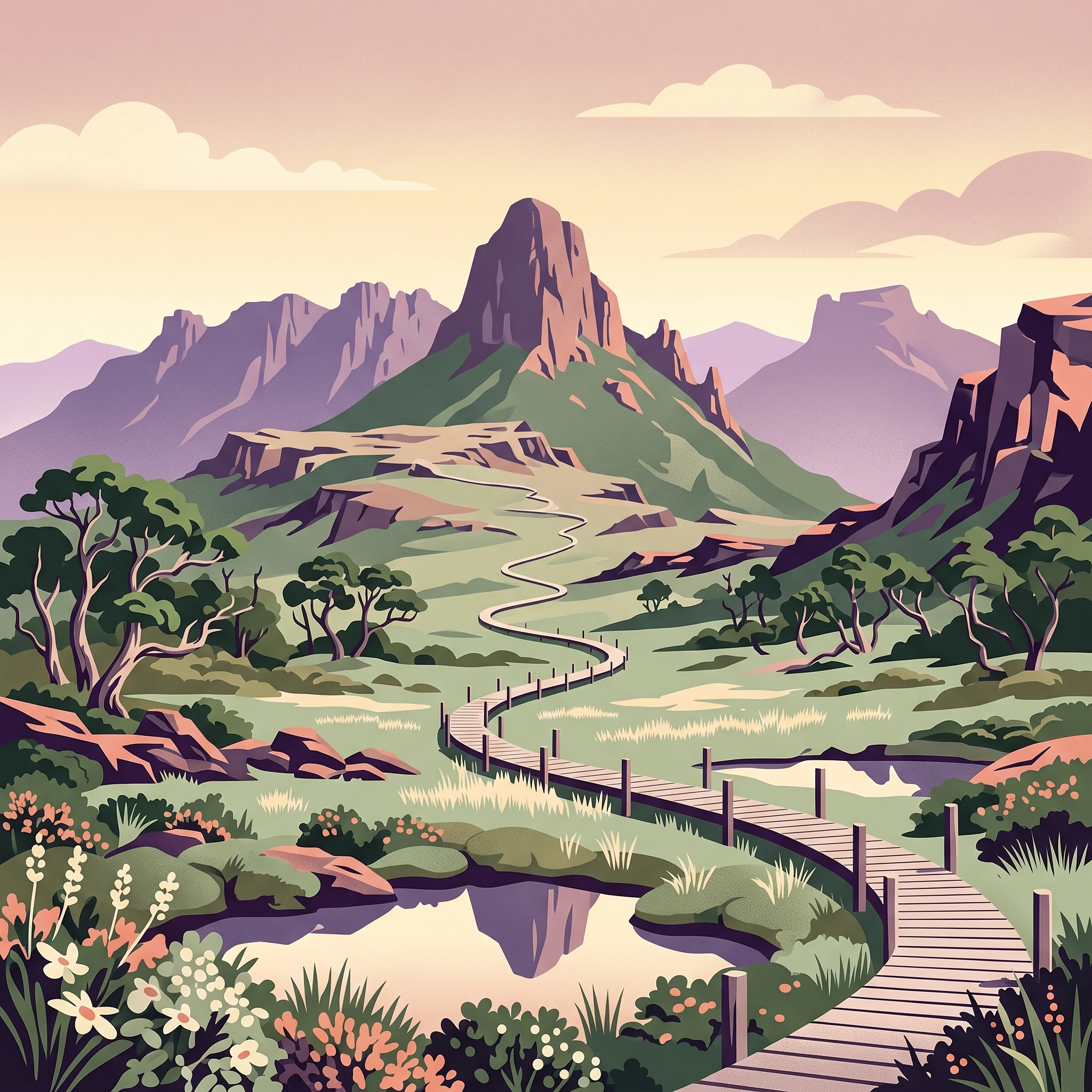
The landscape of Walls of Jerusalem National Park is characterized by dramatic alpine mountain terrain with steep ridgelines, rocky peaks, and broad valleys. The most prominent geographical feature is King Davids Peak, which rises to 1,509 meters and forms the centerpiece of the park's dramatic skyline. The peak is composed of Precambrian quartzite that has been intensely folded and faulted over geological time, resulting in the steep, angular cliffs that define its appearance. Adjacent peaks including Mount Jerusalem and Solomon's Throne create a complex mountain landscape with sharp ridgelines descending into hanging valleys and alpine basins. The lower portions of the park feature extensive buttongrass moorlands, which form a distinctive wetland habitat across the Tasmanian Highlands. Throughout the park, the walking tracks are designed to protect the fragile alpine vegetation, with raised boardwalks constructed in sensitive areas such as the route from Wild Dog Creek through to Dixon's Kingdom. Other track surfaces include rock, rocky earth, grassland, and marsh, reflecting the varied terrain encountered by visitors.
Walls of Jerusalem National Park ecosystems, habitats, and plant life
The nature of Walls of Jerusalem National Park reflects the unique environmental conditions of Tasmania's high-altitude Central Highlands. The park supports several distinct vegetation communities that are adapted to the cool, wet conditions prevailing at these elevations. Alpine heath communities dominate many of the higher ridges and plateaus, characterized by low shrubs and cushion plants that have evolved to withstand harsh conditions. The valley floors and lower slopes feature extensive buttongrass moorlands, a typically Tasmanian wetland formation dominated by the sedge Empodisma minus. In more sheltered locations, remnants of ancient Pencil Pine forest survive, representing relict vegetation from cooler historical periods. The park's position within the Tasmanian Wilderness World Heritage Area reflects the outstanding biodiversity values of the broader region, which includes numerous endemic species found nowhere else on Earth. The fragmented nature of the highland landscapes has also contributed to the evolution of distinct populations and subspecies in isolated pockets of suitable habitat.
Walls of Jerusalem National Park wildlife and species highlights
The wildlife of Walls of Jerusalem National Park reflects the alpine and sub-alpine environments that characterize Tasmania's Central Highlands. The park provides habitat for a range of bird species adapted to high-altitude environments, including various honeyeaters, parrots, and birds of prey. The buttongrass moorlands support specialized bird communities, while the rocky peaks provide nesting sites for raptors. Mammals present in the broader Tasmanian Wilderness region, including various wallabies, possums, and bats, would occur within the park boundaries, though the harsh alpine conditions may limit some species to lower elevations during winter months. The remote and relatively unmodified nature of the park contributes to its value as wildlife habitat, with the lack of vehicle access helping to maintain low disturbance levels in the core wilderness areas.
Walls of Jerusalem National Park conservation status and protection priorities
Walls of Jerusalem National Park is conserved as a core component of the Tasmanian Wilderness World Heritage Area, one of the world's largest and most significant protected wilderness regions. The World Heritage listing, achieved in 1982, recognized the outstanding universal value of this landscape under multiple criteria, including both natural values such as ecosystem diversity and geological processes, and cultural values related to the landscape's significance to Indigenous communities and its historical exploration. The national park status provides statutory protection under Tasmanian legislation, while the World Heritage designation creates additional international obligations for conservation management. The walking track infrastructure, including raised boardwalks through sensitive vegetation areas, reflects ongoing management investments to minimize visitor impacts on the fragile alpine ecosystems. The park's isolation and limited access help maintain its wilderness character and reduce pressures from human disturbance.
Walls of Jerusalem National Park cultural meaning and human context
The cultural context of Walls of Jerusalem National Park is defined primarily by the distinctive biblical naming tradition that gives the landscape its unique identity. This naming practice, originating with European explorers during the 19th century, reflects a particular moment in colonial cartography when new landscapes were often described through reference to familiar religious or historical frameworks. The names imposed on the features of Walls of Jerusalem transform what could be a typical highland landscape into something more evocative and narrative-rich. While the biblical references are European constructs imposed upon the land, they have become deeply embedded in how the park is understood and experienced. The broader Tasmanian Highlands, including the Walls of Jerusalem area, also hold significance in the context of Aboriginal connections to country, though the specific knowledge and cultural values associated with this particular area would be held by the relevant Traditional Owner communities.
Top sights and standout views in Walls of Jerusalem National Park
The highlights of Walls of Jerusalem National Park center on its dramatic mountain landscape and the unusual biblical naming tradition that distinguishes it from other Tasmanian wilderness areas. King Davids Peak stands as the park's most impressive summit, offering spectacular views across the Central Highlands from its 1,509-meter height. The biblical-themed features, including Solomon's Throne, Mount Jerusalem, and the various gates and pools, create a distinctive navigational and narrative framework for exploring the park. The raised boardwalk sections through the fragile alpine vegetation demonstrate the management commitment to protecting the park's environmental values. The park's inclusion in the Tasmanian Wilderness World Heritage Area confirms its international significance as a preserved wilderness landscape of outstanding natural value.
Best time to visit Walls of Jerusalem National Park
The best time to visit Walls of Jerusalem National Park is during the Australian summer months from December to March, when weather conditions are most favorable for high-altitude bushwalking. During this period, temperatures are milder, daylight hours are longest, and precipitation is typically lower than during the winter months. Visitors should be prepared for rapidly changing weather conditions, however, as the Tasmanian Central Highlands are known for sudden weather shifts, with cloud, rain, and cold temperatures possible even during summer. Winter visits are generally not recommended due to severe conditions, short daylight hours, and the challenges of accessing or traversing the park in snow. The remote nature of the park means that visitors must be self-sufficient and prepared for wilderness travel, including carrying adequate supplies and equipment for multi-day walks.