Why Southwest National Park stands out
Southwest National Park is renowned for its exceptional wilderness character and the critical conservation role it plays for Australia's most endangered bird species. The park serves as the sole significant breeding ground for the orange-bellied parrot, a critically endangered species with fewer than 50 individuals remaining in the wild. The landscape is defined by vast buttongrass moorlands that stretch across rolling terrain, surrounded by the rugged peaks of the Eastern and Western Arthur Ranges, Federation Peak, and Mount Anne. The area's environmental history is marked by the controversial flooding of Lake Pedder in 1972 for hydroelectric development, an event that catalyzed Australia's modern environmental movement and led to the successful protection of the Franklin River from damming. The park's wilderness trails, including the Port Davey Track and South Coast Track, rank among Australia's most challenging and remote multi-day hiking experiences.
Southwest National Park history and protected-area timeline
The human history of Southwest Tasmania spans tens of thousands of years, beginning with Aboriginal Tasmanian occupation that dates back at least 34,000 years based on archaeological evidence from caves in what is now the adjacent Franklin-Gordon Wild Rivers National Park. The South West Nation comprised four known clans, the Mimegin, Lowreenne, Ninene, and Needwonne, who lived as nomadic hunter-gatherers exploiting the coastal and inland resources of the region. There is evidence that Aboriginal burning practices shaped the buttongrass moorlands to create favorable hunting grounds for wallabies and wombats, influencing the landscape in ways that persist today. European exploration of the region began in 1642 when Abel Tasman sighted the coast, though the area was not known to be an island until Matthew Flinders and George Bass circumnavigated Tasmania in 1798. The first overland European expeditions were conducted in the early 1830s by George Augustus Robinson, guided by Truganini and other Indigenous people, during which many landmarks were named. Robinson's expeditions also resulted in the removal of Indigenous residents from the area, part of the broader colonial policy that contributed to the near-destruction of Aboriginal Tasmanians during the Black War. The core of the present national park, originally covering 239 square kilometers around Lake Pedder, was created as Lake Pedder National Park in 1955. In 1968 the Tasmanian Government expanded this to 1,916 square kilometers and renamed it Southwest National Park, though it was initially designated as a scenic reserve with protections removed to allow hydroelectric development. The original Lake Pedder was controversially flooded in 1972 as part of the Upper Gordon River hydro-electric scheme, a decision that galvanized environmental opposition and ultimately led to the successful campaign preventing the damming of the Franklin River in the early 1980s. The park was extended southwestward in 1976 incorporating most of the Port Davey State Reserve and continued expanding until reaching its present size in 2000. The park served as a UNESCO Biosphere Reserve from 1977 until 2002 before gaining full World Heritage listing.
Southwest National Park landscape and geographic character
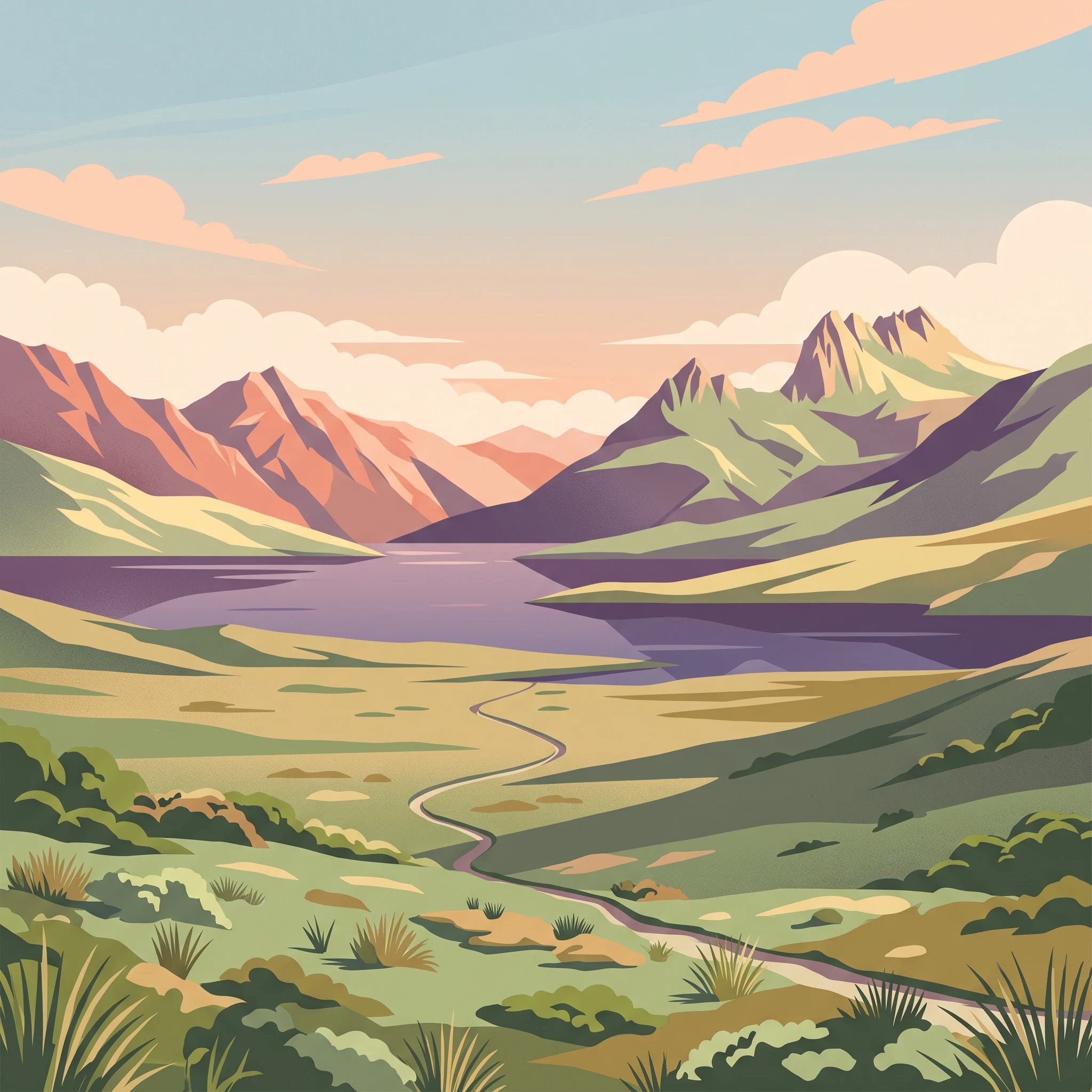
The physical landscape of Southwest National Park is characterized by a remarkable diversity of terrain shaped by ancient geological processes and ongoing weathering. The dominant landscape feature is the extensive buttongrass moorland, a unique vegetation type that covers much of the relatively flat terrain, consisting of the sedge species Gymnoschoenus sphaerocephalus that forms distinctive spherical flower heads. This moorland landscape is interspersed with wet eucalypt forest, particularly along watercourses and in valleys, where stringybark and peppermint eucalypts dominate. The park contains several mountain ranges, including the Eastern and Western Arthur Ranges, which feature dramatic peaks of dolerite and quartzite rising abruptly from the surrounding terrain. Federation Peak, originally named "the Obelisk" by surveyor James Sprent in 1854, stands as an iconic though challenging climbing destination. Mount Anne offers spectacular views from High Shelf Camp, while the southern coastline features remote beaches, headlands, and the spectacular fjords of Bathurst Harbour and Port Davey. The coastal region includes Maatsuyker Island, a group of islands lying offshore that support significant seabird colonies. The landscape varies in elevation from sea level along the coast to over 1,200 meters in the alpine areas, with the western and southern regions receiving the highest rainfall, creating a landscape of rushing streams, buttongrass plains, and densely vegetated gullies.
Southwest National Park ecosystems, habitats, and plant life
The ecological character of Southwest National Park is defined by the interaction between its harsh climate, ancient soils, and unique evolutionary history that has produced extraordinary biodiversity. The park contains 375 species of vascular flora from 84 families, representing approximately 20 percent of Tasmania's total flora, a remarkable concentration given the relatively small area. Of these species, 118 are endemic to Tasmania alone, with six listed as rare or endangered, including the endangered King's lomatia. The non-vascular flora is equally significant, with 128 bryophyte species recorded, six of which are endemic to the park alone. The buttongrass moorland represents the dominant vegetation community, covering extensive areas and providing habitat for numerous endemic species. This moorland ecosystem has been shaped over millennia by both natural processes and Aboriginal fire management practices. The park also contains significant areas of wet eucalypt forest, coastal heath, and limited alpine vegetation. The freshwater systems remain remarkably intact, with no introduced fish species recorded, making these waters among the most conservation-significant in Australia. The park's isolation and harsh conditions have paradoxically contributed to its biodiversity by limiting human disturbance and providing refugia for species through climatic oscillations.
Southwest National Park wildlife and species highlights
Southwest National Park supports an exceptional concentration of endemic wildlife, with several species found nowhere else on Earth. The park's most celebrated resident is the orange-bellied parrot, a critically endangered species that depends almost entirely on the park's Melaleuca Lagoon area for breeding between November and March, representing the only known significant breeding ground for this species. With fewer than 50 individuals remaining in the wild and another 320 in captivity, the park plays a crucial role in the survival of this species. The park supports three terrestrial mammal species, ten terrestrial bird species, seven reptile species, three frog species, and four freshwater fish species that are endemic to the park. Bird species of note include the fairy tern, wedge-tailed eagle, green rosella, and dusky robin, while the reptile fauna includes the Tasmanian tree skink, ocellated skink, and she-oak skink. The amphibian population includes the Tasmanian tree frog, Tasmanian froglet, and the recently discovered moss froglet. The freshwater fish Pedder galaxias, once endemic to the now-flooded Lake Pedder, is listed as extinct in the wild, surviving only in translocated populations. The park also supports the New Zealand fur seal, which regularly visits Maatsuyker Island during the breeding season.
Southwest National Park conservation status and protection priorities
Southwest National Park occupies a critical position in Australian conservation, serving as the core protected area within the Tasmanian Wilderness World Heritage Area recognized under both cultural and natural criteria. The park's conservation significance derives from its outstanding universal values including ancient landscapes, endemic biodiversity, and ongoing ecological processes. As the primary breeding ground for the critically endangered orange-bellied parrot, the park represents the last hope for survival of one of Australia's most threatened bird species. The intact freshwater systems, free of introduced fish species, are among the most significant in Australia for conservation. However, the park faces serious threats including climate change, which is altering rainfall patterns and increasing dry lightning fires that threaten both vegetation and endangered species. The root rot fungus Phytophthora cinnamomi has been detected at Scotts Peak and Melaleuca, posing particular risk to the buttongrass moorlands. Management strategies include hygiene checks for visitors to prevent disease spread, prohibition of campfires making the park a Fuel Stove Only Area, and bans on fishing in freshwater systems to prevent introduction of invasive species. The park was withdrawn from UNESCO's Biosphere Reserve program in 2002 but remains fully protected under World Heritage listing.
Southwest National Park cultural meaning and human context
The cultural landscape of Southwest National Park encompasses tens of thousands of years of Aboriginal occupation and more recent European exploration and settlement history. The South West Nation of Aboriginal Tasmanians inhabited the region for at least 34,000 years, with evidence of occupation extending potentially to 40,000 years before present. The four clans of this nation, the Mimegin, Lowreenne, Ninene, and Needwonne, utilized the diverse resources of the coastal and inland areas, hunting marine mammals, collecting shellfish, and pursuing wallabies and wombats across the buttongrass plains. The flooding of Lake Pedder in 1972 represents a profound cultural loss, with the lake holding significant meaning for both Aboriginal people and the broader Tasmanian community. The lake was famous among bushwalkers for its majestic beauty and unique pink quartz sand, with one conservation figure noting it would hold the same status in Australian mythology as Uluru or Kakadu had it survived. The park contains heritage sites including the Melaleuca-Port Davey area with evidence of Aboriginal occupation, and the memory of the environmental movement that successfully prevented the Franklin River Dam remains integral to the park's identity.
Top sights and standout views in Southwest National Park
Southwest National Park offers exceptional wilderness experiences for experienced outdoor enthusiasts, with the Port Davey Track and South Coast Track representing two of Australia's most significant multi-day wilderness hikes. The South Coast Track traverses the full southern coast from Cockle Creek to Melaleuca, typically taking ten to fourteen days, passing through diverse landscapes from buttongrass plains to coastal heath. Federation Peak, the iconic peak visible from Melaleuca, challenges climbers with its technical routes and rewards with panoramic views of the remote southwest. Bathurst Harbour and Port Davey offer spectacular coastal paddling opportunities in what remains one of Australia's most isolated marine environments. The orange-bellied parrot breeding program at Melaleuca represents a critical conservation effort, with visitors sometimes able to observe these critically endangered birds during the summer breeding season. The park's size means that much of its interior remains effectively roadless and receives minimal visitation, preserving opportunities for genuine wilderness exploration.
Best time to visit Southwest National Park
The most favorable time for visiting Southwest National Park is during the warmer months from October through March, when temperatures are milder and daylight hours are longest. This period corresponds with the orange-bellied parrot breeding season, with parrots present at Melaleuca from November to March. However, visitors should be prepared for the park's notoriously changeable weather at any time of year, with sudden storms, high winds, and low temperatures possible even during summer. The park experiences extremely high annual rainfall exceeding 2000 millimeters, with the western and southern areas receiving the heaviest precipitation. Winter visits offer fewer daylight hours and very cold conditions but can provide dramatic scenery with snow on the higher peaks. Regardless of season, visitors must come prepared for adverse conditions and should register their intentions with park management given the remote nature of the park and the potential for emergencies to require evacuation by helicopter. The walking tracks are designed for experienced hikers with good navigation skills and appropriate equipment for self-sufficiency in challenging conditions.