Why Narawntapu National Park stands out
Narawntapu is particularly renowned for its exceptional density of marsupial wildlife, with visitors commonly encountering forester kangaroos, Bennett's wallabies, Tasmanian pademelons, common wombats, and Tasmanian devils in open grassland areas near the Springlawn visitor precinct. The park's intertidal mudflats in the North East Arm area form part of the Rubicon Estuary Important Bird Area, supporting significant populations of migratory waders including pied oystercatchers. The coastal heathland and sclerophyll woodland habitats support threatened bird species such as the hooded plover, Tasmanian wedge-tailed eagle, and swift parrot, making the park a notable location for birdwatching and wildlife observation within Tasmania.
Narawntapu National Park history and protected-area timeline
The land that now constitutes Narawntapu National Park was first reserved as a protected area on 29 June 1976, initially designated as Asbestos Range National Park in reference to the nearby Asbestos Range geological formation. However, park managers and tourism authorities grew concerned that the word asbestos carried negative connotations that discouraged potential visitors from exploring the area, despite the name referring only to the geological feature and not to any actual asbestos deposits. Following a formal review process, the park was renamed to Narawntapu in the year 2000, adopting a name of Tasmanian Aboriginal origin that specifically references the coastal promontories of West Head and Badger Head within the park's boundaries. This renaming represented a broader movement within Australian protected areas toward acknowledging and preserving indigenous place names and cultural heritage. The park was formally listed on Australia's Register of the National Estate, recognizing its significance as a protected landscape of national importance. The establishment of visitor facilities at Springlawn has enabled tourists to observe native wildlife in accessible settings, with the area becoming particularly popular among visitors arriving from Devonport and Port Sorell. The park's conservation history includes management challenges related to wildlife disease, notably a mange outbreak among common wombat populations that began in 2010 and significantly impacted the species' numbers within the park by 2019.
Narawntapu National Park landscape and geographic character
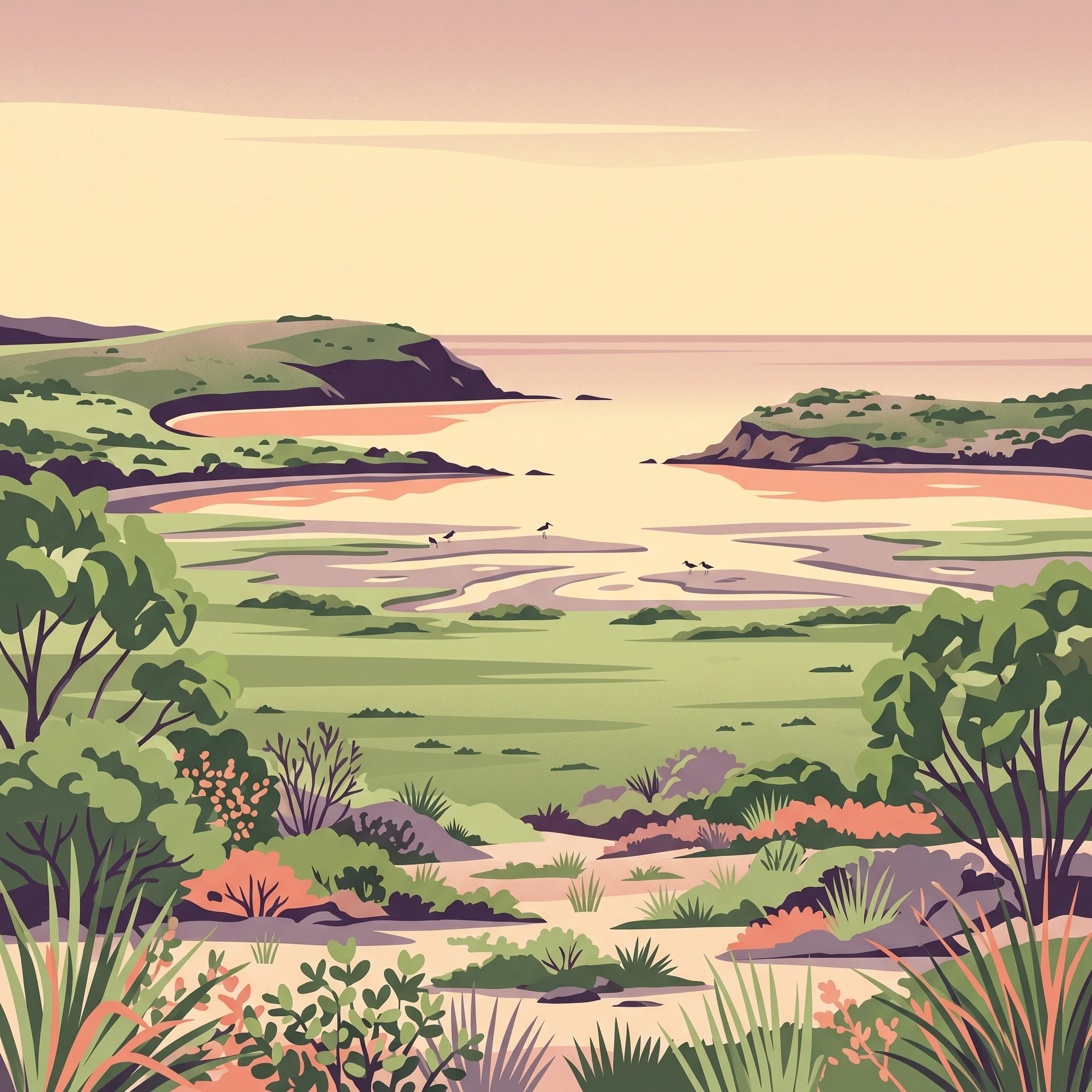
The physical landscape of Narawntapu National Park presents a varied coastal terrain characterised by low to moderate elevation undulating terrain rising to a maximum of 392 metres above sea level. The park's eastern boundary follows the coastline of Bass Strait, where coastal headlands such as West Head and Badger Head project into the sea, creating distinctive promontories that the park's Aboriginal name references. The Port Sorell estuary cuts into the coastline on the western side of the park, introducing tidal influences and creating the extensive intertidal mudflat environments that characterise the North East Arm area. The Carbuncle and other smaller islands within the estuary fall within park boundaries, adding aquatic and island habitats to the protected area's diversity. The terrain transitions from coastal heathland on exposed headlands through drier sclerophyll woodland on the more sheltered slopes to grassland plains in the valley floors and wetland margins. Salt marsh communities occupy the transitional zones between terrestrial and aquatic environments, particularly around the estuary margins where tidal influence creates brackish conditions. The combination of coastal promontories, island environments, woodland ridges, and wetland flats creates a landscape of considerable visual and ecological variety within a relatively compact protected area.
Narawntapu National Park ecosystems, habitats, and plant life
The ecological character of Narawntapu is defined by a mosaic of vegetation communities that reflect the park's coastal location and temperate climate. Coastal heathland dominates the exposed headland areas, characterised by drought-resistant shrubs adapted to salt-laden winds and relatively poor soils. Dry sclerophyll woodland covers the more sheltered slopes and ridges, with eucalyptus species forming an open canopy above a diverse understory of grasses and shrubs. Herbland and grassland communities occupy the valley floors and areas surrounding wetlands, providing the open grassy plains that have become famous for their abundant marsupial populations. Salt marsh vegetation fringe the estuary edges, tolerating the periodic inundation and brackish conditions that characterise these transitional environments. The rare pygmy clubmoss has been recorded within the park, representing a species of particular botanical interest. The intertidal mudflats represent one of the park's most ecologically significant features, supporting highly productive benthic communities that form the base of food chains supporting vast numbers of migratory shorebirds. The Rubicon Estuary system, of which Narawntapu's mudflats form a part, has been identified as an Important Bird Area by BirdLife International due to its international significance for migratory wader species.
Narawntapu National Park wildlife and species highlights
Narawntapu National Park supports an exceptional concentration of marsupial species, making it one of Tasmania's most wildlife-rich protected areas. The Springlawn visitor area provides reliable sightings of forester kangaroos, Bennett's wallabies, and Tasmanian pademelons that graze openly on the grassland plains, often congregating in considerable numbers. Common wombats inhabit the park's woodland and heathland areas, though their populations have been severely affected by a mange outbreak that began in 2010 and reduced the population to between 3 and 10 individuals by 2019. Tasmanian devils, the iconic marsupial carnivore of Tasmania, are also present within the park and can be observed, particularly at dawn and dusk. Smaller marsupials including eastern quolls and spotted-tail quolls occupy the diverse habitats across the park, while monotremes such as platypus and short-beaked echidnas add to the mammalian diversity. The birdlife is particularly notable, with the intertidal mudflats supporting internationally significant populations of migratory waders including pied oystercatchers that travel between Tasmania and northern hemisphere breeding grounds. Threatened bird species including the hooded plover, Tasmanian wedge-tailed eagle, and swift parrot nest and forage within the park's various habitats. Wetland areas support diverse waterbird assemblages including several duck species, herons, swans, cormorants, coots, black-backed bitterns, and grebes, particularly during seasonal gatherings.
Narawntapu National Park conservation status and protection priorities
The conservation significance of Narawntapu National Park extends beyond its role as a protected area within Tasmania's national park network. The park's intertidal mudflats form a critical component of the Rubicon Estuary Important Bird Area, recognised internationally for their importance to migratory shorebird populations that depend on these productive feeding grounds during their annual migrations between southern Australia and northern hemisphere breeding areas. The presence of threatened bird species including the hooded plover, Tasmanian wedge-tailed eagle, and swift parrot demonstrates the park's importance as habitat for species of conservation concern. The diverse vegetation communities, ranging from coastal heathland through sclerophyll woodland to salt marsh, represent relatively intact examples of Tasmania's coastal ecosystems. The park's listing on Australia's Register of the National Estate reflects its recognition as a place of national environmental significance. Management efforts have addressed wildlife disease challenges, with scientific teams implementing treatment programs for wombats affected by mange, though these efforts were ultimately unsuccessful in preventing the deaths of infected individuals. The protection of coastal and wetland habitats ensures the continuation of ecological processes that support both resident and migratory species.
Narawntapu National Park cultural meaning and human context
The name Narawntapu carries deep cultural significance, derived from Tasmanian Aboriginal language and specifically referencing the coastal promontories of West Head and Badger Head that form prominent landscape features within the park. This naming reflects the long history of Aboriginal occupation and connection to the Tasmanian coastline, with the coastal areas providing traditional food resources and cultural significance for local indigenous communities. The park's 2000 renaming from Asbestos Range National Park acknowledged indigenous heritage while addressing practical concerns about visitor perception. The landscape has been shaped by both natural processes and historical human activity, with the coastal location providing contexts for settlement, fishing, and other traditional land uses that predate European colonisation of Tasmania. The cultural layer adds depth to the park's identity beyond its ecological values, connecting contemporary protected area management with the longer human history of the Tasmanian coastline.
Top sights and standout views in Narawntapu National Park
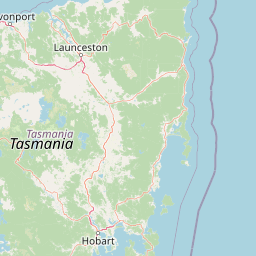
Narawntapu National Park offers distinctive wildlife viewing opportunities at the Springlawn visitor area where forester kangaroos, Bennett's wallabies, and Tasmanian pademelons can be observed grazing in open grassland settings. The coastal headlands of West Head and Badger Head provide scenic lookouts over Bass Strait and the estuary waters below. The intertidal mudflats of the North East Arm support remarkable concentrations of migratory shorebirds, particularly pied oystercatchers, making this a significant destination for birdwatching enthusiasts. The diversity of habitats within a relatively compact area allows visitors to experience heathland, woodland, grassland, and wetland environments in a single visit. The park's accessibility from Devonport and Port Sorell makes it a convenient destination for visitors exploring Tasmania's north coast.
Best time to visit Narawntapu National Park
Narawntapu National Park experiences a temperate maritime climate with characteristic mild temperatures and mainly winter rainfall, making it suitable for visits throughout the year. Mean summer temperatures reach around 17 degrees Celsius in January, while winter temperatures average around 9 degrees Celsius in July, providing comfortable conditions for outdoor exploration in most seasons. The prevailing north-east and north-west winds influence visitor comfort, with spring and autumn often presenting calmer conditions. Winter rainfall can make some tracks muddy and less suitable for walking, though the park remains accessible. The summer months typically offer longer daylight hours for wildlife viewing and landscape appreciation, while the winter season brings fewer visitors and opportunities for more solitary exploration of the park's trails and observation areas.