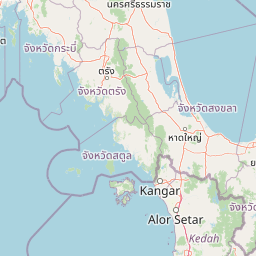
Why Khao Phanom Bencha National Park stands out
Khao Phanom Bencha is best known for its dramatic mountain landscape crowned by the 1,397-meter peak of Khao Phanom Bencha, which forms a striking forested silhouette visible from the surrounding lowlands. The park contains several impressive waterfall systems, including Huai To Falls, a five-tiered cascade dropping 80 meters, and the three-tiered Huai Sakhe Falls, which together represent some of the most accessible natural attractions in the region. The park is also renowned as a birdwatching destination with over 200 documented species, including the endangered Gurney's pitta, one of the world's rarest birds. The old-growth rainforest supports notable mammals including clouded leopard, Malayan tapir, and Asian black bear, making it a significant area for wildlife conservation in peninsular Thailand.
Khao Phanom Bencha National Park history and protected-area timeline
Khao Phanom Bencha National Park was established in 1981 as part of Thailand's expanding national park network during a period of increasing environmental awareness. The protection of this mountainous area reflected recognition of the ecological importance of Thailand's remaining forest cover and the need to preserve watershed areas that support both wildlife and human communities. The park's creation followed surveys that documented the area's significant biodiversity and old-growth forest character. Management by the Department of National Parks, Wildlife and Plant Conservation has focused on balancing conservation objectives with sustainable recreation opportunities. The park has developed facilities for visitors while maintaining the natural character of the environment. Increased attention to the park's bird species, particularly the critically endangered Gurney's pitta discovered in the 1990s, has strengthened the site's conservation profile.
Khao Phanom Bencha National Park landscape and geographic character
The landscape of Khao Phanom Bencha National Park is dominated by the steep, forested slopes of the Khao Phanom Bencha mountain range, which rises abruptly from the surrounding lowland terrain to form a dramatic backdrop of dense jungle. The park encompasses approximately 50 square kilometers of terrain that ranges from near sea level in the valley areas to 1,397 meters at the highest peak. The topography features deep valleys, rocky outcrops, and numerous stream courses that descend through the forest, creating ideal conditions for the waterfall systems that rank among the park's most notable features. The Huai To waterfall system drops approximately 80 meters across five distinct cascades, while Huai Sakhe Falls descends through three tiers. Khao Pheung cave, featuring impressive stalactite and stalagmite formations, adds geological interest to the park's landscape. The mountain's upper elevations support montane forest character with reduced tree height, increased epiphyte presence, and cloud forest conditions during wet seasons.
Khao Phanom Bencha National Park ecosystems, habitats, and plant life
The nature of Khao Phanom Bencha reflects the ecological significance of protecting substantial tracts of lowland and montane rainforest on Thailand's Malay Peninsula. The forest ecosystem includes diverse tree species such as teak, takian, Dipterocarpus alatus, Lagerstroemia, Magnolia champaca, and Parkia speciosa, with each species occupying distinct niches across the elevational gradient. At lower elevations, dense growths of Calamus palms and bamboo create distinct understory conditions, while higher elevations feature more open canopy conditions influenced by cloud immersion. The forest structure supports complex ecological interactions and provides critical habitat for species ranging from large mammals to specialized invertebrates. The watershed functions of the forested slopes supply downstream water resources for agricultural and community use, adding ecological importance beyond biodiversity considerations.
Khao Phanom Bencha National Park wildlife and species highlights
The wildlife population in Khao Phanom Bencha represents one of the most significant mammal and bird assemblages in southern Thailand. The park provides critical habitat for several threatened species, including the clouded leopard, a secretive forest-dependent carnivore, and the Malayan tapir, the largest mammal in the region. Other notable mammals include the Sumatran serow, a goat-antelope adapted to steep terrain, Asian black bear, and small populations of mouse deer. Primate diversity is particularly high, with langur, lar gibbon, and stump-tailed macaque all present in the forest. The bird community exceeds 200 species and makes the park a premier birdwatching destination in Thailand. Species of special conservation concern include the endangered Gurney's pitta, among the world's rarest birds, as well as white-crowned hornbill, helmeted hornbill, white-rumped shama, and argus pheasant. The diversity reflects the forest's intact condition and the variety of habitats from valley floors to mountain ridges.
Khao Phanom Bencha National Park conservation status and protection priorities
Khao Phanom Bencha National Park serves as a critical conservation area within Thailand's protected area network, preserving significant examples of lowland and montane rainforest that have become increasingly rare on the Malay Peninsula. The park's importance is underscored by the presence of multiple threatened species, including the endangered Gurney's pitta whose discovery in the area during the 1990s brought international attention to the site. Conservation efforts focus on maintaining forest integrity, protecting watershed functions, and managing visitor impacts while providing sustainable recreation opportunities. The IUCN Category II designation reflects the park's primary objective of protecting natural ecosystems while allowing controlled public access. The forest also serves as a carbon store and plays a role in regional climate regulation through its influence on local hydrological cycles. Ongoing research and monitoring efforts help inform management decisions and track population trends for key species.
Khao Phanom Bencha National Park cultural meaning and human context
Khao Phanom Bencha sits within a region of cultural significance for local communities in Krabi Province, where traditional relationships with the forest have shaped land-use patterns over generations. The mountain and surrounding area hold spiritual importance for communities who have historically gathered forest products and engaged in shifting cultivation in the broader landscape. While the national park designation has restricted certain traditional activities within the protected boundary, the area remains connected to cultural practices in the surrounding villages. The park's proximity to Krabi town and its role in regional tourism development have created new economic relationships between local communities and visitors, though the mountainous terrain has limited settlement within the park itself. The name Khao Phanom Bencha derives from local language and reflects the mountain's prominence in regional identity.
Top sights and standout views in Khao Phanom Bencha National Park
The standout features of Khao Phanom Bencha include the dramatic Khao Phanom Bencha mountain itself, with its 1,397-meter summit offering challenging trekking and sweeping views across the surrounding landscape. The waterfall systems, particularly Huai To Falls with its 80-meter vertical drop across five tiers, provide accessible natural attractions that draw visitors seeking scenic beauty. The exceptional bird biodiversity, with over 200 species including the rare Gurney's pitta, makes the park a destination of choice for birdwatchers. The old-growth forest character, with towering trees and complex canopy structure, offers a wilderness experience increasingly rare in populated Southeast Asia. Combined with the presence of large mammals including clouded leopard and tapir, the park provides opportunities for wildlife observation that attract nature enthusiasts from around the world.
Best time to visit Khao Phanom Bencha National Park
The optimal time to visit Khao Phanom Bencha National Park falls during the dry season from November through April, when reduced rainfall provides easier access to trails and waterfall viewpoints. The cool season from November to February offers comfortable temperatures for hiking and the most stable weather conditions. The wet season from May through October brings more frequent rainfall that can make trail conditions challenging and reduce visibility from mountain viewpoints, though the waterfalls typically flow more impressively during this period. Birdwatching can be productive throughout the year, though some species may be more active during transitional periods. The mountain trekking experience varies significantly by season, with clear skies in the dry season providing better summit views but potentially hotter conditions on the trail.