Why Sirinat National Park stands out
Sirinat National Park is best known for its well-preserved white sand beaches and its significance as a sea turtle nesting ground. Hat Mai Khao and Hat Nai Yang beaches are particularly notable as nesting areas where sea turtles come ashore to lay eggs between November and February each year. The park also contains significant beach forest ecosystems that serve as natural windbreaks during tropical storms while stabilizing coastal sands. The combination of terrestrial and marine protected areas makes this park distinctive, offering protection to coral reefs located 700 to 1,000 meters offshore, as well as mangrove forests where freshwater and seawater mix in estuarine zones.
Sirinat National Park history and protected-area timeline
Sirinat National Park was established on 13 July 1981 as Thailand's 32nd national park, originally operating under the name Nai Yang National Park. The park was officially renamed Sirinat National Park in 1992, adopting the Thai name อุทยานแห่งชาติสิรินาถ. Throughout its history, the park has faced significant challenges related to development pressures in the Phuket region. A 2014 editorial in the Bangkok Post highlighted concerns about military presence within the park, questioning the appropriateness of security measures for addressing non-physical threats to the protected area. More significantly, in January 2016, reports emerged that approximately 1,200 rai of park land had been illegally detached from the protected area by officials and sold to property developers. These illegal transactions reportedly involved property developers purchasing land for resort and hotel development at prices reaching 40 million baht per rai, representing a significant threat to the park's integrity and demonstrating ongoing challenges in protecting Thailand's national parks from encroachment.
Sirinat National Park landscape and geographic character
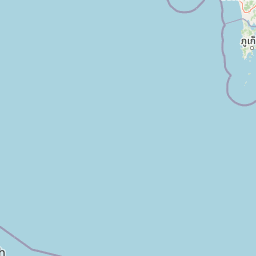
Sirinat National Park's landscape is defined by its coastal setting along the Andaman Sea on Phuket Island's northwestern coast. The park encompasses four primary beaches: Hat Nai Thon, Hat Nai Yang, Hat Mai Khao, and Hat Sai Kaeo. Hat Mai Khao holds the distinction of being Phuket's longest beach, stretching along the coastline and providing important coastal habitat. The beach forest areas within the park feature relatively flat terrain interspersed with vegetation adapted to sandy coastal conditions. The marine portion of the park extends from the shoreline into the Andaman Sea, with coral reef systems located at distances of 700 to 1,000 meters offshore. Mangrove forests are situated where freshwater from inland areas mixes with seawater in estuarine zones, creating distinctive transitional ecosystems. The landscape reflects the dynamic interaction between terrestrial and marine environments that characterizes tropical coastal protected areas.
Sirinat National Park ecosystems, habitats, and plant life
The ecological character of Sirinat National Park encompasses multiple distinct habitat types that support diverse plant and animal communities. Beach forests within the park cover approximately 2 square kilometers and feature numerous tree species adapted to coastal conditions, including common ironwood, tulip tree, tropical almond, white barringtonia, cajeput tree, Alexandrian laurel, screwpine, ashoka tree, black plum, elephant apple, and morning glory. These forests serve critical ecological functions as windbreaks during tropical storms and as stabilizers of beach sands. The park also contains a smaller but significant mangrove forest area of about 1 square kilometer located in estuarine zones where freshwater and seawater mix. Mangrove tree species include red mangrove, white mangrove, black mangrove, cannonball mangrove, looking-glass mangrove, and Ceriops, alongside other plant species. The marine environment supports coral reef ecosystems with plate coral, soft coral, sea fans, and sea anemones, creating underwater habitats for numerous marine species.
Sirinat National Park wildlife and species highlights
Sirinat National Park supports significant wildlife populations across its multiple habitat types. The beach forests are home to various bird species including magpie-robin, common myna, spotted dove, Asian fairy-bluebird, oriole, greater racket-tailed drongo, and several bulbul species. The mangrove forest environments host an diverse avifauna including collared kingfisher, Terek sandpiper, bar-tailed godwit, white-breasted waterhen, slaty-breasted rail, white-bellied sea eagle, brahminy kite, and large-billed crow. Reptile species found in the mangrove areas include monitor lizards, mangrove snakes, and various turtle species. Marine life within the park's waters includes shrimp, mudskipper, mullet, grouper, and garfish. The park holds particular significance as a sea turtle nesting site, with Hat Mai Khao and Hat Nai Yang serving as nesting beaches where sea turtles come ashore between November and February. Historically, leatherback sea turtles nested in the park, with 166 eggs recorded between 1999 and 2013, though nesting activity has ceased since 2013 due to intensive development along the beaches.
Sirinat National Park conservation status and protection priorities
Sirinat National Park represents an important conservation asset for Thailand, protecting coastal ecosystems that face intense development pressure in the rapidly growing Phuket region. The park's dual protection of both terrestrial beach forests and marine environments ensures the preservation of complete coastal ecosystem chains. Beach forests play a critical role in coastal protection by stabilizing sands and providing windbreaks during tropical storms, functions that have ecological and human safety implications for the surrounding area. The marine section protects coral reef ecosystems that support marine biodiversity and contribute to the overall health of the Andaman Sea coastal environment. The park's designation as an IUCN Category II protected area reflects its national park status and the formal protection it provides. However, significant conservation challenges exist, including illegal land encroachment and development pressure. The loss of sea turtle nesting activity since 2013 illustrates the vulnerability of wildlife to human disturbance and habitat modification even within protected areas.
Sirinat National Park cultural meaning and human context
Sirinat National Park exists within the broader context of Phuket Province, an area with deep connections to maritime trade, fishing communities, and increasingly tourism-driven development. The park's land was originally part of the natural landscape supporting local communities before its designation as a protected area. The name Sirinat, สิรินาถ, carries cultural significance in Thai language. The park's location adjacent to Phuket International Airport places it at the gateway to one of Thailand's most visited tourist destinations, creating both opportunities for public awareness of conservation and challenges from tourism-related development pressures. The traditional land uses of fishing and coastal habitation in the region have given way to resort development and tourism infrastructure, highlighting the tension between conservation objectives and economic development that the park must navigate.
Top sights and standout views in Sirinat National Park
Sirinat National Park offers several standout features that distinguish it within Thailand's national park system. The park provides protected access to some of Phuket's most unspoiled beaches, including the island's longest beach at Hat Mai Khao. The sea turtle nesting grounds at Hat Mai Khao and Hat Nai Yang represent significant wildlife conservation value, historically supporting leatherback turtle reproduction and currently providing habitat for nesting turtles between November and February. The combination of beach forests, mangrove ecosystems, and coral reefs within a single protected area creates remarkable ecological diversity. The park's proximity to Phuket International Airport makes it particularly accessible for visitors seeking natural experiences beyond the developed tourist areas of the island. The protection of beach forests that serve as natural storm buffers demonstrates the park's ecological function beyond simple species protection.
Best time to visit Sirinat National Park
The optimal time to visit Sirinat National Park aligns with the cool, dry season typical of Thailand's Andaman coast, generally spanning November through April. This period offers more comfortable temperatures and reduced rainfall, making beach exploration and outdoor activities more pleasant. For visitors specifically interested in sea turtle nesting, the season from November to February is particularly relevant, as this is when turtles come ashore to lay eggs on Hat Mai Khao and Hat Nai Yang beaches. The park can be visited throughout the year, though the wet season from May through October brings increased rainfall and potential tropical storms that may affect beach conditions and accessibility. Visitors seeking to experience the park's natural environments in their most accessible form should consider the dry season months, while those interested in witnessing the turtle nesting phenomenon should plan their visit for the November through February period.