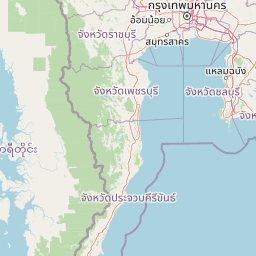
Why Namtok Huai Yang National Park stands out
Namtok Huai Yang National Park is best known for its spectacular waterfall system, particularly the seven-tier Huai Yang waterfall which serves as the park's signature attraction and namesake. The mountain landscape along the Tenasserim Hills provides dramatic forest scenery and panoramic viewpoints, with the fourth tier of Huai Yang offering views extending to the Gulf of Thailand. The park's position along the Thailand-Myanmar border places it within a biogeographically significant zone where forest ecosystems transition between mainland Southeast Asian regions. Visitors can explore well-maintained trails through the forest to multiple waterfall tiers and undertake the challenging hike to Khao Luang, the park's highest summit.
Namtok Huai Yang National Park history and protected-area timeline
Namtok Huai Yang National Park was officially declared as Thailand's 70th national park on December 8, 1991, representing the integration of two former reserved forest areas known as Wang Duan and Huai Yang into a unified protected landscape. The establishment reflected Thailand's broader effort in the late twentieth century to conserve its remaining forest ecosystems and watershed areas, particularly in mountainous border regions. The park's creation also acknowledged the ecological significance of the Tenasserim Hills corridor, which spans the border between Thailand and Myanmar. The original forest reserves had provided preliminary protection to the area's watershed and biodiversity before formal national park designation elevated their conservation status and enabled more comprehensive management. The park's name derives from the Huai Yang waterfall, a seven-tier cascade that serves as the primary natural landmark and visitor attraction.
Namtok Huai Yang National Park landscape and geographic character
The landscape of Namtok Huai Yang National Park is defined by the Tenasserim Hills, a mountain range that forms the natural border between Thailand and Myanmar. The terrain rises from approximately 200 metres elevation in the lower reaches to around 800 metres at the park's highest points, creating a montane environment distinctly different from Thailand's coastal lowlands to the east. The mountain ridges run generally north-south, with numerous streams and tributaries descending through steep valleys to join the larger river systems that originate within the park. Forest cover dominates the landscape, with the combination of hill evergreen forest, dry evergreen forest, and coniferous forest creating varied visual textures across different elevations and aspects. The waterfalls, particularly the seven-tier Huai Yang cascade, represent the most distinctive hydrological features, where stream flow drops over rocky terraces through the forest. The circular trail to the waterfall tiers is well-maintained and signposted, with the fourth tier providing an elevated viewpoint overlooking the surrounding forest landscape toward the Gulf of Thailand in the distance.
Namtok Huai Yang National Park ecosystems, habitats, and plant life
The forest ecosystems of Namtok Huai Yang National Park represent a transitional zone between different Southeast Asian forest types, shaped by the park's position along the Thailand-Myanmar border and its elevation range. The hill evergreen forest dominates the higher elevations, characterized by tree species that maintain their foliage year-round in the tropical montane conditions. The dry evergreen forest occupies lower slopes and valley floors, featuring species adapted to seasonal variation in rainfall. Coniferous elements appear in certain areas, adding diversity to the forest composition. These forest types collectively support the park's role as an important watershed, with streams originating in the protected area feeding rivers including Khlong Ang Thong, Khlong Kaeng, and Khlong Thap Sakae that serve local communities downstream. The forest structure provides habitat complexity supporting diverse wildlife populations.
Namtok Huai Yang National Park wildlife and species highlights
The wildlife community within Namtok Huai Yang National Park includes several notable mammal species adapted to the forest environment. The Indochinese leopard represents the park's largest predator, though sightings are uncommon given the species' elusive nature. The mainland serow, a goat-antelope species, inhabits the rocky terrain and steep slopes of the Tenasserim Hills. Wild boar and Indian muntjac are more frequently encountered, particularly in areas where forest meets grassland edges. The Malayan porcupine occupies ground-level habitats within the forest understory. Primate species including various leaf monkeys and gibbons inhabit the forest canopy, with their vocalizations often audible during morning and evening periods. The park also provides habitat for the endemic freshwater crab species Phricotelphusa sirindhorn, found in the streams around Khao Luang mountain.
Namtok Huai Yang National Park conservation status and protection priorities
Namtok Huai Yang National Park contributes to regional conservation by protecting a segment of the Tenasserim Hills forest corridor that spans the Thailand-Myanmar border. The park's watershed protection function serves both ecological and human community interests, as the rivers originating within its boundaries provide water resources for downstream agricultural and domestic use. The protected area connects with adjacent parks including Hat Wanakon National Park to the north and Lenya National Park in Myanmar to the west, forming a transboundary conservation network that allows wildlife movement across the international boundary. Forest protection within the park helps preserve habitat for species including the Indochinese leopard and mainland serow, both of which face conservation pressures throughout their ranges. The park's management under the Department of National Park, Wildlife and Plant Conservation includes visitor facilities designed to minimize environmental impact while providing access to the area's natural attractions.
Namtok Huai Yang National Park cultural meaning and human context
The area surrounding Namtok Huai Yang National Park lies within Prachuap Khiri Khan Province, a region with historical connections to Thai maritime trade routes and coastal settlement patterns. The park's location along the Tenasserim Hills corresponds to a traditional boundary zone between Thai and neighboring kingdoms over centuries. Local communities in Thap Sakae and Bang Saphan Districts maintain relationships with the forest resources of the area, though the national park designation restricts certain traditional uses within the protected core zones. The park's accessibility via the Huai Yang railway station reflects the area's integration into Thailand's broader transportation network, connecting this mountain region with coastal destinations and the southern railway corridor.
Top sights and standout views in Namtok Huai Yang National Park
The seven-tier Huai Yang waterfall stands as the park's premier attraction, with a well-maintained circular trail allowing visitors to reach multiple tiers while the fourth tier offers panoramic forest views extending to the Gulf of Thailand. The multi-tiered Khao Lan waterfall provides an alternative attraction south of the visitor centre, particularly impressive during the rainy season. Khao On waterfall, also known as Thap Mon, cascades through nine tiers approximately 44 kilometres from the main visitor area. For adventurous visitors, the hike to Khao Luang summit represents the park's most challenging excursion, requiring approximately five hours to reach the peak with an overnight stay necessary, where the endemic freshwater crab Phricotelphusa sirindhorn can be found in the mountain's streams. The campsite facilities allow visitors to experience the forest environment beyond day-trip access.
Best time to visit Namtok Huai Yang National Park
The optimal time to visit Namtok Huai Yang National Park falls during the cool dry season from November to February, when temperatures are moderate and trail conditions are most favorable for hiking to the waterfalls and summit areas. The park's waterfall flow is most impressive during and immediately following the rainy season from May to October, though some trails may be more difficult to navigate during this period due to wet conditions and higher water levels. The transition months of March and April bring warmer temperatures and reduce waterfall flow, though the thinner visitor crowds may appeal to those seeking a quieter experience. The dry evergreen and coniferous forest character remains visible year-round, though the hill evergreen forest appears most lush during the wetter months. Visitors planning summit hikes to Khao Luang should account for seasonal conditions and ranger availability, as access requires guidance from park personnel.