Why Kinchega National Park stands out
Kinchega National Park is best known for its Aboriginal heritage and its position along the Darling River in the Australian outback. The park contains significant archaeological evidence of Paarkantji occupation, with artefacts and cultural sites distributed along the river corridor that served as a vital transportation and resource pathway for Aboriginal communities. The Darling River itself forms the eastern boundary of the park, providing a riparian environment that contrasts sharply with the surrounding semi-arid plains. The park's birdlife is particularly notable, with major Mitchell's cockatoo and red-tailed black cockatoo among the distinctive species found in the region.
Kinchega National Park history and protected-area timeline
Kinchega National Park was formally established on October 1, 1967, as part of the expansion of New South Wales national parks during the mid-twentieth century. The creation of the park reflected increasing awareness of the natural and cultural values present along the Darling River system. Prior to European settlement, the area was part of the traditional lands of the Paarkantji people, who utilized the river corridor for transportation, food gathering, and cultural practices. The establishment of the protected area recognized both the ecological significance of the riparian environment and the Aboriginal heritage embedded in the landscape. The park has been managed by the NSW National Parks and Wildlife Service since its creation, with management priorities including the preservation of Aboriginal cultural sites and the protection of native wildlife.
Kinchega National Park landscape and geographic character
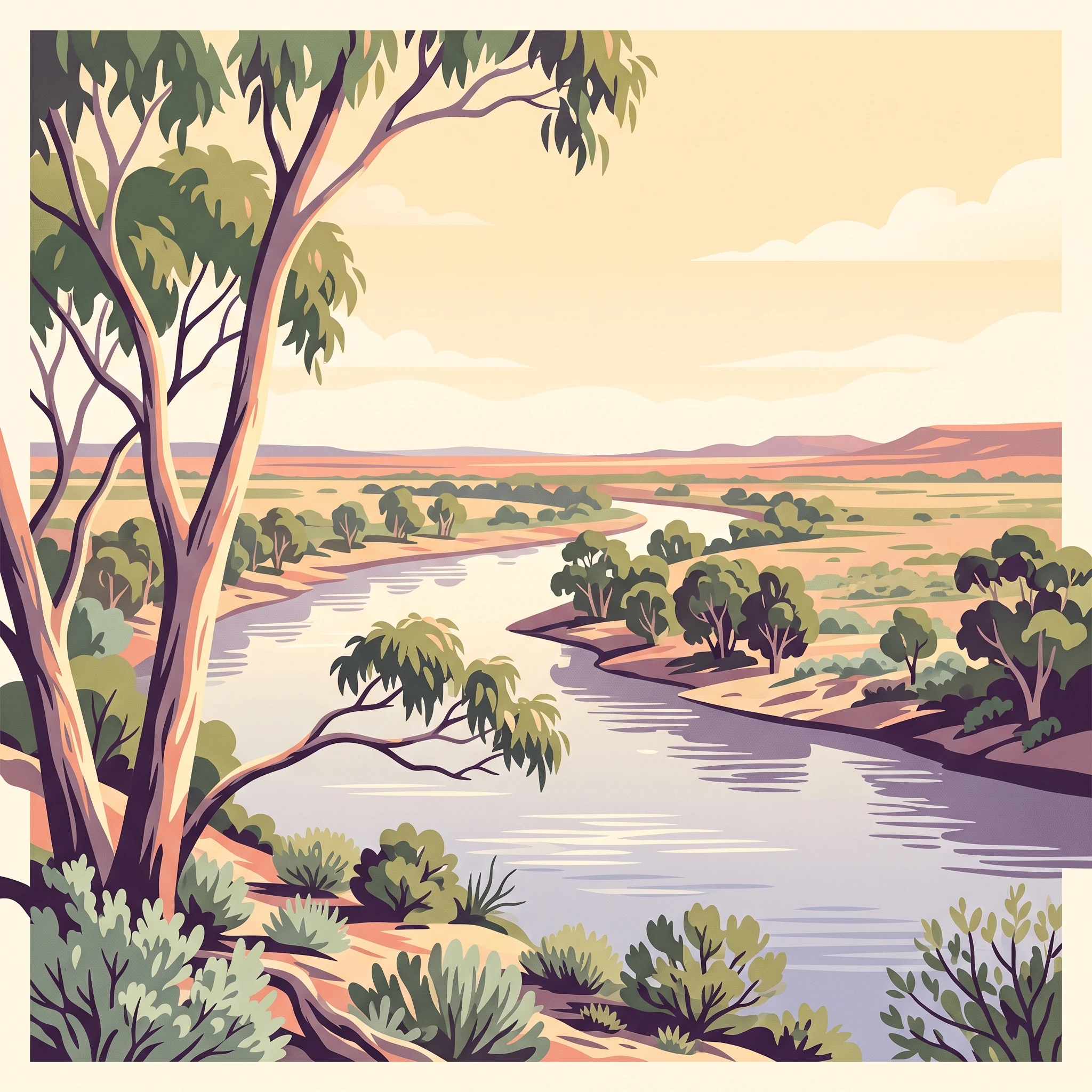
The landscape of Kinchega National Park is characterized by its location along the Darling River, which forms the eastern boundary of the protected area. The river corridor creates a distinctive environment of riparian vegetation, permanent water, and alluvial soils that contrasts markedly with the surrounding semi-arid plains and sandhills typical of far-western New South Wales. The river's channels and floodplains support stands of river red gum and other tree species adapted to the intermittently flowing river system. The broader park extends onto the flat to undulating terrain that characterizes this part of the Murray-Darling Basin, with the landscape shaped by the historical flow patterns of the Darling River system.
Kinchega National Park ecosystems, habitats, and plant life
The ecological character of Kinchega National Park is defined by its riparian environment along the Darling River set within the broader semi-arid landscape. The river corridor provides essential habitat and movement pathways for wildlife in a region where permanent water is scarce. The vegetation along the river includes river red gum communities that provide nesting habitat for birds and shelter for other wildlife. The contrast between the riverine environment and the surrounding arid lands creates a biodiversity hotspot, with species from both environments utilizing the park. The park supports ecosystems representative of the Darling River system, which forms a crucial component of the Murray-Darling Basin.
Kinchega National Park wildlife and species highlights
Kinchega National Park supports a range of wildlife adapted to the harsh interior environment of far-western New South Wales. The park is home to several reptile species including the lace monitor, a large arboreal goanna found throughout eastern Australia. Amphibians such as Peron's tree frog occur in the riparian areas where they utilize the permanent water sources provided by the Darling River. The birdlife is particularly diverse, with major Mitchell's cockatoo and red-tailed black cockatoo among the notable species present. The kultarr, a small marsupial adapted to arid environments, also occurs in the park. The river corridor provides important habitat for these species, with the permanent water and associated vegetation supporting wildlife populations through the variable seasons of the outback.
Kinchega National Park conservation status and protection priorities
Kinchega National Park contributes to the conservation of riparian and arid-environment ecosystems in western New South Wales. The protected area preserves a significant section of the Darling River corridor, maintaining connectivity for wildlife movement through the semi-arid landscape. The park's Aboriginal heritage values are also protected, with cultural sites along the river providing evidence of the long history of human occupation in this region. The protection of the river red gum communities along the Darling supports habitat for hollow-nesting birds and other wildlife dependent on riparian vegetation. As part of the NSW national parks system, Kinchega contributes to the broader conservation network protecting Australia's diverse environments.
Kinchega National Park cultural meaning and human context
Kinchega National Park holds significant cultural value related to the traditional ownership and use of the Darling River by the Paarkantji people. The Paarkantji, also spelled Barkandji, are an Aboriginal group whose traditional territories extend along the Darling River system. Archaeological evidence of their presence is distributed throughout the park, with artefacts and cultural sites along the river corridor testifying to generations of occupation and use of this landscape. The Darling River was a vital pathway for Aboriginal people, providing water, food resources, and serving as a transportation route through the arid interior. The park preserves this cultural heritage alongside its natural values, recognizing the deep connection between Indigenous communities and the river system.
Top sights and standout views in Kinchega National Park
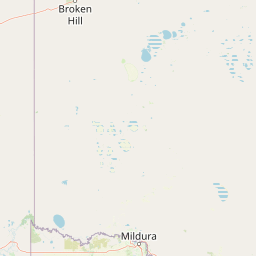
Kinchega National Park offers visitors the opportunity to experience the Darling River environment in a remote outback setting. The river provides a focal point for exploring the park, with the riparian environment offering contrast to the surrounding semi-arid plains. Aboriginal cultural heritage is a significant aspect of the park, with sites along the river demonstrating the long presence of the Paarkantji people. The birdlife, particularly the distinctive cockatoos found along the river corridor, draws visitors interested in wildlife observation. The park's location near Menindee provides access to information and facilities while maintaining a remote outback character.
Best time to visit Kinchega National Park
The optimal time to visit Kinchega National Park is during the cooler months of autumn and spring, from March through May and September through November, when temperatures are more moderate for outdoor exploration. Summer temperatures in far-western New South Wales can be extremely high, making outdoor activities challenging. Winter months, while cooler, can bring cold nights and occasionally inhospitable conditions. The Darling River system is subject to variable flow conditions, and the character of the park can change significantly following periods of high flow or drought. Visitors planning trips should check current conditions and be prepared for the remote nature of the location, which requires self-sufficiency and appropriate preparation for outback travel.