Why San Esteban National Park stands out
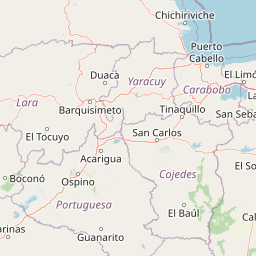
San Esteban National Park is most distinctive for its unusual combination of protected Caribbean forest ecosystems and remarkable colonial-era cultural heritage within a single national park boundary. The park protects significant archaeological sites including the petroglyphs of Vigirima (Tronconero's Painted Stone), pre-Colonial indigenous rock art that represents important cultural evidence of the region's original inhabitants. The historical artifacts include the colonial road known as 'The Way of the Spaniards' linking Valencia to Puerto Cabello, the Indian Salt Way between Patanemo and Guacara, and Solano Castle at Puerto Cabello, a fortification from the Spanish colonial period. The park also contains the town of San Esteban, associated with national hero Bartolomé Salom, linking the park to Venezuela's independence history.
San Esteban National Park history and protected-area timeline
San Esteban National Park was formally established on January 14, 1987, representing a relatively recent addition to Venezuela's national park system compared to pioneering parks like Henri Pittier, which was created in 1937. The establishment of the park reflected evolving perspectives in Venezuelan conservation, which by the 1980s had begun to incorporate recognition of cultural heritage as an integral component of protected landscape values. The park's territory encompasses areas that have been inhabited for centuries, with indigenous peoples leaving behind the petroglyphs at Vigirima, known also as the Painted Stone of Tronconero, representing tangible evidence of pre-Colonial presence in the region. The colonial period left more extensive marks on the landscape, including the construction of the road between Valencia and Puerto Cabello, a strategically important route for the Spanish colonial administration that connected the inland city of Valencia, one of Venezuela's oldest colonial settlements, with the important port of Puerto Cabello. This route, known as the Way of the Spaniards or Road of the Spaniards, includes significant infrastructure such as arched bridges crossing the mountainous terrain. The park also preserves the Indian Salt Way, an older route connecting Patanemo and Guacara that reflects trade patterns predating European contact. The town of San Esteban within the park boundaries holds historical significance as the home of Bartolomé Salom, a figure in Venezuela's independence movement, with his house preserved as part of the park's cultural heritage inventory.
San Esteban National Park landscape and geographic character
The landscape of San Esteban National Park is characterized by its position in the coastal mountain ranges of north-central Venezuela, where the Venezuelan Andes approach the Caribbean coast. The terrain rises from relatively low coastal elevations toward higher slopes inland, creating a topographically diverse environment within the park's boundaries. The park lies along the Caribbean-facing slopes where moisture-bearing winds from the ocean create humid conditions supporting lush tropical vegetation. The area includes the San Esteban river, which has carved a valley through the mountainous terrain, with the bridge of Paso Hondo representing a historical crossing point. The coastal proximity influences the landscape character, with the park including areas with Caribbean character despite its mountainous interior. The park's landscape encompasses both the natural forested slopes and areas modified by historical human use, including colonial-era roads, agricultural areas, and settlements, creating a cultural landscape where natural and historical elements intermingle.

San Esteban National Park ecosystems, habitats, and plant life
The natural environment of San Esteban National Park reflects its position in the Caribbean coastal forest ecoregion of northern Venezuela. The park lies within a zone of tropical and subtropical moist forest that receives significant precipitation from Caribbean weather systems, creating conditions favorable for dense vegetation cover. As part of the connected protected corridor that includes Henri Pittier National Park, San Esteban contributes to protection of a continuous belt of coastal forest that provides habitat for numerous species. The forest ecosystems of the park include both lowland tropical forest in the lower elevations and higher elevation forest types where cloud forest conditions prevail in the moister zones. This altitudinal variation in forest types supports diverse ecological communities and provides structural complexity that hosts varied wildlife populations.
San Esteban National Park wildlife and species highlights
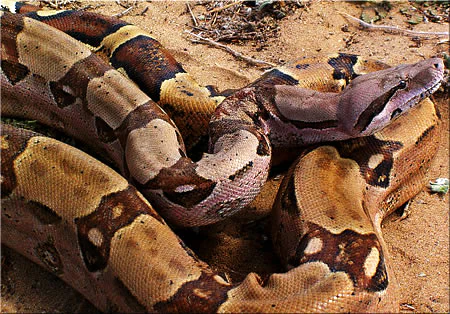
The wildlife of San Esteban National Park is typical of the Caribbean coastal forest region of Venezuela, supporting populations of both common Neotropical species and more specialized forest-dwelling animals. The park lists several notable species including the brown-throated parakeet (Aratinga pertinax), a colorful psittacine bird common in forest edges and semi-open areas throughout northern Venezuela. Reptile presence includes the boa constrictor, one of the largest snake species in the Americas, which inhabits forest floors and occasionally climbs in search of prey. The park also provides habitat for larger mammals including the ocelot, a medium-sized wild cat that hunts in forest understory, and the puma (cougar), a wide-ranging apex predator that requires large territories and intact forest habitat. These larger carnivores indicate that the park maintains relatively healthy ecological conditions capable of supporting viable populations of species requiring extensive home ranges and diverse prey bases.
San Esteban National Park conservation status and protection priorities
San Esteban National Park contributes to Venezuela's protected area network as an IUCN Category II national park, providing formal protection for both natural ecosystems and cultural heritage sites. The park's integration into the broader protected corridor with Henri Pittier National Park enhances conservation effectiveness by creating a larger continuous protected area that allows for wildlife movement and ecosystem processes across a wider landscape. The protection of archaeological sites including the petroglyphs at Vigirima represents conservation of cultural heritage alongside natural values, an approach that has become increasingly recognized as valuable for maintaining connections between human communities and their landscape history. The presence of larger mammal species like puma and ocelot indicates that the park maintains ecological integrity sufficient to support apex predators, generally considered an indicator of ecosystem health.
San Esteban National Park cultural meaning and human context
San Esteban National Park contains significant cultural heritage spanning indigenous pre-Colonial periods through the Spanish colonial era to the independence period of the 19th century. The indigenous heritage is most visibly represented by the petroglyphs at Vigirima, also called Tronconero's Painted Stone, where pre-Colonial peoples created rock art that survives as tangible evidence of the region's original inhabitants. The colonial period left extensive marks on the landscape, including the Road of the Spaniards connecting Valencia to Puerto Cabello, an important route for colonial administration and commerce, with associated infrastructure like arched bridges demonstrating engineering capability of the period. The Indian Salt Way between Patanemo and Guacara reflects older trade routes possibly predating European contact, possibly related to salt trading that was economically important in pre-Colonial times. The town of San Esteban within the park holds historical association with Bartolomé Salom, a general in Simon Bolivar's independence army, whose house is preserved within the park boundaries, connecting the protected area to Venezuela's national identity and independence history. The park also includes Las Trincheras, known for thermal baths and spa facilities that reflect later use of the landscape for recreation and wellness.
Top sights and standout views in San Esteban National Park
San Esteban National Park offers visitors a distinctive combination of natural beauty and historical exploration within a readily accessible location near major Venezuelan cities. The petroglyphs of Vigirima represent one of the park's most unusual attractions, providing direct connection to pre-Colonial indigenous culture through visible rock art in a protected natural setting. Solano Castle at Puerto Cabello provides a colonial-era fortification that reflects the strategic importance of the Caribbean coast during the Spanish colonial period. The preserved sections of the colonial road between Valencia and Puerto Cabello allow visitors to traverse historic infrastructure that connected two important Venezuelan cities during the colonial era. The Ecomuseum Villa Vincencio and the house of General Bartolomé Salom offer additional historical context related to Venezuela's independence period and regional development. The natural forest environments provide hiking and wildlife observation opportunities within a protected area that forms part of a larger forest corridor along Venezuela's Caribbean coast.
Best time to visit San Esteban National Park
The best time to visit San Esteban National Park is generally during the dry season from December through April, when visitor access is easier and trail conditions are more favorable for exploration. The park's location near the Caribbean means that precipitation patterns are influenced by the wet and dry seasons typical of tropical coastal regions, with the dry months offering more predictable weather for outdoor activities. However, the park can be visited year-round, with the wet season from May through November bringing lush green vegetation but potentially more challenging trail conditions. The proximity to the Caribbean coast also means that the park can be affected by tropical weather systems during the wet season, though significant disruptions are relatively uncommon. Visitors interested in wildlife observation may find the dry season more productive as animals concentrate around remaining water sources, while the wet season offers the advantage of fuller vegetation and more active bird activity.