Why Zakouma National Park stands out
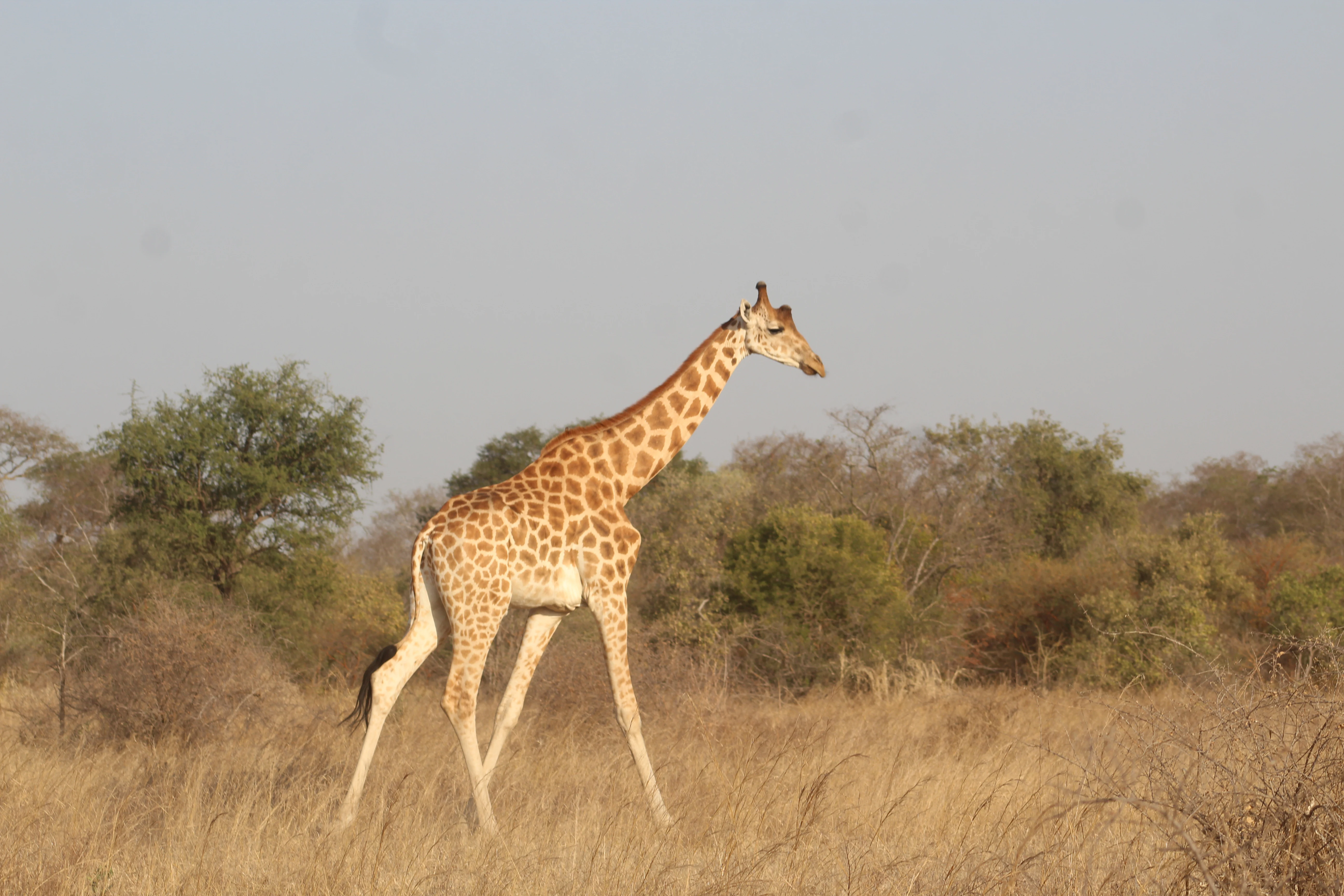
Zakouma is best known for its remarkable Kordofan giraffe population, which represents the largest concentration of this subspecies anywhere on Earth. The park has also become celebrated for its successful elephant recovery story, having stabilized and grown its herd following devastating poaching losses in the 2000s. Additionally, Zakouma has made headlines with its black rhino reintroduction program, with new arrivals in 2023 marking a significant milestone. The park's important bird area designation and diverse avifauna including ostriches, cranes, pelicans, and storks further enhance its ecological significance.
Zakouma National Park history and protected-area timeline
Zakouma National Park was established by the Chadian government in 1963, making it the country's oldest national park and granting it the highest protection status available under national law. Throughout its early decades, the park maintained relative stability, but the 2000s brought severe challenges as wildlife populations came under intense pressure from organized poaching networks, particularly those targeting elephants for their ivory. The situation reached a tragic apex in May 2007 when militia forces attacked the park's headquarters, killing three rangers and making off with approximately 1.5 tons of seized ivory that had been stored as evidence of previous poaching interdictions. In response to these escalating threats, the Chadian government initiated a partnership with African Parks in 2010, bringing professional conservation management to the park. This collaboration introduced modern anti-poaching infrastructure including GPS tracking for rangers, improved radio communications, and enhanced mobility through vehicles and horses. The European Union pledged 6.9 million euros in 2011 to support these conservation efforts over a five-year period. A significant expansion of elephant protection efforts occurred in 2012 when activities extended beyond the park's official boundaries, and an airstrip was constructed at Heban to facilitate monitoring of migratory elephant herds. The park's fiftieth anniversary was celebrated in February 2014 with a ceremony attended by President Idriss Déby, who participated in the ceremonial burning of approximately one ton of elephant tusks to demonstrate the government's commitment to ending the ivory trade. African Parks assumed management of adjacent protected areas including the Siniaka-Minia Faunal Reserve and Bahr Salamat Faunal Reserve in 2017, creating a larger conservation landscape.
Zakouma National Park landscape and geographic character
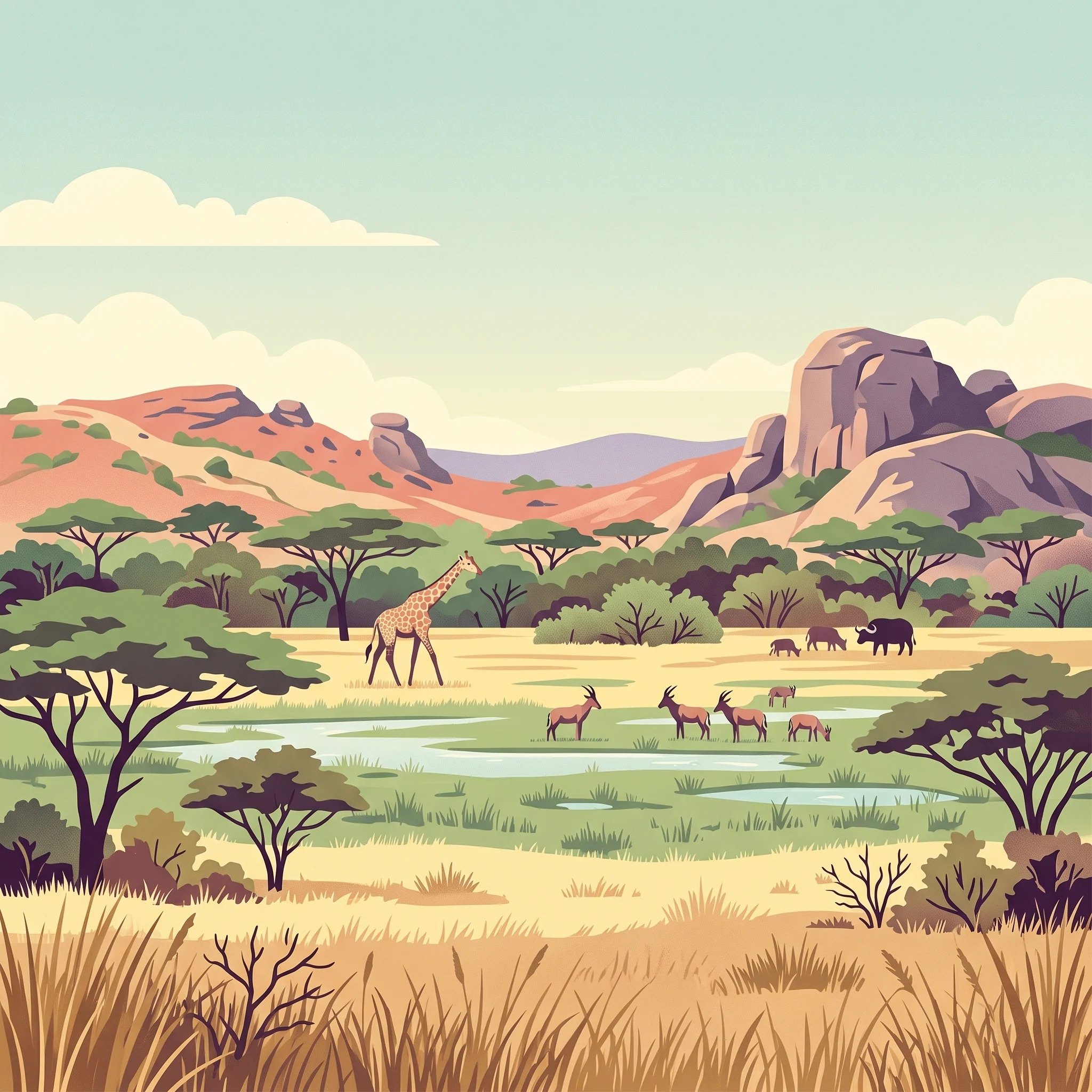
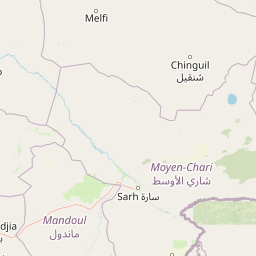
Zakouma National Park occupies a distinctive position within the Sudano-Sahelian vegetation zone of Central Africa, encompassing approximately 3,000 square kilometers of diverse terrain in southeastern Chad. The landscape is characterized by an open vegetation structure featuring extensive shrubland communities, expansive stands of tall seasonal grasses that can reach significant heights during the rainy season, and scattered Acacia forests that provide critical habitat and foraging resources for large mammals. The park's terrain spans across the border of Guéra Region and Salamat Region, an area of relative topographic variation within Chad's generally flat central basin. Watercourses and seasonal water bodies dot the landscape, providing crucial water sources for wildlife during the dry season and contributing to the park's ecological diversity. The vegetation is dominated by species adapted to the semi-arid climate, with Vachellia seyal (commonly known as the whitethorn acacia) being particularly prominent alongside other members of the Combretaceae family. The open nature of the landscape allows for excellent wildlife viewing and supports the large herds of grazing animals that characterize the park's ecological community.
Zakouma National Park ecosystems, habitats, and plant life
The ecological character of Zakouma National Park is defined by its position within the Sudano-Sahelian transition zone, which supports a remarkable diversity of habitats and species despite the challenging semi-arid climate. The park's vegetation communities include shrubland dominated by scattered woody plants, extensive grasslands that transform dramatically between wet and dry seasons, and distinctive Acacia forests that provide critical resources for both resident and migratory wildlife. Plant surveys have documented species from the Combretaceae family as common throughout the park, along with Vachellia seyal which forms dense stands in certain areas. This vegetation structure supports a complex ecological community ranging from large megafauna to small terrestrial mammals and diverse birdlife. The park's designation as an Important Bird Area by BirdLife International reflects its significance for avifauna, with the landscape supporting significant populations of waterfowl, raptors, and ground-dwelling bird species. The seasonal dynamics of rainfall and vegetation create a rhythm of migration and movement that influences wildlife distribution throughout the year.
Zakouma National Park wildlife and species highlights
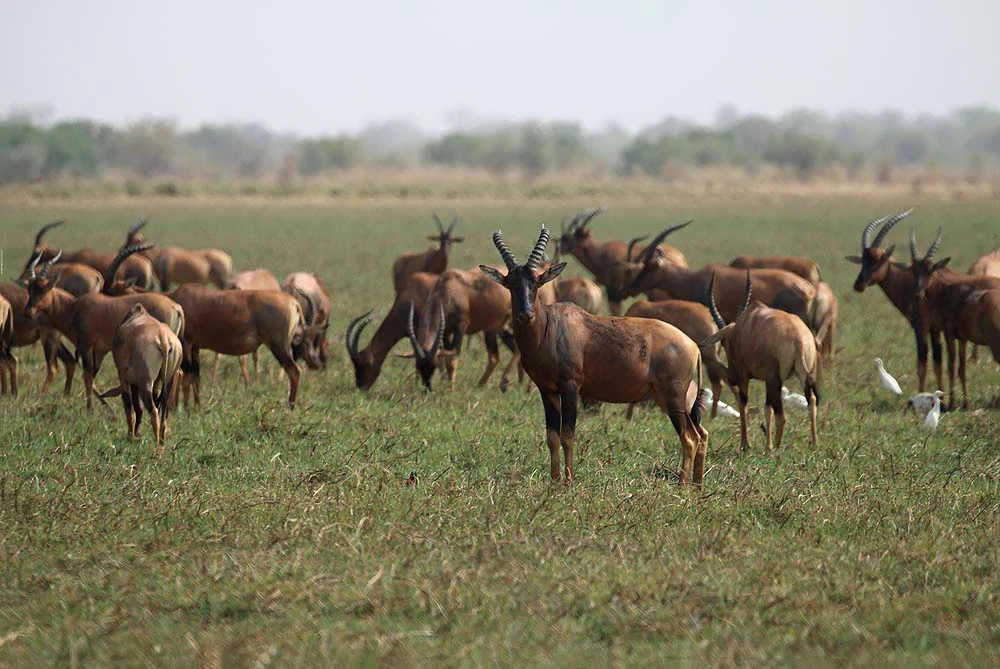
Zakouma National Park supports an impressive array of large mammals that represent some of Africa's most iconic species. The Kordofan giraffe population is particularly significant, with an estimated sixty percent of the global population of approximately 2,300 individuals residing within the park, making Zakouma the single most important stronghold for this subspecies. Other prominent large mammals include the African bush elephant, which has demonstrated remarkable recovery following intensive conservation efforts, African buffalo, greater kudu, hartebeest, and the striking tiang antelope. Predators present in the park include African leopard and lion, maintaining the ecological balance of the savanna ecosystem. Beyond large mammals, the park supports remarkable small mammal diversity with terrestrial rodent surveys documenting nine species including African grass rat, Congo gerbil, and various multimammate mice, along with two shrew species. The avian community is exceptionally diverse and includes ostriches, various crane species, eagles, egrets, herons, ibis, pelicans, and storks. The park has been recognized as an Important Bird Area supporting significant populations of species including black crowned cranes, red-throated bee-eaters, black-breasted barbets, Niam-Niam parrots, and numerous other species.
Zakouma National Park conservation status and protection priorities
Zakouma National Park represents one of Central Africa's most significant conservation success stories, having transitioned from a park under severe threat from poaching to a thriving protected area with recovering wildlife populations. The intervention by African Parks in 2010 marked a turning point, bringing professional management, modern anti-poaching technology, and substantial financial resources to bear on the park's challenges. Anti-poaching efforts have included equipping approximately sixty rangers with GPS tracking units and radios, establishing rapid response teams, and building additional patrol bases throughout the park. The elephant population, which declined dramatically from over 4,000 individuals in 2002 to fewer than 450 by 2010, has since stabilized and grown to over 600 animals by 2021, with the herd now breeding successfully after a period of very few births. The establishment of the Mambas rapid response team and the construction of additional outposts have provided enhanced security. Conservation efforts expanded beyond the park's boundaries in 2012 to protect migrating elephants, and African Parks assumed management of adjacent protected areas in 2017. The reintroduction of black rhinos, with new arrivals in 2023, represents another major conservation milestone for the park.
Zakouma National Park cultural meaning and human context
Zakouma National Park holds significant importance for the local communities in southeastern Chad, who depend on the surrounding landscape for their livelihoods and have long maintained connections to the land now protected within the park. The park's establishment in 1963 represented a formal recognition of the area's natural value, though human communities have interacted with this landscape for generations. The partnership between African Parks and the Chadian government has emphasized community engagement as a core component of conservation strategy, recognizing that sustainable protection requires local support and involvement. Tourism at the park provides economic benefits to surrounding communities, with thousands of local visitors staying at the park's facilities annually. The park's management has worked to balance wildlife conservation with the needs and traditions of local populations, though the park's remote location and the challenges of Chad's broader political environment have shaped the nature of this interaction.
Top sights and standout views in Zakouma National Park
Zakouma National Park stands out as Chad's premier wildlife destination and the nation's oldest protected area, offering visitors the opportunity to observe substantial populations of Kordofan giraffes, African elephants, lions, leopards, and diverse antelope species in a relatively accessible setting. The park's successful conservation story, particularly the remarkable recovery of its elephant population following intensive anti-poaching efforts, provides compelling context for visitors interested in African wildlife conservation. The landscape itself, with its open savanna, Acacia forests, and seasonal grasses, offers classic African scenery and excellent game viewing opportunities. The recent black rhino reintroduction adds another dimension of conservation significance. The park's facilities, including Tinga Lodge and Camp Nomade, provide accommodation options that allow visitors to experience the park's wildlife across multiple days.
Best time to visit Zakouma National Park
The optimal time to visit Zakouma National Park corresponds with the dry season, typically from November through May, when wildlife congregates around remaining water sources and vegetation is less dense, making animal observation easier. The peak visitor season generally coincides with the cooler months from November to February, when temperatures are more comfortable and animals are readily observable at waterholes. The landscape transforms dramatically with the arrival of the rainy season from June to October, as grasses grow tall and water becomes more widely available, causing animals to disperse across the park and making wildlife viewing more challenging but the scenery nonetheless beautiful. Birdlife is particularly spectacular during the wet season when migratory species arrive and waterfowl congregate around flooded areas. The park remains accessible year-round, though road conditions may vary between seasons and some areas may be more difficult to reach during the height of the rainy period.