

Mori Atlas logo
National parkBou-Hedma National Park

Discover the mapped boundaries and ecological transition zone of this significant national park.

Bou-Hedma National Park: A Protected Landscape of Saharan Conservation and Roman Heritage in Tunisia

Bou-Hedma National Park represents a critical protected landscape in Tunisia, strategically situated in the Gafsa Governorate at the ecological divide between Saharan aridity and central Tunisia's more temperate zones. This national park is internationally recognized for its pioneering conservation efforts, serving as a sanctuary for critically endangered large Saharan mammals through successful reintroduction programs. Users can explore the park's mapped terrain, understand its unique habitat mosaic, and appreciate its dual identity as both a modern conservation success and a site of rich Roman archaeological heritage.

Saharan ecosystemsEndangered species conservationArchaeological heritageRamsar wetlandReintroduction programsRoman ruins

Bou-Hedma National Park

National park

Park overview

Structured park overview, official facts, and landscape profile for Bou-Hedma National Park

Bou-Hedma National Park park facts, protected area profile, and essential visitor context
Review the core facts for Bou-Hedma National Park, including designation, size, terrain, visitor scale, habitats, and operating context in one park-focused overview.

About Bou-Hedma National Park

Bou-Hedma National Park represents one of Tunisia's most significant conservation achievements and one of the few protected areas in North Africa dedicated to preserving Saharan biodiversity. The park's establishment in 1980 marked a deliberate effort to protect the unique ecosystem that spans the transition between true desert and the more hospitable landscapes of central Tunisia. This geographic position gives the park exceptional ecological diversity, with habitats ranging from arid Saharan plains to more vegetated wadi systems and the saline wetland known as Sebkhet Noual. The park has gained international recognition not only for its biodiversity but also for its successful captive breeding and reintroduction programs that have helped establish viable populations of species that were approaching extinction in the wild. Beyond its conservation mission, the park preserves important traces of human history, with archaeological evidence of Roman settlement including villages, infrastructure, and water management systems that demonstrate the long relationship between human communities and this challenging landscape.

Quick facts and research context for Bou-Hedma National Park

Bou-Hedma National Park covers territory in the Gafsa and Sidi Bouzid governorates of Tunisia, situated in North Africa. The park was established in 1980 and received Ramsar designation in 2007 for its wetland Sebkhet Noual. It has been on UNESCO's tentative World Heritage list since 2008. The park serves as a critical refuge for four flagship Saharan ungulates that have been reintroduced here after near-extirpation from the wild: the scimitar oryx, addax, North African ostrich, and dama gazelle.

Park context

Deeper park guide and search-rich context for Bou-Hedma National Park

Bou-Hedma National Park history, landscape, wildlife, and travel context
Explore Bou-Hedma National Park through its history, landscape character, ecosystems, wildlife, conservation priorities, cultural context, and seasonal travel timing in a structured park guide built for atlas discovery and search intent.

Why Bou-Hedma National Park stands out

Bou-Hedma is most prominently known as a conservation sanctuary for some of Africa's most endangered large mammals. The park has conducted pioneering reintroduction programs for the scimitar oryx, addax, North African ostrich, and dama gazelle, species that have been nearly eliminated from their natural habitats across the Saharan region. The park's dual identity as both a modern conservation success story and a repository of Roman archaeological heritage makes it distinctive among Tunisia's protected areas. Its location on the ecological boundary between the Sahara and more verdant northern Tunisia creates a unique mosaic of habitats supporting species adapted to both desert and semi-arid environments.

Bou-Hedma National Park history and protected-area timeline

Bou-Hedma National Park was officially established on December 18, 1980, representing Tunisia's commitment to preserving its natural heritage and protecting endangered Saharan species. The creation of the park came during a period of growing awareness in North Africa about the need to conserve unique desert ecosystems and the remarkable wildlife they support. In 2007, the park's wetland area known as Sebkhet Noual was designated as a Ramsar site, recognizing its international importance as a wetland habitat and adding another layer of formal protection under the Ramsar Convention. The park was also submitted to UNESCO's tentative list of World Heritage Sites in 2008, a designation that reflects both the park's natural significance and its cultural heritage value. The reintroduction programs for endangered species have been ongoing since the park's establishment, with careful management of captive breeding populations and gradual release into suitable habitats within the park boundaries.

Bou-Hedma National Park landscape and geographic character

The landscape of Bou-Hedma National Park reflects its position at the ecological crossroads between the Sahara Desert and the more temperate regions of central Tunisia. The terrain is characterized by a mixture of flat Saharan plains, rocky outcrops, and seasonal wadi systems that carry water during rare rainfall events. The park encompasses the distinctive Sebkhet Noual, a saline wetland that provides a critical water source and supports specialized plant and animal communities adapted to brackish conditions. The vegetation transitions from sparse Saharan scrub and drought-resistant shrubs in the drier zones to more diverse plant communities near water sources and in areas with better soil moisture. The overall visual character combines the dramatic emptiness of desert expanses with the unexpected vibranity of wetland areas and the historical imprint of ancient human settlement.

Bou-Hedma National Park ecosystems, habitats, and plant life

The ecological character of Bou-Hedma is defined by its position in a transitional zone between Saharan and Mediterranean-influenced biomes. This geographic position creates a mosaic of habitats that support both true desert species and species requiring slightly more moderate conditions. The park's wetland, Sebkhet Noual, is particularly important for biodiversity, supporting birdlife and providing crucial water access for larger mammals during dry periods. The vegetation includes specialized halophyte species adapted to the saline soils around the wetland, alongside drought-resistant shrubs and small trees in the surrounding terrain. The park's conservation programs have focused on establishing self-sustaining populations of species that represent the region's natural heritage, with the successful reintroduction of large mammals being the most visible achievement.

Bou-Hedma National Park wildlife and species highlights

Bou-Hedma National Park is perhaps most significant for its role in protecting and reestablishing populations of critically endangered Saharan megafauna. The scimitar oryx, once widespread across the Sahara but reduced to tiny remnant populations, has been successfully reintroduced and now breeds within the park. The addax, another iconic Saharan antelope species driven to the brink of extinction by hunting and habitat loss, has also been established in the park through reintroduction programs. The North African ostrich, the largest bird in Africa and a species that has disappeared from much of its historic range, has been reintroduced to suitable habitats within the park. The dama gazelle, traditionally prized as one of the most elegant Saharan antelopes, has also benefited from conservation efforts at Bou-Hedma. These flagship species form the core of the park's wildlife identity and represent the success of targeted conservation programs.

Bou-Hedma National Park conservation status and protection priorities

The conservation significance of Bou-Hedma extends beyond its role as a protected area to encompass active programs that have helped prevent the extinction of several Saharan species. The park's reintroduction success with scimitar oryx, addax, North African ostrich, and dama gazelle represents meaningful progress in conservation for species that have suffered catastrophic declines across their historic ranges. The Ramsar designation of Sebkhet Noual in 2007 formal international recognition of the wetland's importance and provides additional framework for habitat protection. The park's inclusion on UNESCO's tentative World Heritage list reflects recognition of both its natural values and its cultural heritage. As a protected area spanning an ecologically important transition zone, Bou-Hedma also serves as a research site for understanding how desert ecosystems function and how conservation can be effective in challenging environments.

Bou-Hedma National Park cultural meaning and human context

Bou-Hedma contains significant archaeological remains that provide evidence of human settlement in this region during the Roman period. The park encompasses the remains of ancient Roman settlements, including villages that once housed agricultural communities working the land around the wetland area. The Roman bridge crossing Wadi Bautista represents impressive engineering for its time and demonstrates the importance of water management in this semi-arid environment. Ancient Roman pools and the remnants of an aqueduct system indicate sophisticated approaches to collecting and distributing water for agricultural and domestic use. These archaeological features add a cultural dimension to the park's identity, connecting modern conservation efforts to a longer history of human engagement with this landscape. The Roman presence dates to a period when North Africa was a productive agricultural region feeding the empire, and the remains at Bou-Hedma illustrate how communities adapted to the challenges of the local environment.

Top sights and standout views in Bou-Hedma National Park

Bou-Hedma National Park offers a distinctive combination of wildlife conservation success and cultural heritage preservation in a dramatic Saharan setting. The opportunity to observe reintroduced populations of scimitar oryx, addax, North African ostrich, and dama gazelle in their natural environment represents a conservation achievement of genuine international significance. The park's Roman archaeological remains, including the bridge, pools, and aqueduct, provide a tangible connection to ancient settlement patterns and water management practices. The Ramsar-listed wetland Sebkhet Noual adds ecological diversity and supports birdlife and other wetland species. The park's location in central Tunisia makes it accessible from major cities while providing an authentic experience of Saharan landscapes and biodiversity.

Best time to visit Bou-Hedma National Park

The optimal time to visit Bou-Hedma National Park is during the cooler months from October through April, when temperatures are more comfortable for outdoor exploration. Summer months in central Tunisia can bring extremely high temperatures that may limit movement within the park and make wildlife viewing less comfortable. The shoulder seasons of spring and autumn offer a good balance of comfortable temperatures and varied scenery, though rainfall events, while uncommon, can affect access to certain areas. Wildlife viewing is generally better during the cooler months when animals are more active during daylight hours, whereas the hottest periods may cause wildlife to remain less active during peak daytime temperatures.
Park location guide

Geography guide, regional context, and park location map for Bou-Hedma National Park

Bou-Hedma National Park park geography, regions, and map view in Tunisia
Understand where Bou-Hedma National Park sits in Tunisia through a broader geographic reading of the surrounding landscape, nearby location context, and its mapped position within the national park landscape.

How Bou-Hedma National Park fits into Tunisia

Tunisia is a Maghreb country in North Africa with a Mediterranean coastline, bordered by Algeria and Libya. The country features the ancient ruins of Carthage, the Great Mosque of Kairouan, and portions of the Atlas Mountains and Sahara Desert. With a population of approximately 12 million, Tunisia operates as a unitary presidential republic with Arabic as the official language.

Wider geography shaping Bou-Hedma National Park in Tunisia

Tunisia occupies 163,610 km² in North Africa, bordering Algeria to the west and southwest, Libya to the southeast, and the Mediterranean Sea to the north and east. The country features the eastern end of the Atlas Mountains in the north and extends into the northern Sahara Desert in the south. Its 1,300 km of coastline runs along the Mediterranean Basin. Africa's northernmost point, Cape Angela, is located in Tunisia.

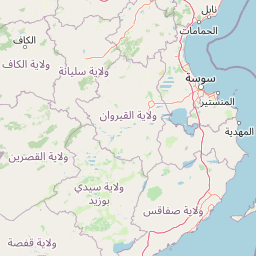
Map view of Bou-Hedma National Park

Use this park location map to pinpoint Bou-Hedma National Park in Tunisia, understand its exact geographic position, and read its mapped placement within the surrounding landscape more clearly.

Pigeon | © OpenStreetMap contributors

Location context for Bou-Hedma National Park

Gafsa GovernorateSidi Bouzid Governorate
Park atlas

Explore the geographic spread of protected areas, comparing conservation landscapes across central Tunisia.

Explore National Parks and Protected Areas Surrounding Bou-Hedma National Park
After exploring Bou-Hedma National Park's unique blend of Saharan ecosystems and Roman archaeological heritage, continue your discovery by browsing other protected areas within central Tunisia. Comparing these conservation landscapes provides valuable geographic context, revealing how different parks protect diverse natural habitats and historical sites across the region.
National parkKasserine Governorate

Chambi National Park: Tunisia's Highest Mountain Protected Area and Biosphere Reserve

Explore its mountainous terrain and conservation significance.

Chambi National Park is a protected national park in Tunisia's Kasserine Governorate, safeguarding the country's highest mountain, Djebel Chambi. This park is renowned for its mountainous terrain, semi-arid vegetation, and its role as a critical habitat for endangered species like the Cuvier's gazelle and Barbary sheep. As a UNESCO biosphere reserve, it offers significant insights into North African mountain ecosystems and landscape conservation.

Area
67.23 km²
Established
1980
IUCN
II
Relief
Mountain
National parkTunisia

Boukornine National Park: A Protected Mediterranean Mountain Landscape in Tunisia

Explore its mapped terrain and unique protected ecosystem.

Boukornine National Park in Tunisia represents a significant protected landscape, notable for its central granite peak, Jebel Boukornine, which rises sharply above the surrounding coastal plains. This national park, covering approximately 1,939 hectares, preserves a distinctive Mediterranean mountain ecosystem. Its rugged terrain, rocky slopes, and the presence of Aïn Zargua spring support a unique concentration of species, including notable flora and fauna. Understanding Boukornine National Park provides insight into the regional geography and the importance of conserving these mountainous protected areas within Tunisia.

Area
19.39 km²
Established
1987
IUCN
II
National parkEl Tarf Province

El Kala National Park: Protected Wetlands and Barbary Stag Habitat

Explore its mapped geography and vital ecosystem context.

El Kala National Park represents a crucial protected landscape within El Tarf Province, Algeria, recognized internationally for its extensive Mediterranean wetlands and rich biodiversity. This national park is a vital ecological zone, comprising six major lakes and a significant stretch of coastline, offering a unique mosaic of aquatic and terrestrial environments. Its role as a sanctuary for the Barbary stag and migratory birds highlights its importance in regional conservation efforts. Exploring El Kala National Park provides insight into the mapped terrain, protected boundaries, and distinct geographic features that define this significant North African natural area.

Area
764 km²
Established
1993
IUCN
II
Watercolor painting of a landscape with rolling hills, pink wildflowers, and scattered trees
National park

Pantelleria National Park: A Protected Landscape within Italy's Atlas

Mapped boundaries and regional geographic context.

Pantelleria National Park is a designated national park in Italy offering a distinct protected landscape for exploration. This page provides essential geographic context, highlighting the park's mapped boundaries and its significance within the regional atlas. Understand the terrain and protected land features that define this important natural area.

Area
66.4 km²
Established
2016
IUCN
II
Relief
Highland
National parkJijel Province

Taza National Park: Protected Mediterranean Coast and Tell Atlas Forest Landscape

Explore its unique mapped geography and conservation significance.

Taza National Park, situated in Algeria's Jijel Province, represents a crucial protected landscape where the Tell Atlas mountains meet the Mediterranean Sea. This 3,807-hectare national park is celebrated for its dramatic coastal cliffs, extensive cork oak and gall oak forests, the largest in Algeria, and its designation as a UNESCO biosphere reserve. The park's geography facilitates unique habitat zones, making it a key area for atlas-based discovery of North African biodiversity, including the Barbary macaque and Algerian nuthatch, within a landscape of exceptional natural beauty and conservation priority.

Area
38.07 km²
Established
1923
IUCN
II
National park

Ta' Qali National Park: Malta's Largest Urban Protected Landscape and Recreation Hub

Mapped Gardens, Event Venues, and Recreational Zones

Ta' Qali National Park serves as a vital green lung in central Malta, showcasing a landscape transformed from a wartime airfield into a modern urban protected area. This national park is recognized for its extensive recreational zones, meticulously designed formal gardens, and a prominent open-air concert venue that hosts major cultural events. Its relatively flat terrain and planned infrastructure offer a distinct map-based perspective on urban parkland, highlighting its significance as a major public amenity and a key feature of Malta's landscape.

Area
0.35 km²
IUCN
V
Relief
Lowland
Climate
Mediterranean
Stylized illustration of rocky coastal cliffs, turquoise sea, scattered trees, and a sea stack
National parkItaly

National Park of the Gulf of Orosei and Gennargentu: Italy's Coastal and Mountain Protected Terrain

Mapped geography of a unique Sardinian protected landscape.

Delve into the atlas-level details of the National Park of the Gulf of Orosei and Gennargentu, a protected area in Italy renowned for its stark contrast between dramatic coastal cliffs bordering the Gulf of Orosei and the wild, mountainous interior of the Gennargentu massif. This page provides structured geographic context, mapping the park's boundaries and showcasing its distinctive karst landscape, hidden beaches, and rugged peaks for comprehensive protected-area exploration.

IUCN
II
National parkCalabria

Aspromonte National Park: A Protected National Park within Calabria's Geographic Atlas

Explore its mapped terrain and regional landscape context.

Aspromonte National Park represents a crucial element within the protected landscapes of the Calabria region. This page serves as an in-depth atlas entry, detailing the park's geographic features and its specific context within southern Italy's broader natural terrain. Users can explore the park's mapped boundaries and understand its significance as a protected area within the Italian peninsula's rich geography.

Area
641.53 km²
Established
1989
IUCN
II
Relief
Mountain

Common questions about visiting, size, designation, and location context for Bou-Hedma National Park

Bou-Hedma National Park FAQs for park facts, access, geography, and protected area context
Find quick answers about Bou-Hedma National Park, including protected-area facts, park geography, trail and visitor context, and how the park fits into its surrounding country and regional landscape.
MoriAtlas Explorer

Continue Your Protected Areas Search Across the Global Atlas

Deepen your exploration by continuing the structured search for national parks and protected areas worldwide. Utilize the comprehensive filtering capabilities to compare different conservation landscapes and refine your understanding of global park geography. Discover more about the distribution and characteristics of protected natural areas.

Global natural geography