
Why Aspromonte National Park stands out
Aspromonte National Park is best known for its extraordinary vertical landscape that drops from nearly 2,000-meter Apennine summits directly to the Mediterranean coast, creating one of Italy's most dramatic mountain-to-sea transitions in a protected area. The park protects significant populations of apex predators including the Italian wolf, Eurasian eagle-owl, and peregrine falcon, along with the rare Bonelli's eagle. Its recognition as a UNESCO Global Geopark in 2021 highlights the geological significance of the territory, while the presence of rare species like the tropical fern Woodwardia radicans demonstrates the park's ecological importance. The historical dimension is equally notable, with the park containing ancient villages such as Pentedattilo and important archaeological heritage.
Aspromonte National Park history and protected-area timeline
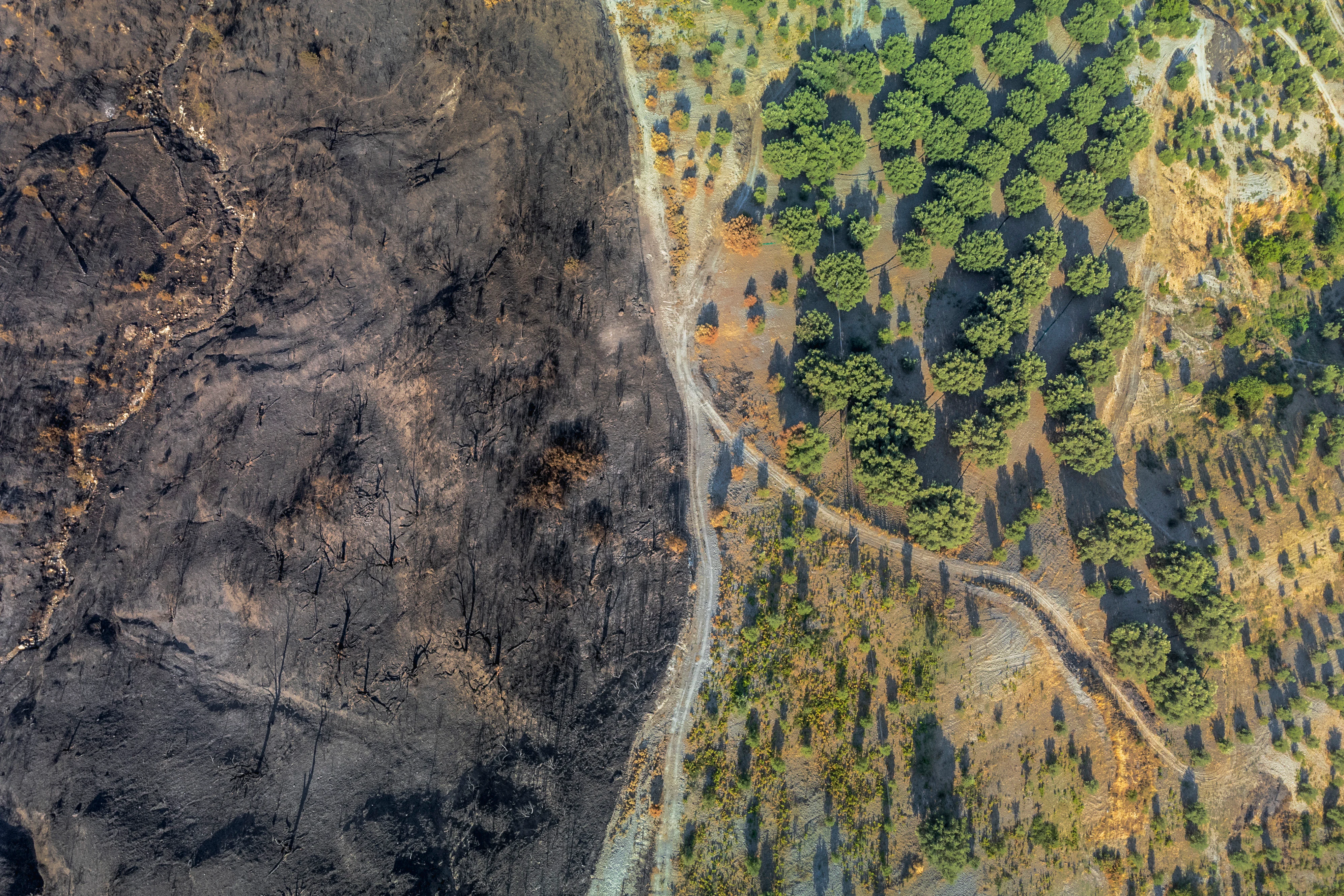
Aspromonte National Park was officially established in 1989 through Italian national legislation, creating a protected framework for the distinctive mountainous territory in southern Calabria. The creation of the park reflected increasing awareness during the late twentieth century of the need to conserve Italy's remaining wilderness areas and to manage the tension between traditional land use practices and ecological preservation. The park's history is deeply intertwined with the broader environmental movement in Italy and the recognition that the Apennine region, despite its proximity to populated areas, contained significant natural value requiring protection. More recently, the park gained international recognition when it was designated as a UNESCO Global Geopark on April 21, 2021, acknowledging the geological significance of the territory and its value for earth science education. The park has faced significant challenges, including devastating wildfires in 2021 that caused substantial damage to portions of the territory, with investigations suggesting involvement of organized crime in some fire events.
Aspromonte National Park landscape and geographic character
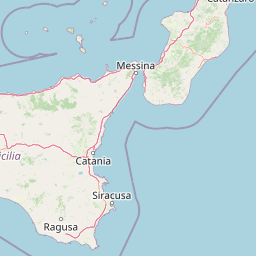
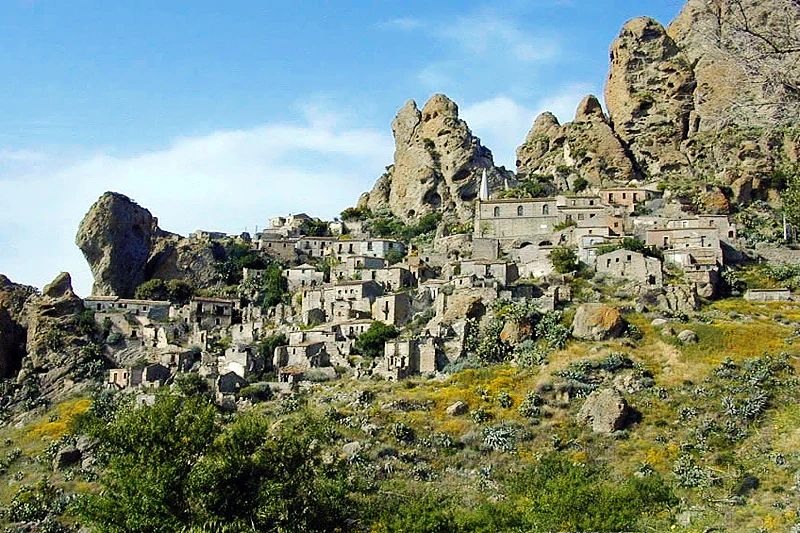
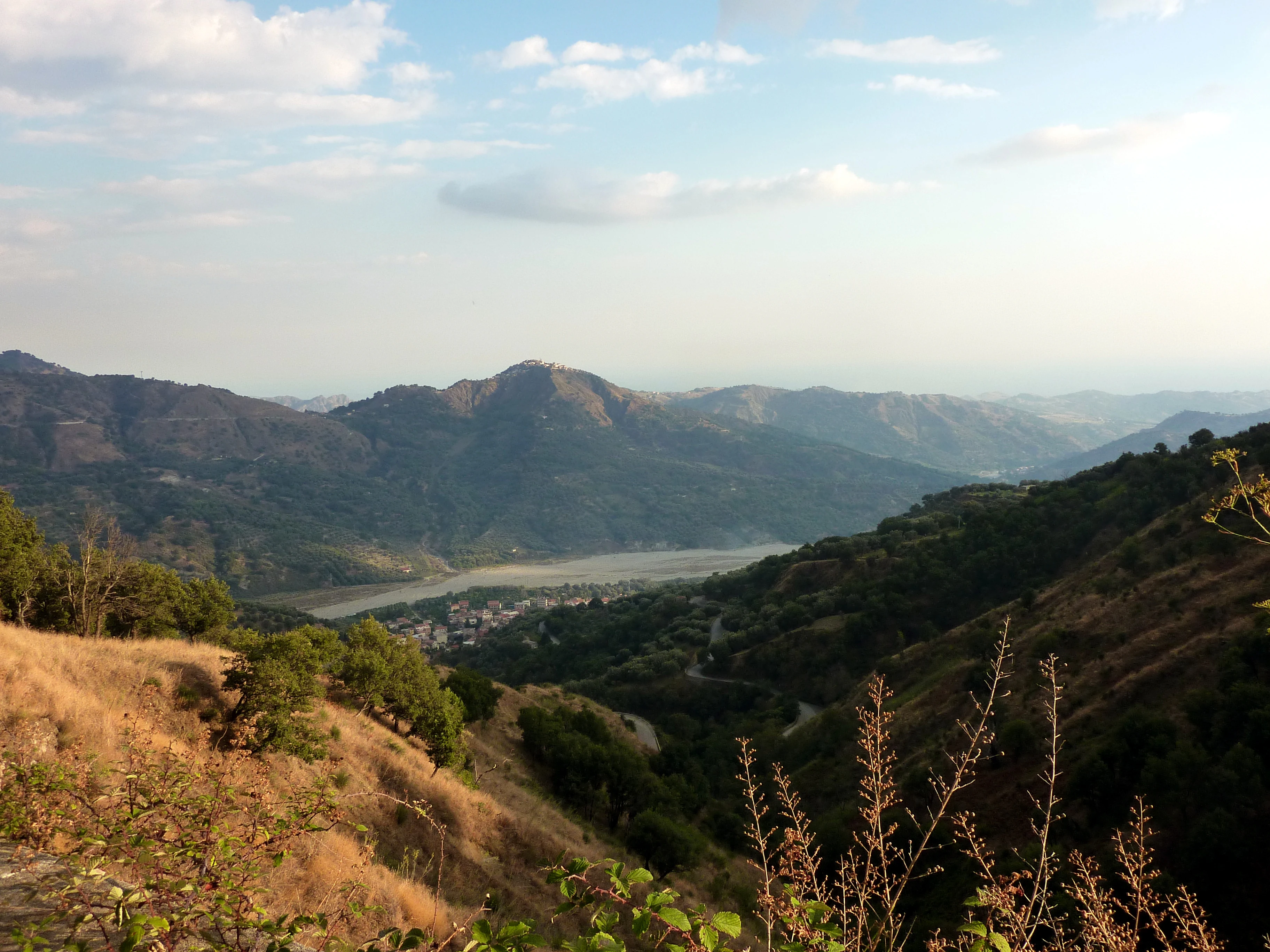
The landscape of Aspromonte National Park is defined by the dramatic encounter between the southern Apennine mountain system and the Mediterranean Sea, creating terrain of exceptional topographic complexity. The park's highest point, Montalto, reaches 1,955 meters and forms part of a ridge system that runs roughly parallel to the coastline before descending sharply toward the Tyrrhenian coast. The terrain is characterized by steep-sided valleys carved by numerous watercourses that flow from the higher elevations down to the sea, creating a network of streams and small rivers that dissect the mountain mass. Rock formations throughout the park showcase the geological history of the Apennine range, with diverse lithologies contributing to the visual variety of the landscape. The transition from mountain to coast occurs over relatively short horizontal distances, meaning that visitors can experience dramatic changes in scenery within the park's boundaries. The presence of traditional villages such as Pentedattilo, built on dramatic rock formations, adds cultural dimension to the natural landscape.
Aspromonte National Park ecosystems, habitats, and plant life
The ecological character of Aspromonte National Park reflects its position at the intersection of Mediterranean and Apennine biogeographic zones, creating a region of considerable biodiversity. The forest communities within the park display strong elevational zonation, with Mediterranean maquis shrubland dominating the lower slopes and transitioning through deciduous oak and chestnut woodlands into beech-dominated forests at higher elevations. Silver fir and black pine form important coniferous components of the higher forest communities, while the variety of habitats supports an impressive diversity of species. The park's designation as a UNESCO Global Geopark recognizes not only its biological significance but also the geological processes that have shaped this diverse landscape over millions of years. The rare tropical fern Woodwardia radicans represents a particularly noteworthy element of the park's flora, occurring in sheltered locations where microclimate conditions allow this species to survive at the northern edge of its range.
Aspromonte National Park wildlife and species highlights
The wildlife of Aspromonte National Park includes several species of significant conservation importance that characterize the park's ecological identity. The Italian wolf inhabits the forested mountainsides, representing one of the last remaining populations of this distinctive subspecies in southern Italy. Bird species of particular note include the peregrine falcon and Eurasian eagle-owl, both apex predators in their respective ecological niches, as well as the northern goshawk and the rare Bonelli's eagle. The combination of forested habitats, open rocky areas, and the vertical complexity of the landscape provides suitable breeding and hunting grounds for these raptorial species. The presence of such a complex of large predators indicates a relatively healthy ecosystem with intact trophic chains, a conservation priority across European protected areas. The park's wildlife community reflects the broader Apennine fauna while incorporating Mediterranean-influenced species from the coastal zones.
Aspromonte National Park conservation status and protection priorities
Aspromonte National Park serves as a critical conservation area within Italy's protected areas network, preserving an important example of Mediterranean mountain ecosystems that have faced significant pressure from human activity. The park's dual designation as both a national park under IUCN Category II and a UNESCO Global Geopark reflects its conservation value from both ecological and geological perspectives. The protection of forest communities, particularly the beech and silver fir woodlands that represent the southernmost extent of these typically central and northern European species in Italy, addresses important conservation targets. The presence of apex predators including wolves and large raptors indicates that the park supports functional ecological communities, though challenges remain in managing human-wildlife interactions and maintaining connectivity with surrounding landscapes. The 2021 wildfires demonstrated the vulnerability of Mediterranean protected areas to fire risk and highlighted ongoing challenges in managing these landscapes sustainably.
Aspromonte National Park cultural meaning and human context
The cultural landscape of Aspromonte National Park reflects centuries of human habitation in this mountainous Calabrian territory, with archaeological and historical heritage contributing to the park's significance beyond its ecological value. The park contains numerous small villages and settlements whose architecture and traditional practices reflect the cultural heritage of the Calabrian Apennines. The area has historically been characterized by relative isolation and economic marginalization, factors that have paradoxically contributed to the preservation of both natural habitats and traditional cultural practices. The park's proximity to the ancient city of Reggio di Calabria, one of the oldest Greek colonies in Italy, connects the protected area to broader historical narratives of Mediterranean civilization. The dramatic setting of villages like Pentedattilo, perched on distinctive rock formations, exemplifies the traditional relationship between human settlement and the rugged landscape that the park now protects.
Top sights and standout views in Aspromonte National Park
Aspromonte National Park offers visitors one of Italy's most distinctive mountain-to-sea protected area experiences, where nearly 2,000-meter Apennine summits drop directly to the Mediterranean coast within a compact territory. The combination of geological significance recognized by UNESCO Global Geopark status, exceptional wildlife including Italian wolves and Bonelli's eagle, and dramatic Mediterranean mountain scenery creates a unique conservation landscape. The park's forests of beech, silver fir, and black pine represent the southernmost occurrences of these species in Italy, while the rare tropical fern Woodwardia radicans demonstrates the ecological complexity of the area. Historical villages and archaeological heritage add cultural depth to the natural landscape, making the park significant for both ecological and cultural conservation.
Best time to visit Aspromonte National Park
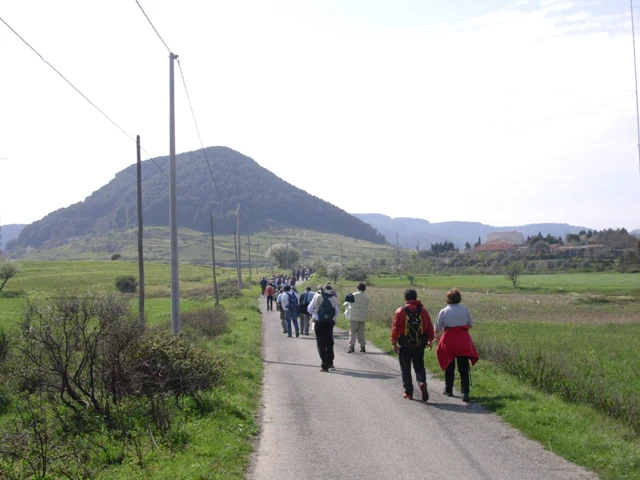
The best time to visit Aspromonte National Park depends on the experience sought, with spring and early summer offering pleasant temperatures for hiking and optimal conditions for observing wildlife activity. The spring months bring wildflower displays in the lower elevations and manageable conditions for exploring the mountain trails, while the summer period can bring high temperatures in the lower elevations but offers the longest days for exploration. Autumn provides another excellent visiting season with comfortable temperatures and the opportunity to observe forest color as the deciduous trees change. Winter conditions in the higher elevations can be challenging but offer a different character for experienced visitors. The park's Mediterranean location generally provides mild conditions year-round, though visitors should be aware that the rugged terrain demands appropriate preparation regardless of season.