
Why Appennino Lucano - Val d'Agri - Lagonegrese National Park stands out
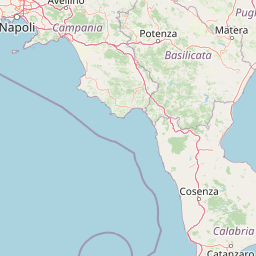
The park is distinguished by its role as a biological corridor connecting two of southern Italy's largest protected areas, creating an extended mountain habitat network across the Lucano Apennines. Its landscape character blends the dramatic, jagged peaks of the Sirino Massif and Monte Volturino with the gentler rolling ridges of the Maddalena mountain chain. The park protects significant populations of wolf and other mammals in the Apennine fauna community, while the Agri River corridor provides critical aquatic habitat. The territory encompasses a notable residual fir forest at Laurenzana, representing a relict stand of silver fir in the southern Apennines.
Appennino Lucano - Val d'Agri - Lagonegrese National Park history and protected-area timeline
The establishment of Appennino Lucano - Val d'Agri - Lagonegrese National Park required more than a decade of legislative and administrative process. Protection for the Val d'Agri area was first anticipated under Italy's framework law for protected areas, Law 394 of 1991, which established the foundational framework for creating national parks throughout Italy. This initial recognition was reinforced by Law 426 of 1998, which specifically called for the creation of a protected area in the Val d'Agri region.
A presidential decree was issued in July 2006 to formally establish the park, but this decree did not receive favorable opinion from the unified conference, causing a procedural delay. A second presidential decree was ultimately issued on December 8, 2007, formally creating the national park. The extended timeline between initial concept and final establishment reflected significant political and economic pressures, particularly from petroleum exploration companies and wind energy development interests that sought access to resources within the territory that became the protected area. These same pressures continue to affect other areas of Basilicata with high natural value that would merit protection.
The park represents the third-to-last national park established in Italy, reflecting both the relative lateness of protection for southern Italian mountain ecosystems and the complex process of balancing conservation objectives with regional economic interests. The governance body, Ente Parco Nazionale dell'Appennino Lucano-Val d'Agri-Lagonegrese, administers the protected area and oversees implementation of the management plan that guides conservation activities and permitted uses within the park boundaries.
Appennino Lucano - Val d'Agri - Lagonegrese National Park landscape and geographic character
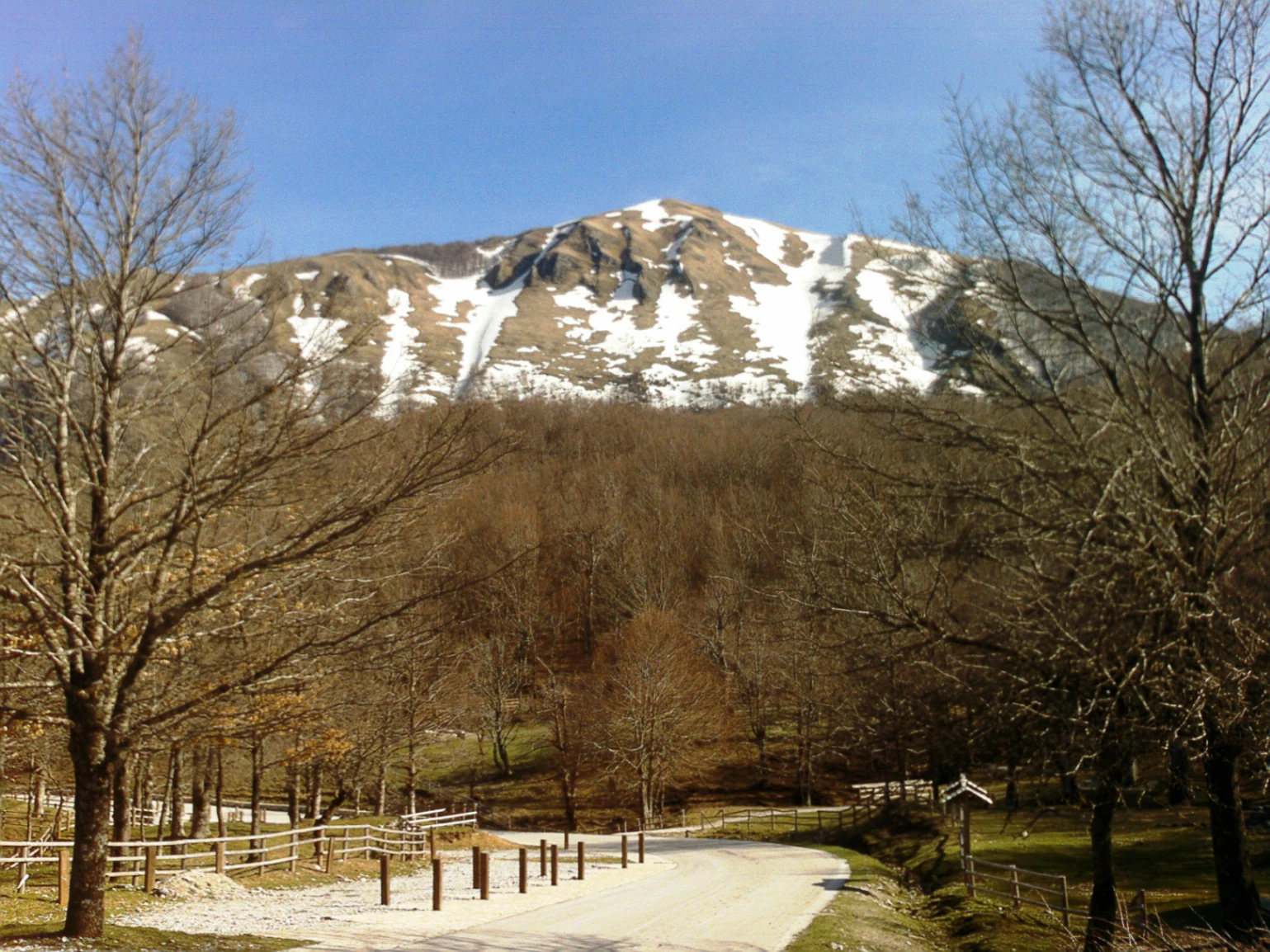
The park's landscape character is defined by the meeting of two distinct mountainous terrains within the Lucano Apennine system. The northern portion features the imposing Sirino Massif, a complex of peaks and ridges that represents one of the highest and most rugged sections of the southern Apennines. Monte Volturino, at 1,836 meters, anchors the northern boundary of the park and presents dramatic northern faces and rocky outcrops that contrast with the softer profiles found elsewhere in the protected area.
The central portion of the park is characterized by the Maddalena mountain chain, a series of more gentle, rounded ridges that enclose the upper Val d'Agri. This area presents a different character than the more dramatic peaks, with smoother profiles and more extensive forest cover creating a landscape of considerable beauty if less dramatic than the higher summits. The Agri River originates in this area and flows through the valley that gives the park its name, cutting a green corridor through the mountainous terrain.
The transition from these mountain landscapes to the surrounding lowlands creates the park's eastern and western boundaries, where the protected area encompasses the upper catchments of streams flowing outward from the Apennine core. Throughout the park, the interplay of rock, forest, and agricultural land creates a mosaic characteristic of mountain landscapes where human settlement and natural processes have shaped the terrain together over centuries.
Appennino Lucano - Val d'Agri - Lagonegrese National Park ecosystems, habitats, and plant life
The park's ecological character reflects its position within the Apennine biogeographic region and its role as a connector between larger protected areas. The vegetation follows distinct altitudinal patterns corresponding to the mountain environment. At lower elevations, evergreen oak woodland and thermophilic shrub communities dominate, featuring species adapted to the relatively mild Mediterranean-influenced climate of the valleys. The lower slopes support roverella oak, white hornbeam, ash, and flowering ash in varying combinations depending on aspect and soil conditions.
As elevation increases, the vegetation transitions through belts of deciduous oak and then into beech forest, which forms the dominant woodland type on the park's higher slopes. Within these beech forests, other species including holly and Lobel's maple create diverse forest structure. The presence of silver fir represents a particular ecological significance, as the residual fir forest at Laurenzana represents one of the southernmost relict populations of this species in Italy, a living reminder of the forests that once covered broader areas of the Apennines during cooler climatic periods.
The park's position as a corridor between Pollino and Cilento enhances its conservation value considerably, allowing species to move between larger protected populations and maintaining genetic connectivity across what would otherwise be isolated fragments of suitable habitat. This corridor function is especially important for species requiring large territories or seasonal movement patterns.
Appennino Lucano - Val d'Agri - Lagonegrese National Park wildlife and species highlights
The mammal community of the park reflects the Apennine fauna assemblage, with the European wolf representing the apex predator and a species of particular conservation significance. Wolf populations in the southern Apennines have demonstrated resilience despite historical persecution and habitat fragmentation, and the protected area network including this park supports their persistence. The park also supports populations of red deer and the Italian roe deer, a subspecies endemic to the Italian peninsula. Wild boar are present throughout the territory, their populations responding to the mix of forest and agricultural habitats.
The Agri River corridor provides aquatic habitat supporting otter, a species that has recovered from historical persecution and now occupies waterways throughout the Apennine region where water quality and riparian habitat permit. The river and its tributaries also support fish communities and provide drinking water for wildlife throughout the year. Birdlife includes species associated with forest, rocky habitats, and open areas, though detailed species records are limited in the available source material.
Appennino Lucano - Val d'Agri - Lagonegrese National Park conservation status and protection priorities
The park's establishment addressed a significant gap in the protected area network of southern central Italy. Prior to 2007, the mountain landscapes of the Lucano Apennines lacked the formal protection that comparable ecosystems enjoyed in the Pollino range to the south and the Cilento area to the west. By creating this protected area, Italy established a connective framework that allows ecological processes to operate across a broader mountain landscape than any single park could sustain alone.
The three-zone management structure provides a framework for balancing conservation with the continued presence of human communities within the park boundary. The 29 municipalities within the park include settlements whose residents maintain traditional relationships with the land through agriculture, forestry, and related activities. Zone 1 provides the highest protection for the most ecologically sensitive areas, while Zone 3 accommodates the greater human presence associated with settled areas and traditional land uses. The park has received recognition through the European Charter for Sustainable Tourism, indicating alignment with broader European frameworks for reconciling conservation with sustainable economic activity in protected areas.
Appennino Lucano - Val d'Agri - Lagonegrese National Park cultural meaning and human context
The park encompasses territory that has been inhabited and cultivated for millennia, with evidence of human presence throughout the Basilicata interior dating to ancient periods. The 29 municipalities within the park boundary represent communities whose identity is closely tied to the mountain landscape and its resources. Traditional agricultural practices, including pastoral activities and small-scale farming, have shaped both the landscape and the cultural character of the region.
The road networks and settlements reflect centuries of movement between the mountain interior and the coastal regions, with the Val d'Agri serving as a passage through the Apennine barrier. Historical routes connected Basilicata with Calabria and the southern Adriatic coast, and the region's relative remoteness has helped preserve elements of traditional culture that have been lost in more accessible areas. The park's establishment required consideration of these human dimensions, and the management framework acknowledges the ongoing relationship between local communities and the protected landscape.
Top sights and standout views in Appennino Lucano - Val d'Agri - Lagonegrese National Park
The park stands out for its strategic position as the central connector in a chain of protected areas spanning the southern Apennines, enabling ecological continuity across a landscape of significant topographic and habitat diversity. The combination of dramatic peaks like Monte Volturino, the gentler Maddalena ridges, and the agricultural valley of the Agri River creates a varied landscape that rewards exploration. The presence of wolf and other characteristic Apennine mammals, along with the residual fir forest at Laurenzana, highlight the ecological values the park protects. Its relatively recent establishment and the ongoing pressures from extractive industries underscore both the challenges facing protected areas in this region and the importance of continued vigilance.
Best time to visit Appennino Lucano - Val d'Agri - Lagonegrese National Park
The mountain setting of the park offers distinct seasonal experiences throughout the year. Spring brings mild temperatures and blooming vegetation, with wildflowers appearing in the meadows and forest edges as the snow recedes from higher elevations. Summer offers warm conditions in the valleys and pleasant temperatures at higher elevations, though afternoon thunderstorms are common in the mountain environment. Autumn provides a second favorable season, with foliage color in the deciduous forests and generally stable weather conditions. Winter brings cold temperatures and snow to the higher peaks, with the mountain environment experiencing a quiet season when visitor activity decreases substantially.