
Why Vesuvius National Park stands out
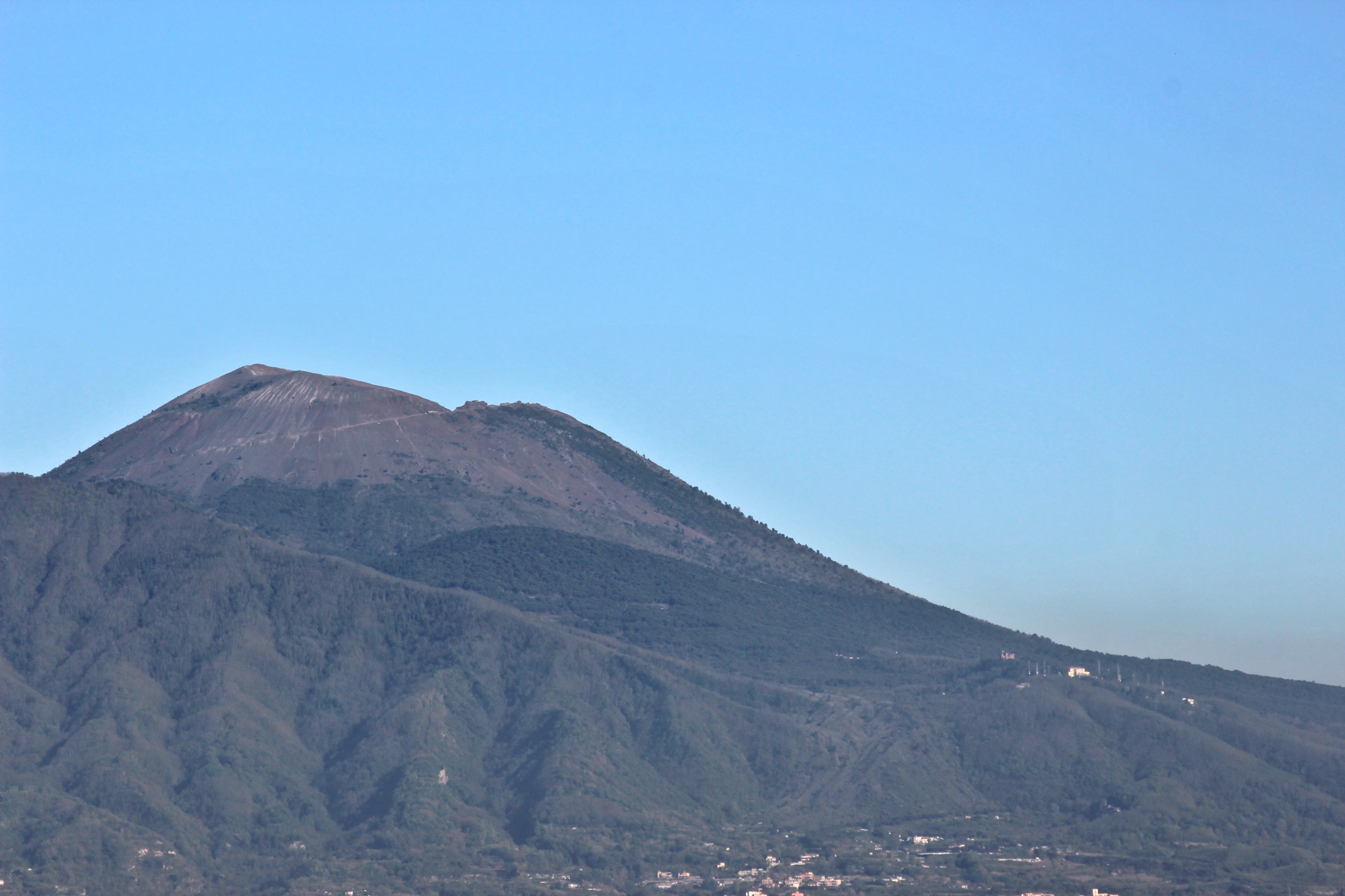
Vesuvius National Park is best known for protecting one of Europe's most iconic and dangerous volcanoes. The park encompasses both Monte Somma, the ancient caldera-forming volcano, and the active Gran Cone of Vesuvius that dominates the Neapolitan landscape. The 79 AD eruption that destroyed Pompeii and Herculaneum occurred from this volcano, making it one of history's most famous volcanic events. The park also preserves remarkable volcanic geology including lava flows, volcanic caves, and the dramatic Valle dell'Inferno (Valley of Hell) with its spectacular rope-like lava formations. Additionally, the park is notable for supporting significant biodiversity on its volcanic slopes, with over 600 plant species and 200 animal species in a relatively compact area.
Vesuvius National Park history and protected-area timeline
The Somma-Vesuvius volcanic complex began forming over 400,000 years ago, though the most reliable geological records cover the past 25,000 years. The volcanic history is typically divided into three periods: the formation of the ancient Monte Somma volcano from its origins until the catastrophic 79 AD eruption; the intermediate period from 79 AD to 1631; and the modern period from 1631 to the present. The catastrophic 79 AD eruption buried the Roman cities of Pompeii, Oplontis, Herculaneum, and Stabiae under meters of hot ash and mud flows, a disaster that has provided invaluable archaeological insights into Roman life. After centuries of intermittent activity, a violent eruption in 1631 opened a new phase of persistent activity characterized by numerous effusive eruptions. The last eruption occurred in 1944, after which Vesuvius entered its current state of active rest. The national park was announced by Italy's framework law on protected areas in 1991 and formally established by Presidential Decree on June 5, 1995, with the dual goals of conserving environmental values and safeguarding animal and plant species along with geological singularities.
Vesuvius National Park landscape and geographic character
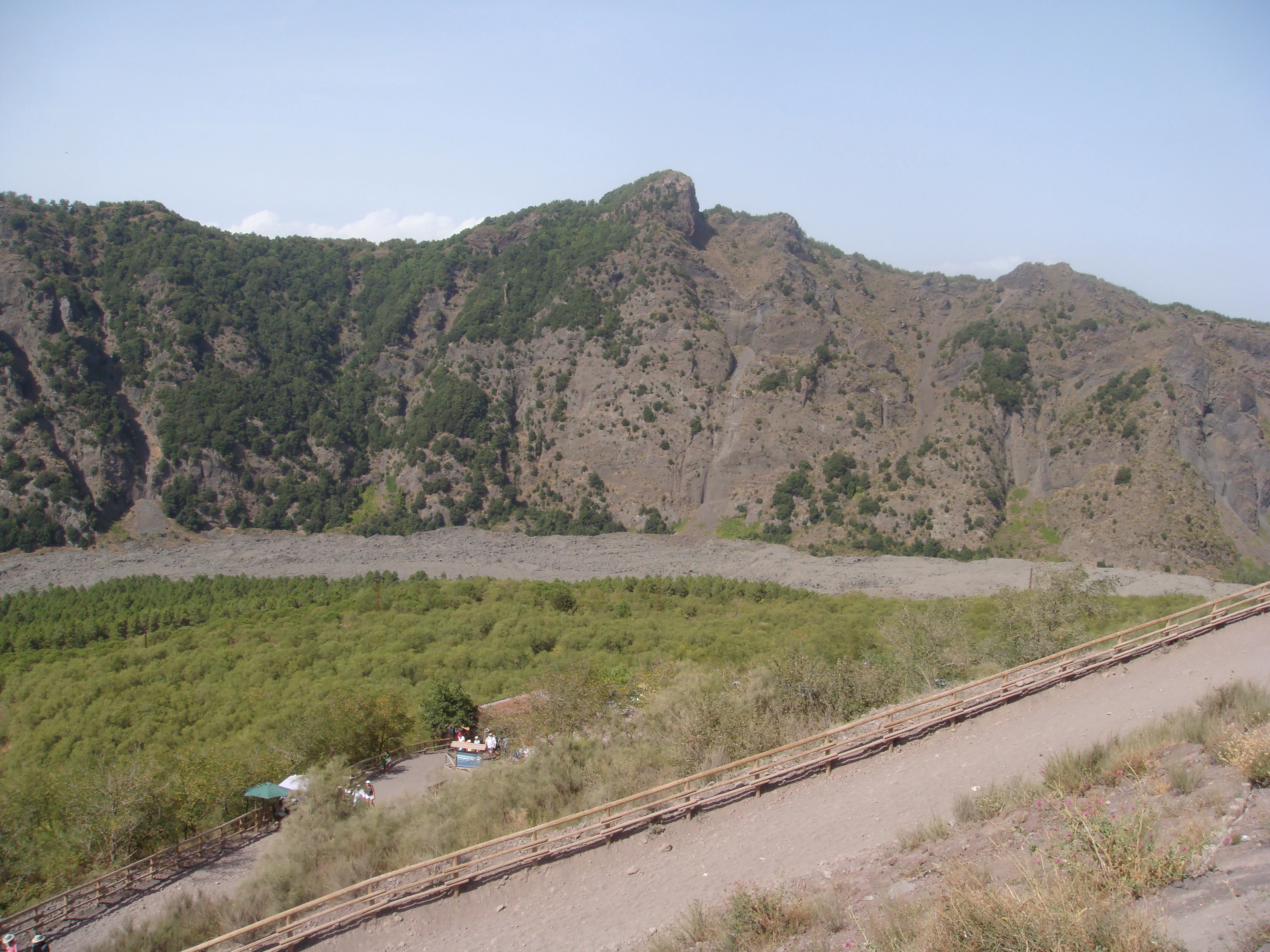
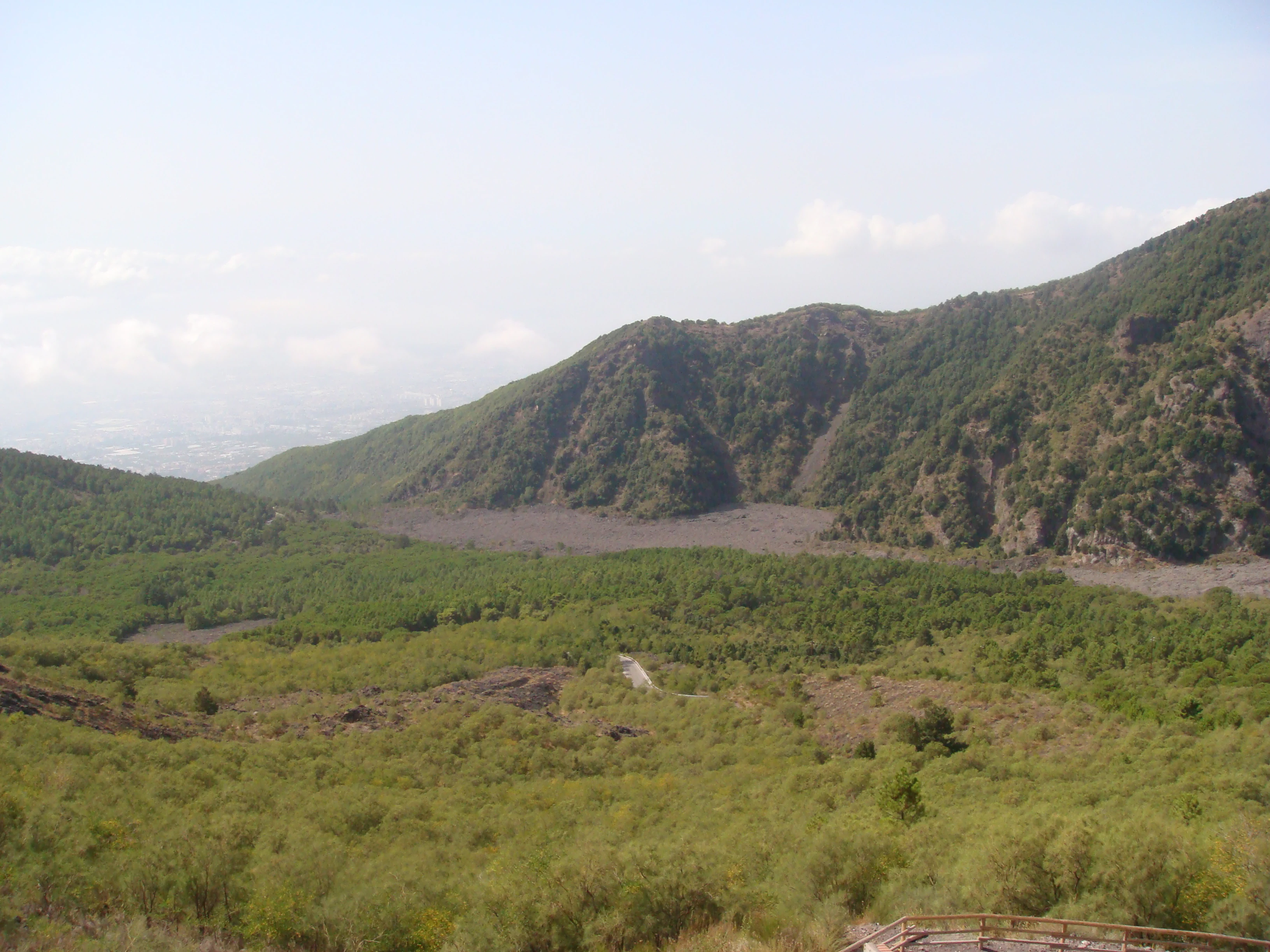
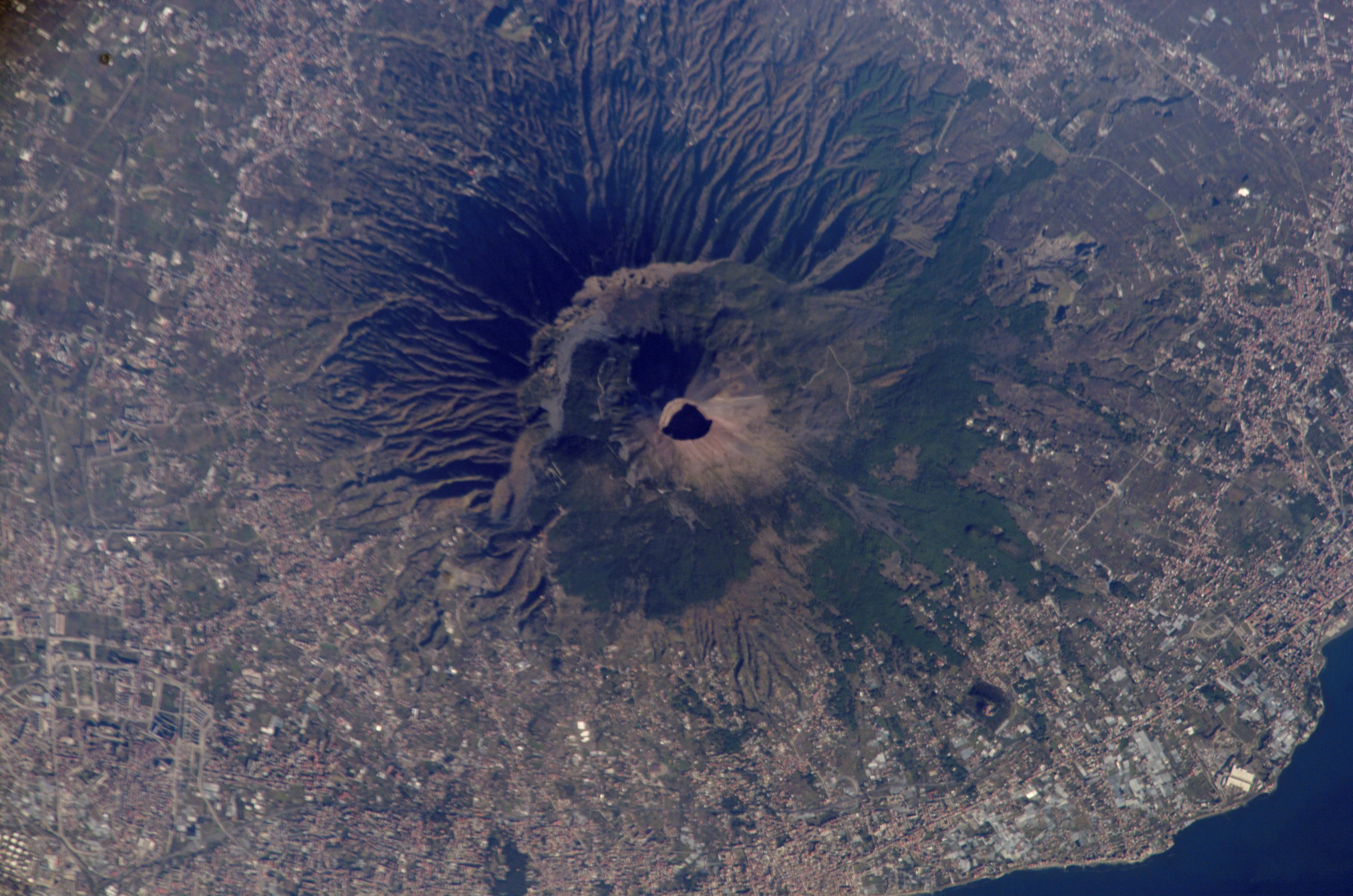
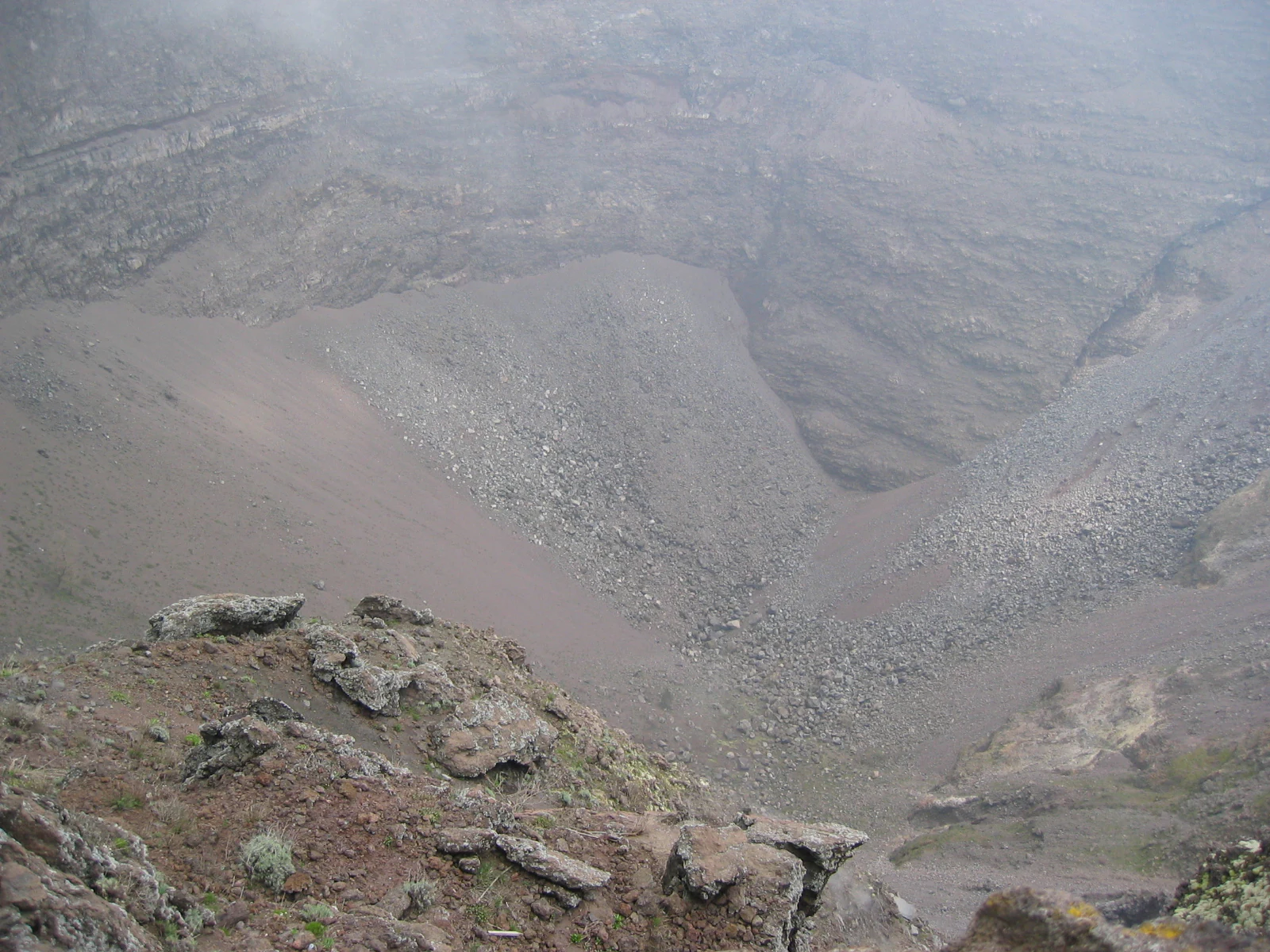
The landscape of Vesuvius National Park is defined by its dramatic volcanic terrain. The outer slope of Monte Somma forms a roughly circular crater rim, now inactive and partially eroded, while within this ancient caldera rises the steeper, truncated cone of Vesuvius reaching 1,277 meters above sea level. The crater at Vesuvius's summit currently measures approximately 450 meters in diameter and 300 meters in depth. Throughout the park, visitors encounter volcanic features including ancient lava flows, volcanic caves, and the distinctive Cognoli—steep volcanic vents that rise dramatically from the slopes. The Valle dell'Inferno (Valley of Hell) showcases spectacular rope-like lava formations, while the Valle del Gigante (Giant's Valley) preserves the lava flow from the 1944 eruption. The terrain varies from nearly flat areas to steep ascents, with elevations ranging from the volcanic base to the summit crater. Vegetation creates patches of green across the dark volcanic substrate, particularly in the Monte Somma area and along certain trails through the maquis and forest.
Vesuvius National Park ecosystems, habitats, and plant life
Despite its volcanic and urban Setting, Vesuvius National Park supports remarkable ecological diversity. The park's vegetation reflects Mediterranean climate conditions, with extensive Mediterranean maquis (shrubland) dominating lower slopes, transitioning to forested areas at higher elevations. The park records 612 plant species, a notably high number for its relatively small area of approximately 72.6 square kilometers. The volcanic soil, despite its rocky nature, supports diverse plant communities adapted to the challenging conditions. Pine forests occur in certain areas, such as the Pineta di Terzigno. The park's animal population includes 227 documented species. Mammals present include foxes, weasels (faine), dormice (moscardini), and various small rodents including field mice. Notably, some species previously present in the park—the European wildcat and badger—are now considered locally extinct. The diverse habitats, from rocky volcanic terrain to shrubland and forest, support the ecological communities that make this small park biologically significant.
Vesuvius National Park wildlife and species highlights
The wildlife of Vesuvius National Park reflects Mediterranean ecological patterns adapted to volcanic terrain. Among the park's mammals, foxes are among the more commonly observed species, along with weasels that hunt in the shrubland and rocky areas. Dormice inhabit the forested zones, while small rodents including various mouse species occupy diverse habitats throughout the park. The volcanic landscape, with its mix of exposed rock, shrubland, and forest patches, provides varied microhabitats supporting these animal communities. Birdlife is characteristic of Mediterranean parks, though specific avian species are not detailed in available sources. The park's relatively small area supports a notable density of species, demonstrating the ecological resilience of Mediterranean ecosystems even in geologically dynamic volcanic landscapes.
Vesuvius National Park conservation status and protection priorities
Vesuvius National Park holds significant conservation value on multiple levels. Geologically, it preserves one of Europe's few active continental volcanoes and its associated volcanic features, providing natural laboratories for studying volcanic processes and geological history. The park protects the Somma-Vesuvius complex as an ecosystem, preserving the ecological relationships between volcanic terrain and Mediterranean biodiversity. Biologically, the park's 612 plant species and 227 animal species within 72.6 square kilometers demonstrate remarkable biodiversity concentration, reflecting the ecological complexity possible even in small, geologically extreme areas. The park is classified as IUCN Category II (National Park) and includes EUAP0009 designation with SIC (Sito di Interesse Comunitario/Community Interest Site) status. The conservation framework aims to preserve geological formations, biological communities, scenic values, natural processes, and hydrological equilibria while integrating environmental protection with the human presence that characterizes this densely populated region.
Vesuvius National Park cultural meaning and human context
The Vesuvius area carries profound human history intertwined with volcanic activity. The 79 AD eruption that destroyed Pompeii and Herculaneum represents one of antiquity's most famous natural disasters and has shaped the region's identity for nearly two millennia. The cities at the volcano's base—Pompei, Ercolano (Herculaneum), and others—were major Roman settlements whose well-preserved remains provide unmatched archaeological insights into Roman civilization. The park encompasses territory within thirteen municipalities that have developed over centuries in the volcanic shadow, creating cultural landscapes where agriculture, particularly the distinctive pomodorino a piennolo (a type of cherry tomato), thrives in the volcanic soil. The mountain has long held significance beyond economics—geologically, it has been studied since the establishment of the Osservatorio Vesuviano (Vesuvius Observatory) in the 19th century, one of the world's first volcanic observatories. The relationship between this active volcano and the surrounding human communities represents an enduring dialogue between natural forces and human settlement.
Top sights and standout views in Vesuvius National Park
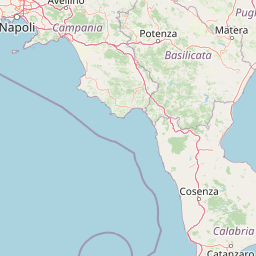
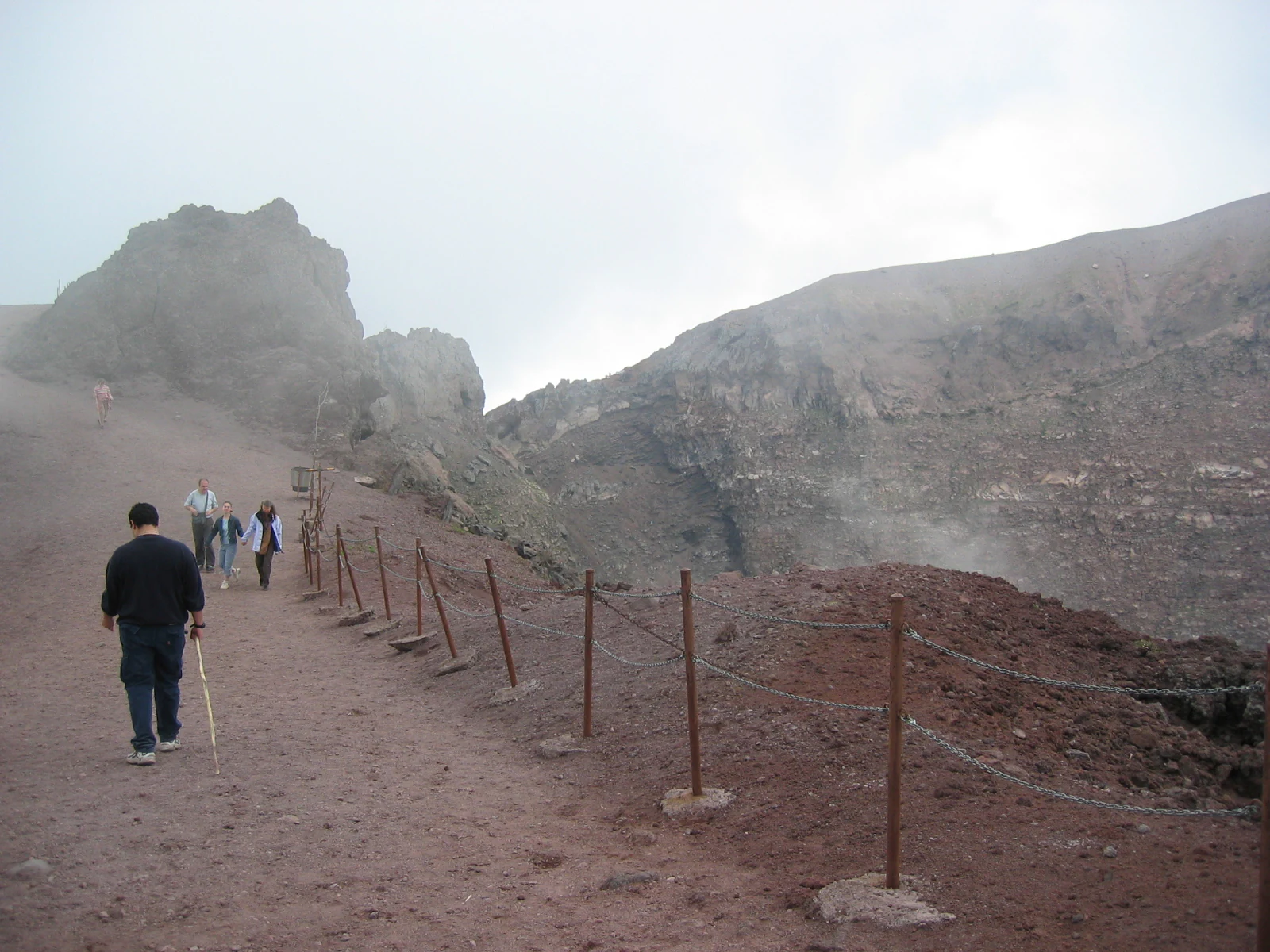
Vesuvius National Park offers visitors access to one of Europe's most historically significant active volcanoes. The eleven official hiking trails traverse diverse terrain from easy walks through forests to challenging ascents to the crater rim. Trail number 5, ascending the Gran Cono to the crater, is the most popular route, offering dramatic views across the Bay of Naples from approximately 1,170 meters elevation. The Monte Somma trail provides accessible exploration of the ancient caldera with panoramic views. For geology enthusiasts, the Valle dell'Inferno showcases remarkable rope lava formations, while Trail 9 (Il Fiume di Lava) directly traverses a 1944 lava flow, allowing visitors to walk on volcanic material from the last eruption. The park's biodiversity, with over 600 plant species, creates seasonal interest as different flora blooms throughout the year. The Pineta di Terzigno offers a shaded pine forest walk, while the Tirone-Alto Vesuvio nature reserve provides relatively flat walking through suggestive woodland.
Best time to visit Vesuvius National Park
The optimal time to explore Vesuvius National Park depends on visitor preferences and tolerance for volcanic terrain conditions. Spring and autumn generally offer the most comfortable temperatures for hiking, with mild weather allowing exploration of the various trails without summer heat stress or winter cold. Spring brings flowering plants to the maquis and lower slopes, adding ecological interest to hikes. Summer can be very hot on exposed volcanic terrain, making early morning or late afternoon hiking advisable for those visiting during warmer months. Winter provides fewer crowds and clear visibility across the Bay of Naples from elevated points, though some trails may be less suitable due to conditions. Year-round, the park remains accessible, though visitors should check current conditions and trail accessibility, particularly for routes approaching the active crater where monitoring may affect access. The active rest status of the volcano means continuous observation, so visitors should respect any access restrictions for safety.