Why Serpentine National Park stands out
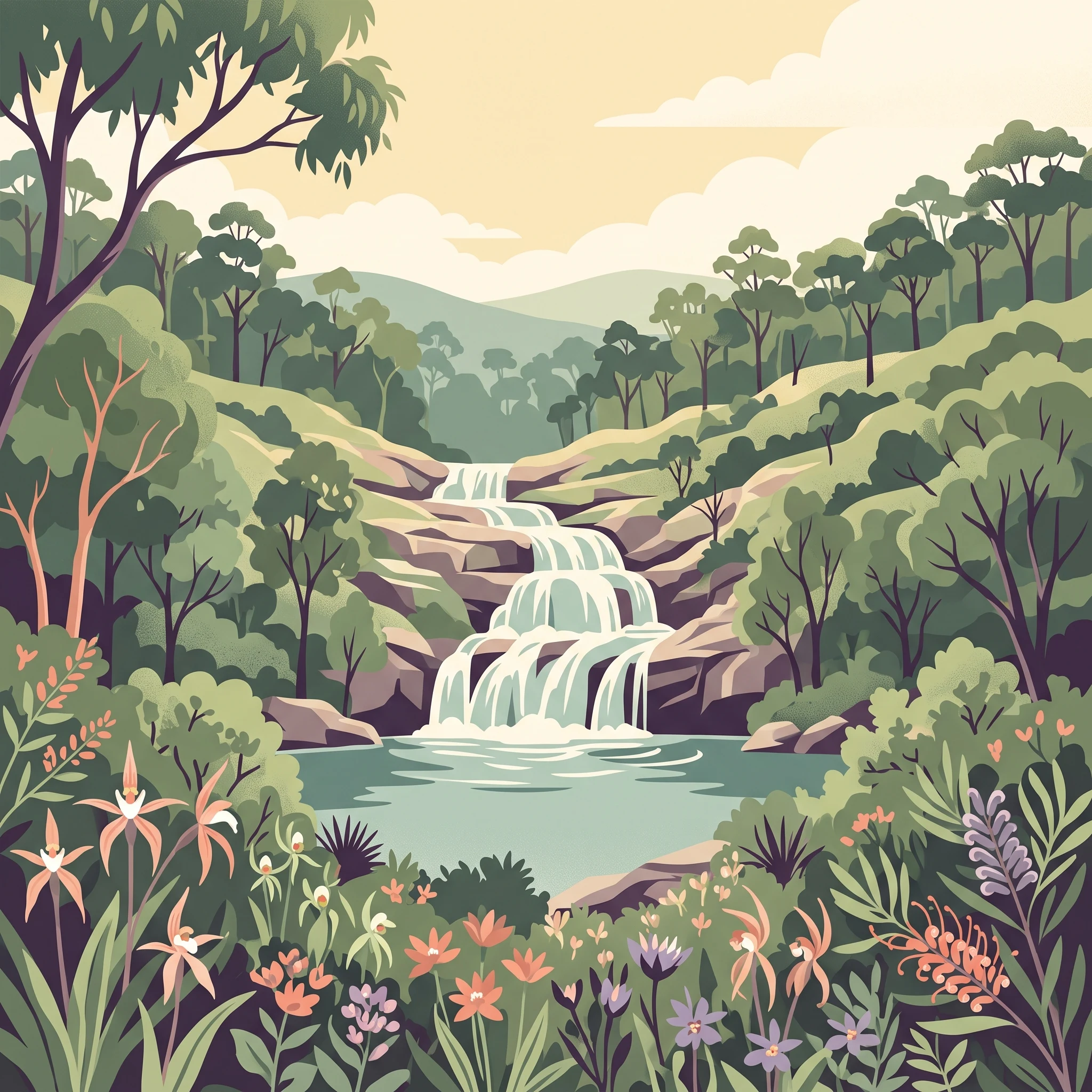
Serpentine National Park is best known for its namesake waterfall, a multi-tiered cascade that creates a popular swimming and photography destination. The park is also celebrated for its spectacular spring wildflower displays, when the understory bursts into color with numerous orchid species including spider orchids and greenhoods, alongside triggerplants, giant sundew, dryandras and grevilleas. The combination of accessible waterfall scenery with outstanding botanical displays makes this park a distinctive nature destination within the Perth region.
Serpentine National Park history and protected-area timeline
Serpentine National Park was officially proclaimed in 1957, establishing formal protection for the Serpentine Falls area and surrounding bushland. The park's creation reflected growing post-war interest in conserving Western Australia's natural landscapes near population centres. In the mid to late 2000s, the park underwent significant expansion to the north of the Serpentine River, incorporating land that had previously been managed as State Forest and Regional Parks by the Shire of Serpentine Jarrahdale, as well as land under the management of the Water Corporation. This consolidation brought the total area to its current extent of 4,387 hectares. The Gooralong Camping and Day Use Area was closed in the mid-2000s as part of these management changes. The park continues to be managed by the WA Department of Parks and Wildlife as part of the state's protected area network.
Serpentine National Park landscape and geographic character
The park sits on the Darling Scarp, a steep geological escarpment forming the eastern margin of the Swan Coastal Plain. The terrain is characterized by laterite-capped ridges and valleys, with the Serpentine River cutting a prominent course through the landscape. The river descends via a series of waterfalls, with Serpentine Falls being the most prominent, cascading over granite and laterite steps into a large natural pool. The surrounding terrain supports open woodland of jarrah and marri trees, with a diverse shrub layer. The presence of the Serpentine Dam and smaller Pipehead Dam within the park boundary introduces constructed water bodies into the landscape, though these are largely obscured by surrounding forest when viewed from the falls area.
Serpentine National Park ecosystems, habitats, and plant life
The park's vegetation reflects the southwestern Australian floristic region, supporting jarrah and marri woodland with an understory of shrubs and herbs. The area is notable for its spring wildflower display, when numerous species bloom across the forest floor. Common floral species include several orchid varieties such as spider orchids and greenhoods, along with triggerplants, the carnivorous giant sundew, dryandras and various grevillea species. The diverse plant communities support a range of invertebrate and vertebrate fauna typical of the jarrah forest ecosystem. The park's inclusion within the North Dandalup Important Bird Area highlights its significance for bird conservation in the region.
Serpentine National Park wildlife and species highlights
The jarrah forest environment of Serpentine National Park supports diverse wildlife, though the Wikipedia source provides limited specific species detail. The park's designation as part of the North Dandalup Important Bird Area indicates significance for bird populations, particularly species associated with woodland and forest habitats. The variety of habitats present, from riparian zones around the waterfalls to upland woodland, supports fauna communities typical of the Perth region's bushland areas.
Serpentine National Park conservation status and protection priorities
Serpentine National Park is designated as IUCN Category II, reflecting its status as a national park with primary conservation objectives. The park protects representative samples of Darling Scarp vegetation communities and the Serpentine River catchment. Its inclusion in the North Dandalup Important Bird Area recognizes the site's significance for bird biodiversity conservation. The 2000s expansion increased habitat connectivity and consolidated protection of the upper catchment area. The park's proximity to Perth also serves an important conservation education function, providing residents with accessible natural landscape experience.
Serpentine National Park cultural meaning and human context
The Serpentine National Park area lies within the traditional lands of the Noongar people, the Indigenous custodians of the southwestern Western Australian landscape. While the Wikipedia source does not detail specific cultural heritage information, the park's location on the Darling Scarp places it within a region of significance to Noongar heritage. The Serpentine River and its waterfalls would have held cultural and practical importance for local Indigenous communities historically.
Top sights and standout views in Serpentine National Park
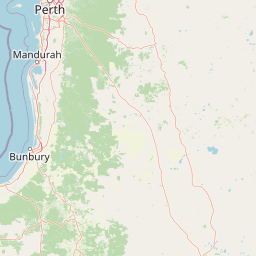
Serpentine Falls remains the park's standout feature, a series of cascading waterfalls on the Serpentine River that create a scenic swimming destination. The spring wildflower season transforms the park's understory with abundant orchid displays and colorful blooming shrubs. The accessible location, less than an hour's drive from Perth, makes this one of the most visited national parks in Western Australia. The combination of waterfall scenery, jarrah forest atmosphere, and botanical displays creates a distinctive nature experience.
Best time to visit Serpentine National Park
The park offers year-round appeal, though spring from September to November represents the most visually spectacular period when wildflowers bloom across the forest floor. Summer months can be warm, making the waterfall pool a popular cooling destination. Autumn and winter bring quieter visitation and different atmospheric qualities as the forest takes on seasonal character. The waterfall flows are most reliable during the winter and spring wet season, though the falls maintain some flow throughout the year.