Why Yengo National Park stands out
Yengo National Park is best known for its wilderness character and role as the most north-easterly protected area within the Greater Blue Mountains World Heritage Site. The park features Mount Yengo (Big Yengo), a 668-metre mountain that serves as a significant geographical landmark. Its biodiversity is notable, with over 50 mammal species including koalas, wallaroos, wombats, and gliding possums, alongside more than 200 bird species. The 2019-2020 Gospers Mountain Fire burned nearly the entire park, making it Australia's largest single-ignition bushfire and highlighting the area's ecological vulnerability and resilience.
Yengo National Park history and protected-area timeline
Yengo National Park's modern management history began in 1993 when the NSW National Parks and Wildlife Service established a depot at Bucketty to manage the newly declared protected area. A helipad, informally known as 'Bucketty International,' was constructed to support park operations and emergency response. Following severe bushfires in the area, a fire tower was built in 1995 to improve fire detection capabilities across the park's challenging terrain. In 1999, the NPWS acquired additional Crown land that had previously separated the Bucketty settlement from the national park, expanding the protected area and incorporating significant cultural sites including the Convict Wall and a community amphitheatre. The Bucketty community, which had long maintained a connection to the landscape, approached the NPWS seeking recognition of their custodianship, leading to the development of a Memorandum of Understanding in 2000 for joint management of the area. This partnership represents an important model of collaborative land management between government agencies and local communities. The summer of 2019-2020 brought catastrophic fire to the park when the Gospers Mountain Fire engulfed nearly the entire national park, representing the largest bushfire from a single ignition point in Australia's recorded history.
Yengo National Park landscape and geographic character
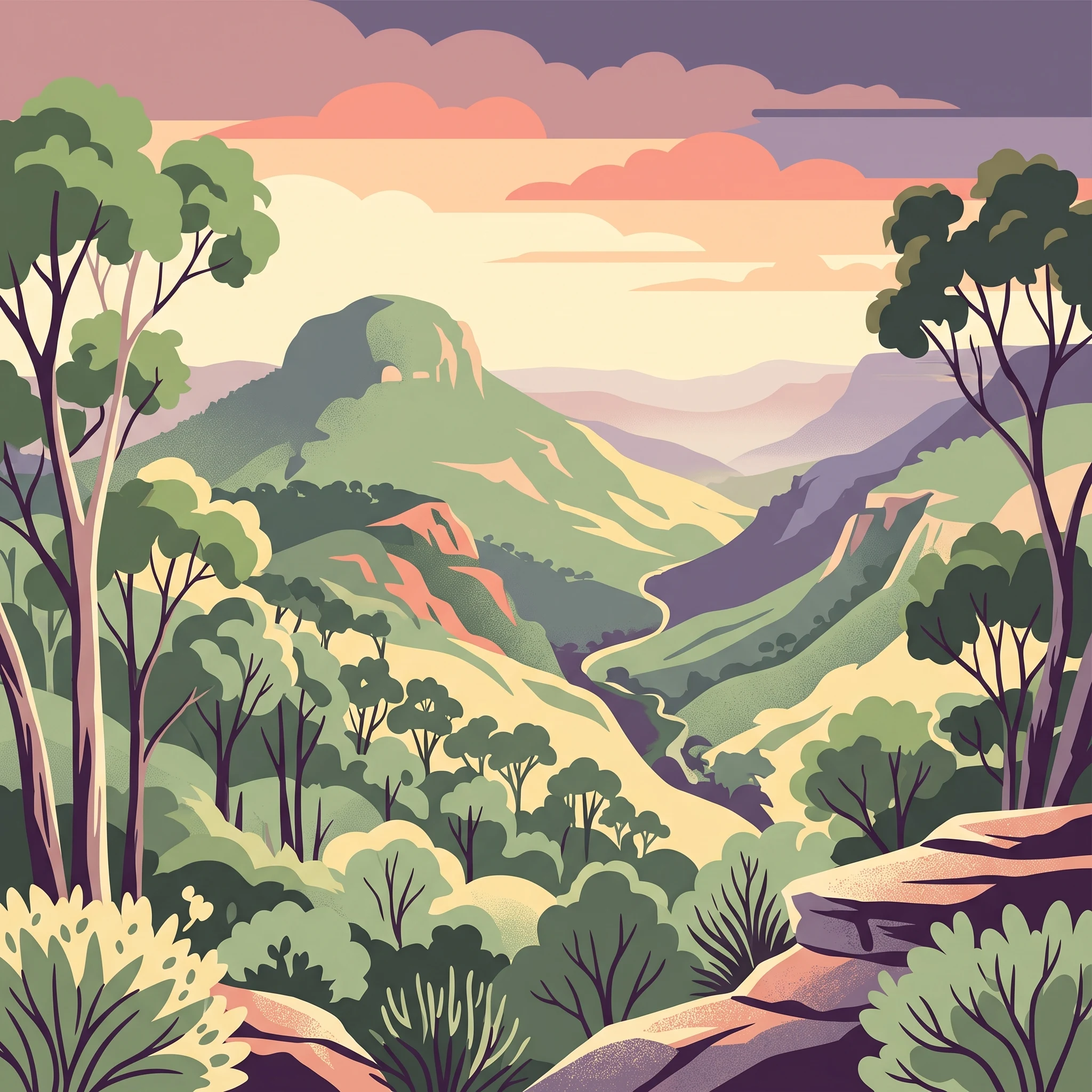
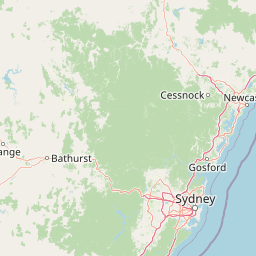
The terrain of Yengo National Park is defined by its position within the Great Dividing Range, featuring mountainous and forested landscapes characteristic of the Blue Mountains region. Mount Yengo, also known as Big Yengo, rises to 668 metres and serves as the park's most prominent physical feature, visible from surrounding areas and providing sweeping views across the protected landscape. The park's average elevation is 309 metres, with the terrain descending through ridges and valleys toward the Macdonald River, which flows from the northwest toward its confluence with the Hawkesbury River in the southeast. The landscape includes the Mellong Range along the western boundary, with the park also bordered by Wollombi Brook to the north and Webbs Creek, Mogo Creek, and the Hawkesbury River along its southern edge. The terrain supports diverse vegetation communities typical of the region, ranging from ridgeline forests to valley floor ecosystems.
Yengo National Park ecosystems, habitats, and plant life
Yengo National Park supports significant biodiversity within its 154,328-hectare expanse, reflecting the ecological richness of the Greater Blue Mountains region. The park contains diverse habitats ranging from moist eucalypt forests on the ridgelines to more open woodland communities in the valley areas. The Macdonald River system provides aquatic habitat and serves as a corridor for wildlife movement through the park. Vegetation communities include various eucalypt species, paperbarks, and river oak along watercourses, with heath and rocky outcrop vegetation occurring on steeper terrain. The park's wilderness designation and relatively limited development have helped preserve these ecological communities, though the 2019-2020 bushfires caused extensive impacts across nearly the entire park area.
Yengo National Park wildlife and species highlights
The wildlife population of Yengo National Park demonstrates significant diversity, with the park supporting over 50 mammal species and more than 200 bird species. Notable marsupial residents include common wombats that inhabit burrow systems throughout the park, wallaroos that occupy rocky terrain and ridgeline areas, and koalas that are present in suitable eucalypt forest habitat. The gliding possums, including sugar gliders and greater gliders, utilise the arboreal canopy and represent an interesting component of the nocturnal fauna. Birdlife is particularly diverse, with over 200 species recorded including various honeyeaters, parrots, cockatoos, and raptors. The combination of forested habitat, watercourse corridors, and varied terrain creates suitable conditions for this bird diversity. The park's position within the Greater Blue Mountains World Heritage Area contributes to its significance as a wildlife refuge in the regional context.
Yengo National Park conservation status and protection priorities
Yengo National Park holds significant conservation value through its inclusion in the Greater Blue Mountains Area World Heritage Site, inscribed by UNESCO in 2000. As the most north-easterly of the eight protected areas that comprise this World Heritage listing, Yengo plays an important role in the ecological connectivity of the region. The park's IUCN Category Ib classification as a wilderness area reflects its high protection status and the minimal development within its boundaries. The 2019-2020 Gospers Mountain Fire, which burned nearly the entire park, underscored both the vulnerability of these ecosystems and their capacity for recovery. Conservation management focuses on fire management, invasive species control, and habitat maintenance, with the NSW National Parks and Wildlife Service working to restore fire-affected areas and protect remaining biodiversity. The park also contributes to the conservation of water quality in the Macdonald River and Hawkesbury River systems.
Yengo National Park cultural meaning and human context
Yengo National Park contains elements of cultural significance, particularly through the historical connection of the Bucketty community to the area. The community's relationship with the landscape predates national park declaration, and their ongoing custodianship is recognised through the 2000 Memorandum of Understanding with the NSW National Parks and Wildlife Service for joint management of the site. The park landscape would have been utilised by Aboriginal peoples historically, as evidenced by the presence of the Convict Wall, a historical site within the area acquired in 1999. The name Yengo derives from the local Aboriginal word for the mountain, reflecting the indigenous heritage of the place. The historic Great North Road passes near the park, connecting the area to early colonial infrastructure and settlement patterns in the Sydney to Hunter region.
Top sights and standout views in Yengo National Park
Yengo National Park stands out as a wilderness refuge within the Greater Blue Mountains World Heritage Area, offering a remote and undeveloped nature experience in close proximity to the Sydney region. The iconic Mount Yengo provides a notable destination for visitors, with its 668-metre summit offering panoramic views across the mountainous terrain. The park's biodiversity is exceptional, supporting over 50 mammal species and 200 bird species within its 154,328-hectare expanse. The 2019-2020 Gospers Mountain Fire, while devastating, created landscape-scale ecological disturbance that has become a significant case study in fire ecology and post-fire recovery. The partnership between the Bucketty community and park management represents a notable model of collaborative conservation.
Best time to visit Yengo National Park
Yengo National Park can be visited throughout the year, though autumn and spring typically offer the most comfortable conditions for exploring the park's trail network and natural features. Summer months can bring high temperatures and elevated fire risk, while winter may see cold conditions at higher elevations. The park's recovery from the 2019-2020 bushfires continues to influence vegetation regrowth and habitat conditions, creating a dynamic landscape that visitors may find of interest. Those planning visits should check current conditions and any park closures with the NSW National Parks and Wildlife Service, as fire impacts and recovery work may affect access to certain areas.