Mori Atlas logo
National parkBandipur National Park

Explore the mapped terrain and diverse ecosystems of this vital protected area in South India.

Bandipur National Park: Karnataka's Premier National Park for Protected Landscape and Map Exploration

(Bandipur Tiger Reserve)

Bandipur National Park represents a significant protected landscape in Karnataka, India, offering a gateway to understanding protected area geography and mapped terrain. Situated where the Deccan Plateau meets the Western Ghats, this national park encompasses a diverse mosaic of dry and moist deciduous forests, shrublands, and grasslands. Its strategic location within the Nilgiri Biosphere Reserve highlights its ecological importance, providing a rich context for atlas-style exploration of India's natural heritage and conservation efforts.

Tiger ReserveWildlife ConservationDeciduous ForestsWestern GhatsElephant HabitatNational Park

Bandipur National Park

National park

Park overview

Structured park overview, official facts, and landscape profile for Bandipur National Park

Bandipur National Park park facts, protected area profile, and essential visitor context
Review the core facts for Bandipur National Park, including designation, size, terrain, visitor scale, habitats, and operating context in one park-focused overview.

About Bandipur National Park

Bandipur National Park represents one of India's most important protected areas for large mammal conservation. Located in the southern Indian state of Karnataka within Chamarajanagar district, the park encompasses approximately 1,456 square kilometers of varied terrain where the Deccan Plateau transitions into the Western Ghats mountain range. This geographic positioning creates a unique ecological setting that supports multiple forest types and a remarkable diversity of wildlife species. The park was formally established as a tiger reserve in 1973 under India's Project Tiger initiative, which aims to protect endangered tiger populations and their habitats. However, the area's conservation heritage extends much further back, having been established as the Venugopala Wildlife Park by the Maharaja of Mysore in 1931, making it one of the oldest protected areas in the region. The park forms an integral component of the Nilgiri Biosphere Reserve, a sprawling protected landscape that encompasses parts of Kerala, Tamil Nadu, and Karnataka and represents one of India's most significant ecological zones. The Karnataka Forest Department manages the park in coordination with the Ministry of Environment and Forests, implementing conservation programs focused on habitat protection, wildlife monitoring, and community engagement. Bandipur's ecological significance extends beyond its boundaries, serving as a critical wildlife corridor that facilitates gene flow between disconnected protected areas and maintains ecological connectivity across the Western Ghats region.

Quick facts and research context for Bandipur National Park

Bandipur National Park covers 1,456.3 square kilometers in Karnataka, India, at the junction of the Deccan Plateau and Western Ghats. Established in 1973 as a Project Tiger reserve, it was originally created as the Venugopala Wildlife Park in 1931 by the Maharaja of Mysore. The park forms part of the larger Nilgiri Biosphere Reserve and ranges in elevation from 680 to 1,454 meters. The landscape supports dry deciduous forests, moist deciduous forests, and shrubland ecosystems, with the Kabini and Moyar rivers providing critical water resources. Key wildlife includes Bengal tigers, Asian elephants, gaurs, leopards, and over 200 bird species.

Park context

Deeper park guide and search-rich context for Bandipur National Park

Bandipur National Park history, landscape, wildlife, and travel context
Explore Bandipur National Park through its history, landscape character, ecosystems, wildlife, conservation priorities, cultural context, and seasonal travel timing in a structured park guide built for atlas discovery and search intent.

Why Bandipur National Park stands out

Bandipur National Park is best known as one of the premier tiger reserves in India, supporting a significant population of Bengal tigers within its diverse forest ecosystems. The park is also notable for its substantial Asian elephant herds and serves as a critical corridor for wildlife movement between the Western Ghats and other protected areas in the region. Its location within the Nilgiri Biosphere Reserve positions it as a key conservation area for India'sWestern Ghats biodiversity hotspot, supporting populations of gaur, sloth bear, four-horned antelope, and numerous other species. The park's varied topography, ranging from undulating plains to forested hillsides, creates multiple distinct habitats that support remarkable species diversity.

Bandipur National Park history and protected-area timeline

The conservation history of Bandipur National Park traces back to 1931 when the Maharaja of the Kingdom of Mysore established the Venugopala Wildlife Park as a protected sanctuary covering approximately 90 square kilometers. This early conservation initiative reflected the region's long-standing tradition of royal wildlife protection and established the foundation for what would become one of India's premier national parks. The park underwent significant expansion in 1973 when it was formally designated as a tiger reserve under Project Tiger, India's flagship conservation program for protecting endangered Bengal tiger populations. This expansion added nearly 800 square kilometers to the original sanctuary, creating the extensive protected landscape that exists today. The inclusion in Project Tiger brought increased funding, scientific management practices, and national attention to the park's conservation needs. In 1986, Bandipur was incorporated into the Nilgiri Biosphere Reserve, recognizing its ecological importance within the larger regional context of Western Ghats conservation. This designation connected Bandipur to a network of protected areas spanning multiple states and established integrated conservation frameworks for the broader ecosystem. The park's history includes challenges related to road safety, with national highways passing through its boundaries and causing wildlife mortality from vehicle collisions, leading to collaborative measures between Karnataka and Tamil Nadu governments to restrict night-time traffic.

Bandipur National Park landscape and geographic character

Bandipur National Park occupies a diverse landscape where the flat tablelands of the Deccan Plateau merge with the forested slopes of the Western Ghats, creating a terrain of exceptional topographic variety. The park's elevation ranges from 680 meters in the lower valleys to 1,454 meters at Himavad Gopalaswamy Betta, the highest point within the reserve, which features a Hindu temple at its summit that attracts both pilgrims and visitors. The landscape is characterized by undulating hills, rocky outcrops, river valleys, and open grassy areas interspersed with dense forest cover. Three major river systems traverse the park: the Kabini River defines the northern boundary, the Moyar River marks the southern edge, and the Nugu River flows through the interior, providing critical water resources for wildlife throughout the year. The park's position at the ecological transition between plateau and mountain environments results in a complex mosaic of habitats, from dry deciduous forests in the lower elevations to moist deciduous forests in higher areas and shurbland patches in certain zones. This topographic and ecological diversity supports the wide array of plant and animal species that make Bandipur notable within India's protected area network.

Bandipur National Park ecosystems, habitats, and plant life

The ecological character of Bandipur National Park reflects its position within one of India's richest biodiversity regions. The park supports three primary forest types: tropical dry deciduous forests dominate the lower elevations and cover the majority of the area, while moist deciduous forests appear in higher rainfall zones, and shrubland ecosystems occur in pockets throughout the reserve. This forest diversity creates a heterogeneous habitat matrix that supports remarkable species richness. The vegetation includes commercially valuable timber species such as teak, rosewood, and sandalwood, alongside numerous flowering and fruiting trees that provide food resources for wildlife throughout the year. The park's river systems and associated riparian zones add further ecological complexity, supporting different plant communities and providing crucial water sources that sustain wildlife populations during dry seasons. The integration into the Nilgiri Biosphere Reserve connects Bandipur to a larger network of protected areas that collectively shelter significant populations of endemic and endangered species, making the park a critical node in regional conservation strategies for the Western Ghats biodiversity hotspot.

Bandipur National Park wildlife and species highlights

Bandipur National Park supports exceptional wildlife diversity, with particular significance attached to its populations of large mammals. The park is recognized as an important tiger habitat, supporting a viable population of Bengal tigers that represent a key component of India's conservation efforts for this endangered species. Asian elephants thrive in the park, with population estimates showing significant growth over recent decades, demonstrating the effectiveness of protection measures. The park also supports healthy populations of gaurs, the largest wild cattle species in the world, as well as Indian leopards, sloth bears, four-horned antelopes, and dholes, also known as Asiatic wild dogs. Smaller mammals commonly observed include chital deer, gray langurs, Indian giant squirrels, sambar deer, and wild boars. The bird fauna exceeds 200 species and includes both resident and migratory species, with notable populations of crested honey buzzards, red-headed vultures, various eagle and hawk species, kingfishers, and the commonly seen blue peafowl and gray junglefowl. Reptile diversity includes spectacled cobras, Indian rock pythons, vipers, and mugger crocodiles. The park also supports remarkable invertebrate diversity, particularly butterflies with numerous species documented, as well as ant species and dung beetles that play important ecological roles in nutrient cycling and ecosystem functioning.

Bandipur National Park conservation status and protection priorities

Bandipur National Park occupies a critical position in India's conservation framework, serving as a cornerstone of Project Tiger and a key component of the Nilgiri Biosphere Reserve. The park's inclusion in the Nilgiri Biosphere Reserve since 1986 connects it to a larger conservation landscape that encompasses multiple protected areas across Kerala, Tamil Nadu, and Karnataka, facilitating coordinated conservation strategies for the Western Ghats region. The tiger reserve designation has enabled substantial investment in anti-poaching efforts, habitat management, and wildlife monitoring programs. However, the park faces significant conservation challenges related to infrastructure development, as national highways NH-181 and NH-766 pass through the reserve, creating mortality risks for wildlife from vehicle collisions. Following the death of an elephant named Ranga in 2018, the governments of Karnataka and Tamil Nadu implemented night-time traffic restrictions to reduce wildlife mortality. These mitigation measures reflect ongoing efforts to balance transportation infrastructure needs with wildlife protection requirements, a common challenge in India's densely populated landscape where protected areas often intersect with human development corridors.

Bandipur National Park cultural meaning and human context

Bandipur National Park is situated in the region historically governed by the Kingdom of Mysore, and the park's origin as a protected area traces directly to the conservation initiatives of the Mysore royal family. The original Venugopala Wildlife Park was established in 1931 by the Maharaja of Mysore, reflecting an early recognition of the area's ecological value and wildlife significance. The park's landscape includes Himavad Gopalaswamy Betta, a prominent hill that features a Hindu temple at its summit, representing the intersection of natural and cultural heritage within the protected area. The region surrounding the park is inhabited by local communities whose livelihoods are influenced by the presence of the reserve and who have historical relationships with the landscape. The park's proximity to the city of Mysore, approximately 80 kilometers away, and to Chamarajanagar, approximately 50 kilometers distant, positions it within a cultural landscape that includes both traditional rural communities and historic urban centers associated with the former Kingdom of Mysore.

Top sights and standout views in Bandipur National Park

Bandipur National Park stands as one of India's premier wildlife destinations within the Nilgiri Biosphere Reserve. The park's significant tiger population makes it a key location for tiger conservation and wildlife viewing in the country. Its substantial Asian elephant herds are among the most notable in southern India, and the park serves as an important habitat for gaurs, leopards, and numerous other mammal species. The diverse forest ecosystems, ranging from dry deciduous to moist deciduous formations, create varied landscapes that support remarkable biodiversity. The presence of three major rivers within the park ensures reliable water availability for wildlife throughout the year. The park's historical significance as a royal hunting ground transformed into a modern conservation area illustrates the evolution of wildlife protection in India. The combination of large mammal populations, bird diversity exceeding 200 species, and significant invertebrate communities makes Bandipur one of India's most ecologically diverse protected areas.

Best time to visit Bandipur National Park

The optimal time to visit Bandipur National Park aligns with the dry season when wildlife visibility improves and animals concentrate around remaining water sources. The period from October through May offers the most favorable conditions for wildlife viewing, with the dry months from March to May providing particularly good opportunities to observe tigers, elephants, and other species at waterholes. The monsoon season from June to September brings heavy rainfall to the region, transforming the landscape into lush green but making wildlife spotting more challenging and potentially restricting access to certain areas. The park experiences a tropical climate with distinct wet and dry seasons, and the dry and hot period typically begins in early March and continues until the monsoon arrives in June. Visitors seeking to avoid the peak summer heat may prefer the cooler winter months from November to February, though waterhole viewing is less predictable during this period. The timing of visits should consider the park's access restrictions and seasonal operational changes.

Park location guide

Geography guide, regional context, and park location map for Bandipur National Park

Bandipur National Park park geography, regions, and map view in India
Understand where Bandipur National Park sits in India through a broader geographic reading of the surrounding landscape, nearby location context, and its mapped position within the national park landscape.

How Bandipur National Park fits into India

India is a South Asian country bordered by the Indian Ocean, Arabian Sea, and Bay of Bengal. It shares land borders with Pakistan, China, Nepal, Bhutan, Bangladesh, and Myanmar. The country has a population of over 1.4 billion people and operates as a federal parliamentary republic with its capital in New Delhi.

Wider geography shaping Bandipur National Park in India

India occupies the Indian subcontinent in South Asia, bordered by the Arabian Sea to the southwest, the Bay of Bengal to the southeast, and the Indian Ocean to the south. It shares land borders with Pakistan to the west, China, Nepal, and Bhutan to the north, and Bangladesh and Myanmar to the east. The territory also includes the Andaman and Nicobar Islands in the Indian Ocean.

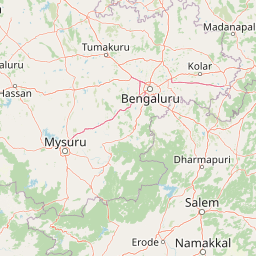
Map view of Bandipur National Park

Use this park location map to pinpoint Bandipur National Park in India, understand its exact geographic position, and read its mapped placement within the surrounding landscape more clearly.

Pigeon | © OpenStreetMap contributors

Location context for Bandipur National Park

Chamarajanagar districtKarnataka
Park atlas

Browse regional protected landscapes, tracing geographic connections and comparing adjacent park systems in South India

Explore Other National Parks and Protected Areas Near Bandipur National Park
After exploring Bandipur National Park's vital ecosystems, browse other national parks and protected areas throughout its surrounding Western Ghats region of southern India. Compare various conservation landscapes and regional park distributions to trace the broader network of protected lands across the Deccan Plateau transition zone.
National parkNilgiri District

Mukurthi National Park: Nilgiri District's Protected Montane Grassland and Shola Ecosystem

Explore a vital refuge for the endangered Nilgiri tahr.

Mukurthi National Park, situated in the Nilgiri District of India, is an essential protected area celebrated for its distinctive montane landscape. This national park plays a critical role in the survival of the endangered Nilgiri tahr, protecting the rare shola-grassland ecosystem where they thrive. Its dramatic terrain, high elevations, and unique ecological associations make it a focal point for understanding conservation geography and the mapped boundaries of protected lands within the Western Ghats.

Area
78.46 km²
Established
1990
IUCN
II
Relief
Mountain
National parkKarnataka

Kudremukh National Park: Karnataka's Protected Landscape and River Origin

Explore the geography of shola forests and grasslands.

Kudremukh National Park is a pivotal protected landscape in Karnataka, India, recognized for its distinctive montane grasslands and shola forests. This national park is a critical source for three major rivers: the Tunga, Bhadra, and Nethravathi, highlighting its ecological and geographic significance within the Western Ghats. The park's terrain features rolling hills and steep western slopes, contributing to its unique biodiversity and landscape character for atlas-based discovery.

Area
600.57 km²
Established
1987
IUCN
II
Relief
Mountain
National parkKerala

Periyar National Park: National Park Protected Area Atlas and Geographic Context

Mapped protected lands and regional landscape exploration in Kerala.

Discover Periyar National Park as a distinct protected landscape offering rich geographic context for atlas exploration. This entry details its mapped boundaries and its significance within the broader regional geography of Kerala. Understand the natural terrain and protected-area distribution that makes Periyar National Park a key element in India's conservation mapping.

Area
350.54 km²
Established
1982
IUCN
II
Visitors
754.3K annual
National parkTamil Nadu

Gulf of Mannar Marine National Park: Protected Island Archipelago and Marine Atlas

Explore India's vital marine national park and its coral reef ecosystems.

Gulf of Mannar Marine National Park is a designated national park located in Tamil Nadu, India, protecting a chain of 21 islands and their surrounding marine environments. This protected area is renowned for its extensive coral reefs, crucial seagrass meadows supporting dugongs, and diverse fish species, making it a key site for marine conservation and geographic exploration. The park's unique island landscape and intertidal zones offer a distinct perspective on coastal protected areas within the Indian Ocean, providing rich material for atlas-style discovery and understanding regional marine geography.

Area
560 km²
Established
1986
IUCN
II
Relief
Lowland
National parkNorthern Province

Adam's Bridge Marine National Park: Protected Coastal Landscape and Geographic Significance

Mapped marine geography and protected island ecosystems.

Adam's Bridge Marine National Park is a protected national park in Sri Lanka's Northern Province, notable for encompassing the legendary Adam's Bridge. This marine protected area safeguards critical shallow-water habitats, including seagrass meadows and sand dunes, which are vital for migratory birds, dugongs, and sea turtles. The park's unique geographic identity as a chain of limestone shoals and islands offers a distinct landscape for atlas-based discovery and understanding of coastal conservation significance.

Area
190 km²
Established
2015
IUCN
II
National parkNorthern Province

Madhu Road National Park: Sri Lanka's Northern Province Dry Zone National Park

Explore protected landscapes and mapped geography.

Madhu Road National Park, situated in Sri Lanka's Northern Province, is a significant protected area defined by its dry zone ecosystems, including forests, grasslands, and wetlands. As one of the island's larger national parks, it offers critical habitat for diverse wildlife and represents an important component of northern Sri Lanka's conservation efforts. This page provides detailed atlas-style insights into the park's geography, mapped boundaries, and its ecological context within the region.

Area
631 km²
Established
2015
IUCN
II
National parkNorth Western Province

Wilpattu National Park: Sri Lanka's Largest Protected Landscape and Wetland Atlas

Discover the unique willu system and mapped geography of this National Park.

Wilpattu National Park represents a significant protected area within Sri Lanka's North Western Province, recognized for its vast expanse and the distinctive natural sand-rimmed water basins known as willu. This atlas entry provides a deep dive into the park's geographic setting, focusing on its dry zone forest, coastal lowland terrain, and the critical wetland habitats that define its ecological importance. Understand the mapped boundaries and landscape character of Wilpattu National Park, a key site for conservation and natural discovery.

Area
1,316.67 km²
Established
1938
IUCN
II
National parkNorth Central Province

Horowpathana National Park: Protected Landscape within North Central Province's Dry Zone

Explore its mapped boundaries and vital wildlife habitat.

Horowpathana National Park is a designated national park in Sri Lanka's North Central Province, covering 2,570 hectares of dry zone forest. Established to protect critical habitats for endangered species like the Sri Lankan elephant and leopard, it plays a vital role in regional wildlife conservation and managing human-wildlife conflict. Its landscape is characterized by dry forest ecosystems situated near the Tawalamham Hammillewa reservoir system, presenting a unique environmental context within the broader mapped geography of the island.

Area
2,570 km²
Established
2011
IUCN
II

Common questions about visiting, size, designation, and location context for Bandipur National Park

Bandipur National Park FAQs for park facts, access, geography, and protected area context
Find quick answers about Bandipur National Park, including protected-area facts, park geography, trail and visitor context, and how the park fits into its surrounding country and regional landscape.
MoriAtlas Explorer

Continue Your Protected Areas Search Across the Global Atlas

Deepen your exploration by continuing the structured search for national parks and protected areas worldwide. Utilize the comprehensive filtering capabilities to compare different conservation landscapes and refine your understanding of global park geography. Discover more about the distribution and characteristics of protected natural areas.

Global natural geography