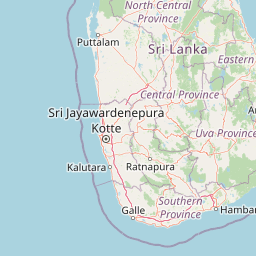
Why Flood Plains National Park stands out
Flood Plains National Park is most renowned for its role as a critical elephant corridor and feeding ground within the Mahaweli River basin. The park's exceptional wetland productivity supports one of the highest biomass concentrations within the Mahaweli development project area. The villu system, with its distinctive zonation patterns of aquatic vegetation, creates a rich habitat supporting both resident and migratory waterfowl. The flood plains serve as a vital dry season grazing area for elephants, maintaining ecological connectivity between Wasgamuwa and Somawathiya national parks. The park also holds significant archaeological value, with ancient cave monastery ruins dating to between the 2nd and 7th century BC discovered at Mutugalla villu.
Flood Plains National Park history and protected-area timeline
Flood Plains National Park was officially declared on 7 August 1984 as one of four national parks established under the Mahaweli River development project, Sri Lanka's largest river basin management initiative. The creation of this protected area reflected the government's recognition of the ecological importance of the Mahaweli flood plain system and the need to conserve the natural habitat while developing water resources for agriculture and hydroelectric power. The park forms the upper section of a continuous protected area corridor, with Somawathiya National Park established downstream in 1986. These two parks, together with Wasgamuwa National Park to the southwest and the Trikonamadu Nature Reserve to the northeast, comprise a contiguous network of protected areas designed to maintain ecological connectivity across the region. The historical significance of the area extends far beyond modern conservation, as the Mahaweli River in this section was connected to an ancient irrigation network that supported agricultural production in the Polonnaruwa region during medieval times. Archaeological investigations at Mutugalla villu uncovered ruins of an ancient cave monastery bearing inscriptions dating between the 2nd and 7th century BC, providing evidence of human habitation and spiritual activity in this landscape across more than two millennia. Proposed plans to link all these national parks into a single unified protected area reflect ongoing efforts to maximize conservation effectiveness through landscape-level management.
Flood Plains National Park landscape and geographic character
The physical landscape of Flood Plains National Park is defined by the Mahaweli River, which flows from south to north through the centre of the protected area, carving a path through the alluvial flood plain. The park's terrain is predominantly flat, lying at elevations between 20 and 60 metres above sea level, with sparse rock outcrops emerging on slightly higher ground. The most distinctive landscape feature is the villu system, comprising approximately 38 shallow, swampy depressions scattered across the flood plain. These villus represent relic channel and oxbow lake features that have become permanent wetland habitats due to the consistent water availability from the river and seasonal flooding patterns. The rich alluvial soils deposited by periodic flooding create highly fertile conditions that support lush vegetation and sustain the park's exceptional biodiversity. The landscape transitions from riverine zones along the main channel through increasingly wet villus complexes to seasonal grasslands that dry out during the extended dry season. Sparse tree cover characterizes the higher ground, while the villus themselves support dense stands of aquatic vegetation and water-tolerant grasses. The monsoon forest found on higher grounds and gallery forest along the river banks represent the park's arboreal vegetation, though the original riverine forest on the banks has been largely converted to agricultural use, primarily tobacco cultivation.
Flood Plains National Park ecosystems, habitats, and plant life
The ecological character of Flood Plains National Park is defined by the complex interplay of aquatic and terrestrial habitats within the Mahaweli flood plain system. The villu formations create a diversity of ecological zones including river channels, riverine marshes, permanently flooded villus, seasonally flooded grasslands, and swamp forests, each supporting distinct plant communities. The flood plain and associated villus support exceptional plant diversity, with 231 species recorded from the Handapan and Bendiya villus complex alone, which represents the largest villu in the Mahaweli flood plain at 796 hectares. The vegetation within the villus displays pronounced zonation patterns, with creeping grasses such as Cynodon dactylon and terrestrial annual plants occupying the edges, hydrophytic plants and grasses in intermediate zones, and floating aquatic plants including Aponogeton crispum, A. natans, and Nymphoides species occurring in deeper water. The sacred lotus Nelumbo nucifera and water lily Nymphaea stellata dominate the deepest sections, while Ceratophyllum demersum forms submerged communities. Between the river banks, the vegetation resembles swamp forest due to periodic inundation, with Terminalia arjuna, Hydnocarpus venenata, Mitragyna parvifolia, Madhuca longifolia, and Barringtonia asiatica being the most abundant tree species. The saturated soils and persistent flooding create conditions that favor water-tolerant grasses and aquatic plants over tree growth, explaining the park's characteristic open wetland appearance.
Flood Plains National Park wildlife and species highlights
Flood Plains National Park supports remarkable wildlife diversity, particularly for a protected area of its size within the dry zone. The park is especially important for Asian elephants, with an estimated population of 50 to 100 individuals in 2007 utilizing the flood plains as both a wet season feeding ground and, historically, a crucial dry season grazing area when the villus maintained water and forage availability. The mammalian community includes several species of conservation significance: the fishing cat, jungle cat, rusty-spotted cat, golden jackal, wild boar, Indian muntjac, sambar, spotted deer, water buffalo, European otter, Sri Lankan spotted chevrotain, leopard, and the grey slender loris. The avifauna is particularly exceptional, with the flood plains recognized as especially important for diversity and richness of migratory birds. Approximately 75 species winter in the swamps of the flood plains, including the rare lesser adjutant. Resident birds are abundant and diverse, featuring marsh sandpiper, wood sandpiper, Asiatic golden plover, garganey, osprey, black-tailed godwit, great egret, cattle egret, painted stork, pond heron, grey heron, pheasant-tailed jacana, purple swamphen, Indian darter, little cormorant, Indian shag, Indian cormorant, brahminy kite, painted snipe, black-winged stilt, and red-wattled lapwing. The freshwater fish community includes both exotic species such as Oreochromis and Osphronemus goramy and endemic species including Esomus thermoicos, Garra ceylonensis, and Schistura notostigma. Reptiles are well-represented, with mugger crocodile, estuarine crocodile, natricine watersnakes, Indian black turtle, and Indian flap-shelled turtle occupying the aquatic habitats.
Flood Plains National Park conservation status and protection priorities
Flood Plains National Park holds significant conservation importance within Sri Lanka's protected area network, particularly for the long-term survival of elephants within the Mahaweli catchment area. The park's designation as an elephant corridor connecting Wasgamuwa and Somawathiya national parks ensures the maintenance of essential migration routes that allow elephant populations to access seasonal feeding resources across the broader landscape. Together with Somawathiya National Park, Flood Plains provides crucial sanctuary for both resident and migratory waterfowl species. However, the park faces serious conservation challenges that threaten its ecological integrity. The absence of a dedicated management plan leaves the park divided administratively, with the northern half managed as part of Somawathiya and the southern half as part of Wasgamuwa. Proposed dam construction on the Mahaweli River would significantly reduce downstream water flow, diminishing the magnitude and duration of flooding that sustains the villu system and transforms the rich grasslands into poor quality grazing grounds harmful to wildlife. In 1989, the park was added to the IUCN/CNNPA register of threatened protected areas due to severe integrity threats from resource overexploitation. Elephants have died after falling into holes created by numerous kilns operating in the area. The drying up of villus has facilitated the spread of invasive alien species including water hyacinth, Xanthium indicum, and Salvinia molesta, which have displaced native grasses and aquatic plants, reducing forage availability for herbivores. Political and security problems in the region have further hampered effective conservation management.
Flood Plains National Park cultural meaning and human context
The cultural landscape surrounding Flood Plains National Park bears evidence of human interaction spanning millennia. The Mahaweli River in this section was historically connected to the ancient irrigation network that supported the agricultural prosperity of the Polonnaruwa kingdom during the medieval period of Sri Lankan history. The discovery of an ancient cave monastery at Mutugalla villu, with inscriptions dating between the 2nd and 7th century BC, provides tangible evidence of early Buddhist habitation and spiritual practice in the flood plain environment. This archaeological site represents a connection between the natural landscape and the cultural development of the region across more than two thousand years. The broader North Central Province contains numerous ancient religious and historical sites, reflecting the area's long-standing significance in Sri Lankan civilization. While the park itself does not contain resident communities, the surrounding landscape has been shaped by traditional land use practices including agriculture and pastoral activities that influenced the development of the current protected area boundaries.
Top sights and standout views in Flood Plains National Park
The villu system stands as the defining ecological feature of Flood Plains National Park, comprising approximately 38 shallow wetland depressions that support exceptional biodiversity and primary productivity. The flood plains serve as Sri Lanka's most important elephant corridor, facilitating seasonal migration between Wasgamuwa and Somawathiya national parks and providing crucial feeding grounds for an estimated 50 to 100 elephants. The park's avifaunal importance is extraordinary, with around 75 migratory bird species wintering in the swamp habitats including the rare lesser adjutant. The archaeological significance of Mutugalla villu, where ancient cave monastery ruins with inscriptions dating to between the 2nd and 7th century BC have been discovered, connects the park's ecological identity with the deep historical past of the North Central Province. The park's integration into a contiguous protected area network spanning Somawathiya, Wasgamuwa, and Trikonamadu represents landscape-level conservation planning within the Mahaweli basin.
Best time to visit Flood Plains National Park
The optimal time to visit Flood Plains National Park corresponds with the northeast monsoon season from October through late January, when water availability in the villus is at its peak and wildlife congregates around the remaining water sources. This period offers the best opportunities for elephant sightings as the animals concentrate on the flood plains seeking forage and water. Birdwatching is particularly rewarding during the migratory season from November through March, when the park hosts approximately 75 wintering species including waterfowl, waders, and raptors. The dry season from March through September, while offering less scenic wetland views, provides easier wildlife viewing as vegetation thins and animals increasingly rely on the remaining villus and river channels. However, visitors should be aware that water levels become severely reduced during the extended dry period, and some access may be restricted as conditions become increasingly arid across the park.