Mori Atlas logo
National parkMaiko National Park

Discover the mapped boundaries and pristine rainforest terrain of this critical national park.

Maiko National Park: A Vital Protected Landscape in the Democratic Republic of the Congo

(Parc national de la Maiko)

Maiko National Park represents a significant expanse of pristine tropical rainforest within the Democratic Republic of the Congo, covering approximately 10,885 square kilometers. Established in 1970, this national park is a vital refuge in the Ituri Rainforest ecosystem, characterized by its remote location and extensive river systems. The park's remarkable conservation importance lies in its role as a sanctuary for critically endangered endemic species, including Grauer's gorilla, the okapi, and the Congo peafowl, making its protected landscape a cornerstone of central African biodiversity.

Lowland RainforestEndemic SpeciesGorilla ConservationOkapi HabitatImportant Bird AreaCongo Basin

Maiko National Park

National park

Park overview

Structured park overview, official facts, and landscape profile for Maiko National Park

Maiko National Park park facts, protected area profile, and essential visitor context
Review the core facts for Maiko National Park, including designation, size, terrain, visitor scale, habitats, and operating context in one park-focused overview.

About Maiko National Park

Maiko National Park stands as a testament to both the ecological richness and the complex conservation challenges present in the Democratic Republic of the Congo. Covering nearly 11,000 square kilometers of contiguous tropical forest, the park occupies a strategically important position within the Congo Basin, the world's second-largest tropical rainforest. The park's three-sector structure spans administrative boundaries, integrating the northern reaches of the Ituri Rainforest with more varied terrain to the east and south. Rivers originating from the surrounding hills traverse the park, providing critical water resources and habitat corridors for aquatic species. The region's remoteness has historically insulated much of the forest from intensive human development, though this same isolation has created governance challenges. The park's establishment in 1970 represented a formal recognition of the area's ecological significance, building upon earlier colonial-era protections that focused on the Bakumu region and its indigenous communities. Today, Maiko faces the dual challenge of maintaining ecological integrity while addressing threats from illegal activities and limited resources.

Quick facts and research context for Maiko National Park

Maiko National Park encompasses roughly 10,885 km² of contiguous lowland rainforest in northeastern Democratic Republic of the Congo, making it one of the largest national parks in the country. The park was formally established in 1970 under Presidential Decree 70-312, building upon the earlier Bakumu Hunting Reserve created by Belgian colonial authorities in 1949. The landscape is characterized by tall, closed evergreen rainforest with patches of secondary forest around settlements, receiving high rainfall with peak precipitation in October and November. The eastern sector maintains relatively flat terrain at approximately 1,000 meters elevation, while the northern sector forms part of the larger Ituri Rainforest. The park is governed by the Institut Congolais pour la Conservation de la Nature and has been designated as an Important Bird Area by BirdLife International.

Park context

Deeper park guide and search-rich context for Maiko National Park

Maiko National Park history, landscape, wildlife, and travel context
Explore Maiko National Park through its history, landscape character, ecosystems, wildlife, conservation priorities, cultural context, and seasonal travel timing in a structured park guide built for atlas discovery and search intent.

Why Maiko National Park stands out

Maiko National Park is renowned for harboring three of the Democratic Republic of the Congo's most iconic endemic species: Grauer's gorilla (eastern lowland gorilla), the okapi, and the Congo peafowl. These species represent the park's extraordinary conservation significance, as each faces severe threats across their remaining range. The park also supports significant populations of African forest elephants, eastern chimpanzees, and the rare aquatic genet, making it a critical refuge for central African forest biodiversity. The combination of these flagship species, combined with the park's vast intact forest habitat, positions Maiko as one of the most important conservation areas in the Congo Basin.

Maiko National Park history and protected-area timeline

The conservation history of Maiko National Park traces back to the Belgian colonial period, when the Bakumu Hunting Reserve was established in 1949 on lands inhabited by the Bakumu people, known locally as "The Kumus." Notably, the original rationale for protecting this area focused more on preventing mineral resource exploitation than on wildlife preservation. The modern protected area emerged on November 20, 1970, when President Joseph Désiré Mobutu signed Presidential Decree 70-312, which incorporated the park into the national protected area network under the legal framework established the previous year. Following the Simba Rebellion of 1964, the park's remote character made it an attractive retreat for rebel groups, and these elements have remained in the region, engaging in poaching and controlling illegal mining operations. This security situation has severely constrained park management, with the ICCN forced to support military operations against rebels and survey teams attacked between 2003 and 2005. International conservation organizations began systematic exploration in 1989, with the Wildlife Conservation Society conducting extensive surveys supported by the World Bank, European Community, and WWF. Subsequent surveys in 2005 and 2006 revealed concerning population trends, and a 2010 survey documented the extinction of a newly discovered gorilla subpopulation, highlighting the intense hunting pressure from miners.

Maiko National Park landscape and geographic character

The physical landscape of Maiko National Park is defined by extensive lowland tropical rainforest with remarkable topographic variation across its three sectors. The northern sector comprises the southern extent of the Ituri Rainforest, one of the most biodiverse forest blocks in central Africa, characterized by tall, closed-canopy evergreen forest with emergent trees reaching impressive heights. The eastern sector presents a relatively flat terrain at approximately 1,000 meters elevation, extending to the Lindi River valley where the landscape begins to transition. Moving farther east, elevation increases as the terrain rises toward hills that mark the park's boundaries. Multiple rivers originate from these elevated areas, flowing northward, eastward, and southward through the forest, creating complex drainage patterns and providing critical aquatic habitat. The vegetation throughout the park consists primarily of primary rainforest, though patches of secondary forest have developed around historical settlement areas. The landscape supports a complex mosaic of forest types responding to local soil conditions, drainage patterns, and elevation changes, creating diverse habitat conditions across the park's extensive area.

Maiko National Park ecosystems, habitats, and plant life

The ecological character of Maiko National Park centers on its vast tracts of intact lowland rainforest within the Congo Basin, one of Earth's most important tropical forest ecosystems. The park's position spanning three provinces places it at the intersection of multiple forest types and ecological zones, contributing to its biological diversity. Rainfall patterns feature high annual precipitation with a pronounced peak during October and November, followed by a relatively drier season in July and August that influences vegetation dynamics and wildlife movement patterns. The primary forest canopy, characterized by tall evergreen trees, creates a complex vertical structure that supports diverse ecological niches. The river systems traversing the park provide riparian corridors and aquatic habitats that extend through the forest matrix. This combination of primary forest, river systems, and varying elevation creates the conditions supporting exceptional biodiversity, including species found nowhere else on Earth. The park's designation as an Important Bird Area by BirdLife International recognizes its significance for avifauna conservation.

Maiko National Park wildlife and species highlights

Maiko National Park supports extraordinary wildlife diversity, most notably harboring three of the DRC's flagship endemic species. Grauer's gorilla, also known as the eastern lowland gorilla, represents the park's most significant primate population, with surveys documenting multiple subpopulations throughout the forest. The okapi, a forest-dwelling relative of the giraffe known for its striking striped legs, remains one of the most elusive large mammals in Africa and finds important habitat within Maiko's dense understory. The Congo peafowl, the only peacock species native to Africa, represents another endemic species for which the park provides critical protection. Beyond these flagship species, Maiko supports substantial populations of African forest elephants, whose populations have faced severe pressure across their range, and eastern chimpanzees, the less-studied cousin of the more familiar common chimpanzee. The park also contains the aquatic genet, an elusive carnivore specialized for riparian habitats. BirdLife International has designated the park as an Important Bird Area due to its significance for numerous bird species, though detailed surveys remain limited given the challenging field conditions.

Maiko National Park conservation status and protection priorities

Maiko National Park represents a conservation priority of global significance due to its role as a refuge for species with extremely limited distribution elsewhere. The three endemic flagship species—Grauer's gorilla, okapi, and Congo peafowl—all face severe threats across their ranges, making the park's populations critically important for species survival. Conservation efforts have been complicated by the park's remote location, limited infrastructure, and ongoing security challenges from armed groups. International organizations including the Wildlife Conservation Society, Dian Fossey Gorilla Fund, Fauna and Flora International, and Frankfurt Zoological Society have conducted surveys and implemented conservation initiatives. The 2010 survey documented concerning trends, including the extinction of a previously identified gorilla subpopulation, highlighting the urgent pressure from hunting and habitat degradation. Conservation strategies have included efforts to engage former rebels in ranger roles and develop alternative livelihoods for local communities. The park's inclusion in the national protected area system under ICCN management provides institutional framework, though effective conservation requires sustained international support.

Maiko National Park cultural meaning and human context

The region surrounding Maiko National Park has been inhabited by the Bakumu people, whose name meaning "The Kumus" reflects their indigenous identity in the forest region. The establishment of the original Bakumu Hunting Reserve in 1949 recognized, at least nominally, the presence of this indigenous community and their traditional relationship with the forest. However, the formal protected area framework has not always aligned with local community needs, and the ongoing presence of armed groups in the region has complicated the relationship between conservation and local populations. The construction of health centers and schools by conservation organizations in 2010 represented attempts to address community needs while reducing dependence on activities that harm the park's ecological integrity. Traditional land use practices by local communities have historically shaped the forest landscape, though the park's strict protection status has limited such activities in core zones.

Top sights and standout views in Maiko National Park

Maiko National Park offers exceptional opportunities to preserve some of Africa's most remarkable endemic species within vast tracts of intact tropical rainforest. The park's significance for Grauer's gorilla conservation makes it a critical area for understanding and protecting this endangered subspecies. The presence of okapi and Congo peafowl, both found primarily within the DRC, creates a unique combination of flagship species not found together in any other protected area. The park's position within the Ituri Rainforest connects it to one of Africa's most biodiverse forest ecosystems, supporting complex ecological processes that sustain countless species. Survey work by international conservation organizations has revealed both the extraordinary value of this area and the serious threats it faces, making Maiko a focal point for conservation investment in central Africa.

Best time to visit Maiko National Park

Visiting Maiko National Park presents significant challenges due to the park's remote location and ongoing security considerations, and access is generally restricted to research and conservation activities rather than conventional tourism. For those able to visit, the drier season from June to August may offer slightly easier conditions for wildlife observation as animals concentrate around remaining water sources, though this period still receives substantial rainfall. The peak wet season from October through November brings challenging travel conditions but corresponds with optimal fruiting periods that support wildlife movement. Any visit would require coordination with ICCN and consideration of the complex security environment that has constrained park management activities. The park's inaccessibility means that conventional tourism infrastructure is essentially nonexistent, and visits are limited to specific conservation and research purposes.
Park location guide

Geography guide, regional context, and park location map for Maiko National Park

Maiko National Park park geography, regions, and map view in Democratic Republic of the Congo
Understand where Maiko National Park sits in Democratic Republic of the Congo through a broader geographic reading of the surrounding landscape, nearby location context, and its mapped position within the national park landscape.

How Maiko National Park fits into Democratic Republic of the Congo

The Democratic Republic of the Congo is a Central African country bordered by the Republic of the Congo, Angola, Zambia, Tanzania, Uganda, Rwanda, Burundi, and the Central African Republic, with a small Atlantic coastline. It occupies the Congo Basin, one of the world's largest tropical rainforest regions. French is the official language, though over 200 indigenous languages are spoken. Kinshasa is the capital and largest city.

Wider geography shaping Maiko National Park in Democratic Republic of the Congo

The DRC occupies a central position in Central Africa, bordering the Republic of the Congo and the South Atlantic Ocean to the west, the Central African Republic and South Sudan to the north, Uganda, Rwanda, Burundi, and Tanzania to the east (across Lake Tanganyika), and Zambia and Angola to the south. The country's terrain is dominated by the Congo Basin, a vast lowland plain covered in equatorial rainforest, while the eastern and southeastern regions feature highlands and mountains including the Albertine Rift.

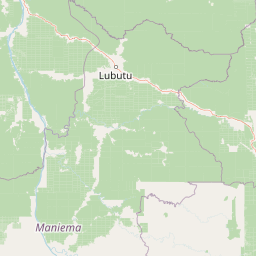
Map view of Maiko National Park

Use this park location map to pinpoint Maiko National Park in Democratic Republic of the Congo, understand its exact geographic position, and read its mapped placement within the surrounding landscape more clearly.

Pigeon | © OpenStreetMap contributors

Location context for Maiko National Park

ManiemaNord KivuProvince Orientale
Park atlas

Discover the geographic spread of protected areas surrounding Maiko, highlighting regional conservation landscapes in central Africa.

National Parks and Protected Areas Near Maiko National Park for Further Exploration
Browse a curated selection of national parks and protected areas located geographically near Maiko National Park, featuring vast lowland rainforests and crucial habitats for central African endemic species. Comparing these adjacent conservation landscapes offers invaluable atlas-style insights into the regional protected-area network and distinct biodiversity patterns.
National parkDemocratic Republic of the Congo

Virunga National Park: Democratic Republic of the Congo's Premier Protected Landscape

Mapped boundaries and diverse Albertine Rift endemic geography.

Virunga National Park represents a pivotal protected area within the Democratic Republic of the Congo, characterized by an exceptional range of geographic features and vital ecosystems. Its protected landscape includes active volcanoes like Nyiragongo with its lava lake, the towering Rwenzori Mountains, and diverse lowland savannas. This atlas-focused entry highlights the park's unique position in the Albertine Rift, crucial for numerous endemic species and offering significant insight into regional geography and protected land context.

Area
7,800 km²
Established
1925
IUCN
II
National parkSouth Kivu Province

Kahuzi-Biéga National Park: A Protected Landscape in South Kivu Province's Albertine Rift

Explore its mapped boundaries and diverse terrain.

Kahuzi-Biéga National Park, a significant national park in South Kivu Province, is defined by its dramatic geographic diversity. Spanning approximately 6,000 square kilometers, it features a unique ecological gradient from dense lowland equatorial rainforest in the west to the subalpine zones of the Mitumba Mountains in the east, dominated by the dormant volcanoes Mount Kahuzi and Mount Biéga. This protected landscape offers a rich atlas context for understanding the biodiversity and regional geography of the Albertine Rift, showcasing a vital transition in terrain and habitat.

Area
6,000 km²
Established
1970
IUCN
II
National parkUganda

Rwenzori Mountains National Park: Uganda's Distinctive Glacial National Park Landscape

Mapped terrain and Afro-alpine ecosystems of this East African protected area.

Rwenzori Mountains National Park represents a unique protected landscape in Uganda, known for its iconic glacial peaks and endemic Afro-alpine vegetation. As a UNESCO World Heritage Site, it showcases dramatic terrain ranging from montane forests to permanent glaciers, with Margherita Peak standing as the crown jewel. This park offers a rich geographic context for understanding East African mountain ecosystems and the mapped boundaries of significant conservation areas, providing valuable data for atlas-style exploration.

Area
996 km²
Established
1991
IUCN
VI
National parkDemocratic Republic of the Congo

Lomami National Park: Central African Protected Landscape and Biodiversity Hub

Explore its lowland tropical rainforest and distinct bonobo habitat.

Lomami National Park is a recently established national park in the Democratic Republic of the Congo, covering nearly 9,000 square kilometers of lowland tropical rainforest. Situated in the central Congo Basin, it plays a crucial role in protecting unique biodiversity, including genetically distinct bonobo populations separated by the Lomami River. The park also supports populations of okapi and the Congo peafowl, making it a vital area for conservation and geographic discovery within Central Africa.

Area
8,879 km²
Established
2016
IUCN
II
National parkKagera Region

Ibanda-Kyerwa National Park: Tanzania's Tri-Border Protected Landscape and Geographic Atlas

Savanna, riparian habitats, and vital regional geography exploration.

Delve into Ibanda-Kyerwa National Park, a recently established national park in Tanzania's Kagera Region. This protected area is distinguished by its critical location at the tri-border with Uganda and Rwanda, with the Kagera River system defining its unique savanna and riparian landscapes. Understanding its mapped boundaries and ecological context provides essential insight into protected land discovery in northwestern Tanzania and its role within the wider regional atlas.

Area
200 km²
Established
2019
IUCN
II
National parkDemocratic Republic of the Congo

Garamba National Park: Protected Landscape Atlas and Geographic Context in DRC

Explore Mapped Boundaries of Africa's Historic Savanna Sanctuary

Garamba National Park is a foundational protected area within the Democratic Republic of the Congo, spanning nearly 5,200 square kilometers of distinctive tropical savanna. Established in 1938, this national park is recognized globally as a UNESCO World Heritage Site due to its exceptional biodiversity and role as a critical habitat. The park's landscape is characterized by rolling grasslands, scattered woodlands, and a unique ecological position that supports a rich variety of wildlife, including significant populations of elephants and the DRC's last giraffes. Exploring Garamba National Park through MoriAtlas provides insight into its mapped boundaries, regional geography, and its status as a vital sanctuary for endangered species.

Area
5,200 km²
Established
1938
IUCN
II
National parkUganda

Murchison Falls National Park: Uganda's Largest Protected Landscape with Dramatic Nile Gorge

Explore mapped boundaries and diverse savanna terrain.

Murchison Falls National Park represents a significant protected landscape in Uganda, renowned for the powerful cascade of the Victoria Nile through a narrow gorge. This expansive national park encompasses varied terrain, from savanna woodlands to riparian forests, offering a rich geographic context. Understanding its mapped distribution within the region is key to appreciating its conservation importance and unique natural features, providing a compelling atlas-style entry point for exploration.

Area
3,893 km²
Established
1952
IUCN
II
National parkUvinza District

Mahale Mountains National Park: Tanzania's Remote Mountain Forest & Lake Tanganyika Landscape

Explore unique primate habitats and dramatic protected terrain.

Mahale Mountains National Park stands as a testament to unique ecological convergence, where the Mahale Mountains' dense forests dramatically meet the vast expanse of Lake Tanganyika. This protected area is globally recognized for harboring the largest wild population of eastern chimpanzees, offering a rare glimpse into their behavior within a pristine wilderness. The park's landscape is defined by steep mountain slopes, diverse woodland, and aquatic environments, creating a distinctive geographic context that sets it apart from typical savanna protected areas in Tanzania.

Area
1,650 km²
Established
1985
IUCN
II

Common questions about visiting, size, designation, and location context for Maiko National Park

Maiko National Park FAQs for park facts, access, geography, and protected area context
Find quick answers about Maiko National Park, including protected-area facts, park geography, trail and visitor context, and how the park fits into its surrounding country and regional landscape.
MoriAtlas Explorer

Continue Your Protected Areas Search Across the Global Atlas

Deepen your exploration by continuing the structured search for national parks and protected areas worldwide. Utilize the comprehensive filtering capabilities to compare different conservation landscapes and refine your understanding of global park geography. Discover more about the distribution and characteristics of protected natural areas.

Global natural geography