Why Mount Harriet National Park stands out
Mount Harriet National Park is best known as a butterfly biodiversity hotspot and as the site of Mount Manipur, the third-highest peak in the Andaman and Nicobar Islands. The park is distinguished by its combination of mountain forest ecosystems and coastal terrain, supporting a remarkable concentration of endemic species. Its fauna includes endangered Andaman wild pigs, saltwater crocodiles, and numerous endemic reptile and amphibian species. The park also stands out for featuring on the Indian twenty-rupee banknote, representing one of the few Indian protected areas to achieve such cultural prominence.
Mount Harriet National Park history and protected-area timeline
Mount Harriet National Park was formally established as a protected national park in 1979, though the area had previously been designated as a reserve forest. The park was named in commemoration of Harriet C. Tytler, the second wife of Robert Christopher Tytler, a British army officer who served as Superintendent of the Convict Settlement at Port Blair from April 1862 to February 1864. Harriet Tytler is remembered for her significant work in documenting the monuments of Delhi and for her contemporaneous notes during the Revolt of 1857 in India. The park was officially renamed as Mount Manipur National Park, reflecting the local name for Mount Harriet, though it is commonly still referred to by its original designation. The mountain itself, Mount Manipur, was depicted on the reverse side of the Indian twenty-rupee banknote prior to the 2019 currency redesign, granting the park significant cultural recognition at the national level.
Mount Harriet National Park landscape and geographic character
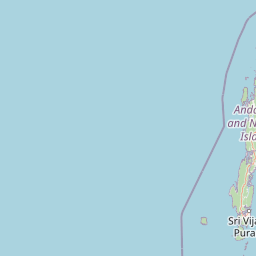
The landscape of Mount Harriet National Park is characterized by its mountainous terrain forming part of the larger hill ranges of South Andaman Island. The park's elevation ranges from sea level along the coastal areas to approximately 481 meters at the summit of Mount Manipur. The mountains are oriented in a north-south alignment, with ridges and spurs projecting eastward and westward from the central spine. The eastern face of the park features notably steep slopes, while the coastline consists of rocky shores with intermittent sandy beach formations. Several streams originate in the higher elevations and flow eastward through the park before entering the sea. The terrain supports diverse forest types including tropical evergreen forests in the lowland areas, hilltop tropical evergreen forests on the upper slopes, and littoral forests along the coastal zone. This combination of mountain and coastal environments within a relatively compact area creates a distinctive landscape character.
Mount Harriet National Park ecosystems, habitats, and plant life
The ecological character of Mount Harriet National Park is defined by its three primary forest types: tropical evergreen, hilltop tropical evergreen, and littoral forests. The tropical evergreen forests feature species from the Dipterocarpus genus including Dipterocarpus gracilis, Dipterocarpus grandiflorus, and Dipterocarpus kerrii, along with Hopea odorata and the distinctive conifer Araucaria columnaris. The hilltop tropical evergreen vegetation includes Canarium denticulatum, Cratoxylum formosum, and Dipterocarpus costatus. The littoral forest areas are characterized by species adapted to coastal conditions. Overall, approximately 134 plant and tree species have been documented within the park, including 74 native species and 51 introduced species. At Chiriyatapu, the forest type transitions to mixed deciduous, representing a combination of primary and secondary forest growth. The park's location near the equator and its marine climatic conditions create an environment favorable for high biodiversity and continuous vegetation growth throughout the year.
Mount Harriet National Park wildlife and species highlights
Mount Harriet National Park supports a diverse faunal community with notable concentrations of endemic species. The mammal population includes the Andaman wild pig, an endangered species, as well as introduced Asian elephants and chital deer. The park is home to saltwater crocodiles and various turtle species that utilize the coastal areas. Robber crabs are present in the forest environments. The avian fauna is particularly significant, with Bird Life International identifying seven near-threatened bird species: the Andaman wood pigeon, Andaman cuckoo-dove, Andaman scops-owl, Andaman boobook, Andaman woodpecker, Andaman drongo, and Andaman treepie, along with two least-concern species including the Andaman coucal and white-headed starling. The reptile population includes 28 recorded species, with 14 being endemic to the Andaman Islands, comprising various lizards and snakes. Six amphibian species have been documented, including two endemic species: the Andaman bull frog and the Andaman paddy field frog. The aquatic fauna in the park's streams includes 16 species of eels, catfish, gobies, sleepers, and snakeheads. The invertebrate population is particularly diverse, with 355 species recorded, insects comprising approximately 70 percent of this total. The park has been identified as a significant butterfly hotspot, and the well-known silkmoth Samia cynthia has been recorded in lowland forest areas.
Mount Harriet National Park conservation status and protection priorities
Mount Harriet National Park holds significant conservation value as a protected area within the Andaman and Nicobar Islands, a region recognized as a biodiversity hotspot. The park protects critical forest ecosystems including tropical evergreen, hilltop tropical evergreen, and littoral forest types that support numerous endemic species. Conservation attention focuses on protecting the endangered Andaman wild pig population and the various endemic reptile and amphibian species that occur within the park boundaries. The protection of habitat for seven near-threatened bird species identified by Bird Life International further underscores the park's conservation importance. The diverse invertebrate community, particularly the butterfly populations, represents an additional conservation asset. There have been proposals to extend the park's boundaries to include additional mountain ranges and adjacent marine ecosystems along the eastern coast, potentially expanding protection to approximately 1,700 hectares of additional territory. The park's inclusion on Indian currency has helped raise awareness about the conservation significance of this Andaman protected area.
Mount Harriet National Park cultural meaning and human context
The cultural context of Mount Harriet National Park is closely tied to its naming after Harriet C. Tytler, whose connection to the Andaman Islands came through her husband Robert Christopher Tytler's appointment as Superintendent of the Convict Settlement at Port Blair. Harriet Tytler's work in documenting the monuments of Delhi and her contemporaneous accounts of the 1857 Revolt have preserved her historical significance beyond the Andamans. The local Negrito people, a tribal community traditionally practicing hunting and gathering, have historically inhabited the tropical forest areas within the park's boundaries. The Andaman and Nicobar Islands have a complex colonial history as a British penal settlement, and sites like Kalapathar in the vicinity of the park reflect this challenging past. The park's depiction on Indian currency has embedded it within the broader cultural fabric of the nation, making it one of the more culturally recognized Indian national parks.
Top sights and standout views in Mount Harriet National Park
The highlights of Mount Harriet National Park include the challenging yet rewarding trekking experience from Bambooflat to the mountain summit, offering views across the Andaman archipelago. The park's butterfly diversity makes it a significant destination for nature enthusiasts interested in observing these insects in their natural habitat. The endemic wildlife, particularly the Andaman wild pig and numerous endemic reptile and amphibian species, provides compelling reasons for biological interest. The combination of coastal and mountain ecosystems within a single protected area creates a distinctive landscape character not commonly found in other Indian national parks. The cultural connection to Harriet C. Tytler and the park's representation on Indian currency add historical and cultural dimensions to the natural attractions. The proximity to Port Blair makes the park accessible for day trips while still offering a genuine wilderness experience.
Best time to visit Mount Harriet National Park
The best time to visit Mount Harriet National Park corresponds to the Andaman Islands' cooler and drier season, typically from November through April, when conditions are more comfortable for trekking and outdoor exploration. The monsoon season from May to October brings heavy rainfall to the archipelago, which can restrict access to trails and increase humidity levels significantly. The hot and humid conditions prevailing for much of the year make the cooler dry season considerably more favorable for visitors. Trekking is most popular during the winter months when temperatures are moderate and rainfall is minimal. Wildlife observation, particularly for birds and butterflies, can be productive throughout the year though conditions vary with seasonal changes. Visitors planning treks to the mountain summit should account for the terrain difficulty and ensure appropriate physical preparation regardless of the season chosen.