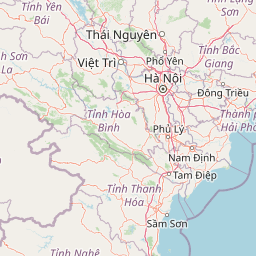
Why Tam Dao National Park stands out
Tam Dao National Park is best known for its dramatic mountain landscape characterized by sharp peaks, deep valleys, and dense forest cover that supports exceptional biodiversity. The park protects one of the few remaining substantial forest areas in northern Vietnam's heavily populated lowland region. Its elevation gradient from 100 meters to nearly 1,600 meters creates multiple distinct ecological zones supporting diverse flora and fauna. The French colonial heritage is evident in Tam Đảo town, where historic villas, a stone church, and resort architecture from the early 1900s remain. The park also holds cultural significance as a center of Vietnamese Buddhism through sites like Thien Vien Truc Lam Tay Thien temple complex.
Tam Dao National Park history and protected-area timeline
Tam Dao National Park's protected status evolved from earlier conservation efforts beginning with the establishment of the Conservation Forest Tam Dao in 1977. The national park was formally designated in 1996, elevating the area's protection level and institutional framework. Beyond its recent conservation history, the area holds deeper historical significance through the development of Tam Đảo town at an elevation of 930 meters. French colonists established this hill station in 1907, creating a retreat from the Hanoi summer heat in the mountainous terrain northwest of the capital. The colonial period left lasting architectural heritage, including villas, a stone church, and palace structures that remain visible today. The town was planned as a resort destination, occupying a small valley of approximately 3 square kilometers. Administratively, the town remains an enclave within Vinh Yen city, a legacy of its colonial-era designation as a separate administrative entity. The park also encompasses the Tay Thien area, a significant center of Vietnamese Buddhist practice that predates modern conservation efforts.
Tam Dao National Park landscape and geographic character
The Tam Đảo range presents a distinctive mountain landscape defined by sharp peaks with steep, sloping sides and numerous deep partitions cutting between summits. The range extends approximately 80 kilometers along a northwest-to-southeast orientation, with more than 20 peaks exceeding 1,000 meters in altitude. The highest summit, Tam Đảo North, reaches 1,592 meters above sea level, while other notable peaks include Thien Thi at 1,375 meters, Thach Ban at 1,388 meters, and Phu Nghia at 1,300 meters. The topography creates a complex arrangement of valleys, ridges, and cliffs characteristic of mid-altitude tropical mountain terrain. The mountain range acts as a dividing line that influences regional climate patterns, with the park's climatic conditions varying between areas on either side of the main ridge due to differences in rainfall distribution. Below the mountain peaks, the landscape transitions through progressively lower elevations to the surrounding lowlands at approximately 100 meters. The Tam Đảo town area occupies a valley at 930 meters elevation, providing a relatively flat area within the otherwise steep terrain.
Tam Dao National Park ecosystems, habitats, and plant life
Tam Dao National Park supports eight distinct forest types distributed across its elevation gradient, reflecting the complex topography and climatic variation within the protected area. Tropical moist evergreen forest dominates the lower elevations below 800 meters, characterized by species including Hopea chinensis, Michelia, Cinnamomum, and Pavieasia anamensis. Above 800 meters, subtropical moist evergreen low mountain forest contains diverse families including Lauraceae, Fagaceae, Theaceae, Magnoliaceae, and Hamamelidaceae, with conifer species appearing above 1,000 meters including Dacrycarpus imbricatus, Fokienia hodginsii, Podocarpus neriifolius, and Nageia fleuryi. High mountain short forest occurs near the highest elevations, featuring dwarf forms of species from Ericaceae, Lauraceae, Fagaceae, Illiciaceae, and Aceraceae families. Bamboo forest covers approximately 8.84 square kilometers at elevations between 500 and 800 meters. Additional forest types include restored forest replanted after establishment, plantation forest from the French colonial period featuring Pinus massoniana, bush vegetation in exposed areas, and grassland in previously exploited sections. The park contains over 2,000 plant species, with 904 species classified as useful to humans across categories including wood, fruit, fiber, medicine, essential oil, vegetables, aesthetic purposes, and starch.
Tam Dao National Park wildlife and species highlights
The vertebrate fauna of Tam Dao National Park demonstrates significant diversity across major taxonomic groups. Mammals are represented by 64 species across 8 orders and 25 families, while birds comprise 239 species spanning 16 orders and 50 families. Reptiles include 75 species across 3 orders and 14 families, and amphibians are represented by 28 species in 3 orders and 7 families. This vertebrate diversity is complemented by exceptional insect populations, with at least 22 insect species endemic to northern Vietnam and several genera specifically named after the park including Tamdaora and Tamdaotettix among Orthopterans. Eleven species are endemic to Tam Dao National Park specifically, including the snake species Amphiesma angeli and Boiga multitempolaris, three amphibian species including Paramesotriton deloustali, five bird species, and four reptile species. One mammal species is endemic to Vietnam. The park's documentation notes concerning issues around wildlife in restaurant settings, indicating pressures on some species from human consumption.
Tam Dao National Park conservation status and protection priorities
Tam Dao National Park holds IUCN Category II designation as a national park, reflecting its primary purpose of protecting natural ecosystems while allowing for sustainable visitor use. The park preserves critical forest habitat in a region where surrounding lowlands have undergone extensive agricultural and urban development. Its elevation range from 100 to nearly 1,600 meters creates a mosaic of habitats that support both lowland and montane species, including significant populations of rare and endemic taxa. The 42 endemic plant species and 64 rare plant species documented within the park represent conservation priorities given their limited distributions. The park's watershed function provides downstream benefits for communities in the surrounding provinces, though documentation notes ongoing challenges from human activity affecting climate zones within the protected area. The buffer zone of approximately 535 square kilometers surrounding the core protected area provides transitional habitat and additional conservation context.
Tam Dao National Park cultural meaning and human context
The Tam Dao area contains significant cultural heritage beyond its ecological values, most notably through the French colonial period that shaped Tam Đảo town beginning in 1907. The hill station was developed as a retreat for French colonists seeking escape from Hanoi summers, resulting in architectural remains including villas, a stone church, and palace structures that define the settlement's character today. The town was designed as a compact resort covering approximately 3 square kilometers in a mountain valley. Beyond colonial heritage, the park contains the Tay Thien site, an important center of Vietnamese Buddhism that includes the Tay Thien Quoc Mau Temple and multiple pagodas. Thien Vien Truc Lam Tay Thien is considered alongside the Yen Tu complex and the Da Lat location as one of the three principal centers of Vietnamese Buddhist practice, reflecting deep spiritual connections to the mountain landscape that predate modern conservation designations.
Top sights and standout views in Tam Dao National Park
Tam Dao National Park combines mountain wilderness, colonial heritage, and religious significance in a uniquely accessible package near Vietnam's capital. The dramatic landscape features over 20 peaks exceeding 1,000 meters, with the highest at 1,592 meters creating opportunities for ridge exploration and summit views. Forest ecosystems transition through distinct zones from tropical evergreen at base to subtropical montane and high-elevation short forest near the peaks, supporting exceptional plant diversity including 42 endemic species. Wildlife includes 239 bird species and 64 mammal species, with several species named specifically after the park indicating its unique biological character. The preserved French colonial architecture in Tam Đảo town, including the stone church and historic villas, provides cultural dimension rarely found in Vietnam's protected areas. The Tay Thien Buddhist complex adds spiritual significance, ranking among Vietnam's three primary centers of Buddhist practice.
Best time to visit Tam Dao National Park
Tam Dao National Park can be visited throughout the year, though the climate varies significantly across seasons tied to elevation and monsoonal patterns. The park sits at approximately 897 meters elevation, maintaining cooler temperatures than the Hanoi lowlands year-round. Annual precipitation exceeds 2,400 millimeters, with the wettest months from June through August when monthly rainfall regularly exceeds 300 millimeters. The dry season from November through February offers lower precipitation totals and reduced rainfall days, though humidity remains high at 81-89 percent even in the driest months. Average temperatures range from around 11 degrees Celsius in January to 23 degrees Celsius in July, creating a mild climate compared to the tropical lowlands. Visitors seeking optimal conditions for forest exploration and wildlife viewing may prefer the transition seasons of March through May or September through October when precipitation is moderate and visibility better for observing forest biodiversity.