Mori Atlas logo
National parkVeun Sai–Siem Pang National Park

Explore the mapped boundaries and rich primate habitat of this key protected area in Ratanakiri province.

Veun Sai–Siem Pang National Park: Cambodia's National Park and Protected Lowland Forest Landscape

Veun Sai–Siem Pang National Park represents a significant protected natural landscape in northeastern Cambodia, safeguarding extensive lowland evergreen and semi-evergreen forests. This national park, located within Ratanakiri province, is crucial for maintaining regional biodiversity corridors and provides critical habitat for numerous primate species, including the endangered Northern buffed-cheeked gibbon. Understanding its geographic extent and natural terrain through mapped context reveals its importance as a core conservation area within the Indochinese peninsula.

Lowland ForestPrimate ConservationNortheastern CambodiaRatanakiri ProvinceStung Treng ProvinceGibbon Habitat

Veun Sai–Siem Pang National Park

National park

Park overview

Structured park overview, official facts, and landscape profile for Veun Sai, Siem Pang National Park

Veun Sai, Siem Pang National Park park facts, protected area profile, and essential visitor context
Review the core facts for Veun Sai, Siem Pang National Park, including designation, size, terrain, visitor scale, habitats, and operating context in one park-focused overview.

About Veun Sai, Siem Pang National Park

Veun Sai–Siem Pang National Park occupies a significant position in Cambodia's protected area network, representing one of the last substantial tracts of intact lowland forest in the country's northeast. The park's establishment in 2016 marked an important milestone in Cambodia's conservation efforts, building upon earlier work by the Ministry of Agriculture, Forestry and Fisheries and Conservation International, which had been managing the area as a conservation zone. The 2023 expansion of the park's boundaries nearly quintupled its protected area, reflecting the government's recognition of the site's ecological importance and the need to incorporate biodiversity corridors into the formal protected area system. The park sits within a broader landscape of provincial forest reserves and community-managed lands, forming an interconnected network of habitats that support wildlife movement across the region.

Quick facts and research context for Veun Sai, Siem Pang National Park

Veun Sai–Siem Pang National Park covers approximately 280,000 hectares following a 2023 boundary expansion, making it one of Cambodia's larger protected areas. The park is administered by the country's Ministry of Environment and was originally designated in 2016 through Sub-decree No. 77. The landscape is dominated by lowland forest ecosystems that support exceptional primate diversity, including several endangered species. The park lies in a tropical climate zone with a pronounced wet season from May through October and a drier period from November through April.

Park context

Deeper park guide and search-rich context for Veun Sai, Siem Pang National Park

Veun Sai, Siem Pang National Park history, landscape, wildlife, and travel context
Explore Veun Sai, Siem Pang National Park through its history, landscape character, ecosystems, wildlife, conservation priorities, cultural context, and seasonal travel timing in a structured park guide built for atlas discovery and search intent.

Why Veun Sai, Siem Pang National Park stands out

The park is especially known for its remarkable primate populations, particularly the endangered Northern buffed-cheeked gibbon. Survey data indicates significant gibbon populations, with approximately 389 groups recorded in 2019 surveys. The park also supports healthy populations of red-shanked douc, Annamese silvered langur, and several macaque species. This concentration of threatened primates places Veun Sai, Siem Pang among the most important primate conservation areas in mainland Southeast Asia.

Veun Sai, Siem Pang National Park history and protected-area timeline

The area that became Veun Sai–Siem Pang National Park was originally managed as a conservation area by Cambodia's Ministry of Agriculture, Forestry and Fisheries, with technical support from Conservation International. During this earlier phase, the territory was expected to receive designation as a protected forest rather than national park status. On 9 May 2016, the area was officially designated as Veun Sai–Siem Pang National Park through Sub-decree No. 77, covering an initial area of 57,469 hectares across Ratanakiri and Stung Treng provinces. The park's history shifted dramatically in July 2023 when Sub-decree No. 183 expanded the boundaries to 280,359 hectares, a change implemented as part of a broader reclassification of biodiversity corridors as protected areas across Cambodia.

Veun Sai, Siem Pang National Park landscape and geographic character

The park's landscape consists primarily of lowland terrain characteristic of northeastern Cambodia's interior, with elevations varying across gentle slopes and valleys. The forest cover is dominated by evergreen and semi-evergreen formations that remain verdant year-round in the tropical climate. The landscape provides a natural transition between the more mountainous areas of the Mekong corridor and the forested plains that stretch toward the Cambodian central lowlands.

Veun Sai, Siem Pang National Park ecosystems, habitats, and plant life

The ecological character of Veun Sai–Siem Pang is defined by its extensive lowland forest ecosystems, which support exceptional biodiversity despite ongoing pressures. The forest type is classified as lowland evergreen and semi-evergreen, a habitat that has become increasingly rare across the Indochinese region due to agricultural expansion and logging. These forests maintain a complex vertical structure that provides shelter and resources for diverse species assemblages, from canopy-dwelling primates to forest-floor organisms.

Veun Sai, Siem Pang National Park wildlife and species highlights

The primate community within Veun Sai–Siem Pang represents one of the most significant wildlife features of the park. The endangered Northern buffed-cheeked gibbon populations have been the subject of systematic surveys, including auditory census methods that documented approximately 456 gibbon groups in 2010 and a more recent estimate of 389 groups in 2019. The park also supports the red-shanked douc, a strikingly colored colobine monkey, along with the Annamese silvered langur, northern pig-tailed macaque, long-tailed macaque, pygmy slow loris, and stump-tailed macaque. This diversity of primate species indicates a relatively intact forest ecosystem capable of supporting multiple arboreal mammal communities.

Veun Sai, Siem Pang National Park conservation status and protection priorities

Veun Sai–Siem Pang holds significant conservation value as a protected area supporting endangered species and intact forest habitats in a region facing intense development pressure. The park's primate populations, particularly the Northern buffed-cheeked gibbon, represent conservation priorities at both national and regional levels. However, the park faces substantial challenges including illegal selective logging, agricultural expansion into forest areas, and hunting pressure on wildlife populations. Community-based conservation initiatives including joint patrols between community wardens and park rangers, along with ecotourism projects developed in partnership with Conservation International Cambodia and the TUI Care Foundation, represent efforts to address these pressures.

Veun Sai, Siem Pang National Park cultural meaning and human context

The park exists within a landscape inhabited by local communities who have historically utilized forest resources and continue to interact with the protected area. Villages surrounding the park boundary engage in traditional land use practices that sometimes overlap with forest areas. The relationship between local communities and the protected area represents an important dimension of the park's management, particularly as the 2023 boundary expansion brought additional agricultural land and community areas under formal protection.

Top sights and standout views in Veun Sai, Siem Pang National Park

The park's primate diversity stands as its most distinctive feature, with multiple species including the endangered Northern buffed-cheeked gibbon inhabiting the lowland forest canopy. The 2023 boundary expansion transformed the park from a medium-sized protected area into one of Cambodia's largest national parks, dramatically increasing its conservation significance. The forest ecosystem represents one of the last substantial lowland forest tracts in northeastern Cambodia, providing habitat for species assemblages that have been diminished across much of the Indochinese peninsula.

Best time to visit Veun Sai, Siem Pang National Park

The optimal period to visit Veun Sai–Siem Pang corresponds to the dry season from November through April, when lower rainfall facilitates movement through the forest and wildlife viewing conditions improve. The wet season from May through October brings heavy precipitation that can restrict access and make field activities more challenging, though the landscape takes on a different character during this period. Temperature conditions remain consistently warm throughout the year, with average highs typically ranging from 31 to 36 degrees Celsius.

Park location guide

Geography guide, regional context, and park location map for Veun Sai, Siem Pang National Park

Veun Sai, Siem Pang National Park park geography, regions, and map view in Cambodia
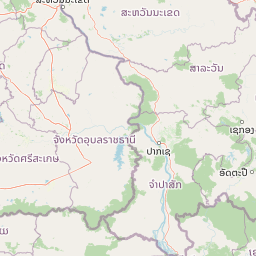
Understand where Veun Sai, Siem Pang National Park sits in Cambodia through a broader geographic reading of the surrounding landscape, nearby location context, and its mapped position within the national park landscape.

How Veun Sai, Siem Pang National Park fits into Cambodia

Cambodia is a unitary parliamentary constitutional elective monarchy in Southeast Asia. The country spans 181,035 km² and is characterized by a low-lying plain centered around the Mekong River and Tonlé Sap, Southeast Asia's largest lake. Its capital and largest city is Phnom Penh. The nation has a tropical climate and is home to a predominantly Khmer ethnic population. Cambodia has a history dating back to the Khmer Empire established in 802 AD.

Wider geography shaping Veun Sai, Siem Pang National Park in Cambodia

Cambodia occupies 181,035 km² in Mainland Southeast Asia. It is bordered by Thailand to the northwest, Laos to the north, and Vietnam to the east, with a coastline along the Gulf of Thailand in the southwest. The terrain is dominated by a low-lying central plain centered around the confluence of the Mekong River and Tonlé Sap, Southeast Asia's largest lake. The country has a tropical climate.

Map view of Veun Sai, Siem Pang National Park

Use this park location map to pinpoint Veun Sai, Siem Pang National Park in Cambodia, understand its exact geographic position, and read its mapped placement within the surrounding landscape more clearly.

Pigeon | © OpenStreetMap contributors

Location context for Veun Sai, Siem Pang National Park

Ratanakiri provinceStung Treng Province
Park atlas

Map the surrounding lowland forest terrain and regional protected landscapes of northeastern Cambodia, tracing contiguous conservation areas.

Continue Your Park Discovery: Explore National Parks and Protected Areas Near Veun Sai–Siem Pang
After exploring Veun Sai–Siem Pang National Park, browse other protected areas across northeastern Cambodia and the wider Indochinese peninsula, discovering similar lowland forest ecosystems and crucial primate habitats. Compare park geography, conservation priorities, and regional landscape connections to understand the broader protected-area network in Southeast Asia.
National parkRatanakiri province

Virachey National Park: Cambodia's Vast Highland Protected Landscape in Ratanakiri

Explore its remote montane forest ecosystems and diverse terrain.

Virachey National Park, Cambodia's largest national park, offers a profound glimpse into one of mainland Southeast Asia's last great wildernesses. Spanning remote highland terrain in Ratanakiri province, it features dramatic elevation changes from 400 to 1,500 meters, supporting diverse ecosystems including dense lowland forests, unique montane cloud forests, and upland savannahs. Its recognition as an ASEAN Heritage Park underscores its critical regional conservation value, making it a significant destination for understanding protected landscapes and their geographic context.

Area
3,380.57 km²
Established
1993
IUCN
II
National parkRatanakiri province

O'Yadav National Park: Protected Forest Conservation in Ratanakiri Province

Explore mapped boundaries and regional landscape context.

O'Yadav National Park is a national park located in northeastern Cambodia's Ratanakiri province, designated to protect significant forest ecosystems and serve as a vital link in the nation's biodiversity corridor system. Spanning 105,019 hectares, the park encompasses forested terrain and includes the historically significant Yak Nang temple site. Its conservation efforts contribute to the ecological integrity of the broader Indochinese region, making it a key protected landscape for atlas-based geographic study.

Area
1,050.19 km²
Established
2016
IUCN
II
Scope
Terrestrial
National parkĐắk Lắk Province

Yok Đôn National Park: Vietnam's Expansive Lowland Forest Protected Landscape and Regional Geography

Mapped boundaries within Đắk Lắk Province, part of a transboundary conservation area.

Yok Đôn National Park is Vietnam's largest lowland forest national park, covering approximately 1,155 square kilometers in Đắk Lắk Province. This protected area is characterized by its rare khộp forest ecosystem and serves as a crucial refuge for large mammals. Situated near the Cambodian border, it forms a key component of one of Southeast Asia's largest continuous protected area networks, offering significant insights into regional protected landscape geography and conservation connectivity.

Area
1,155.45 km²
Established
1986
IUCN
II
National parkSisaket Province

Khao Phra Wihan National Park: Protected Landscape and Archaeological Atlas Gateway

Explore dramatic red sandstone cliffs and historic Khmer ruins.

Khao Phra Wihan National Park in Sisaket Province, Thailand, is a protected landscape distinguished by its dramatic Pha Mo I Daeng red sandstone cliff and its role as a gateway to significant Khmer archaeological sites. This national park offers a deep dive into the region's unique geography, featuring rugged terrain, distinctive forest ecosystems, and prehistoric rock art. As a key entry point for understanding the Preah Vihear Temple's context, the park provides rich material for atlas-based exploration of border landscapes and historical terrain.

Area
130 km²
Established
1998
IUCN
II
National parkVietnam

Bach Ma National Park: Protected Area and Mountain Landscape in Vietnam

Explore the biodiversity and unique geography of this vital national park.

Bach Ma National Park in Vietnam is a protected area defined by its steep, granite-rich mountainous terrain within the Annamite Range. The park’s location at a significant biogeographical crossroads contributes to its exceptional biodiversity, particularly its documented birdlife and varied forest ecosystems. Understanding Bach Ma National Park through its mapped landscape provides critical insight into Vietnam's natural heritage and the ecological dynamics shaped by its unique regional geography.

Area
220 km²
Established
1986
IUCN
II
National parkVietnam

Cát Tiên National Park: Vietnam's Premier Protected Lowland Forest and Wetland Atlas

Explore the mapped boundaries and diverse ecosystems of this vital national park.

Cát Tiên National Park represents a significant ecological reserve in southern Vietnam, covering a vast expanse of lowland tropical forest and critical wetland habitats. The park's landscape is shaped by seasonal flooding from the Dong Nai River, creating unique ecosystems like the renowned Bàu Sấu (Crocodile Lake) and supporting diverse flora and fauna. Understanding Cát Tiên National Park's geography, its protected landscape character, and its position within Vietnam offers valuable insights for atlas-based exploration of Southeast Asia's natural heritage.

Area
720 km²
Established
1992
IUCN
II
National parkSiem Reap Province

Phnom Kulen National Park: Protected Highland Landscape and Khmer Empire Origins in Siem Reap

Explore ancient Khmer sites and natural terrain within this Cambodian national park.

Phnom Kulen National Park offers a unique glimpse into Cambodia's geographic and historical richness. As a protected national park in Siem Reap Province, it preserves a distinct highland landscape characterized by sandstone formations, evergreen forests, and sacred sites. Discover the mapped boundaries of this important conservation area, trace the historical significance of the Khmer Empire's origins, and explore the natural terrain that defines this culturally significant region.

Area
373.76 km²
Established
1993
IUCN
II
National parkVietnam

Phong Nha, Kẻ Bàng National Park: Vietnam's Karst Terrain and Subterranean World

Explore protected landscapes, cave systems, and geological wonders.

Phong Nha, Kẻ Bàng National Park in Vietnam is a globally significant protected landscape, recognized by UNESCO for its exceptional karst topography and extensive cave networks. This national park features dramatic limestone mountains, deep river gorges, and some of the world's most impressive subterranean formations, offering a rich atlas of natural history and geological wonders to explore.

Area
857.54 km²
Established
2001
IUCN
II

Common questions about visiting, size, designation, and location context for Veun Sai, Siem Pang National Park

Veun Sai, Siem Pang National Park FAQs for park facts, access, geography, and protected area context
Find quick answers about Veun Sai, Siem Pang National Park, including protected-area facts, park geography, trail and visitor context, and how the park fits into its surrounding country and regional landscape.
MoriAtlas Explorer

Continue Your Protected Areas Search Across the Global Atlas

Deepen your exploration by continuing the structured search for national parks and protected areas worldwide. Utilize the comprehensive filtering capabilities to compare different conservation landscapes and refine your understanding of global park geography. Discover more about the distribution and characteristics of protected natural areas.

Global natural geography