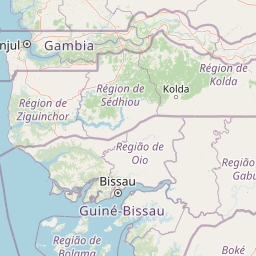
Why Abuko National Park stands out
Abuko National Park is best known as Gambia's first wildlife reserve and a premier destination for observing West African forest biodiversity in an accessible setting. The park is particularly famous for its population of three primate species: vervet monkeys, red colobus monkeys, and patas monkeys, all of which are commonly encountered by visitors. The reserve's birdlife is exceptionally diverse for its small size, with over 270 species recorded including the green turaco, West African pied hornbill, and numerous other forest-dependent species. The park also maintains animal rehabilitation facilities, including enclosures for hyenas and other wildlife orphans.
Abuko National Park history and protected-area timeline
The conservation history of Abuko National Park traces back to 1916 when the Lamin Stream flowing through what would become the reserve was fenced to create a water collection point. This simple intervention had the unexpected consequence of increasing wildlife and flora populations within the enclosed area, demonstrating the value of protecting water sources in the Gambian landscape. The modern conservation movement at Abuko began in 1967 when wildlife officer Eddie Brewer and his daughter Stella Marsden visited the area and recognized its significant conservation value. Their advocacy led to formal protection, and 1968 saw the establishment of the Gambia Department of Parks and Wildlife Management specifically to manage the reserve. This institutional foundation marked the beginning of organized wildlife conservation in The Gambia, making Abuko the catalyst for the country's protected area system.
Abuko National Park landscape and geographic character
The landscape of Abuko National Park is defined by the interplay between gallery forest and savanna ecosystems in a relatively small but visually distinct area. The gallery forest forms a dense, humid corridor along the Lamin Stream, where tall trees create a closed canopy that shades the watercourse below. This forest type supports a distinct microclimate and provides habitat for species that would otherwise be found only in much larger forest systems. Beyond the gallery forest, the reserve transitions into typical West African savanna characterized by shorter vegetation and more open conditions. The terrain is generally flat, reflecting the low-lying nature of the Gambia region, with the Lamin Stream providing the primary topographical feature and water source for the entire ecosystem.
Abuko National Park ecosystems, habitats, and plant life
The ecological character of Abuko National Park centers on its gallery forest ecosystem, which represents a rare example of closed forest in the Gambian landscape. The forest contains typical West African tree species including oil palm, mahogany, iroko, and Anthocleista procera, with canopy heights reaching up to thirty feet. This forest habitat exists in stark contrast to the surrounding savanna, creating a biodiversity hotspot that supports species requiring more humid, shaded conditions. The gallery forest acts as a refuge for moisture-dependent species and provides essential habitat for primates, forest birds, and numerous invertebrate groups. The combination of forest and savanna within such a small protected area creates remarkable ecological diversity and demonstrates how watercourses can establish forest habitats in otherwise savanna-dominated landscapes.
Abuko National Park wildlife and species highlights
Abuko National Park supports an impressive diversity of wildlife relative to its small size, with particular significance attached to its primate populations. Three species of monkeys inhabit the reserve: vervet monkeys, red colobus monkeys, and patas monkeys, all of which can be regularly observed by visitors. Beyond primates, the mammal population includes antelope, squirrel, porcupine, African palm civet, various mongoose species, galagos, and cane rats. The reptile fauna is particularly diverse, featuring monitor lizards, Nile crocodiles, dwarf crocodiles, spitting cobras, black cobras, pythons, puff adders, and western green mambas. The bird population is exceptional, with over 270 species recorded including numerous forest-dependent species such as green turacos, West African pied hornbills, and the specially protected species recognized under the Important Bird Area designation.
Abuko National Park conservation status and protection priorities
Abuko National Park holds significant conservation importance as Gambia's first designated wildlife reserve and a model for subsequent protected area establishment in the country. The reserve achieves IUCN category IV status, reflecting its role as a habitat and species management area. Its designation as an Important Bird Area by BirdLife International recognizes the global significance of its bird populations, particularly for species with restricted distributions in West African forest habitats. The park also serves a critical conservation function through its animal rehabilitation facilities, which provide care for wildlife in need and help maintain public awareness of wildlife welfare issues. The establishment of the Gambia Department of Parks and Wildlife Management at this site in 1968 created the institutional foundation for conservation across the country.
Abuko National Park cultural meaning and human context
While Abuko National Park is primarily valued for its ecological significance, the protected area exists within a region where local communities maintain connections to the landscape. The park lies south of the town of Abuko, and the surrounding area has traditionally been used for agricultural and pastoral activities. The Lamin Stream has historically provided water resources for the local population, a relationship that predates formal protection. The park's establishment and continued management involve ongoing considerations of how to balance conservation objectives with the needs and aspirations of surrounding communities.
Top sights and standout views in Abuko National Park
Abuko National Park offers visitors the opportunity to experience West African gallery forest biodiversity in a compact, accessible setting. The gallery forest along the Lamin Stream provides a striking visual contrast to the surrounding savanna and supports three monkey species that are commonly encountered on forest walks. The birdlife is exceptionally diverse for such a small area, with the Important Bird Area designation reflecting populations of specialized forest species including green turacos and West African pied hornbills. The park's historical significance as Gambia's first wildlife reserve adds educational value to visits, while the animal orphanage facilities provide insight into wildlife rehabilitation efforts.
Best time to visit Abuko National Park
Abuko National Park can be visited throughout the year, though the optimal period coincides with the dry season when wildlife is more concentrated around water sources and vegetation is less dense, making animal observation easier. The dry season months from November to April typically offer the best conditions for wildlife viewing, as animals congregate near the Lamin Stream and the reduced undergrowth improves visibility. The wet season from June to October transforms the landscape with lush vegetation but can make trail navigation more challenging and wildlife less visible. Visitors seeking to maximize their wildlife viewing experience should consider planning their visit during the dry season months.