

Mori Atlas logo
Nature reserveAkrotirio Aspro - Petra Romiou

A critical nature reserve combining Mediterranean marine habitats, coastal cliffs, and significant ornithological corridors

Akrotirio Aspro - Petra Romiou: Mapping the Protected Coastal Landscapes of Southern Cyprus

Akrotirio Aspro - Petra Romiou serves as a vital conservation unit along the southern coast of Cyprus, encompassing a diverse mosaic of Mediterranean habitats. This protected area features exposed coastal cliffs, juniper matorral, and expansive phrygana formations that support one of the island's most significant concentrations of protected bird species. By integrating marine reef zones with terrestrial riparian galleries and pine forests, the site acts as an essential ecological bridge within the regional landscape.

Mediterranean coastal landscapeNatura 2000 siteSpecial Protection AreaSpecial Area of ConservationCoastal cliffsJuniper matorral

Akrotirio Aspro - Petra Romiou

Nature reserve

Park overview

Structured park overview, official facts, and landscape profile for Akrotiri Peninsula - Petra tou Romiou

Akrotiri Peninsula - Petra tou Romiou park facts, protected area profile, and essential visitor context

Review the core facts for Akrotiri Peninsula - Petra tou Romiou, including designation, size, terrain, visitor scale, habitats, and operating context in one park-focused overview.

About Akrotiri Peninsula - Petra tou Romiou

Akrotirio Aspro - Petra Romiou is a protected area on the southern coast of Cyprus, occupying the Akrotiri Peninsula and extending to the celebrated Petra tou Romiou rock formation. Designated under the Natura 2000 framework, it functions simultaneously as a Site of Community Importance (SCI), a Special Protection Area (SPA) for birds, and a Special Area of Conservation (SAC), making it one of the more heavily designated coastal sites in the Cypriot network of protected landscapes. The site is entirely terrestrial in its formal designation, yet its ecological character is shaped by an intimate relationship with the Mediterranean Sea, since cliffs, headlands, and coastal scrub communities blend directly with marine ecosystems along its boundaries.

The site's protected identity rests on a layered combination of Mediterranean habitats. Nine natural habitat types are recognized within its perimeter, including reefs, annual vegetation at the tidal limit, matorral with juniper formations, thermo-Mediterranean and pre-desert shrublands, Sarcopoterium spinosum phryganas, pseudo-steppe grasslands with annual Thero-Brachypodietea species, southern riparian galleries including Nerio-Tamaricetea and Securinegion tinctoriae, forests of Olea and Ceratonia, and Mediterranean pine forests with endemic mesogean pines. This mosaic reflects the classic landscape transitions of the eastern Mediterranean, where coastal cliffs give way to garrigue formations, inland scrub, and relict pine woodlands.

The designations of 2004, 2005, and 2015 progressively recognized the site's significance for birdlife and broader biodiversity. With 78 protected bird species, including raptors such as the saker falcon, the peregrine falcon, Eleonora's falcon, and the griffon vulture, along with iconic Mediterranean species such as the European roller, the little egret, the purple heron, and the endemic Cyprus wheatear (Oenanthe cypriaca), the site carries substantial ornithological value. The presence of Rousettus aegyptiacus, the Egyptian fruit bat, is a rare mammal recognition for a Mediterranean coastal SCI. Together with identified plants, amphibians, invertebrates, and reptiles, the protected area represents an exceptional cross-section of southern Cypriot biodiversity compressed into a relatively compact coastal peninsula.

Its broader appeal lies in the cultural and natural overlap. The same coastline celebrated for its connection to the Aphrodite myth is, in conservation terms, a working example of how European Natura 2000 protection can be applied to culturally iconic Mediterranean landscapes. The site therefore operates as both a symbol of Cypriot coastal identity and a functional conservation area within the European ecological network.

Quick facts and research context for Akrotiri Peninsula - Petra tou Romiou

Akrotirio Aspro - Petra Romiou is a Natura 2000 site in southern Cyprus with the site code CY5000005, located on the Akrotiri Peninsula. It is a wholly terrestrial protected area covering roughly 2,489 hectares, and it holds three overlapping designations: Site of Community Importance (SCI, May 2004), Special Protection Area for birds (SPA, December 2005), and Special Area of Conservation (SAC, September 2015).

The site spans Mediterranean marine and Mediterranean terrestrial ecoregions and includes nine natural habitat types, ranging from marine reefs and tidal vegetation to juniper matorral, thermo-Mediterranean shrubland, Sarcopoterium phryganas, pseudo-steppe grasslands, riverside galleries, Olea and Ceratonia forests, and Mediterranean pine forests. It was established primarily to protect 79 animal species, including a remarkable 78 bird species and the Egyptian fruit bat (Rousettus aegyptiacus).

Protection and recognition

Documented conservation scopes, official Natura 2000 listings, and administrative records

Akrotirio Aspro - Petra Romiou Protection Status and Recognition Data

Akrotirio Aspro - Petra Romiou maintains a mixed protection scope supported by official Natura 2000 recognition records. Conservation researchers review these verified administrative frameworks to understand management boundaries and designation history.
Park context

Deeper park guide and search-rich context for Akrotiri Peninsula - Petra tou Romiou

Akrotiri Peninsula - Petra tou Romiou history, landscape, wildlife, and travel context

Explore Akrotiri Peninsula - Petra tou Romiou through its history, landscape character, ecosystems, wildlife, conservation priorities, cultural context, and seasonal travel timing in a structured park guide built for atlas discovery and search intent.

Why Akrotiri Peninsula - Petra tou Romiou stands out

Akrotirio Aspro - Petra Romiou is best known for combining the legendary coastal scenery of Petra tou Romiou, the so-called birthplace of Aphrodite, with one of the most concentrated bird-protection sites in Cyprus. The 78 protected bird species recorded here give it exceptional ornithological weight within the Mediterranean, and the site is widely cited as a key Special Protection Area in the Cypriot Natura 2000 network. Beyond its mythological fame, the area is recognized for its mosaic of Mediterranean habitats that meet the sea: juniper matorral on exposed headlands, phrygana and pseudo-steppe formations in drier interior zones, patches of indigenous Mediterranean pine forest, and Olea-Ceratonia woodland. This diversity of land-based Mediterranean habitats adjoining marine reef systems makes the site an unusually complete Mediterranean coastal conservation unit.

Akrotiri Peninsula - Petra tou Romiou history and protected-area timeline

The formal conservation history of Akrotirio Aspro - Petra Romiou begins with its designation as a Site of Community Importance under the Natura 2000 network in May 2004. This initial recognition was driven by the need to protect 79 animal species documented on site, particularly the large concentration of bird species for which the area qualifies under the Birds Directive.

In December 2005, the site received additional protection through its designation as a Special Protection Area (SPA), reinforcing its role in the conservation of migratory and resident birds. The most formal and comprehensive classification came in September 2015, when the area was declared a Special Area of Conservation (SAC), consolidating the overlapping layers of habitat and species protection under European nature law.

Although the present-day protected-area framework dates only from the early twenty-first century, the underlying landscape has long been recognized as one of the most distinctive stretches of the Cypriot coast, both for its mythological associations with Petra tou Romiou and for its ecological richness. The progressive layering of SCI, SPA, and SAC status reflects a deliberate effort to align this cultural and natural landmark with the strictest levels of European habitat and species protection.

Akrotiri Peninsula - Petra tou Romiou landscape and geographic character

The landscape of Akrotirio Aspro - Petra Romiou is defined by its position at the meeting point between the southern Cypriot coastline and the Mediterranean Sea. The Akrotiri Peninsula is characterized by exposed headlands, sea cliffs, and low coastal elevations where rocky promontories alternate with small bays and tidal margins. The site's most recognizable landform is the Petra tou Romiou formation, an iconic stack-like rock outcrop rising from the sea that has become a defining visual symbol of the southern Cypriot coast.

Inland from the coast, the terrain transitions into a mosaic of Mediterranean landforms typical of the south of the island. Juniper matorral covers exposed slopes, while Sarcopoterium phryganas, thermo-Mediterranean shrublands, and pseudo-steppe grasslands occupy drier inland areas. Where moisture and soil conditions allow, the landscape shifts toward fragmented relict forests: groves of Olea and Ceratonia, and Mediterranean pine forests featuring endemic mesogean pines. Along seasonal watercourses, southern riparian galleries with Tamarix and other riverside vegetation create narrow green corridors that contrast sharply with the surrounding garrigue.

Although the protected-area boundary itself is terrestrial, the site's ecological character cannot be separated from its marine context, since reefs and tidal-margin vegetation form the seaward edge of these terrestrial habitat transitions.

Akrotiri Peninsula - Petra tou Romiou ecosystems, habitats, and plant life

Akrotirio Aspro - Petra Romiou spans two formally recognized ecoregions: the Mediterranean marine ecoregion and the Mediterranean terrestrial ecoregion. Although legally a terrestrial site, its ecological profile is shaped by the meeting of sea, coastline, and inland Mediterranean vegetation zones.

The habitats protected within the site reflect a layered ecological structure. Marine reefs and annual tidal-limit vegetation define the interface between land and sea. Juniper-containing matorral, thermo-Mediterranean and pre-desert shrublands, and Sarcopoterium spinosum phryganas form the characteristic low Mediterranean scrub communities, while pseudo-steppe grasslands dominated by Thero-Brachypodietea species occupy drier inland zones. Riparian galleries along seasonal watercourses provide another distinct habitat layer, supporting Nerio-Tamaricetea and Securinegion tinctoriae communities.

The forest component of the site includes patches of Olea and Ceratonia woodland as well as Mediterranean pine forests with endemic mesogean pines, providing canopy structure and habitat complexity that contrasts with the open scrub mosaic. Together, these habitats create a compact ecological gradient, from coastal cliffs and tidal margins to inland pine stands and riparian corridors, all within a relatively limited coastal peninsula.

Akrotiri Peninsula - Petra tou Romiou wildlife and species highlights

Wildlife is the defining conservation focus of Akrotirio Aspro - Petra Romiou. The site was formally designated to protect 79 animal species, of which 78 are birds, giving it one of the highest concentrations of protected avian species among Natura 2000 sites in Cyprus.

The protected avifauna includes a broad spectrum of Mediterranean and migratory species. Notable raptors include the saker falcon (Falco cherrug), the peregrine falcon (Falco peregrinus), Eleonora's falcon, the red-footed falcon, the long-legged buzzard, and the griffon vulture. Wading and water-associated birds are represented by species such as the great egret, the little egret, the purple heron, the squacco heron, and the grey heron, while coastal-margin species include the Kentish plover and the ruddy turnstone. Migratory passerines and Mediterranean songbirds add further diversity, with species such as the European roller, the common kingfisher, the red-backed shrike, the Cyprus wheatear (Oenanthe cypriaca), the melodious warbler, Ruppell's warbler, and the Cyprus warbler among those formally protected.

Beyond its birdlife, the site also protects the Egyptian fruit bat (Rousettus aegyptiacus), the only formally protected mammal in the site's designation. Additional records indicate the presence of amphibian, reptile, and invertebrate species, along with a small number of plant species, contributing to a broader, though less heavily protected, biodiversity layer.

Akrotiri Peninsula - Petra tou Romiou conservation status and protection priorities

From a conservation perspective, Akrotirio Aspro - Petra Romiou is significant as one of the most multiply-designated Natura 2000 sites in Cyprus. Its overlapping designations as a Site of Community Importance, a Special Protection Area for birds, and a Special Area of Conservation place it within the most demanding tier of European habitat protection. This layered status reflects the unusually high biodiversity value compressed into a relatively limited coastal peninsular area.

The site's conservation importance is anchored in three reinforcing factors: habitat diversity, with nine natural habitat types including marine-influenced, terrestrial, and riparian systems; species diversity, with 79 protected animal species, 78 of them birds, placing the site among the most important avian conservation areas in Cyprus; and ecological coherence, since coastal cliffs, garrigue, forests, and riparian gardens form a continuous and functional ecological gradient rather than isolated conservation units.

The combination of Mediterranean habitat preservation, strong bird-directive coverage, and inclusion of a notable mammal species gives the area a conservation profile that extends well beyond its small territorial footprint. As a Cypriot anchor of the Natura 2000 network, the site plays an important demonstration role for Mediterranean coastal ecosystem protection in the eastern Mediterranean region.

Akrotiri Peninsula - Petra tou Romiou cultural meaning and human context

The cultural identity of Akrotirio Aspro - Petra Romiou is inseparable from the legend of Aphrodite's birthplace. Petra tou Romiou, the rock formation rising from the sea at the southern edge of the protected area, has long been associated with the mythological emergence of Aphrodite from the waves, making this coastline one of the most symbolically charged natural landmarks in Cyprus.

Beyond its mythological associations, the Akrotiri Peninsula has historically been a landscape of significance for local communities, combining fishing coastline, agricultural hinterland, and coastal travel routes. The contemporary presence of the British Sovereign Base Area of Akrotiri on the broader peninsula adds a further administrative and geopolitical layer to the landscape, even though the protected biological site itself is defined purely on ecological and Natura 2000 grounds.

The site's recognition as a Natura 2000 protected area represents a modern conservation effort to safeguard a landscape whose cultural symbolism long predates its formal ecological designation.

Top sights and standout views in Akrotiri Peninsula - Petra tou Romiou

Akrotirio Aspro - Petra Romiou stands out for its triple Natura 2000 designation, including one of the densest concentrations of protected bird species in Cyprus. The site unites mythological coastal scenery with serious Mediterranean ecological value.

Its habitat richness, ranging from marine reefs and tidal vegetation to juniper matorral, phrygana, riparian galleries, and Mediterranean pine forests, makes it an unusually complete coastal conservation unit in the eastern Mediterranean.

Best time to visit Akrotiri Peninsula - Petra tou Romiou

The site's Mediterranean coastal climate gives it appeal across much of the year. Spring is typically the most rewarding season, when migratory birds pass through the area and Mediterranean shrublands and wildflowers are at peak display. Autumn is also favorable for bird-related visits, since many migratory and wintering species arrive or pass through. Summer brings warm, dry conditions with stable sea conditions along the coast, while winter tends to be mild, with continued ornithological interest thanks to waterbirds and winter visitors. Avoid inventing details not grounded in source.
Monthly climate preview

Long-term representative monthly temperature and precipitation averages for Cyprus

Akrotirio Aspro - Petra Romiou Climate Normals and Annual Weather Patterns

Historical data records the annual rhythm of average temperatures and daily precipitation rates measured across twelve distinct monthly intervals at a representative coordinate. Accessing the full monthly sequence allows detailed comparison of long-term climate normals across the protected landscape.
Annual mean21 °C
15 °C27 °C
Jan15°
Feb15°
Mar16°
Apr18°
May21°
Jun24°
Jul27°
Aug27°
Sep26°
Oct24°
Nov21°
Dec17°
Warmest month
August

27.2 °C

Coolest month
February

14.9 °C

Wettest month
December

3 mm/day

Driest month
July

0.1 mm/day

Park location guide

Geography guide, regional context, and park location map for Akrotiri Peninsula - Petra tou Romiou

Akrotiri Peninsula - Petra tou Romiou park geography, regions, and map view in Cyprus

Understand where Akrotiri Peninsula - Petra tou Romiou sits in Cyprus through a broader geographic reading of the surrounding landscape, nearby location context, and its mapped position within the national park landscape.

How Akrotiri Peninsula - Petra tou Romiou fits into Cyprus

Cyprus is an island nation in the eastern Mediterranean Sea, positioned at the crossroads of Europe, Africa, and Asia. The Republic of Cyprus governs the southern portion of the island, with Nicosia as its capital and largest city. The island has a complex political situation due to the Turkish occupation in the north and contains British military bases in the south. Cyprus gained independence from Britain in 1960 and is a member of the European Union.

Wider geography shaping Akrotiri Peninsula - Petra tou Romiou in Cyprus

Cyprus is an island located in the eastern Mediterranean Sea, off the coast of the Levant in West Asia. The island lies approximately 75 km south of Turkey, 105 km west of Syria, and 380 km north of Egypt. The terrain varies from mountainous regions in the north and interior to plains and coastal areas. The Troodos Mountains dominate the central and southwestern part of the island. The island has no land borders as it is entirely surrounded by sea.

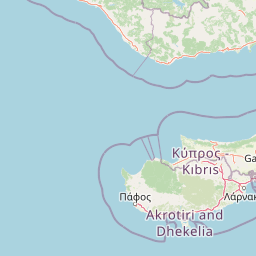
Map view of Akrotiri Peninsula - Petra tou Romiou

Use this park location map to pinpoint Akrotiri Peninsula - Petra tou Romiou in Cyprus, understand its exact geographic position, and read its mapped placement within the surrounding landscape more clearly.

Pigeon | © OpenStreetMap contributors
Recorded earthquake history

View the Historical Earthquake Catalogue for Akrotirio Aspro - Petra Romiou

Review documented seismic events associated with the Akrotirio Aspro - Petra Romiou landscape through a mapped historical catalogue. MoriAtlas provides these records to assist with geographic understanding of the seismic history surrounding this protected southern Cypriot coastal site.

Akrotirio Aspro - Petra Romiou Earthquake History

Catalogued events

378 events

Strongest magnitude

Magnitude 6.8

Most recent event

Dec 12, 2025

This history includes earthquakes recorded inside the park or within 50 km of its borders

Park atlas

Compare surrounding Mediterranean coastal habitats and regional nature reserves

Parks Near Akrotirio Aspro - Petra Romiou and Related Protected Landscapes

Browsing other protected areas near Akrotirio Aspro - Petra Romiou reveals shared Mediterranean coastal terrain, marine habitats, and bird sanctuaries. Comparing adjacent regional landscapes provides deeper context for southern Cypriot conservation zones and coastal geography.
Nature reservePaphos District
3.4 km away#1 closest

Northwest

Cha-Potami Nature Reserve: Protected Riverine Geography in Paphos District, Cyprus

River valley ecosystems and Mediterranean protected terrain

Cha-Potami spans a twelve-kilometer river stretch characterized by deep, narrow valleys and varied topography. This protected area offers a look into the rich ecological stratification of southwestern Cyprus, from dense riverside corridors and cypress-dotted slopes to rugged, raptor-nesting cliffside gorges that define the local landscape character.

Area
26.266 km²
Established
2000
Relief
Upland
Climate
Mediterranean
Nature reserveCyprus
4.9 km away#2 closest

West

Ekboles Potamon Ezousas, Xerou, Kai Diarizou: Nature Reserve and Coastal Habitat

Natura 2000 protected landscape in southwestern Cyprus

Spanning over 800 hectares, Ekboles Potamon Ezousas, Xerou, Kai Diarizou protects the vital intersections of three river mouths with the Mediterranean Sea. This nature reserve sustains a dense network of avian habitats, ranging from coastal flats to river corridors, and represents a crucial migratory waypoint and breeding ground within the Cyprus landscape.

Area
8.271 km²
Established
2007
Climate
Mediterranean
Scope
Terrestrial
Nature reserveCyprus
7.2 km away#3 closest

North

Koilada Diarizou Nature Reserve and Mediterranean River Valley Geography

Protected riparian landscapes in the Paphos district of Cyprus

Koilada Diarizou represents a prime example of a Mediterranean river valley protected area in western Cyprus. This nature reserve sustains a mosaic of rocky limestone slopes, cypress woodlands, and seasonal riparian channels that serve as a critical reference point for understanding the island's unique ecological connectivity.

Area
13.58 km²
Established
2002
Relief
Mixed relief
Climate
Mediterranean
Nature reserveCyprus
9.1 km away#4 closest

Northeast

Potamos Paramaliou: Geography and Avian Conservation in Southwestern Cyprus

A vital river-centered nature reserve and protected corridor

Potamos Paramaliou serves as a specialized nature reserve in southwestern Cyprus, protecting a seasonal river valley and the diverse bird species it supports. This site illustrates the intersection of Mediterranean riverine ecosystems and arid open landscapes, offering a clear view of how targeted conservation boundaries safeguard avian movement and regional ecological stability.

Area
17.819 km²
Established
2008
Climate
Mediterranean
Scope
Terrestrial
Protected areaCyprus
About 13 km away#5 closest

Northeast

Metalleio Kalavasou: A Mediterranean Protected Area in Southern Cyprus

Mapped Mediterranean scrub, pine forests, and habitat mosaics.

Located in the foothills of the Limassol district, Metalleio Kalavasou represents a vital protected landscape within the European Natura 2000 network. The area serves as a case study for Mediterranean biodiversity, where dense pine canopies, olive woodlands, and open garrigue create a unique environment for numerous bird species, reptiles, and endemic vegetation types in a compact geographic footprint.

Area
0.471 km²
Established
1992
Climate
Mediterranean
Scope
Terrestrial
Protected areaCyprus
About 13 km away#6 closest

Northeast

Periochi Kokkinokremmos: An Overview of the Protected Landscape and Regional Geography

A vital ecological sanctuary in the Mediterranean landscape of Cyprus.

Periochi Kokkinokremmos represents a specialized protected area in Cyprus, notable for its compact but high-density mosaic of Mediterranean ecosystems. From calcareous cliffs to pine-dominated woodlands, the site offers deep insight into the regional botanical and avian diversity supported by the island's unique Mediterranean terrain.

Area
1.002 km²
Established
1992
Relief
Mixed relief
Climate
Mediterranean
Nature reserveCyprus
13 km away#7 closest

Northwest

Koilada Ezousas: Protected Inland Valley Landscapes and Map Geography in Western Cyprus

Natura 2000 designated nature reserve in the Paphos district

Koilada Ezousas represents a strategically mapped protected area in western Cyprus, characterized by its extensive inland valley terrain. The site acts as a critical refuge within the Mediterranean ecoregion, supporting a high concentration of raptors and endemic passerines. Understanding its geographic spread provides insight into the broader network of protected corridors across the island.

Area
56.27 km²
Established
2019
Climate
Mediterranean
Scope
Terrestrial
Nature reserveCyprus
15 km away#8 closest

Northwest

Episkopi Morou Nerou: Mapping the Protected Nature Reserve Landscapes of Western Cyprus

A regional geography of river valleys, riparian galleries, and forest mosaics

Located in western Cyprus, Episkopi Morou Nerou is a notable nature reserve spanning river valleys and Mediterranean scrubland. This protected area supports an array of habitats, from oriental plane forests and poplar galleries to open phrygana and pseudo-steppe grasslands, serving as a critical sanctuary for diverse bird populations and native plant species.

Area
4.193 km²
Established
2002
Relief
Mixed relief
Climate
Mediterranean

Common questions about visiting, size, designation, and location context for Akrotiri Peninsula - Petra tou Romiou

Akrotiri Peninsula - Petra tou Romiou FAQs for park facts, access, geography, and protected area context

Find quick answers about Akrotiri Peninsula - Petra tou Romiou, including protected-area facts, park geography, trail and visitor context, and how the park fits into its surrounding country and regional landscape.
MoriAtlas Explorer

Continue Your Protected Areas Search Across the Global Atlas

Deepen your exploration by continuing the structured search for national parks and protected areas worldwide. Utilize the comprehensive filtering capabilities to compare different conservation landscapes and refine your understanding of global park geography. Discover more about the distribution and characteristics of protected natural areas.

Global natural geography