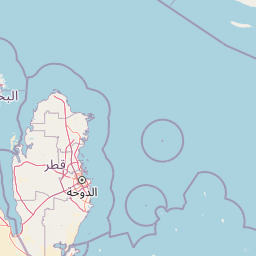
Why Al Reem Biosphere Preserve stands out
Al Reem Biosphere Preserve is best known for its population of gazelles and Arabian oryx thriving in a semi-arid desert setting, a remarkable ecological achievement in Qatar's extremely arid climate. The reserve's distinguishing feature is its dense vegetation, which stands in striking contrast to the typically barren desert terrain of the Arabian Peninsula. As one of the Middle East's 24 UNESCO-designated biosphere reserves, it represents a model of successful desert conservation and sustainable land management in an extreme environmental context.
Al Reem Biosphere Preserve history and protected-area timeline
Al Reem Biosphere Preserve was officially established in 2005 as Qatar's primary designated biosphere reserve, representing a coordinated national effort to protect the country's most significant natural landscapes. The reserve was subsequently recognized by UNESCO in 2007, joining the World Network of Biosphere Reserves in the Arab States alongside 23 other biosphere reserves across the Middle East. This dual recognition at both national and international levels underscored Qatar's commitment to biodiversity conservation despite the challenging desert environment. The selection of Al Reem as a biosphere reserve reflected the area's ecological value, its successful populations of keystone species like gazelles and Arabian oryx, and the presence of meaningful vegetation communities in an otherwise arid landscape. The inhabited status of the reserve has necessitated careful management approaches that balance conservation objectives with the needs of local communities.
Al Reem Biosphere Preserve landscape and geographic character
The landscape of Al Reem Biosphere Preserve consists of semi-arid desert terrain typical of the Arabian Peninsula, characterized by flat to gently undulating sandy plains, occasional dune formations, and gravel-covered interdunal areas. The reserve's defining visual characteristic is its dense vegetation, which clusters in areas where underlying groundwater reaches near the surface, creating green corridors and vegetation patches that starkly contrast with the surrounding tan and ochre desert. These vegetation zones typically support drought-resistant shrubs, desert grasses, and scattered acacia trees that provide critical shade and forage for wildlife. The overall visual character presents an intimate interplay between barren-appearing desert and surprisingly productive vegetation zones, creating a landscape of subtle beauty and ecological significance.
Al Reem Biosphere Preserve ecosystems, habitats, and plant life
The ecological character of Al Reem Biosphere Preserve centers on its semi-arid desert ecosystem, which supports specialized plant and animal communities adapted to extreme aridity and temperature fluctuations. The reserve's dense vegetation zones represent ecological islands of productivity within the broader desert matrix, supporting higher biodiversity than the surrounding terrain. Plant communities consist primarily of drought-adapted species including various desert shrubs, ephemeral grasses that respond to rare rainfall events, and scattered trees such as acacia that can access deeper groundwater reserves. These vegetation communities form the foundation of the desert food web, supporting insect populations, small mammals, and the larger herbivores that define the reserve's conservation significance.
Al Reem Biosphere Preserve wildlife and species highlights
Al Reem Biosphere Preserve is home to notable populations of gazelles and Arabian oryx, the latter being an iconic antelope species that was once driven to near-extinction in the wild but has been reintroduced through captive breeding programs across the Arabian Peninsula. The gazelle populations thrive in the reserve's vegetation zones, where they find both forage and cover from predators. These ungulates represent the ecological core of the reserve's fauna, supported by the desert vegetation that provides food and habitat structure. The presence of Arabian oryx particularly underscores the conservation value of the reserve, as this species serves as a flagship for desert conservation efforts throughout the region.
Al Reem Biosphere Preserve conservation status and protection priorities
As a UNESCO-designated biosphere reserve, Al Reem represents a core component of Qatar's contribution to international conservation efforts and the World Network of Biosphere Reserves in the Arab States. The reserve's designation reflects its successful demonstration of balancing biodiversity protection with sustainable use of natural resources in a desert environment. The protection of gazelle and Arabian oryx populations within the reserve addresses broader regional conservation goals for these species, particularly the Arabian oryx which remains dependent on protected area networks for viable wild populations. The dense vegetation communities within the reserve serve as ecological reference areas for understanding desert ecosystem function and resilience, providing scientific value beyond their biodiversity significance.
Al Reem Biosphere Preserve cultural meaning and human context
Al Reem Biosphere Preserve is an inhabited protected area, meaning that local communities maintain residence and traditional land-use practices within its boundaries. This inhabited status distinguishes the reserve from strictly wilderness protection zones and necessitates management approaches that accommodate human presence while achieving conservation objectives. The relationship between local communities and the desert landscape has shaped both the cultural context and the ecological character of the area, with traditional pastoral and land-use practices influencing vegetation patterns over generations.
Top sights and standout views in Al Reem Biosphere Preserve
Al Reem Biosphere Preserve stands as Qatar's largest protected area, representing ten percent of the nation's territory and serving as the primary sanctuary for desert biodiversity including gazelles and Arabian oryx. The reserve's dense vegetation in a semi-arid desert setting creates a striking ecological contrast that defines its visual and conservation character. Its UNESCO biosphere reserve status places it among the select group of premier conservation areas in the Middle East, recognizing its success in protecting desert ecosystems. The presence of Arabian oryx populations makes it particularly significant for regional conservation efforts targeting this iconic species.
Best time to visit Al Reem Biosphere Preserve
The optimal time to explore Al Reem Biosphere Preserve coincides with Qatar's winter months from November through March, when daytime temperatures are moderate and comfortable for outdoor activities. During this period, the desert landscape exhibits its most vibrant vegetation response following the autumn rains, and wildlife activity increases as temperatures become more favorable for movement. Summer months from June through August bring extreme heat that limits exploration and increases health risks, making them less suitable for visits. The shoulder seasons of spring and autumn offer intermediate conditions, though spring may coincide with sandstorm activity common to the region.