

Why Réserve naturelle régionale des anciennes carrières d'Orival stands out
The reserve is best known for its old limestone quarries, which have become a refuge for calcicole plant communities and orchids on outcropping calcareous rock. Merovingian-era extraction activity left open quarry faces and lime kilns that now support a mosaic of dry grassland, cliff, and shrubby habitats. These features, combined with the proximity to the wet meadows of the Seulles valley, give the reserve both geological and botanical importance at a national level for its exposed rock formations and a regionally valuable collection of protected flora.
Réserve naturelle régionale des anciennes carrières d'Orival history and protected-area timeline
The quarrying activity that shaped the site began in the Merovingian period, when limestone was extracted from open pits at Orival. The stone, known as 'carreau d'Orival', is a hard Bathonnian limestone that was widely used in local construction, including major monuments such as the Bayeux Cathedral. Alongside extraction, the burning of limestone in kilns produced lime; traces of these old lime kilns can still be seen in and around the modern reserve.
After centuries of activity, the quarries gradually fell silent and natural revegetation began to take hold on the abandoned workings. The combination of exposed calcareous faces, old kilns, recovering vegetation, and a setting beside the Seulles valley eventually attracted the attention of conservationists. The site was classified as a regional nature reserve by deliberation of 18 April 2008, with its perimeter and regulations defined under that instrument. It is also covered by a prefectoral biotope protection order (FR3800068) and registered as a ZNIEFF type I site under reference 250006506. Since classification, the reserve has been managed by the Conservatoire d'espaces naturels de Basse-Normandie, which oversees conservation, public information, and monitoring of natural heritage on the site.
Réserve naturelle régionale des anciennes carrières d'Orival landscape and geographic character
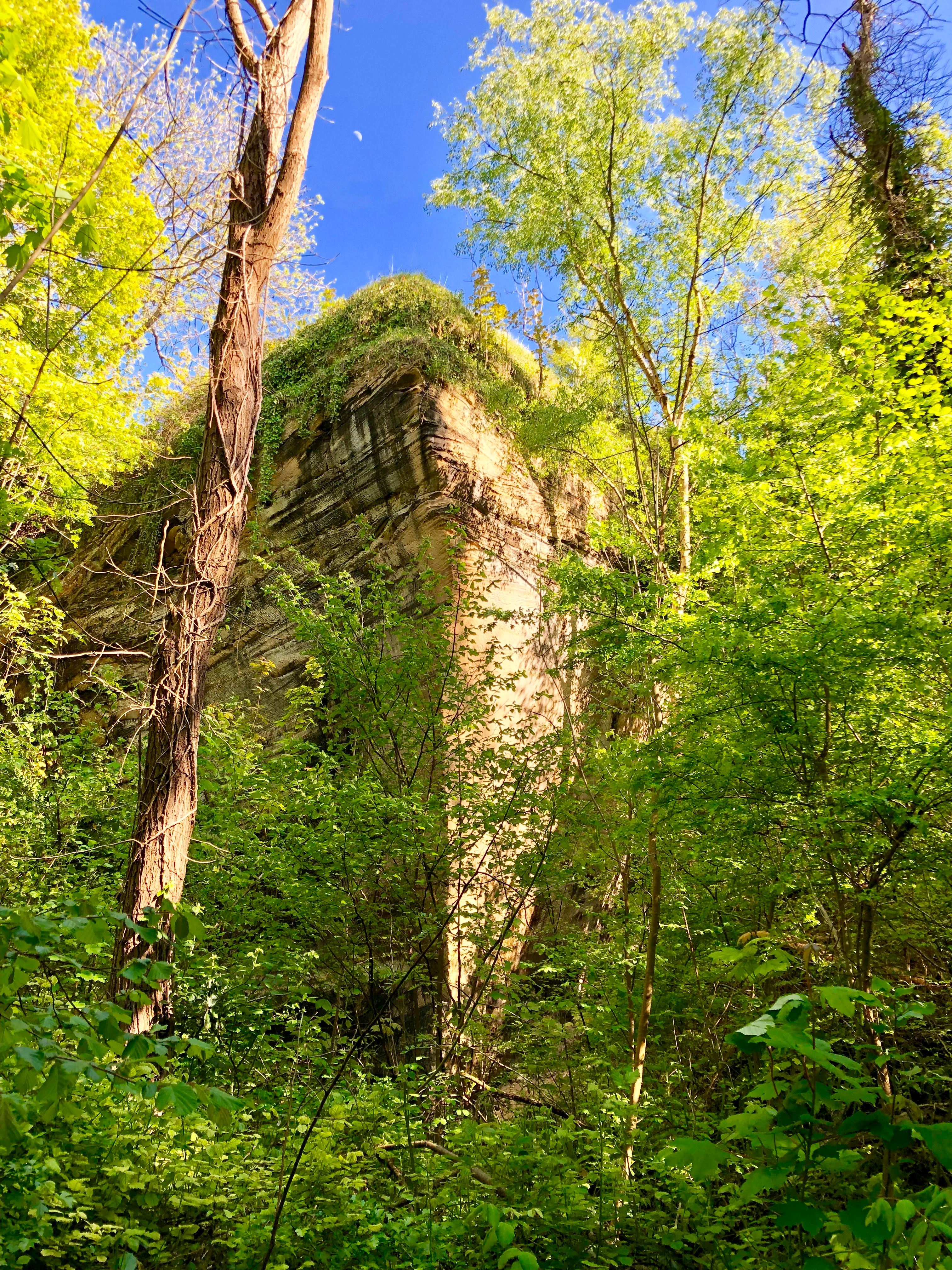
The landscape of the Orival reserve is essentially an industrial landform transformed into a haven for nature. Centuries of extraction have left a series of open quarry pits with vertical fronts, oblique walls, and uneven floors, all cut into pale Bathonnian limestone. Where excavation stopped, vegetation has returned unevenly, producing a patchwork of bare rock faces, dry calcicole grasslands, low shrubs, small ponds, and patches of woodland slowly reclaiming the workings.
The reserve sits in a hollow near the Seulles river, a small Normandy coastal river, and the terrain falls gently toward the valley. From the upper edges of the quarries, visitors can see down across the wet meadows and damp pastures of the Seulles valley below, offering a striking contrast between the dry, stony interior of the reserve and the greener floodplain around it. Near the coast, just a few kilometers away, the inland limestone landscape gives way to the broader Norman coastal plain.
Réserve naturelle régionale des anciennes carrières d'Orival ecosystems, habitats, and plant life
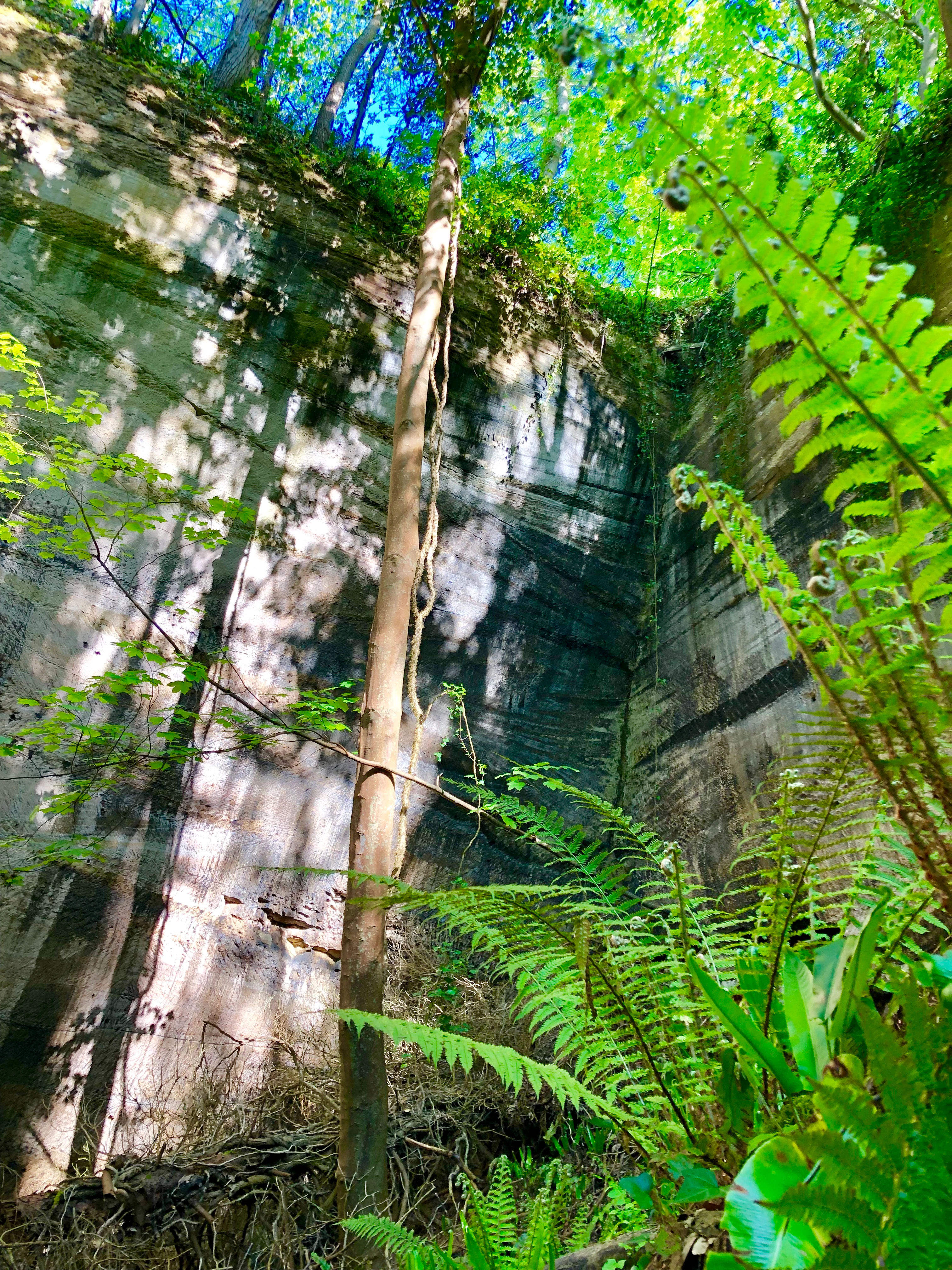
Ecologically, the reserve is defined by calcareous substrates and the habitats that develop on them. The thin soils over Bathonnian limestone support dry grassland communities rich in calcicole species, including several plants protected at the national or regional level. The Alisier de Fontainebleau, the bitter gentian, the frog orchid, the delicate rampion, the stiff hedgenettle, and the blue moorgrass are among the notable botanical species documented on the site. A diversity of orchids further enriches the flora, while bryophytes colonize the moister shaded rock surfaces.
Beyond the strict calcicole communities, the mosaic of habitats created by the quarries supports a broader ecological gradient. Open rock, dry grassland, scrub, and small wetland pockets around ponds and seeps each contribute different plant and animal communities. The site also functions as an ecological corridor with the Seulles valley, allowing exchanges between the dry calcareous environments of the reserve and the wet meadows and watercourses of the surrounding landscape.
Réserve naturelle régionale des anciennes carrières d'Orival wildlife and species highlights
The fauna of the reserve is closely tied to its calcareous habitats, especially for invertebrates. Warm, dry calcicole grasslands and sunny rock faces are attractive to a range of specialized insects, including butterflies such as the Provençal chalkhill blue, as well as hopping insects like the bromes grasshopper and dragonflies such as the banded demoiselle and the libellule déprimée. These insect communities, in turn, support the broader food web of the reserve.
The old lime kilns provide sheltered, stable microclimates that are particularly valuable for overwintering bats, making the site significant for chiropteran fauna even though it does not appear to host large woodland bat colonies. The combination of insects, sheltered cavities, and varied vegetation creates a modest but characteristic wildlife profile associated with limestone landscapes in northwestern France.
Réserve naturelle régionale des anciennes carrières d'Orival conservation status and protection priorities
Conservation interest in the site rests primarily on its botany and geology. The outcropping calcareous rock formations are recognized as nationally important from a geological perspective, while the calcicole flora, including several protected species and a rich orchid community, gives the reserve a strong botanical value for Normandy. The site is covered by a prefectoral biotope protection order and registered as a ZNIEFF type I site, reinforcing its formal recognition.
As a regional nature reserve, the area is managed with an emphasis on maintaining the balance between open calcicole habitats and recolonizing woodland, so that the dry grassland flora is not lost to natural succession. The reserve's role as a corridor with the Seulles valley adds a landscape-scale dimension to its conservation value, connecting dry calcareous environments to wet meadow and river habitats in the surrounding area.
Réserve naturelle régionale des anciennes carrières d'Orival cultural meaning and human context
The cultural dimension of the reserve is inseparable from its geology. The 'carreau d'Orival', a Bathonnian limestone prized for building, has been quarried here since the Merovingian era. This same stone was used in significant Norman architecture, including the Bayeux Cathedral, giving the site a tangible link to the region's medieval construction heritage. The surviving lime kilns are additional evidence of the long industrial history that shaped the local landscape.
Today, the reserve plays a quieter but continuing cultural role as a place of public education. An interpretive panel at the entrance introduces visitors to the site's history and ecology, and the diversity of habitats in such a small area makes it a useful outdoor classroom for understanding how human activity and natural succession can combine to create biodiversity.
Top sights and standout views in Réserve naturelle régionale des anciennes carrières d'Orival
The reserve's standout features include the exposed calcareous rock faces of the old quarries, the rich calcicole flora with multiple protected species and a notable orchid presence, and the mosaic of dry grassland, cliff, scrub, and small wetland habitats packed into a compact area. The site's geological significance, its medieval quarrying heritage, and its role as a corridor with the Seulles valley together distinguish it from more typical Norman protected landscapes.
Best time to visit Réserve naturelle régionale des anciennes carrières d'Orival
Spring and early summer are generally the most rewarding periods to experience the reserve, when calcareous grasslands come into bloom and orchids are most visible. Dry, sunny days offer the best conditions both for appreciating the panoramic views over the Seulles valley and for observing the butterflies and other insects associated with the dry habitats. Cooler months can still be interesting for tracing the quarry structures and seeing how the landscape changes with the seasons, though the floral display will be more limited.