Why Chandoli National Park stands out
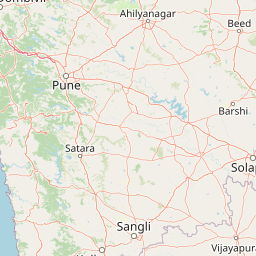
Chandoli National Park is best known as a critical tiger habitat within the Sahyadri Tiger Reserve and as part of the globally significant Western Ghats biodiversity corridor. The park protects a landscape of distinctive flat-topped lateritic plateaus called saddas, rocky cliffs, and ancient Maratha forts. Its diverse forest types support both Malabar Coast moist forests and North Western Ghats moist deciduous vegetation, creating ideal conditions for tiger and leopard populations. The park gained particular attention in 2018 when a tiger was photographed on camera trap for the first time in eight years, confirming the continued presence of this apex predator in the reserve.
Chandoli National Park history and protected-area timeline
Chandoli National Park has a layered history spanning both natural conservation and human activity. The area was first formally protected as a wildlife sanctuary in 1985, establishing initial conservation regulations for the region's forests and wildlife. Following nearly two decades of protection under sanctuary status, the area was upgraded to national park status in May 2004, providing stronger legal protection and management authority. The park forms part of the larger Sahyadri Tiger Reserve, which was formally declared as a Project Tiger reserve by the National Tiger Conservation Authority on May 21, 2007. At the time of designation, the reserve was estimated to support nine tigers and 66 leopards, reflecting the ecological significance of the area for large carnivores. Within the park's boundaries lie historical monuments of considerable importance, including the 17th-century forts of Prachitgad and Bhairavgad, constructed during the Maratha Empire period. Historical accounts suggest portions of the protected area served as an open jail for prisoners of war during the early battles of Chhatrapati Shivaji Maharaj's rule, while Chhatrapati Sambhaji Maharaj utilized Prachitgad as an observation point and recreational retreat. More recently, conservation efforts have included village relocation programs, with nearly 7,894 people from 32 villages successfully moved outside park boundaries to reduce human-wildlife conflict and allow vegetation regeneration.
Chandoli National Park landscape and geographic character
The landscape of Chandoli National Park is defined by the dramatic geology and topography of the Sahyadri Range in the northern Western Ghats. The park spans elevations from 589 meters in the valley floors to 1,044 meters at the higher plateaus, creating diverse microclimates and habitat zones. The most distinctive landforms are the flat-topped lateritic plateaus known locally as saddas, which appear as table-like formations rising from the surrounding terrain. These plateaus are often rocky and nearly devoid of vegetation, creating a stark contrast to the forested valleys below. Large boulders and cave formations are scattered throughout the park, particularly in the higher elevations, adding to the rugged character of the landscape. The park protects numerous perennial water channels and waterholes that sustain wildlife during the dry season, along with the Vasant Sagar Reservoir which serves as a critical water source. The Warna River and its tributaries flow through the park, part of the larger Krishna River basin. The combination of steep escarpments, plateaus, valleys, and water bodies creates a visually varied landscape that supports the park's diverse ecological communities.
Chandoli National Park ecosystems, habitats, and plant life
Chandoli National Park supports exceptional biodiversity within its forest ecosystems, encompassing two major forest type classifications. The Malabar Coast moist forests occur in the wetter portions of the park, characterized by evergreen and semi-evergreen species that maintain foliage year-round. The North Western Ghats moist deciduous forests dominate the more seasonal areas, with trees losing leaves during the dry winter months. Within these forest types, the park contains dwarf evergreen forests in the higher elevations and more extensive deciduous stands at lower altitudes. The vegetation includes numerous tree species such as anjani, jamun, pisa, various fig species, kokum tree, Indian laurel, Indian gooseberry, and chebulic myrobalan. The grass layer is diverse, with species including bluestem grass, golden beard grass, black spear grass, and kangaroo grass. Notably, the park supports insectivorous plant species including sundews and bladderworts, which grow in wetland areas and add to the botanical diversity. The forest composition and structure provide crucial habitat for the park's mammalian fauna, from large carnivores to smaller mammals and arboreal species.
Chandoli National Park wildlife and species highlights
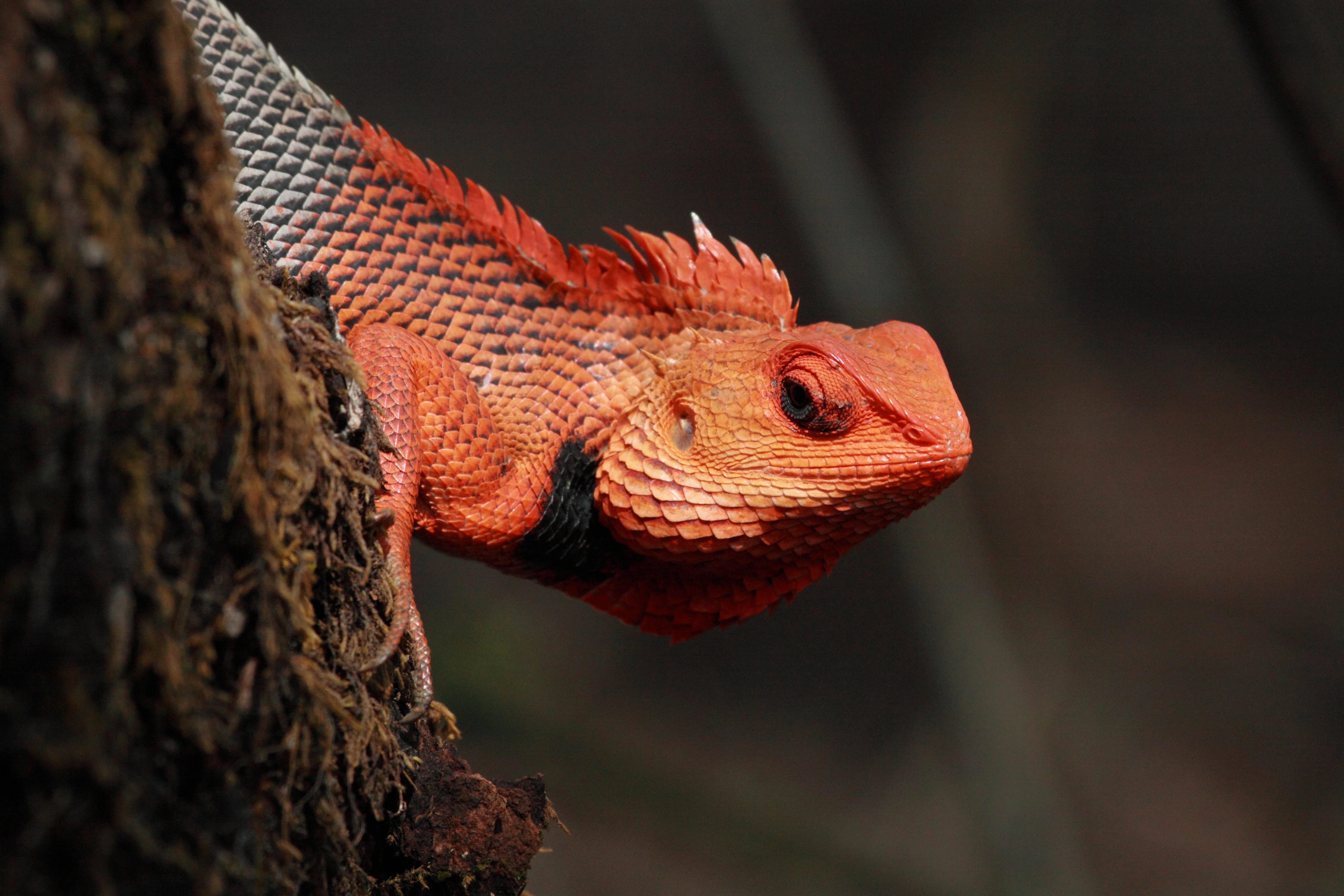
Chandoli National Park supports a remarkable diversity of wildlife, with documented populations of approximately 23 mammal species, 122 bird species, and 20 amphibian and reptile species. The park is particularly significant for its large carnivore populations, including Bengal tigers and Indian leopards, which occupy the apex predator niche in the ecosystem. Camera trap evidence from May 2018 confirmed the continued presence of tigers in the reserve, the first direct observation in eight years, following earlier estimates of five to eight tigers based on scat DNA analysis from 2014. Other notable mammals include Indian bison known as gaur, leopard cats, sloth bears, and the striking Indian giant squirrel, which is commonly observed in the forest canopy. The prey base is robust, supporting populations of barking deer or Indian muntjac, sambar deer, mouse deer known as Indian spotted chevrotain, and blackbuck. A 2002 census showed increasing populations of tigers, leopards, gaur, barking deer, mouse deer, sloth bears, and blackbuck, while a 2004 census documented a dramatic increase in gaur numbers from 88 to 243 individuals in the Kolhapur Wildlife Division.
Chandoli National Park conservation status and protection priorities
Chandoli National Park plays a vital role in India's tiger conservation framework as part of the Sahyadri Tiger Reserve under Project Tiger. The park's designation as a Project Tiger reserve in 2007 brought additional resources and management focus to protecting the area's tiger and leopard populations. The broader Sahyadri Tiger Reserve encompasses 741.22 square kilometers of connected protected habitat, creating a viable landscape for apex predators. The park's inclusion in the UNESCO World Heritage designation for the Western Ghats in 2012 further elevates its conservation significance at the global level. Conservation challenges include a proposed hydroelectric project that would utilize forest land in the Warna Dam catchment area. On the positive side, successful village relocation programs have moved nearly 7,894 people from 32 villages within the park to locations outside the boundaries, reducing human pressure and enabling natural vegetation regeneration. Ongoing management activities include invasive species removal, soil and water conservation, fire prevention, habitat improvement through grassland development, and infrastructure improvements such as watch towers and nature trails.
Chandoli National Park cultural meaning and human context
Chandoli National Park contains significant cultural heritage within its boundaries, most notably the 17th-century forts of Prachitgad and Bhairavgad, built during the Maratha Empire period. These fortifications represent the historical human presence in the landscape and provide tangible links to the region's storied past. Historical accounts indicate that during the reign of Chhatrapati Shivaji Maharaj, portions of the park area functioned as an open jail for prisoners of war captured in early battles. Chhatrapati Sambhaji Maharaj, Shivaji's successor, utilized Prachitgad fort as both an observation point for monitoring the surrounding territory and as a recreational retreat. The presence of these historical structures within a modern national park creates a unique juxtaposition of cultural and natural heritage, offering visitors glimpses into the region's strategic importance during the Maratha period while experiencing the contemporary wild landscape.
Top sights and standout views in Chandoli National Park
Chandoli National Park offers a distinctive combination of tiger-spotting opportunities within the Sahyadri Tiger Reserve, dramatic Western Ghats scenery with lateritic plateaus and rocky outcrops, and historic Maratha-era forts set among pristine forest. The park's position within the UNESCO World Heritage-listed Western Ghats places it among the most biodiverse regions on Earth. Wildlife highlights include confirmed tiger presence, healthy leopard populations, and regular sightings of gaur, sloth bears, and Indian giant squirrels. The landscape of flat-topped saddas against forested valleys creates exceptional photographic opportunities. The park's relatively recent national park status and ongoing development mean it remains less visited than some other Indian tiger reserves, offering a more remote and less crowded wildlife experience.
Best time to visit Chandoli National Park
The optimal visiting period for Chandoli National Park extends from October through June, avoiding the peak monsoon months of July to September when heavy rainfall makes park access difficult and terrain hazardous. The winter months from November to February offer pleasant temperatures and clear visibility for wildlife viewing, while the dry season from March to June concentrates animals around remaining water sources, improving sighting opportunities. The post-monsoon period in October and November provides the advantage of lush green vegetation following seasonal rains while maintaining good accessibility. Visitors should note that the park experiences hot summers with temperatures rising significantly in April and May, so early morning and late afternoon game drives are recommended for both wildlife viewing and comfort.