Why Cofre de Perote National Park stands out
Cofre de Perote National Park is best known for protecting one of Mexico's highest volcanic peaks and the high-altitude ecosystems that surround it. The mountain's distinctive profile, with its gently sloped shield-like base crowned by a dramatic rocky outcrop, makes it visually recognizable across the Veracruz landscape. The park contains important temperate forest ecosystems including Pinus hartwegii forests and pine-oak woodlands that transition with altitude. It also protects the habitat of the critically endangered salamander Pseudoeurycea naucampatepetl, a microendemic species found only on this mountain.
Cofre de Perote National Park history and protected-area timeline
Cofre de Perote National Park was established in 1937 by the Mexican federal government, making it one of the older protected areas in Veracruz state. The creation of the park reflected growing recognition in early twentieth-century Mexico of the need to preserve significant natural landmarks and their surrounding environments. The mountain has long held importance beyond its geological significance, serving as a cultural touchstone for local communities who have lived in its shadow for generations. The Nahuatl names associated with the mountain, including Nauhcampatépetl and Naupa-Tecutépetl, indicate that indigenous peoples understood and named this landscape well before Spanish colonization. These names, recorded by scholars such as Francisco Javier Alegre in the eighteenth century, connect the mountain to Mesoamerican religious concepts and the worship of Tláloc, the god of rain. The park's establishment came during a period of increasing environmental awareness in Mexico, though conservation efforts have faced ongoing challenges from deforestation and land-use pressures in the surrounding region.
Cofre de Perote National Park landscape and geographic character
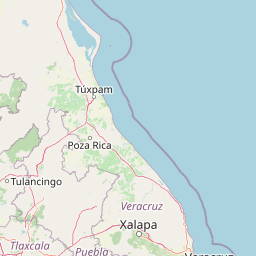
The landscape of Cofre de Perote National Park is defined by the volcano's distinctive form as a complex shield volcano with elements of stratovolcanic construction. The mountain rises from the surrounding highland plains of central Veracruz with broad, gently sloped flanks that are characteristic of shield volcanoes, quite different from the steep conical profile of nearby Pico de Orizaba. The most striking visual feature is the dramatic rocky outcrop at the summit, a vertical cliff formation approximately 30 to 40 meters high and 100 meters long that gives the mountain its name. A prominent horseshoe-shaped escarpment on the eastern side of the summit records a major volcanic collapse event that occurred approximately 240,000 years ago, when a portion of the volcanic edifice collapsed toward what is now the town of Xico. The mountain spans a dramatic vertical range from around 1,350 meters in the lower valleys to the summit at 4,220 meters, with the park itself protecting the upper elevations above 3,000 meters. The surrounding terrain includes agricultural fields on the lower slopes, transitioning through forest zones to alpine meadows near the summit.
Cofre de Perote National Park ecosystems, habitats, and plant life
The protected area encompasses several distinct ecological zones that change with elevation as the mountain rises through the atmosphere. The lower slopes feature agricultural lands where local farmers cultivate maize and potatoes, crops that have shaped the landscape for generations. Above the agricultural zones, temperate forests dominate, with Pinus hartwegii, a pine species adapted to high-altitude conditions, forming extensive forest coverage on the mountain's slopes. These pine forests represent important ecosystems within the Trans-Mexican Volcanic Belt, providing habitat for numerous species and playing a role in watershed protection for the region. The forest composition changes with altitude, with pine-oak associations occurring at mid-elevations before transitioning to more open pine forests and eventually alpine conditions near the summit. The area sits at the biogeographical junction of two major mountain systems, giving it ecological significance as a transition zone that supports species from both the volcanic belt and the Sierra Madre Oriental.
Cofre de Perote National Park wildlife and species highlights
The wildlife of Cofre de Perote National Park includes several species of conservation concern, most notably the salamander Pseudoeurycea naucampatepetl, which is found nowhere else on Earth. This small amphibian is endemic to the high-altitude forests of the mountain and represents a microendemic species of significant conservation importance. The pressures facing this salamander mirror broader environmental challenges in the region, as deforestation has reduced the extent of mature temperate forest in the area by approximately 17 percent between 1970 and 2003, leaving the species in a precarious position. The forest ecosystems support bird populations and other fauna adapted to the high-altitude environment, though detailed species inventories are limited in the available source material. The presence of the endemic salamander highlights the biological significance of protecting this volcanic mountain and its surrounding habitats.
Cofre de Perote National Park conservation status and protection priorities
The creation of Cofre de Perote National Park in 1937 represented an early effort to protect Mexico's volcanic mountain heritage, but conservation challenges have persisted throughout the decades since. The park protects the terrain above 3,000 meters elevation, establishing a core conservation zone around the summit and upper slopes. However, the surrounding lower-elevation forests have experienced significant deforestation, with mature temperate forest cover declining by 17 percent between 1970 and 2003 as agricultural expansion converted forest lands to cultivation. This deforestation has direct consequences for biodiversity, most critically for the endemic salamander Pseudoeurycea naucampatepetl, which is now considered to be on the brink of extinction. The geological instability of the region adds another dimension to conservation planning, as the volcanic system could potentially become active again in the future despite currently being classified as extinct.
Cofre de Perote National Park cultural meaning and human context
Cofre de Perote holds significant cultural meaning for the indigenous peoples of Veracruz, particularly those who speak Nahuatl and maintain connections to pre-Columbian traditions. The mountain is known by several Nahuatl names, the most prominent being Nauhcampatépetl, which translates to either square mountain or mountain of the lord of four places. Another traditional name, Nappateuctli, was recorded by eighteenth-century scholar Francisco Javier Alegre and means four times lord or lord of the four directions, representing one of the epithets of Tláloc, the Mesoamerican deity of rain. This connection to Tláloc indicates that the mountain was understood as a sacred space within indigenous religious practice, likely serving as a site where rain-making rituals were conducted given the importance of agriculture to the region's communities. The Spanish name Cofre de Perote references both the distinctive summit outcrop and the nearby town of Perote, creating a naming heritage that bridges indigenous and colonial periods.
Top sights and standout views in Cofre de Perote National Park
Cofre de Perote National Park protects one of Mexico's highest volcanic peaks and the unique high-altitude ecosystems that surround it. The mountain's distinctive profile, with gently sloped shield-like flanks crowned by a dramatic rocky outcrop, makes it a landmark feature of the Veracruz landscape. The park contains important temperate forest ecosystems and provides critical habitat for the endemic salamander Pseudoeurycea naucampatepetl, one of Mexico's most narrowly distributed amphibians. The convergence of the Trans-Mexican Volcanic Belt and Sierra Madre Oriental gives the area ecological significance, while the Nahuatl names associated with the mountain reflect deep indigenous cultural connections to this landscape.
Best time to visit Cofre de Perote National Park
The dry season from November through April generally offers more stable conditions for visiting Cofre de Perote National Park, with lower precipitation and clearer skies than the summer months. Winter conditions can include snow at higher elevations, which may affect access to the summit area but also create dramatic winter scenery. The mountain's alpine climate means that temperatures are cold year-round at higher elevations, with average temperatures remaining below 10 degrees Celsius even in the warmest months. Summer and early autumn bring the highest precipitation, with monthly rainfall totals exceeding 350 millimeters in June and July, which can make trails muddy and visibility reduced. The climate data shows that the wettest period occurs from June through October, while the relatively drier winter months from December through February see considerably less precipitation.