Why Cross River National Park stands out
Cross River National Park is best known for its remarkable primate population, particularly the endangered Cross River gorilla, one of the rarest gorilla subspecies in the world with only around 300 individuals remaining globally. The park also protects significant populations of common chimpanzees, drills, and Preuss's red colobus. It is recognized as a global biodiversity hotspot and contains one of the oldest rainforests in Africa. The park features dramatic landscapes including the Kwa Falls and Agbokim Falls, rugged terrain rising from river valleys at 100 meters to mountain peaks exceeding 1,000 meters, and a remarkable diversity of flora and fauna across its montane and lowland forest ecosystems.
Cross River National Park history and protected-area timeline
The establishment of Cross River National Park emerged from decades of conservation planning and international collaboration. The park was first proposed in 1965, but serious planning efforts did not begin until 1988 when the World Wide Fund for Nature (WWF) UK took a leading role in developing a comprehensive management plan. The original vision envisioned two divisions separated by farmland and the Cross River valley, with a substantial budget of 49.9 million dollars. The plan incorporated provisions for involving villagers in the buffer zone in park management while providing development aid to local communities. The Cross River National Park was formally established through a Federal Government Decree in 1991, with the Cross River gorilla chosen as the park’s theme animal to symbolize its conservation significance. However, the original plan was not fully implemented, and the park as established in 1991 only included existing forest reserves rather than the comprehensive area originally envisioned. Following initial funding, external assistance diminished, and relations between park management and local communities became strained. A significant administrative change occurred in 1999 when an amending decree converted the Nigerian National Park Service into a paramilitary outfit with increased powers. The creation of the park resulted in the establishment of approximately 105 buffer zone settlements, some of which became enclave towns within the park boundaries. This displacement of local communities from their traditional forest resource use rights without adequate alternative livelihoods has created ongoing challenges for park management and contributed to forest fragmentation pressures.
Cross River National Park landscape and geographic character
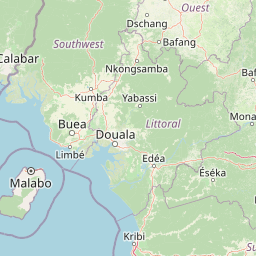
The physical landscape of Cross River National Park is characterized by remarkable topographic diversity and dramatic elevation changes across its two divisions. The Oban Division features rugged terrain that rises from approximately 100 meters in the river valleys to over 1,000 meters in the mountainous areas. The landscape is drained by multiple river systems, with the northern portions served by the Cross River and its tributaries while the southern regions are drained by the Calabar, Kwa, and Korup rivers. The Okwangwo Division presents even more dramatic relief, with rocky ridges and outcrops dominating the terrain. The highest points reach 1,700 meters in the Sankwala Mountains in the north and 1,000 meters in the Mbe Mountains in the southwest. The park encompasses a range of habitat types from coastal mangrove swamps through lowland tropical rainforest to montane grasslands at the highest elevations. The forest ecosystem features a closed canopy typical of Guinea-Congolian rainforests, with emergent trees reaching 40 to 50 meters in height creating a distinctive layered structure. The area experiences intense annual rainfall exceeding 3,500 millimeters in some parts, with a wet season extending from March to November, shaping the hydrological systems and vegetation patterns throughout the park.
Cross River National Park ecosystems, habitats, and plant life
The ecological character of Cross River National Park is defined by its position as a critical repository of Guinea-Congolian rainforest biodiversity. The park contains approximately 1,500 to 1,600 plant species across its two divisions, including around 77 species endemic to Nigeria. The forest vegetation is dominated by species such as Musanga cecropioides (African corkwood), Irvingia gabonensis, Berlinia confusa, Coula edulis, and African mahogany, with red ironwood (Lophira alata) also common. The ecosystem exhibits complex vertical stratification with emergent trees towering above a closed canopy, creating conditions supporting extraordinary biodiversity. The park’s climate features a dry season from November to March and a rainy season from March to November, with annual rainfall between 2,000 and 3,000 millimeters and temperatures ranging from 14 to 25 degrees Celsius. The Okwangwo Division contains montane grasslands on high ridge-tops with relict forests in the valleys, while lower elevations feature lowland rainforests with areas of savanna where human activity has transformed the forest. The park serves as a Pleistocene biodiversity refuge, preserving species that survived past climatic fluctuations and now containing numerous endemic and severely endangered species found nowhere else on Earth.
Cross River National Park wildlife and species highlights
Cross River National Park harbors an extraordinary concentration of wildlife, particularly primates, with 16 species recorded representing approximately 78 percent of all primate species found in Nigeria. The park is globally significant for its population of Cross River gorillas (Gorilla gorilla diehli), the rarest and most endangered gorilla subspecies, with the Okwangwo Division containing approximately 80 to 100 individuals across several subpopulations. The park also supports substantial populations of common chimpanzees, estimated at 200 to 400 individuals across both divisions. Other notable primates include the endangered drill, Preuss's red colobus, Sclater's guenon, and Preuss's monkey. The mammal fauna includes African forest elephants, African buffalo, and numerous smaller species. Over 350 bird species have been recorded, including the vulnerable grey-necked rockfowl that breeds in the Mbe mountains, Xavier's greenbul (one of only two locations in Nigeria), and numerous species rare or absent elsewhere in the country. The park supports at least 42 species of snakes and approximately 75 mammal species overall. Butterfly diversity is exceptional, with nearly 600 species recorded in the Oban division alone.
Cross River National Park conservation status and protection priorities
Cross River National Park holds critical importance in global conservation efforts as one of the world's 25 biodiversity hotspots and an Important Bird and Biodiversity Area. The park serves as a crucial refuge for the endangered Cross River gorilla, with dedicated efforts to protect this subspecies driving conservation initiatives. However, the park faces severe and escalating threats from illegal logging, slash-and-burn agriculture, poaching, and expanding human populations in buffer zone communities. Approximately 66 villages surround the Okwangwo Division, with growing populations increasingly encroaching into the forest. Logging activities have opened trails that facilitate poaching access, and snare traps set for smaller animals cause injuries to larger species. Transboundary poaching between Nigeria and Cameroon remains a concern, particularly for forest elephants. Conservation programs have included community-based forestry projects such as the successful Ekuri Community Forestry Project, which empowered local villages to manage forest resources sustainably. Efforts to incorporate adjacent protected areas like the Afi River Forest Reserve and Mbe Mountains Community Forest into the park have been hindered by land ownership disputes and community resistance. The park remains underfunded, with ranger numbers inadequate for its vast territory and equipment and training needs unmet.
Cross River National Park cultural meaning and human context
The Cross River National Park exists within a landscape of significant human presence and traditional forest resource use. The region is inhabited by various indigenous communities, including the Boki people who have historically inhabited the areas surrounding the park. The establishment of the park in 1991 fundamentally altered the relationship between local communities and the forest, removing their legal rights to utilize forest resources without providing adequate alternative livelihoods. Approximately 105 settlements were created in buffer zones around the park, with some becoming enclave communities within the protected area. These communities have traditionally depended on the forest for subsistence agriculture and collection of forest products, and the loss of access has created tensions that contribute to ongoing pressures on the park’s resources. The local populations maintain suspicion toward government promises of long-term economic assistance in exchange for land, demanding instead immediate financial compensation. This has complicated efforts to expand the protected area and incorporate adjacent forest reserves. Programs promoting backyard farming of bushmeat species have shown success in reducing hunting pressure in some areas, offering a model for community-based conservation that addresses both livelihood needs and biodiversity protection.
Top sights and standout views in Cross River National Park
Cross River National Park offers exceptional natural attractions including the dramatic Kwa Falls, which plunges into a deep pool hidden beneath the tropical rainforest canopy, and the Agbokim Falls which descends in approximately seven plunges over a cliff face. The park provides opportunities for gorilla and chimpanzee tracking, bird watching with over 350 species, game viewing, mountaineering, sport fishing, and boat cruises along the river systems. The Kanyang tourist village serves as a base for visitors, featuring accommodations and a wildlife museum. The botanical garden and herbarium at Butatong showcase the park’s remarkable plant diversity. The park’s significance as a transboundary protected area with Cameroon’s Korup National Park creates potential for international conservation collaboration and joint tourism development.