


Mori Atlas logo
Protected areaFinal Fantasy: The Spirits Within

Understanding the territorial boundaries and mapped environmental features of this protected landscape

Final Fantasy: The Spirits Within Protected Area Geography and Landscape Mapping in the United States

The protected area known as Final Fantasy: The Spirits Within represents a specific geographic entity situated within the United States of America. This focus on the park allows for a detailed examination of its physical boundaries and its position within the broader regional landscape. The data provides a clear view of the site as a distinct protected space, enabling users to analyze its terrain and environmental footprint through a structured mapping perspective.

sand dunenatural monumentCzech RepublicPardubice regionpsammophilic habitatground beetles
A flat-style digital illustration of a scenic valley with a waterfall flowing between cliffs, surrounded by a coniferous forest under a soft, light-filled sky.

Final Fantasy: The Spirits Within

Protected area

Park overview

Structured park overview, official facts, and landscape profile for Vesecký kopec Natural Monument

Vesecký kopec Natural Monument park facts, protected area profile, and essential visitor context

Review the core facts for Vesecký kopec Natural Monument, including designation, size, terrain, visitor scale, habitats, and operating context in one park-focused overview.

About Vesecký kopec Natural Monument

Vesecký kopec is a small protected natural area in the Pardubice District of the Czech Republic, taking its name from a local hill near the village of Veská. Despite covering less than a hectare, the site carries disproportionate ecological importance because it preserves a remnant of a sand dune, the kind of landform that has largely disappeared from the intensively cultivated Bohemian landscapes.

What makes the site especially remarkable is that a significant portion of the dune is not forested. In many surviving sandy patches elsewhere in the region, planted or naturally encroaching woodland has shaded out the open-ground species. At Vesecký kopec, however, the exposed sandy substrate continues to sustain heat-loving, drought-adapted plants and animals that depend on bare or sparsely vegetated sand.

The area belongs to the East Bohemian Table (Východolabská tabule), specifically the Pardubice Basin (Pardubická kotlina) and the Dašice Basin subunit (Dašická kotlina). This geographic context places it in a flat-to-gently-rolling lowland region where sandy Quaternary deposits, the parent material of the original dune system, underlie the surrounding farmland.

The site has been under formal protection since 2004 as a temporary protected area, with enhanced protection status granted in 2012 when it was officially declared a přírodní památka (natural monument). This progression reflects the recognized conservation value of its rare sand-loving flora and fauna, especially its specialist ground beetles.

Quick facts and research context for Vesecký kopec Natural Monument

Vesecký kopec is a Czech natural monument (přírodní památka) classified under IUCN Category IV (habitat/species management area). It lies at an elevation of 243 meters above sea level and covers approximately 0.69 hectares in the Pardubice District of the Pardubice Region. The site protects a sand dune remnant near the village of Veská and is notable for its open, non-forested character and its sand-loving fauna and flora.

Park context

Deeper park guide and search-rich context for Vesecký kopec Natural Monument

Vesecký kopec Natural Monument history, landscape, wildlife, and travel context

Explore Vesecký kopec Natural Monument through its history, landscape character, ecosystems, wildlife, conservation priorities, cultural context, and seasonal travel timing in a structured park guide built for atlas discovery and search intent.

Why Vesecký kopec Natural Monument stands out

Vesecký kopec is best known for preserving an open, unforested section of a sand dune, a rare landform in the Bohemian lowlands. Its open sandy surface supports rare psammophilic species and has been documented as hosting an unusually rich community of ground beetles, including 108 recorded Carabidae species, some of which are strongly tied to sandy soils.
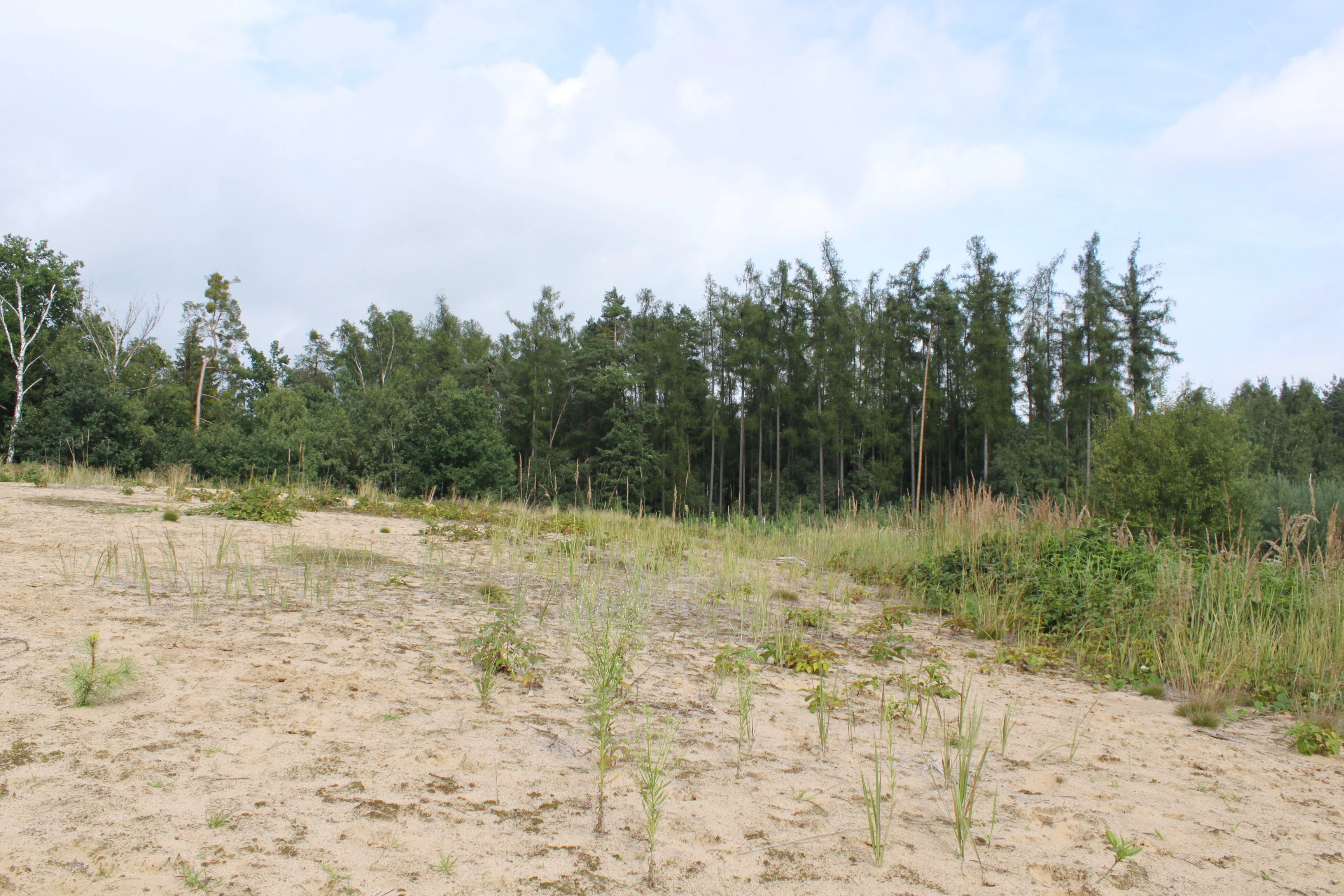
A wide view of a sandy landscape with sparse grasses and low shrubs, backed by a dense line of pine and deciduous trees under a cloudy sky.
A sandy area with sparse vegetation at Vesecký kopec.

Vesecký kopec Natural Monument history and protected-area timeline

The conservation history of Vesecký kopec reflects a two-step process in Czech environmental protection. In 2004, the area was designated as a temporarily protected area, a provisional status used in the Czech Republic to provide immediate legal safeguards when significant natural values are identified but a longer-term assessment is still underway.

In 2012, that provisional protection was converted into permanent status when the site was declared a přírodní památka (natural monument) under the Czech nature conservation framework, equivalent to IUCN Category IV. This upgrade recognized not only the rarity of the existing sandy dune habitat but also the unusual richness of its specialized fauna and flora, particularly the sand-loving beetle communities whose presence had been documented through targeted surveys.

Vesecký kopec Natural Monument landscape and geographic character

The landscape of Vesecký kopec is defined by the survival of a sand dune, an unusual landform in the otherwise lowland, agricultural setting of eastern Bohemia. The dune itself forms a gentle hill that gives the site its name, and what sets it apart is the exposed, bare or sparsely vegetated sandy surface that remains free of closed forest cover.

Geomorphologically, the site belongs to the East Bohemian Table, the Pardubice Basin, and more specifically the Dašice Basin subunit. These settings are characteristically low-lying and gently undulating, and historically they would have supported broader sand-dune systems formed by wind transport of Quaternary sandy sediments. Today, only widely scattered remnants remain, surrounded by farmland, settlements, and infrastructure.

The exposed sand of Vesecký kopec is the key physical feature of the monument. It creates dry, warm microclimates at the surface that differ sharply from the surrounding soils and allows psammophilic plant communities and bare-ground insect habitats to persist on a tiny but concentrated footprint.

Vesecký kopec Natural Monument ecosystems, habitats, and plant life

Ecologically, Vesecký kopec is defined less by forest types than by what it lacks: closed canopy. The open, sandy substrate supports a specialized ecological community adapted to dry, nutrient-poor, sun-exposed sand. These include psammophilic flora and invertebrate fauna that have disappeared from most other localities in the region due to succession, afforestation, and land-use change.

The site is particularly notable for its entomological richness, especially among ground-dwelling beetles. Surveys have documented 108 species of Carabidae (ground beetles) at the site, a striking figure given the monument's tiny area, with several species specifically tied to sandy soils. Such dense species packing reflects the combination of habitat structure, microclimate, and disturbance regime that collectively sustain an unusual concentration of rare organisms in a small space.

Vesecký kopec Natural Monument wildlife and species highlights

The wildlife profile of Vesecký kopec is dominated by invertebrates, especially beetles adapted to sandy ground. Notable records from the site include the brown-colored specialized beetle krajník hnědý, members of the svižník (Cicindelidae, tiger beetles) group, svižník polní, and the kvapník group, all of which are associated with warm, open sandy habitats.

The most striking feature of the fauna is the richness of ground beetles (Carabidae): 108 species have been documented at this very small site, with a subset of them being sand-obligate species that are typically threatened by habitat loss elsewhere in the Bohemian landscape. This underground and soil-surface fauna forms the primary reason for the area's protected status, alongside the rare psammophilic plant communities that share the same open sandy substrate.

Vesecký kopec Natural Monument conservation status and protection priorities

From a conservation perspective, Vesecký kopec matters because it preserves a vanishing element of the regional landscape: an open, non-forested sand dune with its dependent living communities. The site's significance is recognized through its formal designation as a přírodní památka (natural monument) under Czech law, corresponding to IUCN Category IV, focused on habitat and species management.

The monument's conservation value lies in the combination of a rare physical habitat, surviving open conditions, and a documented concentration of specialist fauna. With only 0.69 hectares protected, it is an exceptionally small site, but the rarity of the habitat type and the species tied to it justify protection. Maintaining the open character of the dune is central to the site's purpose, since encroachment by shrubs or trees would shade out the sand-loving species that depend on exposed, warm substrate.

Top sights and standout views in Vesecký kopec Natural Monument

Vesecký kopec stands out as one of the few surviving open sand dune remnants in the Pardubice region, an unusual feature in the intensively cultivated East Bohemian lowlands. Its unforested sandy surface hosts rare psammophilic flora and a remarkably dense community of sand-loving beetles, with 108 ground beetle species recorded. Although the protected area covers only 0.69 hectares, its formal IUCN Category IV designation and its 2012 promotion from temporary to permanent protection underscore the disproportionate ecological value of this tiny but specialized Czech natural monument.

Best time to visit Vesecký kopec Natural Monument

Vesecký kopec is a low-elevation site in the East Bohemian lowlands, and its open sandy character is most easily appreciated during the warmer months, when exposure of the dune surface and activity of sand-associated invertebrates are most pronounced. Spring and early summer are generally favorable for observing the specialized beetle fauna, while the dry, sunny character of the dune is most apparent in late spring through summer. The site can also be visited year-round as a small landscape curiosity, though bare-ground wildlife activity is naturally reduced in the cold season.

Park location guide

Geography guide, regional context, and park location map for Vesecký kopec Natural Monument

Vesecký kopec Natural Monument park geography, regions, and map view in United States of America

Understand where Vesecký kopec Natural Monument sits in United States of America through a broader geographic reading of the surrounding landscape, nearby location context, and its mapped position within the national park landscape.

How Vesecký kopec Natural Monument fits into United States of America

The United States of America is a federal presidential republic and one of the world's largest countries by area and population. It consists of 50 states across a vast territory spanning multiple time zones, with its capital in Washington, D.C. and largest city in New York City. The nation has a diverse economy, influential political system, and significant cultural and military presence globally.

Wider geography shaping Vesecký kopec Natural Monument in United States of America

The United States occupies a vast territory in North America, bordered by Canada to the north and Mexico to the south. The 48 contiguous states stretch from the Atlantic to the Pacific Ocean, while Alaska occupies the northwestern region and Hawaii is an archipelago in the Pacific. The country encompasses diverse terrain including the Rocky Mountains, Appalachian Mountains, Great Plains, and extensive river systems.

Visual reference collection showcasing local terrain, habitats, and natural features

Final Fantasy: The Spirits Within Photos and Protected Area Scenery

Examinations of Final Fantasy: The Spirits Within photos reveal the distinct sand dune topography, sparse vegetation cover, and specialized microhabitats preserved across the protected area. Visual documentation provides essential context for understanding geomorphological features and ecological communities unique to the park environment.

A wide view of a sandy landscape with sparse grasses and low shrubs, backed by a dense line of pine and deciduous trees under a cloudy sky.

Common questions about visiting, size, designation, and location context for Vesecký kopec Natural Monument

Vesecký kopec Natural Monument FAQs for park facts, access, geography, and protected area context

Find quick answers about Vesecký kopec Natural Monument, including protected-area facts, park geography, trail and visitor context, and how the park fits into its surrounding country and regional landscape.
MoriAtlas Explorer

Continue Your Protected Areas Search Across the Global Atlas

Deepen your exploration by continuing the structured search for national parks and protected areas worldwide. Utilize the comprehensive filtering capabilities to compare different conservation landscapes and refine your understanding of global park geography. Discover more about the distribution and characteristics of protected natural areas.

Global natural geography