Why Gola National Forest stands out
Gola National Forest is best known as one of the largest remaining intact areas of seasonal dense moist evergreen and semi-deciduous forest in the entire West African region. It represents a critical biodiversity refuge in the Upper Guinean forest ecosystem, one of Africa's most threatened tropical forest zones. The forest's significance stems from its size, its relatively intact ecological character, and its role as a transboundary forest complex connecting Liberia and Sierra Leone.
Gola National Forest history and protected-area timeline
Gola National Forest was officially proclaimed as a protected area in 1960, establishing it as one of Liberia's earliest national forest reserves. The establishment of the forest reflected growing recognition during the mid-twentieth century of the need to preserve significant natural areas and the valuable timber resources contained within Liberia's extensive forest cover. At the time of its designation, Liberia still retained the majority of its original forest estate, and the creation of Gola represented a forward-thinking approach to forest conservation in West Africa. The reserve was created during a period when Liberia was one of the few countries in the region to maintain substantial forest cover, largely due to the country's relatively low population density and limited infrastructure development compared to neighboring states. The decision to protect this particular forest block recognized both its ecological significance and its value as a timber resource for sustainable harvesting.
Gola National Forest landscape and geographic character
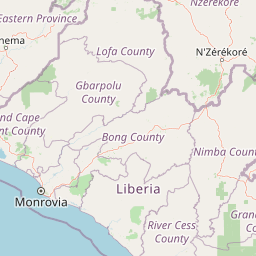
The landscape of Gola National Forest is characterized by dense tropical forest vegetation covering gently rolling terrain in northwestern Liberia. The forest sits within a region of relatively low elevation, with the terrain consisting of undulating plains and occasional ridges that characterize the upper reaches of West Africa's coastal plain. The dense evergreen and semi-deciduous forest creates a closed canopy environment where the forest floor receives limited sunlight due to the多层 canopy of trees, lianas, and epiphytes. The forest exists within a seasonal climate zone that influences its ecological character, with the moist conditions supporting continuous vegetation growth throughout the year. The area's hydrology contributes to the forest's moisture regime, with seasonal rainfall patterns supporting the dense vegetation cover that defines this forest ecosystem.
Gola National Forest ecosystems, habitats, and plant life
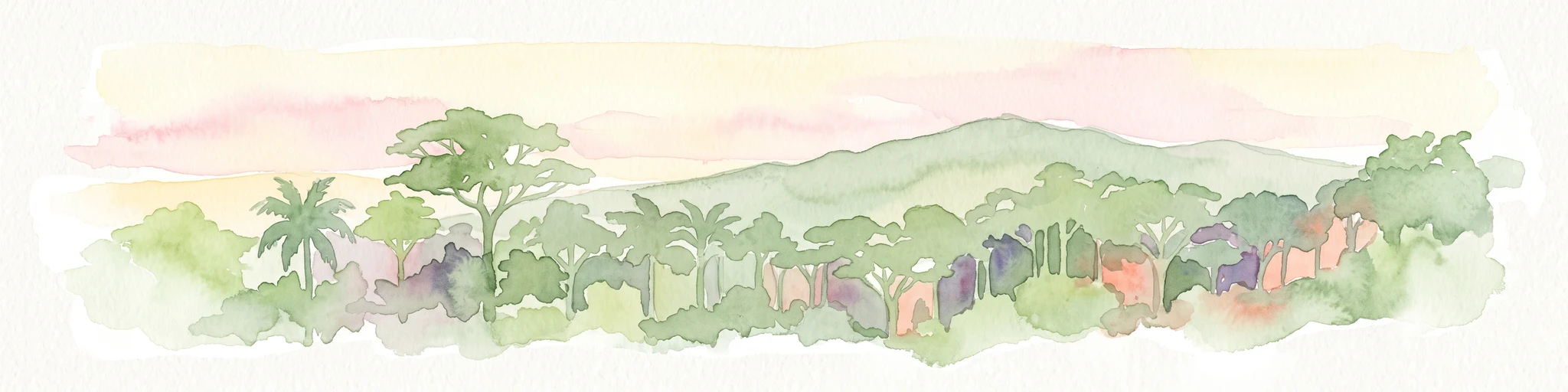
Gola National Forest represents one of the most significant remaining examples of seasonal dense moist evergreen and semi-deciduous forest in the Upper Guinean forest ecosystem. This forest type is characterized by a diverse array of tree species that maintain foliage year-round, mixed with species that lose their leaves during the dry season. The forest structure typically includes multiple canopy layers, with emergent trees rising above a continuous canopy, a middle story of smaller trees and palms, and a varied understory. The moisture-receiving conditions of the region support high biomass accumulation and the complex ecological interactions that characterize intact tropical forest systems. This forest ecosystem serves as a critical refuge for biodiversity in a region where similar habitats have been extensively degraded or converted to other land uses.
Gola National Forest wildlife and species highlights
While detailed species inventories for Gola National Forest are not extensively documented in available sources, the forest's intact character and position within the Upper Guinean biodiversity hotspot suggest it supports significant wildlife populations. West African forest ecosystems are home to diverse mammal, bird, reptile, and invertebrate communities, including species that depend on large tracts of continuous forest. The transboundary nature of the forest complex likely supports wildlife movements between Liberia and Sierra Leone, allowing species to maintain viable populations across a larger area than either country could protect independently. Forest interiors provide habitat for species sensitive to edge effects and human disturbance, while the forest's moisture and structure support diverse bird communities and arboreal mammals.
Gola National Forest conservation status and protection priorities
Gola National Forest holds significant conservation importance as one of the last substantial intact forest blocks in West Africa. The Upper Guinean forest zone has lost the majority of its original forest cover to agricultural expansion, logging, mining, and infrastructure development, making remaining protected areas like Gola critically important for biodiversity conservation. The forest's designation as a national park provides formal protection for its ecosystems, though management challenges typical of forest protected areas in the region apply. The transboundary character of the forest complex, linking protected areas in both Liberia and Sierra Leone, offers opportunities for coordinated conservation management that could enhance ecological connectivity and species persistence across the international boundary.
Gola National Forest cultural meaning and human context
Gola National Forest is situated in a region with historical connections to the forest-dependent communities of northwestern Liberia. The forest landscape has likely maintained traditional relationships with local populations who have historically utilized forest resources for subsistence purposes, traditional medicine, and cultural practices. The forest region lies within areas that experienced colonial-era administrative boundaries and subsequent national development patterns that shaped land use and access. While specific indigenous or traditional uses of the Gola forest area are not extensively documented in available sources, the forest's location suggests historical interactions with communities whose cultural practices were tied to the forest environment.
Top sights and standout views in Gola National Forest
Gola National Forest stands as one of West Africa's most important remaining forest protected areas, representing a rare example of a large intact tropical forest ecosystem in a region where such habitats have become highly fragmented. The forest's 206,990-hectare expanse makes it Liberia's largest protected forest area and one of the largest in the Upper Guinean region. Its transboundary character, linking forest ecosystems across the Liberia-Sierra Leone border, creates an international conservation corridor of regional significance. The preserved nature of the forest, dating to its 1960 establishment, provides a reference point for understanding the original forest ecology of this part of West Africa.
Best time to visit Gola National Forest
Gola National Forest can be visited year-round given Liberia's tropical climate, though the optimal period coincides with the dry season from November to April when conditions are more favorable for travel and wildlife viewing. The wet season from May to October brings heavier rainfall that can affect access within the forest and create challenging travel conditions. The dry season months offer clearer trails and more comfortable conditions for forest exploration, while the wet season showcases the forest at its lushest and supports excellent birdwatching as migratory species arrive. Visitors interested in experiencing the forest's full ecological character should consider the seasonal variations when planning their trip.