

Why Área Natural de Manejo Integrado de los Grandes Lagos Tectónicos de Exaltación stands out
The protected area is best known for its extensive system of tectonic lakes, which represent some of the largest natural freshwater bodies in the entire Amazon basin. These lakes sit within the broader mosaic of the Beni savannas, one of South America's most distinctive seasonally flooded landscapes, where immense tracts of grassland alternate with permanent and seasonal lagoons, palm stands, and forested corridors. It is also recognized for harboring emblematic and threatened species of the Amazonian wetlands, including the river dolphin, the giant otter, the maned wolf, the marsh deer, and highly threatened parrots such as the blue-throated macaw. The combination of tectonic lake systems, pre-Columbian hydraulic cultural heritage, and the cerrado Beniano landscape gives the area a remarkable ecological and cultural identity within Bolivia's protected-area network.
Área Natural de Manejo Integrado de los Grandes Lagos Tectónicos de Exaltación history and protected-area timeline
The protected area was formally established as an Área Natural de Manejo Integrado through Municipal Law No. 001/2015, enacted on 20 November 2015. This municipal designation reflects the governance role of local authorities in the Beni department, where several large landscape units have been recognized as integral to regional identity and ecological functioning.
The creation of the area was driven by recognition of the unique combination of tectonic lake systems, Beni savannas, and cerrado Beniano formations, as well as the need to conserve the pre-Columbian hydraulic heritage of the region. The municipal framework also aimed to align productive activities with conservation, building on longstanding regional traditions of cattle ranching, agriculture, and wetland use that have shaped the Beni lowlands for generations.
As a relatively young but ecologically significant protected area, it continues to evolve as a working landscape where conservation, cultural heritage, and local livelihoods intersect within the broader Amazonian context of Bolivia.
Área Natural de Manejo Integrado de los Grandes Lagos Tectónicos de Exaltación landscape and geographic character
The landscape of the protected area is dominated by an extensive system of tectonic lakes, which give the region its name and much of its identity. These lakes belong to the larger complex of natural freshwater bodies that connect to the Amazon basin, forming one of the most expansive lacustrine networks in the region.
Around the lakes, the terrain transitions into the characteristic Sabanas del Beni: vast seasonally flooded grasslands punctuated by isolated palm stands, forested islands, and slow-moving water courses. Further inland, the cerrado Beniano introduces more open shrubby and tree-dotted formations that contrast with the flooded grasslands, creating an unusual mosaic where dry-adapted vegetation meets Amazonian wet systems.
The overall topography is flat to gently undulating, lying at elevations between roughly 138 and 161 meters above sea level. The interplay of tectonic basins, floodplains, and cerrado uplands defines the visual rhythm of the area and shapes the distribution of wildlife, aquatic vegetation, and human settlement throughout the Beni lowlands.
Área Natural de Manejo Integrado de los Grandes Lagos Tectónicos de Exaltación ecosystems, habitats, and plant life
The ecological profile of the area is built on the convergence of two major South American ecoregions. The Sabanas del Beni contributes seasonally flooded grasslands, palm savannas, and gallery forests that support an exceptional diversity of aquatic and terrestrial species adapted to the flood pulse. In the same territory, the cerrado Beniano contributes drier, more open vegetation formations with shrubs, scattered trees, and fire-adapted flora drawn from the broader cerrado biome shared with Brazil.
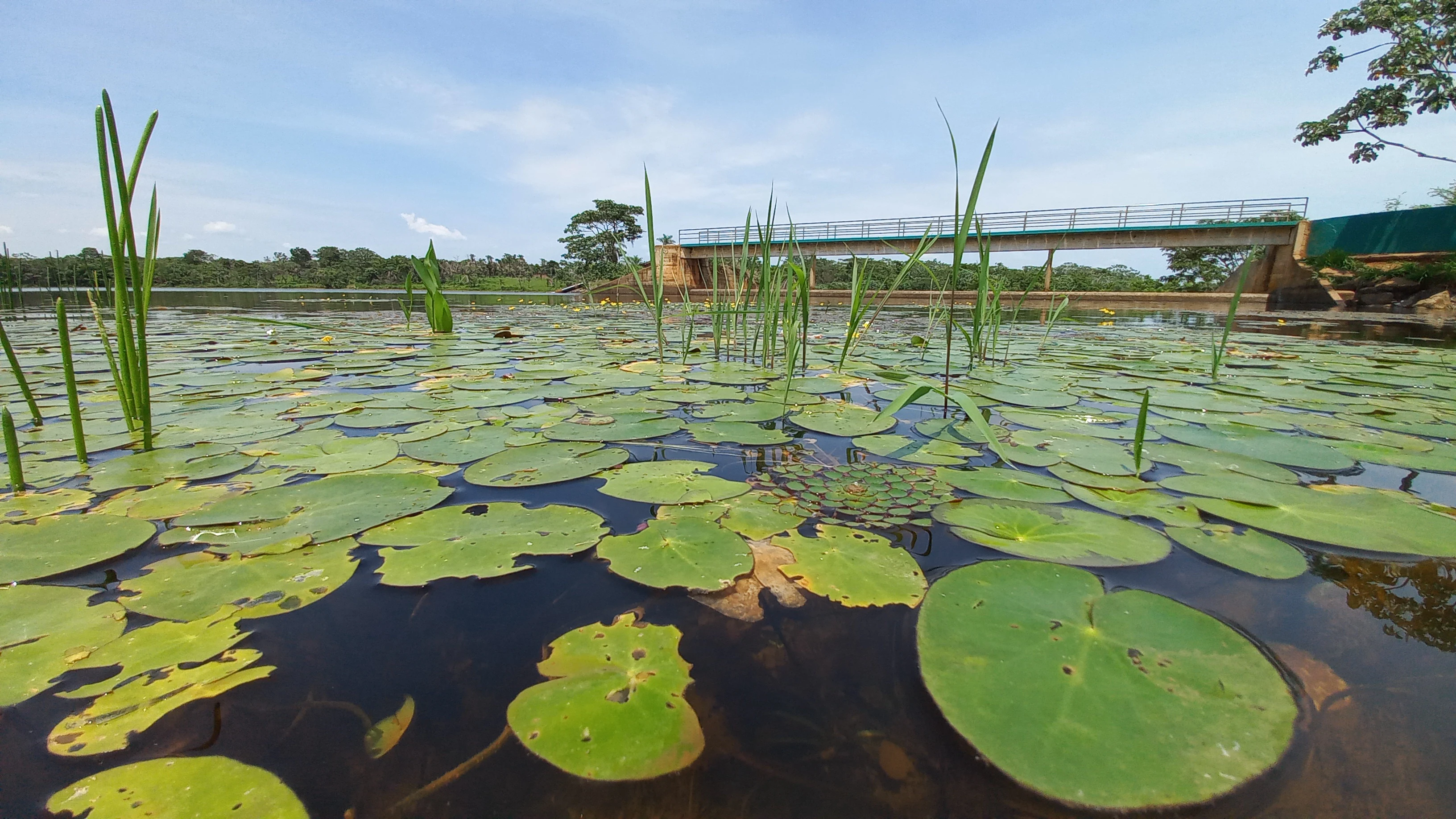
The lake systems host rich aquatic vegetation, including floating mats of tarope and various Eichhornia species that regulate the ecology of the lagoons and provide habitat for fish, turtles, and invertebrates. The mosaic of open water, floating plants, flooded grassland, and forested edges creates a layered habitat structure that supports a remarkable breadth of species and ecological processes.
Because the area lies at the meeting point of savanna, cerrado, and Amazonian influences, it also functions as an ecological transition zone where species from different biomes overlap. This ecological convergence is one of the defining qualities of the area and a key reason for its conservation significance within Bolivia.
Área Natural de Manejo Integrado de los Grandes Lagos Tectónicos de Exaltación wildlife and species highlights
The protected area supports an exceptionally rich fauna typical of the transition between the Beni savannas, the cerrado, and the broader Amazon basin. Among its most emblematic species is the Bolivian river dolphin, or bufeo, an aquatic mammal well adapted to the slow-moving waters of the region's lakes and rivers.
Reptiles of regional and global significance are present, including the Beni anaconda and large river turtles of the genus Podocnemis, whose nesting and dispersal patterns are closely tied to the lake and floodplain systems. The marsh deer, one of the largest deer species of South America, inhabits the wetlands and seasonally flooded grasslands, while the maned wolf ranges into the more open cerrado formations of the area.
The bird life is equally notable, with the powerful harpy eagle present in the forested zones and the blue-throated macaw among the most threatened parrots of South America appearing within the area. The presence of top predators, large ungulates, aquatic mammals, and highly range-restricted parrots together signals the high conservation value of the area's wildlife.
Área Natural de Manejo Integrado de los Grandes Lagos Tectónicos de Exaltación conservation status and protection priorities
From a conservation standpoint, the area is important for protecting part of two recognized ecoregions: the Sabanas del Beni and the cerrado Beniano. Both are considered singular and unique within Bolivia's ecological framework, and their preservation is essential to maintaining the integrity of the Amazon basin's southern periphery.
The area plays a key role in conserving a complex of tectonic lakes that are among the largest natural freshwater bodies within the Amazon catchment. By protecting the lake systems, surrounding savannas, and cerrado formations together, the area safeguards the ecological processes that depend on the annual flood pulse, including fish migrations, turtle reproduction, and seasonal habitat shifts.
Its integrated management category is designed to balance conservation with compatible production, encouraging agricultural and livestock practices that respect wild species and ecological dynamics. This approach reflects a broader model in which biodiversity preservation, cultural heritage, and local livelihoods coexist within a single governance framework.
Área Natural de Manejo Integrado de los Grandes Lagos Tectónicos de Exaltación cultural meaning and human context
The protected area is closely linked to the pre-Columbian hydraulic cultures of the Beni, whose earthworks, mounds, and raised agricultural fields can still be found across the surrounding savanna. These features represent a long history of human interaction with the flood pulse of the Beni lowlands, in which communities shaped productive landscapes in step with seasonal flooding.
Today, the area is associated with the cultural and economic life of the municipality of Exaltación, where cattle ranching, seasonal fishing, agriculture, and wetland-based livelihoods form part of regional identity. The municipal governance of the area reflects the importance of local communities in maintaining the landscape, with production and conservation considered complementary rather than opposed.
Top sights and standout views in Área Natural de Manejo Integrado de los Grandes Lagos Tectónicos de Exaltación
The defining strength of the area lies in the combination of an Amazon-scale tectonic lake complex with the seasonal Beni savannas and the cerrado Beniano, a habitat mosaic rarely protected elsewhere in Bolivia. Its fauna brings together globally recognized species, from the Bolivian river dolphin and giant otter to the threatened blue-throated macaw, while its cultural layer preserves traces of the ancient hydraulic societies that shaped the Beni landscape.
Best time to visit Área Natural de Manejo Integrado de los Grandes Lagos Tectónicos de Exaltación
The seasonality of the Beni lowlands strongly shapes the experience of the area. During the wet season, the savannas flood, lake systems expand, and aquatic life intensifies, offering the richest scenes of wetland dynamics, migrating birds, and flooded landscapes. During the dry season, water recedes, lagoons concentrate wildlife along their edges, and terrestrial fauna becomes easier to observe across the more accessible grassland and cerrado formations. Both seasons offer different perspectives on the same ecological mosaic.