
Why Hildener Heide, Schönholz stands out
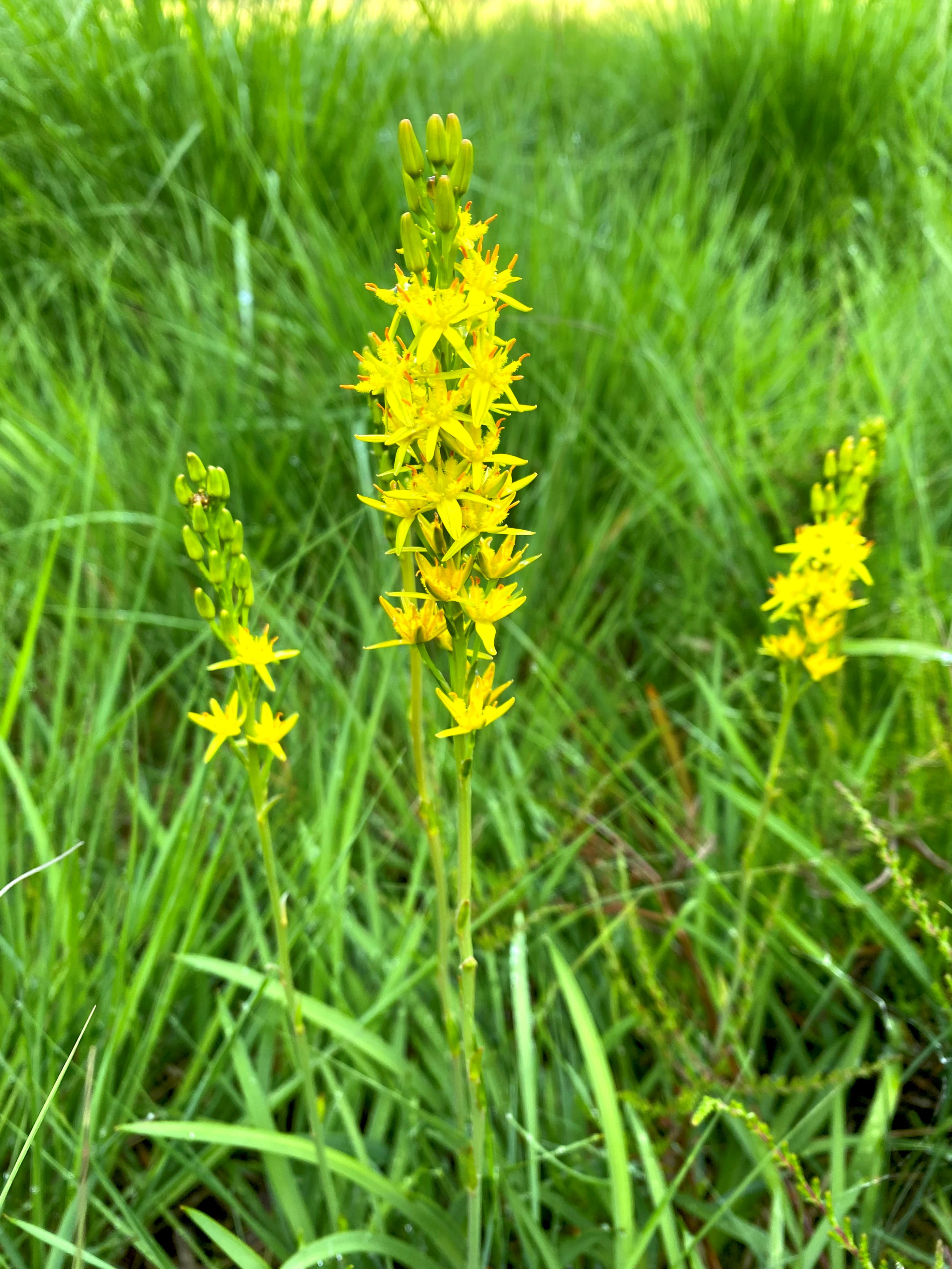
Hildener Heide, Schönholz is best known for its unusually well-preserved mosaic of bog woodland and wet heath on the Bergische Heideterrasse. The reserve harbors extensive peat moss carpets, active raised-bog and transitional bog features, and one of the stronger regional populations of the rare bog asphodel (Narthecium ossifragum). It also provides refuge for threatened habitat types that have largely vanished from the surrounding region, including wet heath dominated by cross-leaved heath (Erica tetralix), communities with sweet gale and peat moss, and ecologically valuable alder-ash and softwood floodplain forest. The combination of wet woodland, open plagg-cut heath, peatland vegetation, and a small stream corridor makes the reserve a textbook example of inland heath and bog recovery on formerly disturbed, nutrient-poor substrates. For conservation biologists, the site is a small-scale showcase of how traditional management techniques, including sod removal, can sustain open pioneer habitats and the highly specialized flora and insectivorous plants such as round-leaved sundew (Drosera rotundifolia) that depend on them.
Hildener Heide, Schönholz history and protected-area timeline
Hildener Heide, Schönholz was placed under formal nature protection in 1938, when the roughly 36-hectare area was designated under the key ME-003 as one of the early Naturschutzgebiete in the Mettmann district. That early designation laid the foundation for the reserve's long-term conservation status, even as the surrounding landscape continued to be shaped by road construction, agricultural change, and suburban expansion.
Decades later, the reserve was reconfirmed and updated within the Mettmann district landscape plan (Landschaftsplan) adopted in 2012, which refreshed habitat protection, forestry guidance, and restoration goals. The 2012 plan explicitly formalized the protection of bog and carr woodland, the maintenance and expansion of wet heath relics, and the conversion of conifer stands to site-appropriate broadleaf forest. The reserve was also integrated into the EU Natura 2000 network through the Fauna-Flora-Habitat site Hilden – Spörkelnbruch, giving it recognition and protection obligations at the European level alongside its purely national status. The site is administered by the Lower Landscape Authority (Untere Landschaftsbehörde) of the Mettmann district, which continues to manage it within that combined national and European framework.
Hildener Heide, Schönholz landscape and geographic character
The landscape of Hildener Heide, Schönholz is shaped by the gentle topography of the Bergische Heideterrasse, with elevations ranging from about 68 meters in the lowest parts to roughly 80 meters at the highest points, averaging about 74 meters above sea level. This subtle relief, combined with relatively poor, sandy substrates, has been central to the development of the heathland and bog character of the area. The terrain gently rises toward the Sandberg to the northeast and the Jaberg to the north, framing a shallow basin that collects moisture and supports the wetland habitats at the heart of the reserve.
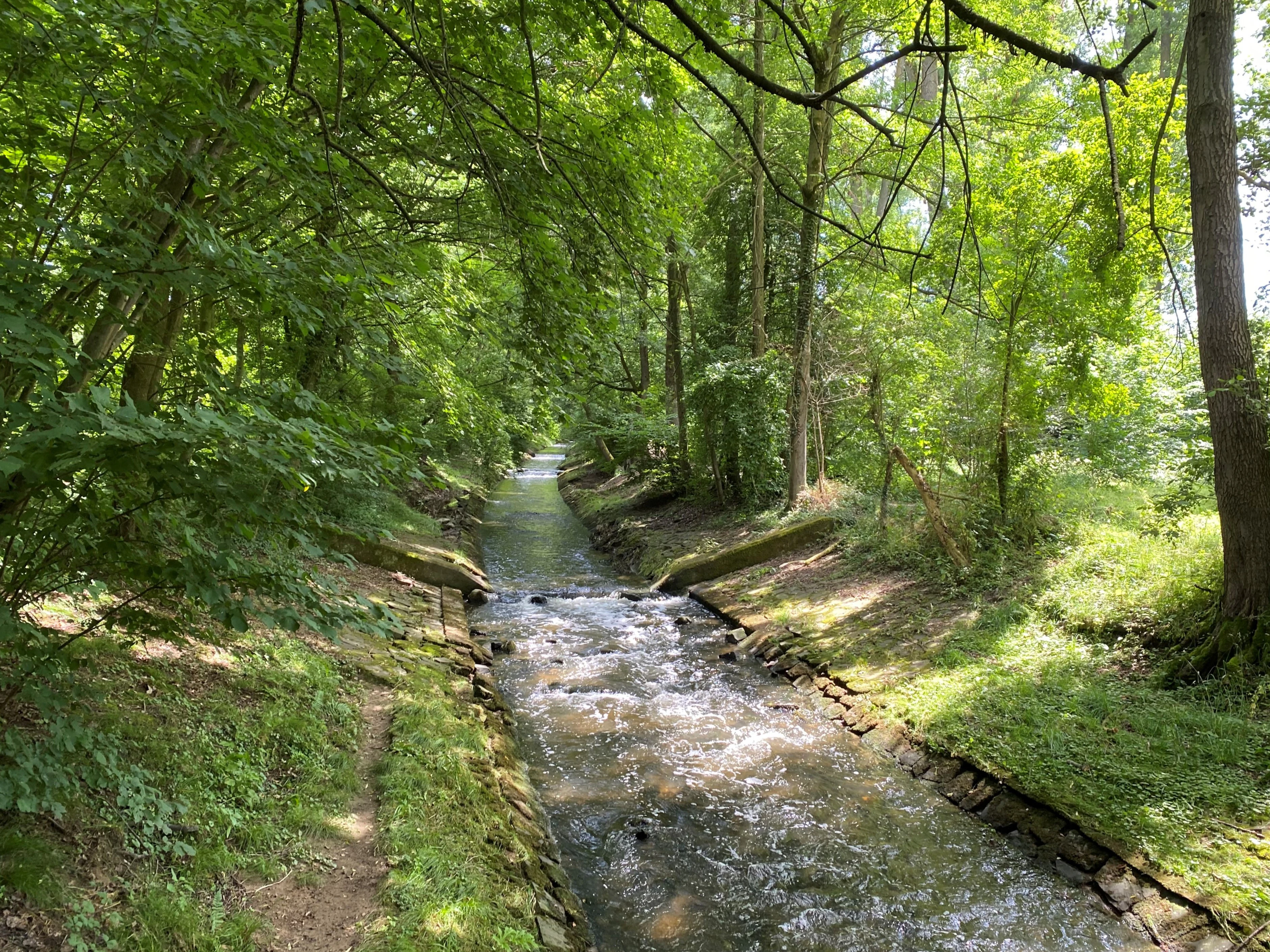
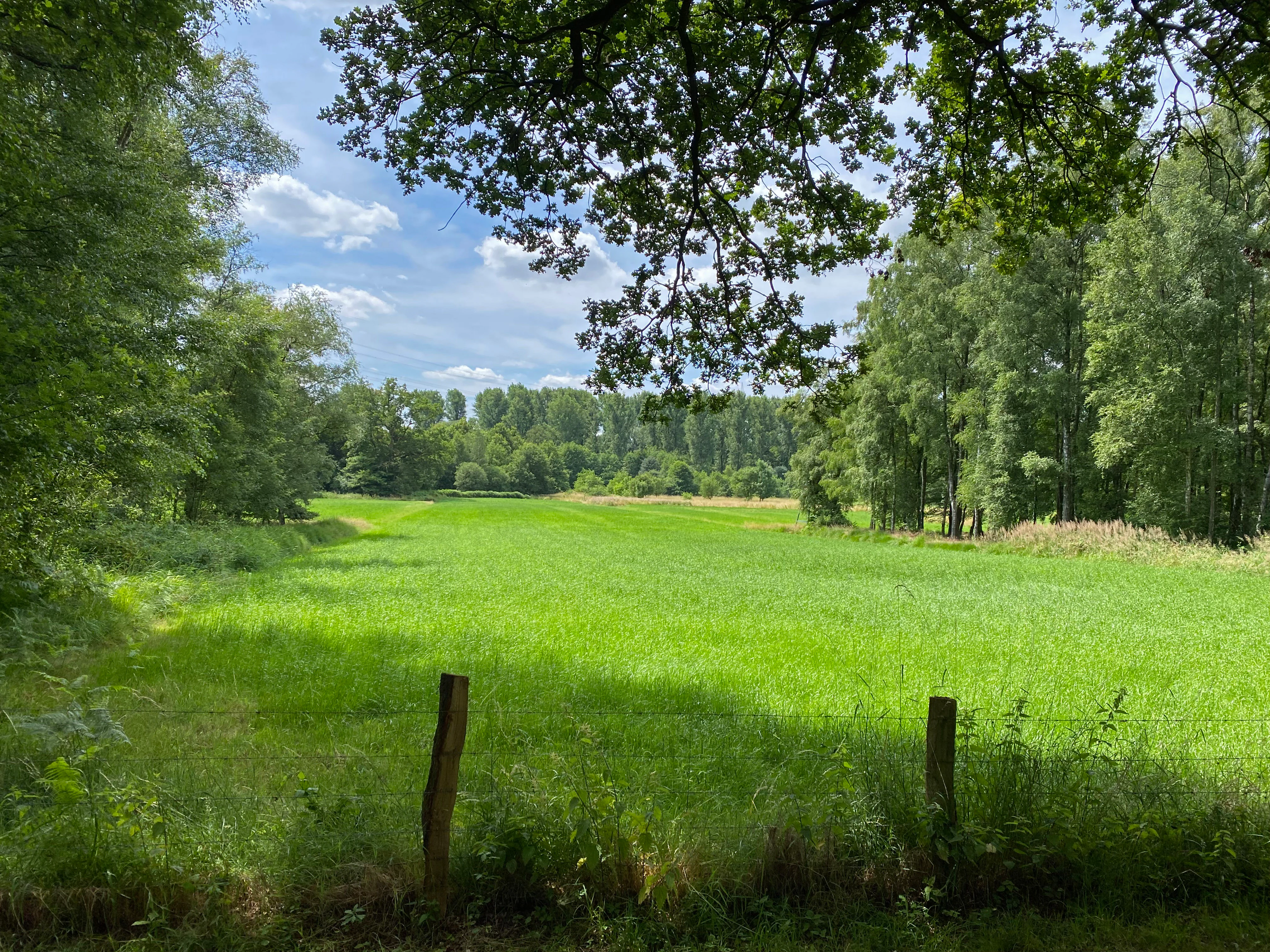
The Itter river marks the southern boundary of the protected area, bringing a clear hydrological element to the landscape. North of the Itter lies a narrow belt of sparse poplar stands and former poplar plantation areas now partially reforested as fallow land with wetland indicators. Beyond this transitional strip, the landscape interior opens up into a tight mosaic of wet woodland, bog forest, open plagg-cut heath, and species-rich peatland vegetation.
Despite being surrounded by roads, autobahn infrastructure, and suburban land use, the interior retains a distinctly quiet, semi-wild atmosphere. The combination of bog woodland, wet heath clearings, and open boggy patches gives the terrain an unusual visual character within the regional context, where most surrounding land is shaped by settlement, agriculture, or commercial forestry.
Hildener Heide, Schönholz ecosystems, habitats, and plant life
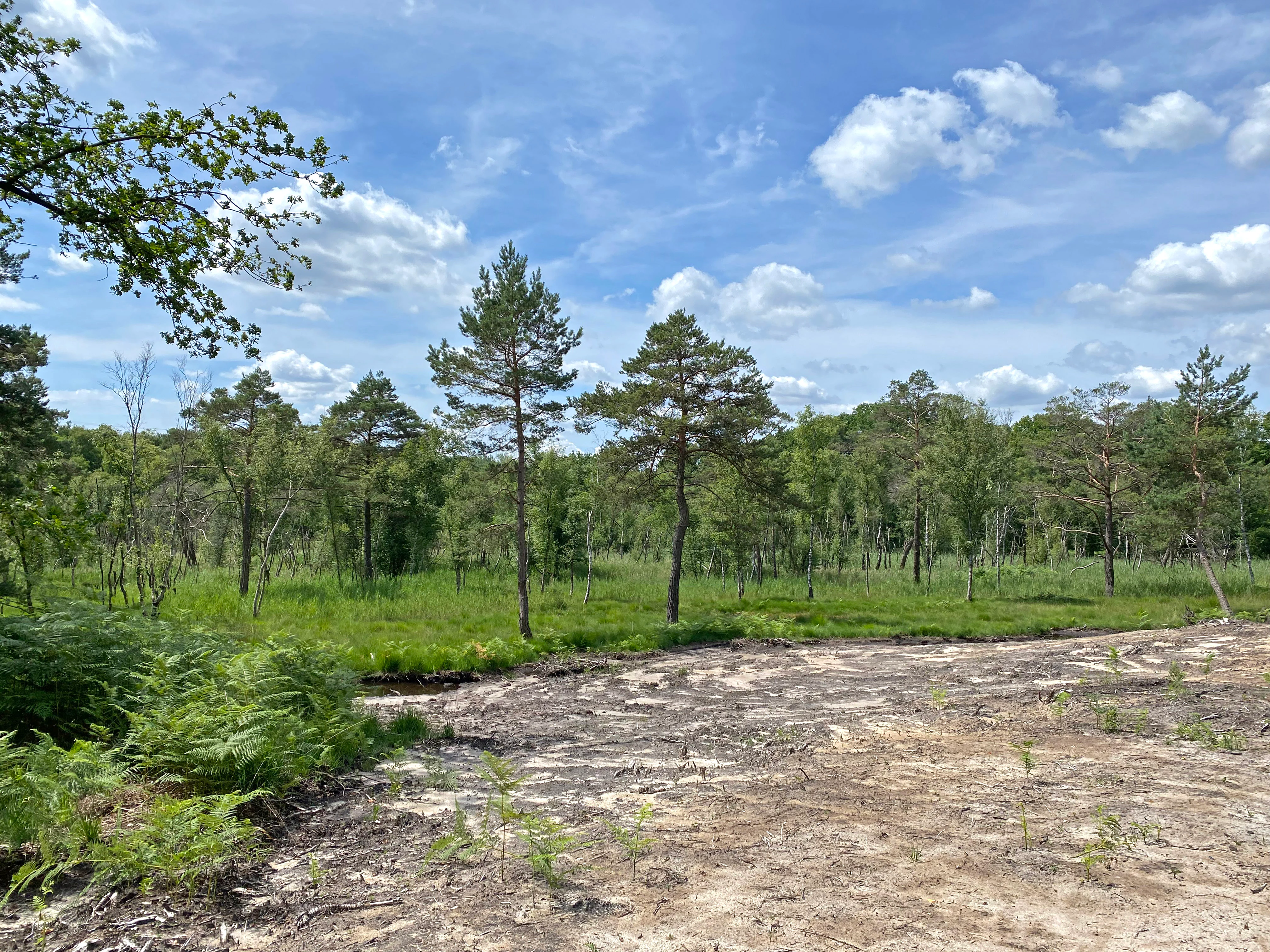
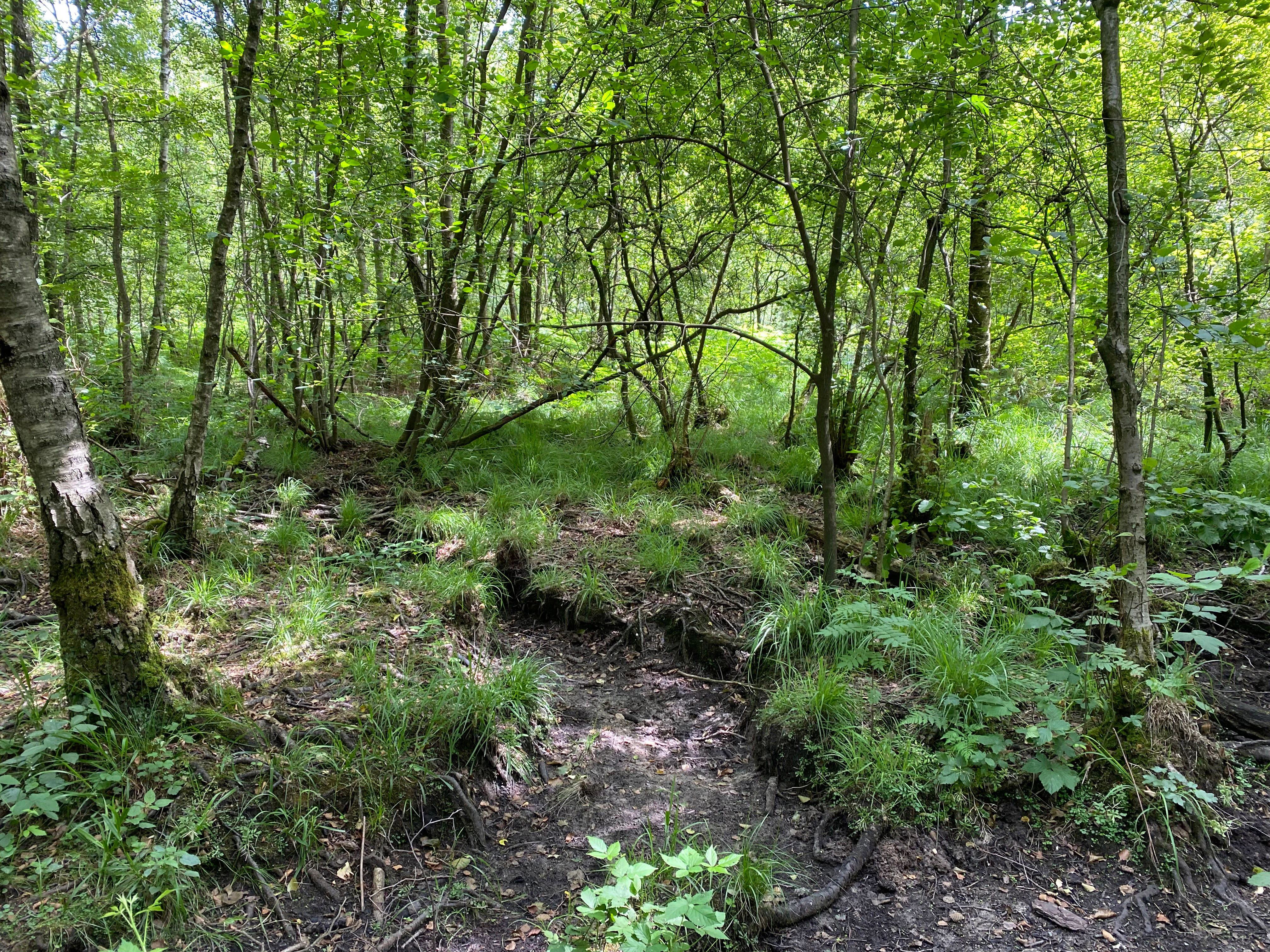
The ecological character of Hildener Heide, Schönholz centers on a tight and ecologically rich mosaic of forest and open wetland habitats. The forested zones include older, wet oak-birch forest, alder carr, and true bog woodland. Within these woodlands, peat moss (Sphagnum) grows so extensively in some areas that it dominates the forest floor. One area around the so-called Püttersträucher features nearly continuous Sphagnum cover, while an eastern carr woodland is rich in peat moss and cotton grass (Molinia), with a high proportion of bog birch (Moorbirke).
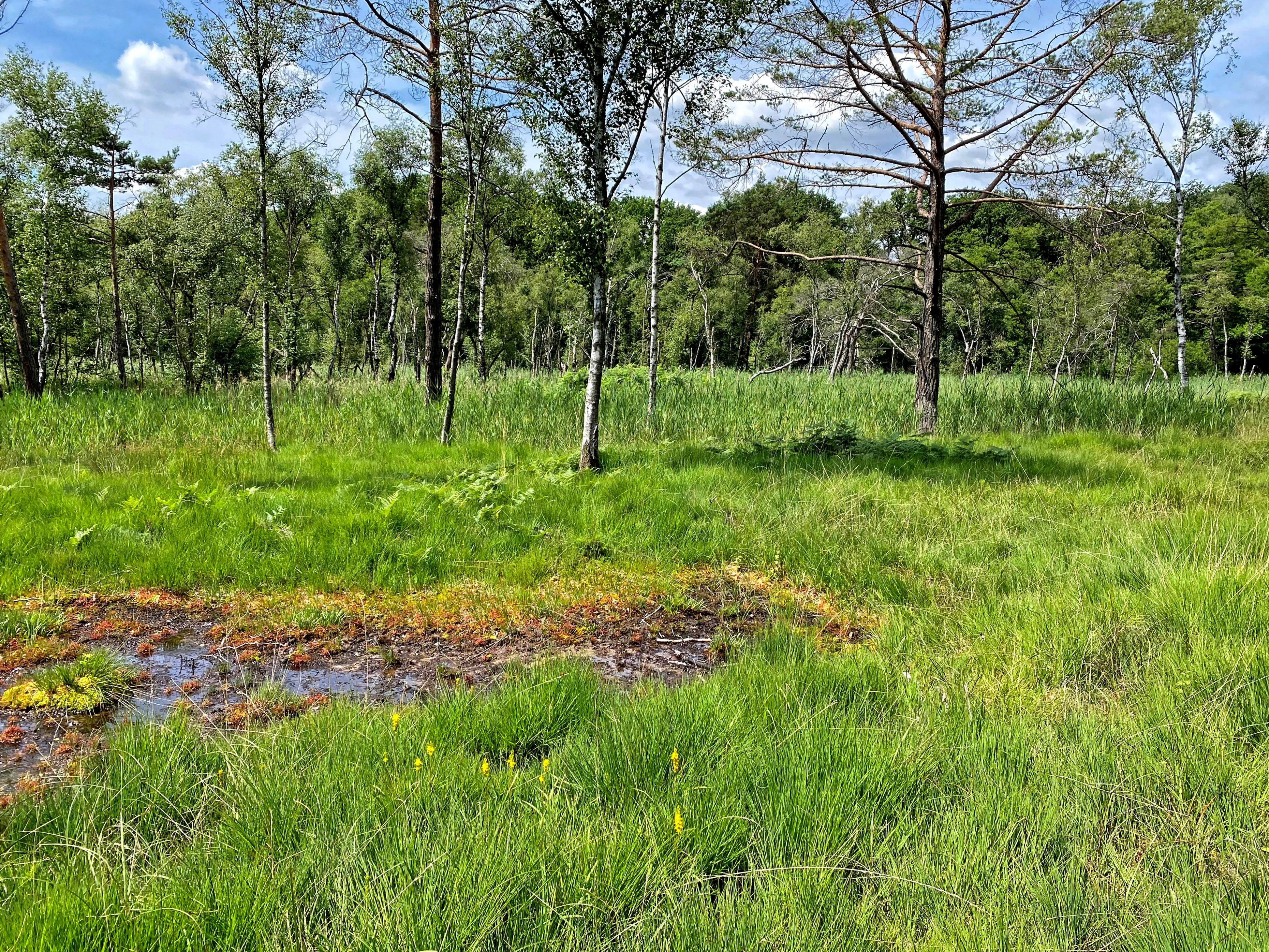
The open and semi-open habitats are equally important. The reserve includes transitional mires, quaking bogs (Schwingrasenmoore), and bog hollows. Its wet heaths, dominated by cross-leaved heath (Erica tetralix), combine with sweet gale (Gagel), bog asphodel (Moorlilie), and round-leaved sundew (Drosera rotundifolia) to create classic inland bog flora. Dry European heaths, nutrient-poor ponds and pools, and Molinia meadows on loamy or peaty substrates further diversify the habitat inventory. Some open areas have been created or maintained through traditional sod-cutting, which removes the upper humus layer and mineral soil to open up pioneer habitat for low-nutrient specialists.
The reserve also includes small patches of older, acidophilous pedunculate oak woodland on sandy plains, alongside alder-ash and softwood floodplain forest along the Itter, both classified as habitats threatened with disappearance at the European level. Together, these habitats form a layered ecological network within a very small footprint, making the site ecologically dense and valuable beyond what its size alone would suggest.
Hildener Heide, Schönholz wildlife and species highlights
The wildlife significance of Hildener Heide, Schönholz is closely tied to its unusual combination of bog woodland, wet heath, open bog, and riparian habitats. The open, plagg-cut surfaces and sparsely vegetated bog clearings support specialized insect faunas and ground-nesting wasps such as the road wasp (Wegwespe) and digger wasp (Grabwespe), along with grasshoppers of open land habitats (Ödlandschrecken). The mix of bare ground, low heath, and scattered shrubs also provides habitat for reptiles such as the common European adder (Kreuzotter) and ground-nesting birds like the northern wheatear (Steinschmätzer), both of which depend on nutrient-poor, sparsely vegetated landscapes.
In the wooded parts of the reserve, the presence of older trees and deadwood supports characteristic forest birds, notably the black woodpecker (Schwarzspecht) and, at the habitat-network level, the European honey buzzard (Wespenbussard), both referenced as important Fauna-Flora-Habitat species for the broader Natura 2000 area of which Hildener Heide, Schönholz forms a part. Riparian zones along the Itter and the wet forest interiors provide additional niches for amphibians and the wider bog-associated invertebrate fauna, including the prey base that sustains these insectivorous birds.
Overall, the reserve is small but unusually rich for a peri-urban site, and it is best understood as a refuge assemblage for habitat specialists rather than a site with mass populations of large mammals or charismatic megafauna.
Hildener Heide, Schönholz conservation status and protection priorities
Hildener Heide, Schönholz is a nationally designated nature reserve (Naturschutzgebiet) and, at the European level, part of the Natura 2000 Fauna-Flora-Habitat site Hilden – Spörkelnbruch. Its conservation significance is rooted in the unusually intact concentration of habitat types that are rare or threatened across the wider region, including wet and dry European heaths, bog woodlands, alder-ash and softwood floodplain forest, transitional mires and quaking bogs, and bog hollows. These habitats are protected both under German nature conservation law and under the EU Habitats Directive.
The site's formal protection goals include preserving and improving the existing bog forest and carr woodland, maintaining and expanding the surviving fragments of wet heath, converting conifer stands into site-appropriate broadleaf forest, and increasing the proportion of old and dead wood in the forested zones. Active management, including traditional Plaggen sod-cutting, is used to maintain open pioneer conditions for specialist plants such as sundews and bog asphodels, as well as the associated insects and reptiles that depend on them.
The reserve plays an additional role in the regional conservation network by functioning as a small but ecologically dense node within the larger chain of protected heath and bog areas along the Bergische Heideterrasse. Its presence helps maintain habitat connectivity in a landscape otherwise dominated by intensive land use, supporting the long-term survival of habitat types that would otherwise have no local refuge.
Hildener Heide, Schönholz cultural meaning and human context
The reserve itself is primarily valued for its natural significance rather than for built cultural heritage, but the surrounding area has a long history of low-intensity land use that shaped the heath landscapes now under protection. Traditional practices such as sod-cutting (Plaggen), grazing, and small-scale peat use historically maintained open heath vegetation across the Bergische Heideterrasse and produced exactly the open, nutrient-poor habitat that the reserve now works to conserve. The continued use of these traditional management techniques is itself a cultural-ecological element, linking the current reserve to the broader rural land-use history of the region.
Hilden itself is an old town in the Bergisches Land, and the heathlands to its northeast have been part of the local imagination and local toponymy for centuries, with place names like Sandberg and references to local heaths appearing across old maps and records. The reserve's formal protection history, reaching back to 1938, also reflects the early German tradition of formal nature conservation in North Rhine-Westphalia and the role of individual reserves in sustaining regional ecological identity.
Top sights and standout views in Hildener Heide, Schönholz
Hildener Heide, Schönholz stands out for the density and ecological completeness of its small-scale habitat mosaic. In a footprint of only about 36 hectares, it combines peat-moss-dominated bog woodland, wet oak-birch and alder carr forest, dry and wet European heaths, active transitional mires, and fragments of rare alder-ash and softwood floodplain woodland.
The reserve is also notable for its combination of conservation history and current best-practice habitat management. Its 1938 protection status, 2012 landscape plan, and integration into the EU Natura 2000 network give it a robust multi-layered framework, while active sod-cutting, deadwood promotion, and conifer-to-broadleaf conversion demonstrate a modern conservation toolkit applied to a historically protected site. Together, these features make the reserve a strong case study of how small inland heath and bog fragments can be preserved at the doorstep of one of Europe's most densely populated metropolitan areas.
Best time to visit Hildener Heide, Schönholz
Hildener Heide, Schönholz is best experienced in the warmer months, when the wet heath and bog vegetation come into flower and when the open clearings offer the most rewarding conditions for nature observation. Late spring into summer generally brings out the white flowers of bog asphodel and displays the sundew rosettes in full activity, while the cross-leaved heath typically flowers in the second half of the year. The mild, humid conditions of late spring and early summer also tend to make mosses, peat formations, and damp forest interiors most visually vivid and botanically active.
In cooler or wetter months the reserve takes on a quieter, more muted character, with bog woodland and mossy areas at their most atmospheric but the open heath less expressive. Because it is a sensitive nature reserve with ongoing conservation work, visits are best kept to marked paths and undertaken with attention to leaving the bog surfaces, plagg-cut clearings, and small bog hollows undisturbed. Seasonal weather variation in the region is moderate, so comfortable visits are possible across much of the year, but those interested in the full expression of the heath flora are best served by a late spring to mid-summer window.