Why Hull River National Park stands out
Hull River National Park is best known for its extensive mangrove-dominated estuary system and its role as a critical habitat for lowland tropical rainforest bird species. The park's recognition as part of the Coastal Wet Tropics Important Bird Area highlights its international significance for avian conservation, particularly for species associated with tropical wetland and forest habitats. The combination of mangroves, melaleuca swamps, and eucalypt forest creates a complex mosaic of habitats that supports exceptional biodiversity within a relatively compact area.
Hull River National Park history and protected-area timeline
Hull River National Park was established in 1968, representing a period when Queensland was expanding its protected area network to include representative samples of the state's diverse ecosystems. Prior to its declaration as a national park, the area had historical significance as the location of the former Hull River Aboriginal Settlement, which operated as a government-run facility for local Indigenous communities. The establishment of the park formalised protection over the coastal wetland system, though the area has continued to evolve in terms of management focus and ecological understanding. The park is managed by the Queensland Parks and Wildlife Service, which oversees conservation activities and visitor management within the protected area.
Hull River National Park landscape and geographic character
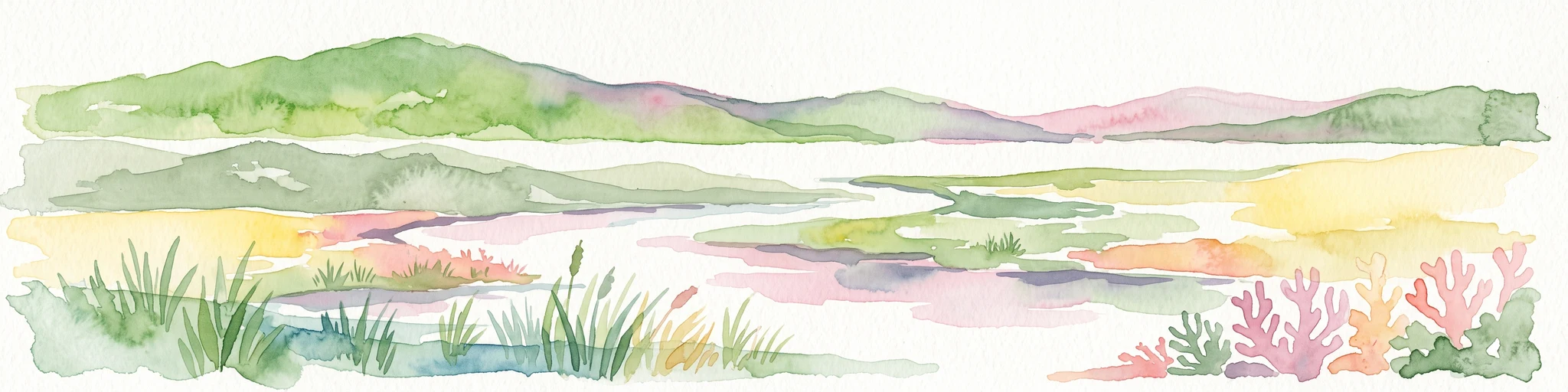
The landscape of Hull River National Park is defined by its low-lying coastal position and the dynamic interface between terrestrial and marine environments. The terrain is predominantly flat, with an average elevation of around 32 metres above sea level, and is characterised by extensive tidal zones where mangrove forests dominate. The park encompasses the estuarine environment of the Hull River, with brackish water conditions varying with tidal cycles and seasonal freshwater flows. Behind the mangrove fringe, the terrain gives way to melaleuca-dominated swamp forests that occupy the lower-lying areas with poor drainage. Small areas of specialist eucalypt forest occur on slightly higher ground within the park, adding to the habitat diversity. The combination of mudflats, mangrove channels, swamp forests, and woodland creates a complex and visually distinctive landscape.
Hull River National Park ecosystems, habitats, and plant life
The ecological character of Hull River National Park reflects its position within the Wet Tropics bioregion, one of Australia's most species-rich areas. The park's mangroves represent a highly productive ecosystem type that provides critical habitat for marine and terrestrial species alike. The melaleuca swamp forests that adjoin the mangrove systems create a transition zone between fully tidal and freshwater environments, supporting species adapted to these intermediate conditions. The specialist eucalypt communities add further ecological diversity, providing habitat for species that require more open woodland conditions. The high annual rainfall of approximately 3,600 millimetres sustains year-round productivity across all habitat types, supporting the remarkable diversity of plant and animal life recorded within the park.
Hull River National Park wildlife and species highlights
Hull River National Park supports an impressive diversity of wildlife, with documentation of 267 animal species and 522 plant species within its boundaries. The park's importance for birdlife is particularly notable, forming part of the Coastal Wet Tropics Important Bird Area recognised by BirdLife International. This designation reflects the park's significance for conservation of lowland tropical rainforest birds, many of which depend on the complex mosaic of mangrove, swamp forest, and woodland habitats. The wetland environments provide crucial feeding and breeding habitat for numerous bird species, while the forest layers support both resident and migratory species. The mangrove systems also support diverse invertebrate communities and fish species that form the base of the coastal food web.
Hull River National Park conservation status and protection priorities
The conservation significance of Hull River National Park is underpinned by its inclusion in the Coastal Wet Tropics Important Bird Area, reflecting international recognition of its value for bird conservation. The park protects representative examples of coastal wetland ecosystems that have been extensively modified elsewhere in Queensland, making this protected area increasingly important as a reference for ecological function and restoration. The diversity of habitat types within a relatively compact area, from mangroves to swamp forests to eucalypt woodlands, provides resilience against environmental changes and supports species with different habitat requirements. The park's position within the broader Wet Tropics World Heritage Area connects it to a landscape-scale conservation network that spans much of Far North Queensland's coastline and hinterland.
Hull River National Park cultural meaning and human context
The area now comprising Hull River National Park has historical significance related to the former Hull River Aboriginal Settlement, which operated as a significant Indigenous community location in the region. The coastal wetland environment would have supported Indigenous communities for thousands of years prior to European settlement, with the rich biodiversity of mangroves and estuarine systems providing important traditional food resources. The park's landscape reflects this long history of human presence, though the primary contemporary cultural context relates to the management of the former settlement site within the protected area boundaries.
Top sights and standout views in Hull River National Park
The most distinctive highlights of Hull River National Park include its extensive mangrove-dominated estuary system, which represents one of the most intact coastal wetland environments in the Wet Tropics region. The park's designation as part of the Coastal Wet Tropics Important Bird Area underscores its importance for bird conservation, particularly for lowland tropical rainforest species. The complex habitat mosaic ranging from tidal mangroves through melaleuca swamps to eucalypt woodland creates remarkable ecological diversity within a relatively small protected area. The park provides a relatively accessible example of intact tropical coastal wetland ecosystems that have been significantly reduced elsewhere in Queensland.