Why Im Woog von Hainstadt Nature Reserve stands out
Im Woog von Hainstadt is best known for the unusually dense habitat mosaic packed into a small footprint, where wet grassland, reed, dry meadow, orchard, fallow, and deciduous woodland habitats meet on the bed of a former Main river arm. This mosaic, combined with the adjacent Wildpark Alte Fasanerie, gives the reserve a strong reputation as bird habitat in the eastern Lower Main plain, where raptors, owls, and a range of songbirds either feed, roost, or breed. Its protected status, gained in 1992, reflects the conservation priority placed on the area as refuge for several species whose local populations have otherwise retreated in recent decades.
Im Woog von Hainstadt Nature Reserve history and protected-area timeline
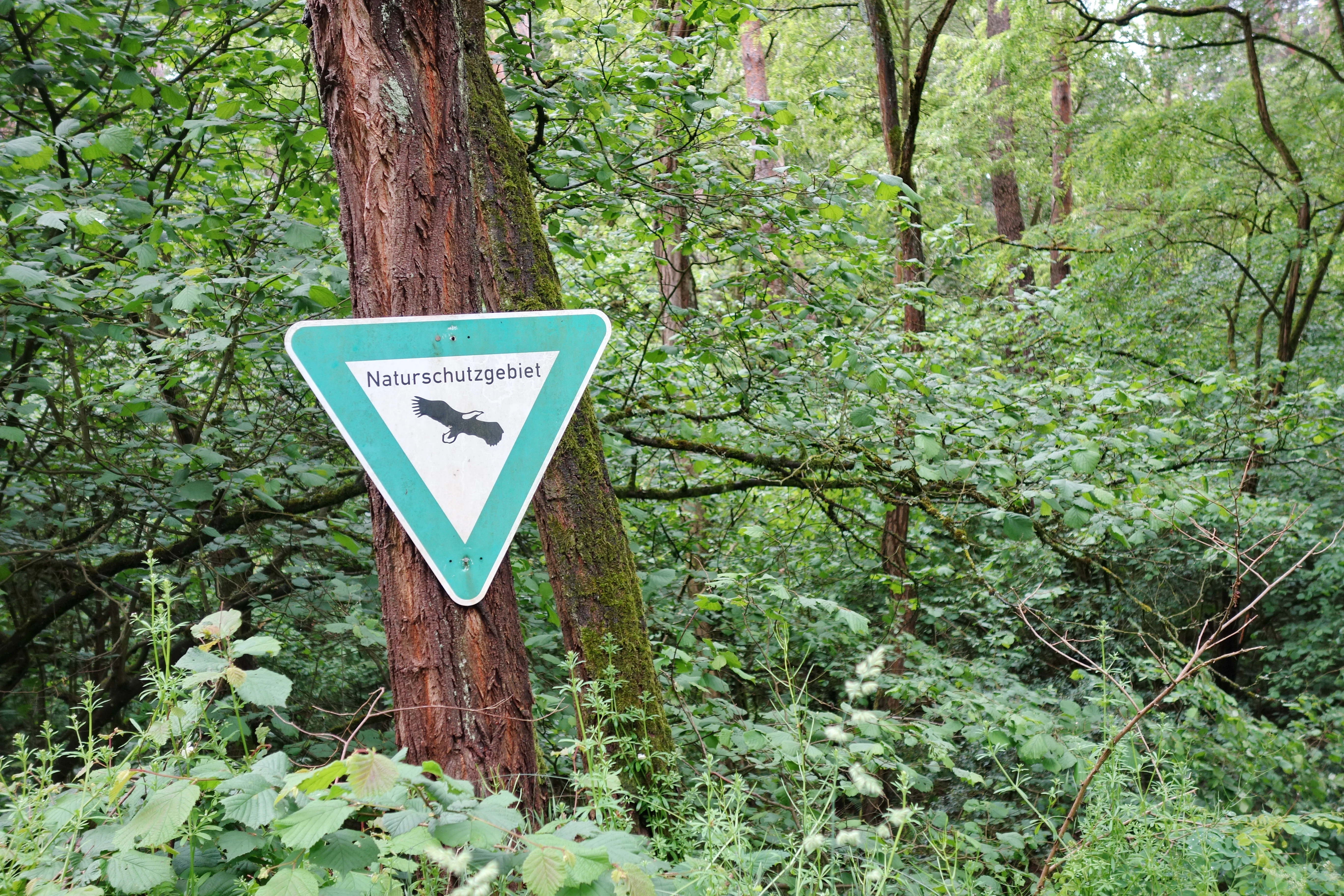
Im Woog von Hainstadt was formally designated as a nature reserve in 1992, formalizing earlier recognition of the area as a particularly valuable habitat within the Offenbach district. The designation process reflected growing awareness in Hesse of the conservation importance of former Main river arms, where relict floodplain features were increasingly squeezed by agricultural and urban land use.
The reserve was set up under the supervision of the lower nature conservation authority of the Landkreis Offenbach, which continues to manage the site. Its purpose, as codified at the time of establishment, was to preserve a structurally rich fragment of a former Main branch, with its mosaic of wet meadow, deciduous woodland, orchard, and fallow habitats, as habitat for numerous threatened species typical of the eastern Lower Main plain. Since designation, the area has continued to be appreciated primarily for its avifauna, with changing breeding populations of species such as little owl, wryneck, and red-backed shrike marking shifts in habitat conditions over recent decades.
Im Woog von Hainstadt Nature Reserve landscape and geographic character
The landscape of Im Woog von Hainstadt is shaped by an old arm of the River Main, whose former course left behind a small but varied floodplain fragment within what is now the built-up area of Hainstadt. In place of a wide open river landscape, the present-day reserve presents a patchwork of woodland, meadow, reed, and orchard on generally level terrain, with fine-scale variation in moisture and soil inherited from the old meander.
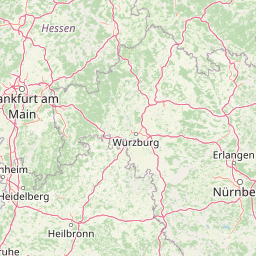
The reserve is bordered to the west by the Wildpark Alte Fasanerie, which connects Im Woog von Hainstadt visually and ecologically to a much larger block of semi-natural landscape. To the east and south, the woodland and grassland of the reserve grade towards the surrounding town and farmland, so the protected area reads as an island of structurally diverse vegetation embedded in a more uniform regional landscape of the eastern Lower Main plain.
Im Woog von Hainstadt Nature Reserve ecosystems, habitats, and plant life
Ecologically, Im Woog von Hainstadt is defined by its small-scale habitat mosaic, a character that gives the site disproportionately high biological value for its modest size. Wet grassland and reed beds occupy the moister ground of the former river arm, while thin-soiled, nutrient-poor dry meadows add a contrasting open-land habitat on slightly elevated patches.
Orchard meadows, fallow land, and deciduous woodland complete the mosaic, and the resulting mix of open and closed habitats supports a wide range of plant communities typical of the eastern Lower Main floodplain. Because such finely structured floodplain mosaics have become rare in the intensively used agricultural and urban landscape around the Main, the reserve is treated as a key local refuge for floodplain species that depend on the combination of wet hollows, herb-rich meadows, and old trees. The deciduous woodland component dominates the protected area, anchoring the ecological stability of the site and providing the structural continuity that allows smaller, more specialist habitats to persist around it.
Im Woog von Hainstadt Nature Reserve wildlife and species highlights
The wildlife profile of Im Woog von Hainstadt is dominated by birds, for which the habitat mosaic provides both feeding grounds and breeding sites. Common buzzard, goshawk, common kestrel, black kite, and red kite use the area as a foraging biotope, taking advantage of the mix of open ground for hunting and the surrounding woodland for perching and nesting.
Several owl species have been recorded in and around the reserve, including little owl, long-eared owl, and tawny owl, which use the older trees and orchard structures for roosting and breeding. Historically, the reserve supported breeding populations of little owl, wryneck, and red-backed shrike, species tied to traditional orchard and open-woodland landscapes, although recent monitoring has not been able to confirm recent breeding for these species, reflecting broader regional declines.
The golden oriole remains a regular breeding bird, adding a distinctive component to the site's bird fauna. Small mammals and invertebrates associated with the wet meadows, reed margins, and orchard understorey round out the wildlife interest, making the reserve a focal point for local birdwatchers and naturalists tracking floodplain biodiversity in the eastern Lower Main plain.
Im Woog von Hainstadt Nature Reserve conservation status and protection priorities
Im Woog von Hainstadt is set aside primarily to protect a structurally and species-rich fragment of the former Main floodplain in the eastern Lower Main plain, a natural region where such fine-scale habitat mosaics have become increasingly scarce. The reserve is classified as an IUCN Category IV habitat and species management area, reflecting its aim of actively maintaining specific habitat features rather than simply leaving land untouched.
The conservation rationale emphasizes the small-scale coexistence of wet meadow, reed, dry grassland, orchard, fallow, and deciduous woodland habitats on the bed of an abandoned Main arm. This combination is what makes the site valuable for threatened species of birds and other wildlife, several of which have shown local declines in recent decades, and the reserve functions as a refuge where these species can still find suitable breeding and feeding conditions. Managed by the lower nature conservation authority of the Offenbach district since its 1992 designation, Im Woog von Hainstadt also contributes to a wider network of protected sites along the Lower Main, including the adjacent Wildpark Alte Fasanerie, helping to maintain ecological continuity in an otherwise heavily used landscape.
Top sights and standout views in Im Woog von Hainstadt Nature Reserve
Im Woog von Hainstadt stands out for the way it concentrates multiple floodplain habitats, wet meadow, reed, dry grassland, orchard, fallow, and deciduous woodland, into a single, compact protected area on a former Main river arm.
Its location directly beside the Wildpark Alte Fasanerie strengthens its role as a node of biodiversity and birdlife in the eastern Lower Main plain, and its 1992 designation underlines the recognized conservation value of this small but structurally rich fragment of the historic Main floodplain.
Best time to visit Im Woog von Hainstadt Nature Reserve
Spring and early summer are generally the most rewarding times to visit Im Woog von Hainstadt, when deciduous trees leaf out, the wet meadows and dry grasslands are in active growth, and bird activity around the reserve is at its peak. Raptors, owls, and songbirds are most easily observed during this period, and the golden oriole, still a regular breeding bird in the area, is most likely to be detected in late spring.
Autumn offers quieter conditions and the chance to observe raptor movements and seasonal changes in the woodland and orchard habitats, while winter visits can still be of interest for tracking resident owls and overwintering birds. Because the reserve is small and structurally varied, visits at any time of year can yield bird observations, but the warmer half of the year tends to display the full habitat mosaic most clearly.