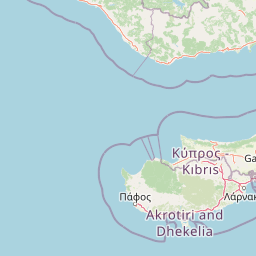
Why Mammari - Kokkinotrimithia - Deneia stands out
Mammari - Kokkinotrimithia - Deneia is best known for its dense concentration of bird species within a small Mediterranean territory, making it a regionally important bird protection area. The site supports an unusually rich avifaunal list relative to its size, drawing on a mosaic of phrygana, pseudo-steppe, rocky calcareous slopes, and thermophilous forests that together accommodate breeding, wintering, and passage species. The combination of open low scrub, rocky limestone outcrops, and patches of olive-carob woodland is the defining ecological feature. These Mediterranean habitat types create a structurally varied environment that hosts species such as the European roller, the Eurasian stone-curlew, the red-footed falcon, the Cyprus wheatear, and the European turtle-dove, alongside colonies of cave-dwelling bats that depend on the karstic landscape.
Mammari - Kokkinotrimithia - Deneia history and protected-area timeline
The site entered the formal European protected-area network in December 2002, when it was designated as a Special Protection Area under the European Union Birds Directive. The designation was driven primarily by the area's outstanding avifaunal richness, particularly the presence of breeding and migratory species of European conservation concern.
In May 2004, the site was additionally recognized as a Site of Community Importance under the Habitats Directive, broadening its legal protection to include the habitats and non-avian species for which it qualifies. The final step in its protective progression came in September 2015, when Mammari - Kokkinotrimithia - Deneia was formally declared a Special Area of Conservation. Today the site carries all three overlapping designations, giving it a comprehensive protection framework that covers its habitats, its bird fauna, and its broader biodiversity.
Mammari - Kokkinotrimithia - Deneia landscape and geographic character
The landscape of Mammari - Kokkinotrimithia - Deneia is shaped by the interior topography of central Cyprus. Slopes, low ridges, and shallow valleys dominate the terrain, all underlain by calcareous rocks that have been folded and weathered into a network of outcrops, cliffs, and stony ground. The result is a visually textured mosaic of open and rocky ground, with relatively few truly flat areas.
The site's vegetation cover follows the underlying geology and water availability. Exposed limestone slopes support chasmophytic communities, while finer soils retain seasonal grasslands and low scrub. Carob and wild olive trees persist in less disturbed patches, giving the landscape occasional wooded character that contrasts with the surrounding open phrygana. The visual impression is one of a low, sun-bleached Mediterranean countryside: dry, rocky, richly colored, and strongly seasonal in its appearance through the year.
Mammari - Kokkinotrimithia - Deneia ecosystems, habitats, and plant life
Ecologically, Mammari - Kokkinotrimithia - Deneia is a textbook example of the Mediterranean habitat mosaic. Its four protected habitat types represent the main building blocks of the island's inland ecosystems outside the true forests of the Troodos and Kyrenia ranges. Sarcopoterium spinosum phryganas are the dominant formation, covering much of the area in a low, spiny, evergreen shrub layer that is highly resilient to drought and grazing. Pseudo-steppe formations of the Thero-Brachypodietea class occupy areas with slightly deeper soils, filling the ground layer with seasonal grasses and annuals. Calcareous rocky slopes with chasmophytic vegetation add vertical structure and microhabitats for rock-dwelling plants and insects. Finally, relict forests of Olea and Ceratonia provide canopy cover and a more wooded character in places that have escaped intensive clearing.
The plant community includes species of conservation interest, including the orchid Ophrys kotschyi, which is one of the principal botanical reasons the site qualified for habitat-based protection. The combination of plant communities also supports a wide range of insects, which in turn underpin the food webs on which birds and bats rely.
Mammari - Kokkinotrimithia - Deneia wildlife and species highlights
Wildlife is the most prominent feature of Mammari - Kokkinotrimithia - Deneia. The site supports forty-five protected bird species, by far the largest faunal group of conservation interest, and an additional thirteen bird species have been recorded within the site beyond those formally listed for protection. This makes the area one of the richer bird sites in central Cyprus.
The breeding and resident bird community includes typical Mediterranean lowland species such as the European roller, the Eurasian stone-curlew, the common quail, the European turtle-dove, the Eurasian hoopoe, and several wheatears, including the endemic Cyprus wheatear. Open-ground species like the calandra lark, the short-toed lark, the wood lark, and crested larks use the phrygana and pseudo-steppe habitats, while rocky slopes host rock-dwelling species such as the black-eared wheatear and the isabelline wheatear. Raptors are well represented through species such as the hen harrier, the pallid harrier, the marsh harrier, the European honey buzzard, and the red-footed falcon, the last of which is particularly notable for its late-summer presence.
Bats are another important element of the site's fauna, with three protected mammal species recorded, including Schreiber's bent-winged bat, the lesser horseshoe bat, and the Egyptian fruit bat. These species roost in fissures, caves, and old structures within the limestone landscape and forage widely across the surrounding open and wooded habitats. Reptiles, with six recorded species beyond the protected list, contribute to the overall faunal diversity, alongside the protected Jersey tiger moth, which represents the invertebrate component of the site's conservation interest.
Mammari - Kokkinotrimithia - Deneia conservation status and protection priorities
From a conservation perspective, Mammari - Kokkinotrimithia - Deneia is significant because it preserves an unusually complete set of lowland Mediterranean habitats within a single protected boundary. Each of its four habitat types, phrygana, pseudo-steppe, calcareous rocky slopes, and Olea-Ceratonia forest, is itself of conservation concern across the Mediterranean region, and their combination in one site allows them to support ecological interactions that would not persist in isolation.
The site's special protection designation reflects its role as a stronghold for species that have declined across much of their European range. Birds such as the European roller, the red-footed falcon, the European turtle-dove, and several larks and wheatears depend on the type of open mosaic landscape preserved here. The designation of the site as a Special Area of Conservation in 2015 consolidated its protection under all three Natura 2000 designations, safeguarding its habitat structure, its bird fauna, and its bat populations. The protected area also serves as a reference site for monitoring how Mediterranean lowland habitats respond to climate, grazing pressure, and land-use change in central Cyprus.
Top sights and standout views in Mammari - Kokkinotrimithia - Deneia
The site's strongest distinguishing feature is the density and variety of its birdlife within a compact Mediterranean territory, anchored by a four-part habitat mosaic. Breeding birds of European conservation concern, such as the European roller, the Eurasian stone-curlew, and the red-footed falcon, sit alongside species of regional importance like the Cyprus wheatear.
Equally notable is the ecological completeness of the protected area. By covering phrygana, pseudo-steppe, calcareous rocky slopes, and thermophilous olive-carob forest, the site functions as a small but representative model of inland Mediterranean Cyprus, and it provides protected roosting and foraging habitat for three bat species whose conservation depends on the persistence of these traditional Mediterranean landscapes.
Best time to visit Mammari - Kokkinotrimithia - Deneia
Spring is the most rewarding season for a natural-history visit to Mammari - Kokkinotrimithia - Deneia, when mild temperatures bring the phrygana and pseudo-steppe grasslands into growth and the breeding bird community reaches its peak activity. Migratory species are also passing through in spring, increasing the variety of birds that may be encountered.
Early autumn offers a second strong window, when passage migrants such as the red-footed falcon are present and the light over the limestone landscape becomes softer. Summer visits are possible but should be planned for the cooler hours due to high temperatures, while winter brings quieter conditions, occasional visits from northern species such as the hen harrier, and a more muted but still characteristic Mediterranean atmosphere.