


Why Naltar Wildlife Sanctuary stands out
Naltar Wildlife Sanctuary is best known for being one of the few protected refuges of the Astor markhor, an endangered wild goat native to the northern mountains of Pakistan. The sanctuary is also recognized for its dramatic fluvio-glacial valley setting, which transitions from dense mixed montane forest to extreme glacial altitudes within a single protected landscape. Its position close to the Hunza Valley and its role as part of a large connected protected-area complex reinforce its reputation as a significant stronghold for Himalayan wildlife conservation in the Karakoram range.
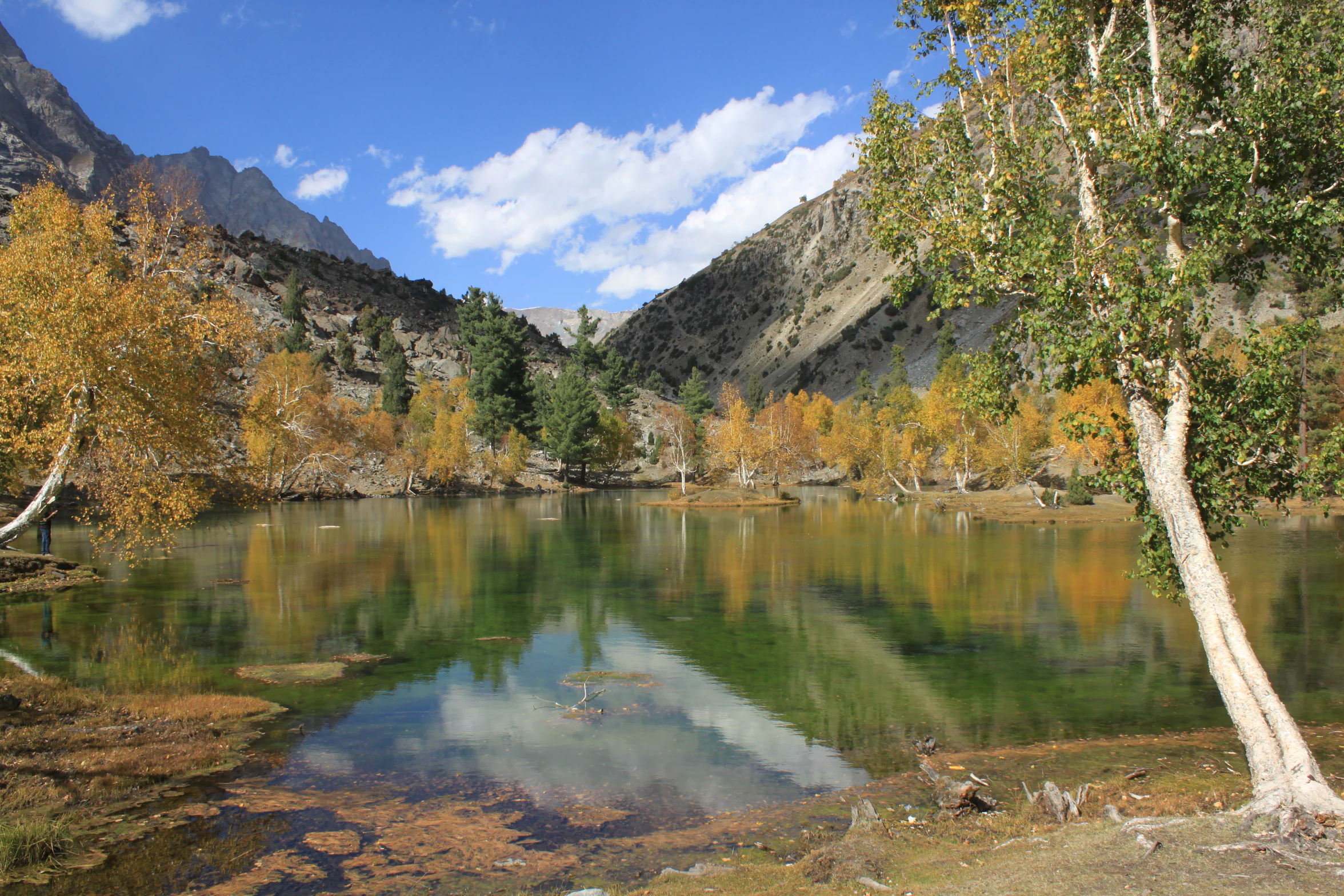
Naltar Wildlife Sanctuary history and protected-area timeline
The Naltar Wildlife Sanctuary was formally designated as a protected area on 22 November 1975. Its creation came at a time when Pakistan was beginning to formalize conservation areas across its northern mountain regions, particularly in areas where rare species such as the markhor remained under pressure from hunting and habitat change.
Rather than standing alone, the sanctuary was designed to function as part of a wider connected conservation landscape. It adjoins the Sher Quillah Game Reserve on one side and the Pakora Game Reserve on the other, forming a continuous block of protected mountain terrain that today covers more than 50,000 hectares. This networked approach has helped maintain habitat continuity for wildlife moving between valleys and across seasonal ranges.
Over time, the sanctuary has retained its identity as a focused wildlife refuge rather than a heavily regulated tourist area, reflecting both the ruggedness of its terrain and the importance of the species it protects, particularly the rare Astor markhor that continues to depend on its forested slopes and cliff habitats.
Naltar Wildlife Sanctuary landscape and geographic character
Naltar Wildlife Sanctuary is a dramatic high-mountain landscape carved by both glacial and river action. The valley has a U-shaped cross section in its upper reaches, where glacial sculpting once dominated, and a V-shaped cross section lower down, where ongoing river incision has cut a steeper gorge. The valley is aligned from northwest to southeast, giving it a clear directional axis that channels cold air and seasonal runoff.
The valley floor is bordered by tall mountains on both sides, and the protected area climbs from the bottom of the valley all the way to elevations of approximately 5,900 metres near the Shani Glacier at the head of the valley. This vertical range gives the sanctuary an unusually complete mountain profile within a single protected unit, ranging from forested lower slopes to bare rock, alpine meadow, and glacial ice.
Climatically, the valley is cool to cold, with annual precipitation of roughly 254 to 381 millimetres, much of which falls as snow. Winters are severe enough that the upper reaches of the river freeze, reinforcing the valley's remote and rugged character. The combination of steep slopes, ice-fed streams, glacial remnants, and dense forest cover makes the landscape one of the most visually distinctive protected areas in the Karakoram foothills.
Naltar Wildlife Sanctuary ecosystems, habitats, and plant life
The ecological character of Naltar Wildlife Sanctuary is defined by its clear vertical zonation, which mirrors the dramatic change in altitude from valley floor to glacial peaks. At lower elevations, the slopes are clothed in a lush mixed forest combining broadleaf and coniferous species. Higher up, this transitions into a pure montane coniferous forest, before thinning out into alpine scrub and ultimately giving way to the barren terrain near the Shani Glacier.
The mixed forest at lower altitudes is one of the sanctuary's most valuable ecological assets. Coniferous species include spruce and juniper, while the broadleaf component includes ash, olive, pistachio, Sageretia, birch, willow, poplar, and Krascheninnikovia ceratoides. Together, these trees form structurally diverse woodland that provides cover for wildlife and stabilizes the steep mountain slopes. Beneath the trees, herbs and shrubs such as Artemisia, Haloxylon, and Stipa complete the understorey.
Because the sanctuary sits within a connected conservation network of more than 50,000 hectares, its ecological value extends well beyond its own boundaries, supporting species that move between valleys and across elevation zones in response to season, weather, and predator pressure.
Naltar Wildlife Sanctuary wildlife and species highlights
The wildlife profile of Naltar Wildlife Sanctuary is dominated by a small but globally significant population of the Astor markhor, an endangered subspecies of wild goat that survives in scattered pockets of the northern Karakoram. Their continued presence is the single most important reason the sanctuary receives conservation attention.
In addition to markhor, the sanctuary supports several other large mammals that depend on its rugged cliffs, forested slopes, and high-elevation terrain. The Alpine ibex inhabits the higher rocky parts of the sanctuary, while carnivores such as the elusive snow leopard, the brown bear, the grey wolf, the red fox, the beech marten, and the leopard cat range across different habitat zones. Smaller mammals and mesocarnivores contribute a steady presence of predator-prey dynamics that help maintain the integrity of the mountain ecosystem.
Birdlife in the sanctuary is modest in documented diversity but ecologically meaningful. Roughly 35 bird species have been recorded, including species such as Brooks's leaf-warbler, which depend on the mixed montane forest for breeding and foraging. The combination of large ungulates, apex and meso predators, and forest-dependent birds gives Naltar a relatively well-rounded wildlife community for a high-altitude sanctuary of its size.
Naltar Wildlife Sanctuary conservation status and protection priorities
The conservation importance of Naltar Wildlife Sanctuary rests on its role as one of the remaining strongholds of the Astor markhor, a subspecies that has suffered severe range contraction across much of the Karakoram. By protecting a steep, forested valley with both cliff habitats and forested cover, the sanctuary offers conditions that this endangered goat still depends on for survival.
The sanctuary is also significant because of its role within a larger conservation network. Together with the adjoining Sher Quillah Game Reserve and Pakora Game Reserve, it forms a continuous protected landscape of more than 50,000 hectares. This kind of multi-reserve connectivity is critical for wide-ranging species such as the snow leopard and for ungulates that move seasonally between valleys in search of forage and shelter.
The valley's intact forest cover, from mixed broadleaf and coniferous woodland lower down to pure coniferous forest higher up, strengthens the sanctuary's conservation value. These forests stabilize fragile mountain soils, regulate water flow into the valley, and provide core habitat for the wildlife the sanctuary was created to protect. Maintaining this protected system in the face of climate change, grazing pressure, and infrastructure development in the wider Gilgit-Baltistan region remains a long-term conservation priority.
Naltar Wildlife Sanctuary cultural meaning and human context
Naltar Wildlife Sanctuary lies within the broader cultural landscape of Gilgit-Baltistan, a region known for its distinct mountain communities, languages, and traditions tied closely to the high Karakoram environment. The valley itself has long been home to small, dispersed settlements whose livelihoods have historically depended on pastoralism, limited agriculture suited to cold mountain conditions, and seasonal use of alpine pastures.
The sanctuary's proximity to the Hunza Valley places it within a region recognized throughout northern Pakistan and beyond for its cultural heritage. While the protected area itself is focused on wildlife conservation, the cultural identity of the surrounding valleys, marked by traditional mountain life and a deep connection to the land, contributes to the broader context in which the sanctuary exists.
Top sights and standout views in Naltar Wildlife Sanctuary
Few protected areas in northern Pakistan combine such a complete altitudinal profile within a single forested valley, ranging from low-elevation mixed woodland to elevations exceeding 5,900 metres near the Shani Glacier.
The sanctuary's enduring population of Astor markhor, alongside snow leopard, brown bear, grey wolf, and Alpine ibex, makes it one of the most wildlife-rich high-mountain sanctuaries in the Karakoram. Its position within a connected protected landscape of more than 50,000 hectares, adjoining the Sher Quillah and Pakora Game Reserves, adds a layer of landscape-scale conservation value that few similar protected areas can match.
Best time to visit Naltar Wildlife Sanctuary
The most accessible conditions in the Naltar valley typically occur during the warmer and drier months, when the lower forested slopes are free of heavy snow and the valley roads are more reliably open. This window allows visitors to experience the sanctuary's characteristic mix of forest and dramatic mountain scenery without the extreme cold that settles over the region in winter.
Late autumn brings vivid seasonal change to the valley's trees and clear mountain views, while spring can offer more active wildlife movement as animals respond to the greening of vegetation. Winter, by contrast, is harsh and isolating: temperatures drop sharply, the upper river freezes, and heavy snowfall closes many approaches. Those willing to travel in winter should expect conditions suitable for hardy, experienced mountain visitors rather than casual sightseeing.