Mori Atlas logo
Wildlife reserveReserva de Producción de Fauna Marino Costero Puntilla Santa Elena

Analyzing the ecological boundaries and marine geography of Ecuador's prominent coastal wildlife reserve.

Reserva de Producción de Fauna Marino Costero Puntilla Santa Elena Protected Marine Landscapes

(Reserva de Producción de Fauna Marino Costera Puntilla Santa Elena)

The Reserva de Producción de Fauna Marino Costero Puntilla Santa Elena occupies a significant marine-coastal expanse along the Pacific edge of Ecuador. This protected area connects deep ocean waters with the arid cliffs of the Santa Elena peninsula, providing a vital sanctuary for diverse marine mammals and resilient coastal vegetation. Through detailed geographic data, the reserve reveals how Pacific currents and dry coastal ecosystems interact to support marine megafauna and unique shoreline environments.

marine protected areacoastal reservewhale watchingmarine mammalssea lionshumpback whales

Reserva de Producción de Fauna Marino Costero Puntilla Santa Elena

Wildlife reserve

Park overview

Structured park overview, official facts, and landscape profile for Reserva de Producción de Fauna Marino Costera Puntilla Santa Elena

Reserva de Producción de Fauna Marino Costera Puntilla Santa Elena park facts, protected area profile, and essential visitor context

Review the core facts for Reserva de Producción de Fauna Marino Costera Puntilla Santa Elena, including designation, size, terrain, visitor scale, habitats, and operating context in one park-focused overview.

About Reserva de Producción de Fauna Marino Costera Puntilla Santa Elena

The Reserva de Producción de Fauna Marino Costera Puntilla Santa Elena is one of Ecuador's distinctive protected areas because it places a very large marine territory under formal conservation status along a populated section of the country's Pacific coastline. Located in the province of Santa Elena, in the western Litoral region, the reserve extends across approximately 52,231 hectares of ocean and around 203 hectares of land, encompassing waters around the city of Salinas and the rocky headland of La Chocolatera. This combination of marine and shoreline territory allows the reserve to protect not only open-water ecosystems but also the small but ecologically valuable coastal land strip that connects the ocean to Ecuador's arid coastal landscape.

Ecologically, the reserve is defined by the meeting of two very different environments. On the marine side, the waters host whales, dolphins, and sea lions, supporting a population of large marine mammals that is unusual for a small coastal reserve. The presence of seven whale species and seven dolphin species gives the area a particularly high profile for marine mammal research, observation, and conservation. On the land side, the vegetation belongs to the dry coastal ecosystem that characterizes much of Santa Elena province, with around 80 plant species adapted to arid conditions, along with reptiles, small terrestrial mammals, and a coastal bird community that includes boobies, pelicans, terns, and petrels.

Beyond its ecological functions, the reserve plays an important role in regional identity and public engagement with nature in coastal Ecuador. La Chocolatera, the rocky peninsula within the reserve, is widely recognized as a scenic viewpoint where visitors can look out over the Pacific and, in season, observe marine wildlife. The reserve's proximity to Salinas, a well-known beach destination, gives it a unique position among Ecuador's protected areas: it is both an active conservation zone and a component of a heavily visited coastal landscape. This dual character shapes how the reserve is perceived and used, from scientific monitoring of marine mammals to public appreciation of the Santa Elena coast.

Quick facts and research context for Reserva de Producción de Fauna Marino Costera Puntilla Santa Elena

The Reserva de Producción de Fauna Marino Costera Puntilla Santa Elena is located in the Litoral region of Ecuador, in the province of Santa Elena, bordering the city of Salinas. The protected area combines roughly 52,231 hectares of marine territory with about 203 hectares of land, making it predominantly an oceanic reserve. It is managed under the country's marine-coastal fauna production reserve category, and shares its onshore footprint with the famous La Chocolatera viewpoint. The reserve is administered through Ecuador's national protected areas system and is a key site for marine mammal conservation along the Ecuadorian Pacific coast.

Protection and recognition

Documented protection scope and conservation designation records for the protected area

Protection Status and International Recognition for Reserva de Producción de Fauna Marino Costero Puntilla Santa Elena

Reserva de Producción de Fauna Marino Costero Puntilla Santa Elena maintains a mixed protection scope within its designated conservation boundaries. Documented records aggregate the official protection framework and management parameters associated with the natural reserve.

Protection details

Protection scope
Mixed
Transboundary protection
No
Park context

Deeper park guide and search-rich context for Reserva de Producción de Fauna Marino Costera Puntilla Santa Elena

Reserva de Producción de Fauna Marino Costera Puntilla Santa Elena history, landscape, wildlife, and travel context

Explore Reserva de Producción de Fauna Marino Costera Puntilla Santa Elena through its history, landscape character, ecosystems, wildlife, conservation priorities, cultural context, and seasonal travel timing in a structured park guide built for atlas discovery and search intent.

Why Reserva de Producción de Fauna Marino Costera Puntilla Santa Elena stands out

REMACOPSE is best known for the exceptional diversity of marine mammals that pass through or reside in its waters, including humpback whales, several dolphin species, and two species of sea lions. The reserve protects a section of the Pacific coast where seasonal whale migrations bring humpback whales close to shore, making whale watching one of the reserve's signature experiences. It is also recognized for the contrast between rich marine biodiversity and the arid coastal vegetation of the Santa Elena peninsula, an unusual combination that defines the area's ecological identity. La Chocolatera, the scenic headland that shares the reserve's land area, adds a recognizable cultural and landscape reference point that draws attention to the reserve beyond strictly biological circles.
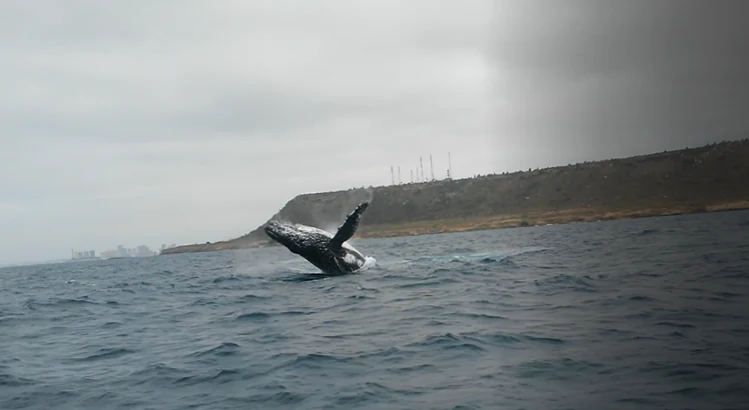
A humpback whale surfacing in the water with a coastal headland in the background under a cloudy sky.
A humpback whale breaching off the coast near the Puntilla Santa Elena reserve.

Reserva de Producción de Fauna Marino Costera Puntilla Santa Elena history and protected-area timeline

The reserve was formally established under Ecuador's national system of protected areas as a marine-coastal fauna production reserve, a category that combines wildlife conservation with managed use of the area for the protection and study of native fauna. Its creation reflected Ecuador's broader effort to extend formal protection to marine and coastal ecosystems that had previously been underrepresented in the country's park network. The reserve was designed around an ocean-dominant territory, immediately distinguishing it from many inland parks and reserves that had historically dominated Ecuadorian conservation policy.

Its location near Salinas and on the same peninsula as La Chocolatera tied the reserve closely to one of Ecuador's most visited coastal landscapes. Over time, this positioning has helped the reserve develop a public profile that goes beyond strictly scientific or administrative audiences. While detailed institutional milestones are not extensively documented in publicly available sources, the reserve's enduring presence in Ecuador's protected areas framework indicates that it has continued to function as an active component of national marine conservation along the Pacific coast.

Reserva de Producción de Fauna Marino Costera Puntilla Santa Elena landscape and geographic character

The landscape of the reserve is defined by the meeting of two contrasting environments: a vast marine extension along the Pacific and a narrow strip of arid coastal land on the western edge of the Santa Elena peninsula. The marine portion covers the majority of the reserve's area, while the land portion is small but visually striking, concentrated around the rocky headland of La Chocolatera and the surrounding cliffs that overlook the ocean. This rocky coastline is a defining scenic feature of the area and gives visitors one of the most recognizable vantage points on the Ecuadorian coast.

The terrestrial portion of the reserve sits within one of the driest coastal regions of Ecuador, where vegetation is sparse, low-growing, and adapted to limited rainfall and strong sun exposure. Shrubby plants, dry grasses, and hardy coastal flora dominate the shoreline, with the surrounding environment shaped more by sun, wind, and salt spray than by lush growth. The result is a coastal landscape that feels wide-open and exposed, where the ocean is always visually present and the horizon dominates views from the land.

Reserva de Producción de Fauna Marino Costera Puntilla Santa Elena ecosystems, habitats, and plant life

Ecologically, REMACOPSE reflects the broader pattern of coastal Ecuador, where arid terrestrial habitats border highly productive marine ecosystems. On land, the reserve belongs to the dry coastal biome typical of the Santa Elena peninsula. The vegetation is adapted to drought conditions and salt exposure, and around 80 native plant species have been documented in this system. Lizards, iguanas, snakes, and toads are part of the terrestrial fauna, along with small mammals such as opossums, which occupy the more vegetated patches within the otherwise harsh coastal environment.

In the marine portion, the reserve protects a productive segment of Ecuador's Pacific coast, where cooler ocean currents and seasonal migrations bring together a wide range of marine mammals and seabirds. The combination of open ocean, nearshore waters, and rocky coastline allows species with different habitat needs to coexist within a relatively compact protected perimeter. The result is an ecological profile in which dry coastal vegetation and rich oceanic fauna exist side by side, giving the reserve a layered natural identity.

Reserva de Producción de Fauna Marino Costera Puntilla Santa Elena wildlife and species highlights

The wildlife of REMACOPSE is strongly defined by its marine mammals, which are among the most diverse along Ecuador's coast. Two species of sea lions inhabit local waters, while seven whale species and seven dolphin species have been recorded in the reserve. The humpback whale is particularly notable, appearing seasonally and attracting significant attention from visitors and researchers. This concentration of marine mammal species in a relatively small coastal reserve gives the area an outsized role in marine mammal conservation and observation in Ecuador.

On land, the wildlife shifts toward the reptile-dominated communities typical of Ecuador's dry coastal zone. Lizards and iguanas are among the more commonly observed animals, alongside snakes and toads that exploit the limited but specialized habitat available. Small mammals such as opossums occupy more sheltered patches of vegetation. The bird community is similarly distinctive, with coastal seabirds forming an important part of the reserve's fauna; boobies, pelicans, terns, and petrels are emblematic species that reflect the reserve's identity as a meeting point between marine and coastal ecosystems.

Reserva de Producción de Fauna Marino Costera Puntilla Santa Elena conservation status and protection priorities

The reserve's role in conservation is closely tied to its strategic position along a heavily visited and biologically important stretch of Ecuadorian coastline. By placing more than 52,000 hectares of ocean under formal protection along with a smaller but ecologically key terrestrial strip, the reserve extends Ecuador's protected area network into a marine-dominated environment that would otherwise be subject to unregulated coastal activity. Its marine mammal fauna, especially the seasonal presence of humpback whales, gives the reserve relevance beyond local conservation into broader regional and migratory species protection.

The reserve also matters because it protects a transition zone between ocean and arid coastal land, an interface that is vulnerable to coastal development, tourism pressure, and environmental change. Its location near Salinas, a popular beach destination, makes its protection function especially important: without formal designation, the pressures of urban and tourism growth could easily erode the habitat that supports both marine mammals and coastal wildlife. The reserve's continued management under Ecuador's protected areas framework therefore represents a meaningful effort to maintain the ecological balance of this unique coastal-marine environment.

Reserva de Producción de Fauna Marino Costera Puntilla Santa Elena cultural meaning and human context

The reserve is closely tied to the regional identity of Santa Elena province and to the everyday environment of Salinas, a coastal city famous for its beaches and oceanfront culture. La Chocolatera, the scenic viewpoint that shares the reserve's land area, is one of the most recognizable places in the area, where residents and visitors gather to experience the Pacific coastline and, in season, to look out for whales and other marine wildlife. This shared use of the landscape gives the reserve a cultural dimension that goes beyond strictly scientific or ecological roles.

In a broader sense, the reserve reflects the gradual integration of marine and coastal conservation into Ecuadorian public life. As coastal cities like Salinas have grown and become tourism destinations, the presence of a formally protected marine area alongside them has shaped how residents and visitors understand and value the surrounding ocean. The reserve's identity is therefore both ecological and cultural, anchored in the lived geography of the Santa Elena peninsula.

Top sights and standout views in Reserva de Producción de Fauna Marino Costera Puntilla Santa Elena

The defining highlights of REMACOPSE are the seasonal presence of humpback whales in its waters, the unusually high diversity of marine mammals recorded in a compact coastal reserve, and the iconic rocky headland of La Chocolatera that frames the reserve's terrestrial portion. Together, these features create a protected area where visitors can experience marine megafauna and dramatic Pacific coastline in a single setting, making the reserve a distinctive component of Ecuador's national system of protected natural areas.

Best time to visit Reserva de Producción de Fauna Marino Costera Puntilla Santa Elena

The most rewarding time to experience the reserve aligns with the seasonal movements of humpback whales along Ecuador's Pacific coast, when marine mammal activity is at its peak and the waters around La Chocolatera and Salinas are most likely to host visible whale behavior. The coastal climate of Santa Elena is warm and dry throughout much of the year, with arid conditions shaping both the terrestrial landscape and the visitor experience. Cooler months may bring slightly calmer seas and clearer viewing conditions from the cliffs at La Chocolatera, while the dry conditions that characterize the region mean that terrestrial vegetation and wildlife viewing are relatively stable across seasons.

Monthly climate preview

Long term temperature and precipitation patterns recorded across representative coordinates

Annual Climate Normals and Weather by Month for Reserva de Producción de Fauna Marino Costero Puntilla Santa Elena

Historical data records a measured annual temperature and precipitation rhythm across representative coordinates in Reserva de Producción de Fauna Marino Costero Puntilla Santa Elena. Examining the complete twelve month climate profile reveals detailed monthly variations in average temperatures and rainfall amounts.
Annual mean23 °C
21 °C25 °C
Jan24°
Feb25°
Mar25°
Apr24°
May24°
Jun22°
Jul21°
Aug21°
Sep21°
Oct21°
Nov22°
Dec23°
Warmest month
March

25.1 °C

Coolest month
September

20.8 °C

Wettest month
February

5.1 mm/day

Driest month
August

0.1 mm/day

Park location guide

Geography guide, regional context, and park location map for Reserva de Producción de Fauna Marino Costera Puntilla Santa Elena

Reserva de Producción de Fauna Marino Costera Puntilla Santa Elena park geography, regions, and map view in Ecuador

Understand where Reserva de Producción de Fauna Marino Costera Puntilla Santa Elena sits in Ecuador through a broader geographic reading of the surrounding landscape, nearby location context, and its mapped position within the national park landscape.

How Reserva de Producción de Fauna Marino Costera Puntilla Santa Elena fits into Ecuador

Ecuador is a presidential republic located in northwestern South America, with Quito as its capital and Guayaquil as its largest city. The country spans 283,561 km² and encompasses the Galápagos Islands, a volcanic archipelago famous for unique wildlife that helped shape Darwin's theory of evolution. Ecuador is a plurinational state with Spanish as the official language, though Kichwa and Shuar are recognized for indigenous peoples.

Wider geography shaping Reserva de Producción de Fauna Marino Costera Puntilla Santa Elena in Ecuador

Ecuador is located in northwestern South America along the Pacific coast. It shares borders with Colombia to the north and Peru to the east and south. The country includes the Galápagos Islands, a volcanic archipelago in the Pacific Ocean approximately 1,000 km west of the mainland. The territory encompasses diverse terrain including the Amazon rainforest in the east, the Andean highlands in the center, and coastal plains along the Pacific.

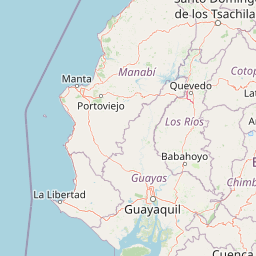
Map view of Reserva de Producción de Fauna Marino Costera Puntilla Santa Elena

Use this park location map to pinpoint Reserva de Producción de Fauna Marino Costera Puntilla Santa Elena in Ecuador, understand its exact geographic position, and read its mapped placement within the surrounding landscape more clearly.

Pigeon | © OpenStreetMap contributors

Location context for Reserva de Producción de Fauna Marino Costera Puntilla Santa Elena

Santa Elena

Visualizing marine habitats, rocky coastal terrain, and Pacific scenery across the reserve

Reserva de Producción de Fauna Marino Costero Puntilla Santa Elena Photos and Landscapes

Browse detailed photography of Reserva de Producción de Fauna Marino Costero Puntilla Santa Elena to examine its stark coastal vegetation, rocky cliffs, and vast marine expanses. Visualizing these protected ecosystems clarifies the unique geographic contrast between dry shoreline environments and rich Pacific waters.

A humpback whale surfacing in the water with a coastal headland in the background under a cloudy sky.

Park atlas

Compare regional protected areas and adjacent coastal conservation landscapes

Parks Near Reserva de Producción de Fauna Marino Costero Puntilla Santa Elena

Continue exploring coastal wildlife reserves and protected marine habitats surrounding Reserva de Producción de Fauna Marino Costero Puntilla Santa Elena. Compare regional park geography to understand the broader ecological network of Ecuador.
A horizontal watercolor painting showing a pale green and soft pink landscape with rolling hills in the background, a flat expanse of light green vegetation in the midground, and a suggestion of water in the foreground.
Marine protected areaSanta Elena
About 41 km away#1 closest

Northeast

Reserva Marina El Pelado: Coastal Marine Protected Area and Underwater Reef Geography

Oceanic convergence zone within the Santa Elena province

Reserva Marina El Pelado features a distinct maritime landscape defined by thirteen submarine shoals, octocoral forests, and coastal mangrove systems. Located within the Santa Elena province, this protected area serves as an essential biological laboratory where tropical and temperate current systems collide, shaping a complex mosaic of rocky reefs and diverse marine habitats.

Area
131.55 km²
Established
2012
IUCN
VI
Relief
Lowland
National parkManabí Province
About 66 km away#2 closest

North

Machalilla National Park: Protected Area and Geographic Context in Manabí Province

Explore mapped natural landscapes and regional geography.

Delve into Machalilla National Park, a protected national park situated in Ecuador's Manabí Province. This page provides a focused view on its protected landscape character, emphasizing its geographic setting and mapped natural terrain. Understand how Machalilla National Park fits into the regional geography, offering a distinct case study for protected-area discovery and landscape atlas exploration.

Area
750.59 km²
Established
1979
IUCN
II
Wildlife reserveGuayas
About 94 km away#3 closest

Southeast

Refugio de Vida Silvestre Manglares El Morro: Protected Coastal Landscape and Map

A strategic marine and mangrove ecosystem in the Guayas Province

The landscape of Refugio de Vida Silvestre Manglares El Morro consists of continuous mangrove forests and rocky farallones, linked by a complex network of tidal channels. This wildlife refuge serves as an essential marine habitat at the threshold of the Gulf of Guayaquil, showcasing the interplay between tidal aquatic systems and coastal vegetation across the southwestern Ecuadorian region.

Area
101.3 km²
Established
2007
IUCN
Ib
Visitors
23K annual
A horizontal watercolor painting showing a stylized forest landscape with soft pastel green, yellow, and pink hues representing trees and rolling hills.
Protected areaGuayas
About 115 km away#4 closest

East

Bosque Protector Cerro Blanco: Protected Area and Tropical Dry Forest Geography in Guayas

Mapped terrain of the Chongon-Colonche mountain range

Bosque Protector Cerro Blanco functions as a major conservation site in coastal Ecuador, protecting rare Tumbesian forest ecosystems within the Guayas province. The reserve features diverse topography of ridges and valleys, serving as a critical buffer for regional endemic species and offering a unique look at seasonally dry forest landscapes near Guayaquil.

Area
60.78 km²
Established
1992
Visitors
12K annual
Relief
Upland
Nature reserveGuayas
About 120 km away#5 closest

East

Bosque Protector La Prosperina Nature Reserve and Coastal Ecuador Forest Geography

Protected dry forest habitat and regional geographic terrain

Bosque Protector La Prosperina represents a critical survival of Ecuador's equatorial dry forest within the Guayas province. This nature reserve offers deep insight into seasonal ravine networks, drought-adapted vegetation, and the structural dynamics of fragmented coastal landscapes near Guayaquil.

Area
2.424 km²
Established
1994
Relief
Upland
Climate
Tropical
Wildlife reserveGuayas
About 123 km away#6 closest

East

Reserva de producción de fauna Manglares El Salado: Coastal Geography and Protected Lands

A mangrove-dominated wildlife reserve in Guayas, Ecuador.

Analyze the protected landscape of Reserva de producción de fauna Manglares El Salado, which spans extensive mangrove forests and estuarine waters within the Guayas province. This wildlife reserve showcases a unique transition between intertidal mangrove zones, salt flats, and remnants of tropical dry forest, providing essential habitat context for the Gulf of Guayaquil coastal region.

Area
53.09 km²
Established
2002
IUCN
VI
Relief
Lowland
Wildlife reserveManabí
About 126 km away#7 closest

North

Refugio de Vida Silvestre Marino Costera Pacoche: Geography and Protected Area Atlas

Coastal and forest protected landscapes in Manabí, Ecuador

Examine the unique geographic structure of Refugio de Vida Silvestre Marino Costera Pacoche, a protected reserve bridging the Tumbesian dry forest and the Pacific Ocean. This atlas entry focuses on the park's coastal cliffs, sediment-rich marine zones, and forest ridges, providing a clear visual and descriptive record of this ecologically significant Manabí sanctuary.

Established
2008
IUCN
V
Visitors
3.2K annual
Relief
Mixed relief
A pale, soft watercolor painting showing a stylized, rolling landscape with light green, pink, and yellow hues representing hills and trees.
Nature reserveGuayas Province
About 137 km away#8 closest

East

Reserva ecológica Manglares Churute: Mapping a Coastal Nature Reserve in Guayas Province

An ecological mosaic of mangrove forests, estuaries, and forested ridges.

Spanning from the inner Gulf of Guayaquil into the Churute hill range, Reserva ecológica Manglares Churute acts as an essential protected area within Ecuador. The region contains one of the country's most significant mangrove complexes, complemented by freshwater lagoons and unique fog-affected forest summits that support diverse wildlife populations and endemic vegetation.

Area
471.74 km²
Established
1979
IUCN
Ia
Relief
Mixed relief

Common questions about visiting, size, designation, and location context for Reserva de Producción de Fauna Marino Costera Puntilla Santa Elena

Reserva de Producción de Fauna Marino Costera Puntilla Santa Elena FAQs for park facts, access, geography, and protected area context

Find quick answers about Reserva de Producción de Fauna Marino Costera Puntilla Santa Elena, including protected-area facts, park geography, trail and visitor context, and how the park fits into its surrounding country and regional landscape.
MoriAtlas Explorer

Continue Your Protected Areas Search Across the Global Atlas

Deepen your exploration by continuing the structured search for national parks and protected areas worldwide. Utilize the comprehensive filtering capabilities to compare different conservation landscapes and refine your understanding of global park geography. Discover more about the distribution and characteristics of protected natural areas.

Global natural geography